• The move to the new server is done. There are some software and database maintenance updates in process. This has us passing the hat around to help out. We appreciate any donations. Seriously, even a dollar helps. The payment page may be found here - https://www.audiokarma.org/support.html

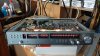
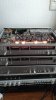
Tandberg TPT 3001 Help please

hello Bob@FM, wow man that is a great tip. The problem occured after I had exchanged the Caps. I used Elna Silmic II everywhere. (excl low profile 1000uF). So no bad caps. But still, maybe I should replace the old ones. e.g. the low leakage ones.
thanks so far. I'll keep posting.

regards
Paul
 
Why not just post it here like I did myself? So that everybody learns? That is the whole point of this forum...

Ya sort of anti climatic, probably won't see another post since he got what what he came for.
 
Since so many are desperate to know what caused the problem, I will tell you.

Capacitor C520 took too long to get upto power.

As I changed all the caps I noticed that some of the caps I took off the board didn't have the same value as in the schematics.

The new ones I putted in all had the values that were noted in the schematics.

C520 (on the selector PCB itself indicated as C521) near The IC B (U601 = MC14016) should have a value of 100µF.

So recapping this I put in a 100µF 35V in there.


I had this cap in mind all the time, but I could not accept the idea of a new high quality cap would be wrong.

However thanks to Bob@FM who gave me the hint that sometimes caps can be too good in some situations, I decided to change it back to the old one.

I changed this to the old cap of 47µF, the value I took off the board when recapping.

This solved the problem.

I have tested the unit meanwhile at least 50 to a 100 times by switching it on and off in all the different switch positions and it functions flawless.

But it will be in observation for the next 2 weeks. After that and when it functions fine I will close it up definitely.


So PE9ZZ since you are so anxious to know what the problem was

Thanks for wasting my time by nagging constantly about the PS, despite my repeated comments and proofs that the problem was not in the PS and that it was fine.

Also remarks like " if it was on my bench the fault would have been found ages ago..." seem not really in place, since you were completely off track.

Next time when you want to "give advice" maybe you would first read all the info and check the data available,

And also you might except that other people here on the board do have intelligence and know how to use it.


To all the others :

thanks for the help, I did appreciate your ideas and info.

regards

Paul
 

Attachments

  • DSC_0044c.jpg
    DSC_0044c.jpg
    94.8 KB · Views: 5
So PE9ZZ since you are so anxious to know what the problem was
Thanks for wasting my time by nagging constantly about the PS, despite my repeated comments and proofs that the problem was not in the PS and that it was fine.
OK, I'll bite. Because you never showed it wasn't. Thanks for your nice remarks. Highly appreciated.

Looked at the SM. Page 28. What a crap design. No wonder no one could figure this out.
 
"I changed this to the old cap of 47µF, the value I took off the board when recapping.
This solved the problem."

Interesting, glad you solved the problem. I also have a TPT-3001 here, so glad to help a fellow owner.
Most engineers would call that a marginal or poor design, likely discovered and fixed in later revisions. Or they simply "fixed" them in production and forgot to update the manual.
The reason it did not work was it took to long for the 100uF cap to charge up, and hence the MC14016 logic was not up and running fast enough.
 
Thanks to your hint (Bob@FM) I really had the guts to roll back. Like I said I was convinced, the new caps - especially the Silmic II - could never be the reason for the problem.
I had also contacted a specialist near me about the problem as well. He had never seen the problem in 35 years Tandberg service.
But as I told him that I had recapped the whole unit up front he was surprised.
He agreed that the heavy ones in the PS and the 1000µF on the decoder board definitely needed to be recapped.
But for most of the others he had never seen any reason for a recap unless the cap really was bad.

Somehow I must agree with him.
Most of the caps I have taken out over the years were in pretty good condition, even after so many years.
they probably used an extra margin for all those parts that really could wear out in time.
So in this case the original design might have been a 100µF at first, but soon they noticed that 47µF worked better.
And like you said; they putted it in, but did forgot to change the schematics.

Let's be fair; also the 4 lamps in the unit are all original and still working fine after 40 years.
Whereas a standard light bulb at home hardly makes it for a year.
It definitely must be the crap design of the Tandberg engineers that make these unit go so well after years. :D

For several years I was head of procurement at Philips. the engineers changed the designs weekly.
So I was reordering stuff day after day, in order to make sure that production had the right parts in time.
Definitely not all those changes on the PCB were also worked out in the schematics in time. I guess some were forgotten as well.

Anyway, the unit is working perfectly now.
But the next problem is waiting already.
A brutally demolished TIA 3012. :(

regards

Paul
 

Attachments

  • clear.png
    clear.png
    137 bytes · Views: 0
Paul, don't take it so personally... troubleshooting remotely is an art not a science at times, and it doesn't always lead to the solution. And, some people that are being asked for help may display some degree of ego in the process. Better to focus on the fact that they took the time to respond and burned some brain cells trying to help, even if you found the suggestions annoying or not very useful. It's better than getting crickets in response to a question.

Posting the fix was absolutely the right thing to do. These threads would cease to exist otherwise, as half the fun of trying to assist is seeing the outcome and (hopefully) learning something in the process.

Thanks for bringing the question here and sticking with it until you got it figured out.

Your finding explains why I had never seen this issue, I've never felt compelled to 100% recap a 3001 or 3001A though I have done a couple of 3011A just for fun and to see what impact it had on resale value.

I have seen component variations in the 3001 also, so not surprised by that part. Same for the TR 2075, they seemed to have been playing with some circuits in these "evolutionary" models, more so than the later versions like 3001A or TR 2080. And much of that isn't well-documented either.

Cheers,

John
 
Back
Top Bottom