

You are using an out of date browser. It may not display this or other websites correctly.
You should upgrade or use an alternative browser.
You should upgrade or use an alternative browser.
Technics SP10 mkII or Denon DP-80
- Thread starter tabarddn51
- Start date

cafe latte
Addicted Member
Where I live.

cafe latte
Addicted Member
Not what I said, I said they are not hard to work on and that motor unit issues are not in my expeience that common unless they have been run with faulty psu caps. A friend is selling a good condition working SP10mk2.Right. I’m liar because your sample pool doesn’t agree with mine. Got it.
My advice to him was dont use it until the psu caps are changed. For most this will give them a realible turntable, but as I said a recap is not hard and the service manual is freely available and it is not rocket science to follow it.
That is what I am saying

JP
7480 74111110101115
Not what I said
I dont think it is as common as you make out.
Ya, it is.
cafe latte
Addicted Member
Ya, it is.
One of mine looks like it has been is a super dry place..
Attachments


JP
7480 74111110101115
I thought there was an optional copper platter that was 40lbs. I could be wrong.
Sorry, thought I responded earlier. Yes, there was an 18kg platter that could be purchased, seemingly very rare to find one today.


I thought there was an optional copper platter that was 40lbs. I could be wrong.
Yamaha had an optional 18kg gunmetal platter for the GT-2000.
JP
7480 74111110101115
Regarding the motors: my own SP10 is an ex-BBC turntable that obviously had quite a lot of use, but the main bearing was in excellent condition. The other one reportedly had very low hours, and the oil inside the bearing basically turned into varnish. I had to spend quite a lot of time removing the mess.
I've yet to see one oxidize that badly. If only to be able to know its history and the conditions it was stored in.
This one from today is typical for what I see on ones that have been sitting around unused for decades. The bottom ~80% of the shaft was bone dry and most of the oil was at the very top of the bushing. Seemingly it may have been stored upside down, though it's been sitting here in the proper orientation for many months.
Perhaps the oil would've redistributed with use, but not before some damage was done to the bearing. Had it been used oil that'd oxidized a bit it's doubtful it'd redistribute, and adding a few more drops wouldn't do a thing. Fortunately this is an NOS service part motor that's never been used.


stratokaster
Mental toss flycoon
I was told it was an attic find, so it probably got quite hot during the summer months...I've yet to see one oxidize that badly. If only to be able to know its history and the conditions it was stored in.
stratokaster
Mental toss flycoon
British Isles 

totem
Addicted Member
A find one hopes to stumble upon.Fortunately this is an NOS service part motor that's never been used.


Cap chemistry and construction consistency has generally improved a lot over the years, the SP-10Mk.II design ran everything hard, and the vast majority of them were used in radio station environments for years, spinning more or less 24/7 unless they were down for repair. That will take a toll on anything.Can I ask, why do you think so many caps were out-of-spec? Is it the stock that Technics was using? Not enough cooling for these caps, in areas of use? Using under-spec'ed voltage ratings?
Do you upgrade the caps with higher voltage rated ones? Or use more expensive stock? How many hours would you expect an average re-cap job to last --- where same quality of caps and voltage ratings were used?
ありがとう
Arigatō!
There may be some "before" pictures of my SP-10Mk.II before I disassembled it and sandblasted the housing. It wasn't as bad as the one pictured, but it wasn't too far off.I've yet to see one oxidize that badly. If only to be able to know its history and the conditions it was stored in.
This one from today is typical for what I see on ones that have been sitting around unused for decades. The bottom ~80% of the shaft was bone dry and most of the oil was at the very top of the bushing. Seemingly it may have been stored upside down, though it's been sitting here in the proper orientation for many months.
Perhaps the oil would've redistributed with use, but not before some damage was done to the bearing. Had it been used oil that'd oxidized a bit it's doubtful it'd redistribute, and adding a few more drops wouldn't do a thing. Fortunately this is an NOS service part motor that's never been used.
View attachment 2912891
JP
7480 74111110101115
There may be some "before" pictures of my SP-10Mk.II before I disassembled it and sandblasted the housing. It wasn't as bad as the one pictured, but it wasn't too far off.
Yes, I’ve seen plenty with exterior chassis corrosion. The quoted comment was in reference to spindle bearing lubricant.
KentTeffeteller
Gimpus Stereophilus!
Wrong! Your Denon and your Sony are overrated. And are less precise than a better Technics. The SP-10 is heavier duty, better built and made, more precise every day. Built to withstand up to 18 hour a day use which kills Denons. Styling don't play records.You mean DP-80 right? Because you write "DP10" and "DP50" on your post.
I also assume you mean the SP10MKII (there are three different models of the SP10)
It's easy, if you want high resale value get the SP10MKII, if you want the best possible sound quality my bet is on the Denon DP80. I wouldn't call the Denon "nearly as good", i would call it having an essentialy superior motor and a more precise frequency generator.
Maybe people think "nearly as good" because the Technics brand is hugely overrated nowaday
High performance and consistent reliability does the job. Complexity is not reliability, nor does it assure accuracy. In my area I see lots of broken Denons and even more broken Sony DD turntables. The automatic, electronic models the most. Reality from my viewpoint.
Same weak parts in the Sony fail when owners neglect them. Always the same parts. The Denon motor is beautiful, but requires being treated delicately with special care and attention. I loved them when new and they didn't have age piled on them. Same with the Sonys. Most models of both didn't age well. Unless very cared for and babied.
I have a Technics SL-1300. Wasn't stored well. Sat from appearances in an unheated garage or a shed. The aluminum top got a few places which look weathered. However, cleaned it up. lubricated the motor. Cleaned the automatic mechanism up. Expected problems. Connected it up. Installed a head shell and cartridge. Set it up carefully. It worked, rotated on speed without a care in the world. My gifted parts donor came to life. Needed new interconnect cables. I still use and enjoy it. Same on a Denon or a Sony, it would be too far gone in many cases to save.

flavio81
Turntable technician
Wrong! Your Denon and your Sony are overrated. And are less precise than a better Technics. The SP-10 is heavier duty, better built and made, more precise every day. Built to withstand up to 18 hour a day use which kills Denons. Styling don't play records.
High performance and consistent reliability does the job. Complexity is not reliability, nor does it assure accuracy.
Simplicity doesn't assure accuracy either. Often you need complexity for accuracy. Take a look at the circuitry of a SP-10MK3, it is anything but simple.
Any direct drive turntable from the 70s or 80s, if it pretends to work optimally, needs recalibration and maybe even a full replacement of capacitors. This will be needed notwithstanding the fact that the turntable is working from the get go or not.
I have a Technics SL-1300. (...) Cleaned the automatic mechanism up. Expected problems. Connected it up. Installed a head shell and cartridge. Set it up carefully. It worked, rotated on speed without a care in the world.
And thus, you have not went through a real service for your turntable. Your SL-1300 works, but not necessarily up to the factory standards.
Returning to the SP-10MK3, the pinnacle of Technics "high performance and consistent reliability":
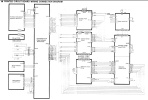
There are 10 PCBs, 10 (ten) printed circuit boards.

It has 20 (twenty) ICs from and all of them are custom (and thus, not so easy or cheap to source) Mastushita ICs.
But let's go back to your claim:
Complexity is not reliability, nor does it assure accuracy.
So, I guess the SP-10MK3 is not a reliable turntable then? Or is it?
If the SP-10MK3 (or the MK2 which also has a certain complexity) is reliable, then will you have the will to tell me that comparable turntables from Sony. I mean, SONY,
- a direct competitor to Matsushita
- a company that introduced some of the first transistors and ICs in japan
- which also had not just capability to manufacture their own ICs in the 70s
- and to invent new devices like the VFET)
- fully dedicated to audio and video unlike Matsushita
... can't make reliable turntables?
You are putting ALL Sony and Denon DD turntables in the same basket, so let me do the same for Technics DD turntables, and comment that in my country the amount of Technics DD turntables with failed ICs like the AN630 or AN620 is comical. A lot of them. And note that i'm a defender of ICs in turntables, i'm not from the school that says "oohh IC bad, discrete good", however there are owners that abuse their turntables, as simple as that.
So I guess nothing is reliable right? Where do we stand?
How do you treat a turntable will always have an impact on the performance and/or reliablity. Put your SL-1300 on a horribly humid climate and it's just a matter of time until bad contacts or cold solder joints or failed capacitors wreak havoc with the performance. Maybe the turntable will still turn, but it will not meet original specs.
I find it not reasonable to think that Technics somehow created more reliable electronics than Sony. And, as mentioned, to say that Sony introduced more complexity in their models is a wrong generalization.
Last edited:
JP
7480 74111110101115
AN660, AN640G, DN860, and MN6042 are the only proprietary ones.It has 20 (twenty) ICs from and all of them are custom (and thus, not so easy or cheap to source) Mastushita ICs.
There are four boards of consequence in the controller. The motor chassis board have only a few diodes and resistors on them, otherwise used for connection points, tactile switches, strobe LEDs, etc. Nearly nothing to go wrong on those and one really never touches them.
Mister Pig
Pigamus Maximus
How is the DIY power supply project going?