

You are using an out of date browser. It may not display this or other websites correctly.
You should upgrade or use an alternative browser.
You should upgrade or use an alternative browser.
The best phono preamp under $1000 (aka the Hagerman Bugle upgrade thread)
- Thread starter oranda
- Start date

Jim Hagerman
Member
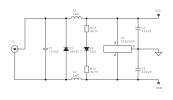
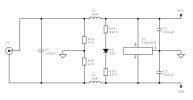
Why the change from the diode to the resistors?
Great question!
First, I didn't feel the reverse polarity protection diode was truly needed, as I figured I would be building all units and providing the correct power supply. Did not foresee me offering the Bugle3 as a kit PCB at that time.
Usually, the problem is not reversed polarity when built as a kit (Bugle2), but rather connecting a power supply where the negative terminal was connected to ground (should be floating). This ends up frying U1. Protection diode does not help. So heck, I took it out.
The resistors are for an entirely different purpose. They were added to load down the wall wart with extra current. Why? Well, the Bugle design does not pull very much load current (which is also why the B2 and B3 do not have on/off switches). At 240V operation things start to get marginal with some brands of wall warts in that they go into pulse-skipping mode (for light loads). This causes an audible whine in the circuit, as the pulse-skipping behavior (start / stop / re-start) is smack dab in the audio spectrum. By adding resistors, the extra load current pushes the wall wart back into continuous mode where the switching frequencies are ultra-sonic, and easier to filter out. This is also why the 1mH inductors are on board! They (along with the 200uF capacitors) filter out all that ultra-sonic noise, leaving behind a decently quiet set of power rails. Opamp PSRR does the rest.
Jim Hagerman
Member
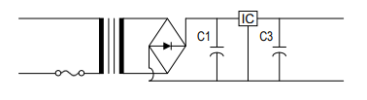
Any issues with this or should I order the switching supply?
Using a linear supply will provide a quieter DC input to the Bugle. Per the drawing you should be Ok. U1 will create a middle point which then gets tied to the shield return of the output cables, and that ends up getting tied to Earth ground in the linestage or receiver. This topology minimizes ground loops.
There are three reasons I ship Bugle product with a switching type supply:
1) Low cost. It's a very competitive landscape out there.
2) Worldwide operation. These things operate from 88Vac to 264Vac. The model I now buy also comes with interchangeable blades. Australia gets those angled blades, Europe gets the round prongs, UK gets the monster plug. One supply ships anywhere. No jumpers or switches or fuses or adapters to worry about.
3) Safety regulations. It's all done for me.


oranda
Active Member
Wow, gone for a week and it looks like I missed a lot of action...

For the larger 220nF caps, I like the new generation polyphenylene sulfide caps (Kemet makes some nice ones) over other mass-produced polymer film caps. Boutique caps work great, but of course there are the cost and/or space considerations.
Thank you for that rundown. To my ear, I am hearing the opposite in that removal of the Neuman "pole" makes the high frequency reproduction more natural/ less artificial and overall less "hot". I felt it could be mitigated somewhat with careful build component choices (like Vishay polyester caps) but that had it's own sonic issues (as did the supersonic Zobel filters I tried implementing to minimize the rising treble.) Ultimately, I found that it sounds amazingly good with the pole removal modification so I have left it this way.
Ah, ok, I was curious to know why there were 3 gain stages. Thanks for that explanation. I think the 3 gain, split passive configuration was an excellent choice.
Again, a pleasure to have you here and I will happily be reading your contributions.
Jim, it's such a pleasure to have you here and contributing to this thread! As you have already noted, the first and 305th post sum up the alterations. The Bugle is such a clever, easily modded design that it was a natural choice to use as a testbed for trying different components. Thank you for making such excellent, affordable products that are straightforward to build and modify. I also own a Piccolo and your inverse RIAA, which are both fantastic. And thank you for the offer of extra boards... I may PM you for that.Aloha folks! Just became a member here (customer had mentioned this thread)...
I want to say thank you for all the kind words and for all the work you've put in to make my humble little circuit shine even more. Special kudos to Oranda and DesertRat. If either of you two need more blank boards, let me know.
It so happens that the silver micas from Cornell Dubilier perfectly fit the lead spacing of C5 on the Bugle board. I've read about the potential microphonics issues, but none of the ones from CDE or Charcroft I've used exhibited that. The McIntosh 225 uses several of them in its design and is renown for its sonics character, as does the excellent Tim de Paravacini designed EAR834, which has silver micas in the RIAA stage. Part of the use in those tube amps might have to do with the excellent thermal stability of silver mica caps, but they also have a sonic transparency that I don't get with PE or PP caps.Regarding silver mica: Shoots, I didn't even realize they came in values as high as 10nF. Never tried them in this circuit. For me, it's all about dielectric absorption, and that's the main reason I don't use them (causes a smearing in time). Also, and I can't remember the details, but 35 years ago I believe we had a microphonic issue with them (non-audio circuit).
For the larger 220nF caps, I like the new generation polyphenylene sulfide caps (Kemet makes some nice ones) over other mass-produced polymer film caps. Boutique caps work great, but of course there are the cost and/or space considerations.
Regarding Neuman (Allen Wright) pole: I thought I explained this in my 1995 paper. Basically, there are two problems with the RIAA specification; it requires infinite gain and infinite bandwidth from a cutting head. We should all understand this does not happen in real life. And as posted earlier in this thread there is commonly a double pole at roughly 50kHz. This makes perfect sense. It's exactly how I would have done it. Anyhow, one pole to remove infinite gain, another to remove infinite bandwidth. Therefore, it should be obvious that my use of a 50kHz zero (not pole) in the phonostage is only a partial compensation. This appears as a rising treble compared to the RIAA standard (which does not specify anything out of band). The rise in gain is not particularly audible (beyond my hearing). What I believe you are hearing has more to do with phase. It's all about attempting to maintain a proper harmonic relationship in time. That is, higher harmonics of something like a cymbal, violin, or piano need to have the proper phase relationship with the fundamental. Otherwise it starts to sound artificial (even with my hearing limited to 12kHz). My inclusion of a single 50kHz zero (not double) is merely an attempt to partially preserve this temporal relationship. Rolling off bandwidth is always the easy way out and often covers up for some issue elsewhere in the system.
Thank you for that rundown. To my ear, I am hearing the opposite in that removal of the Neuman "pole" makes the high frequency reproduction more natural/ less artificial and overall less "hot". I felt it could be mitigated somewhat with careful build component choices (like Vishay polyester caps) but that had it's own sonic issues (as did the supersonic Zobel filters I tried implementing to minimize the rising treble.) Ultimately, I found that it sounds amazingly good with the pole removal modification so I have left it this way.
For me as a designer, price was one of those boundaries. Not everyone is a fan of passive-split equalization. In fact, I believe it is the most difficult approach. Worst SNR, worst overload. But hey, to me it sounds by far the most natural and non-fatiguing. That's what I was going after. Such compromise led to gain management (choosing 3 stages) and doing my best not to overload the 2nd stage (which is what happens because of EQ).
Ah, ok, I was curious to know why there were 3 gain stages. Thanks for that explanation. I think the 3 gain, split passive configuration was an excellent choice.
Thank you for the excellent background info! But then you've always provided a huge amount of background information, schematics, and usage info about your products on your website, so this comes as no surprise. I assumed the Cornet came after the Bugle. Now I know. Actually, I almost chose the Cornet as my platform for experimentation given how well it has been received, but the idea of opamp swapping was more interesting (and more economical than tube swapping.)History of the BUGLE, bit's and pieces, anyway...
...I converged on the passive-split EQ, which was becoming popular at the time. One great example came from Diego Nardi...
Ok, so what does this have to do with the BUGLE? Well, I thought to myself, why not make an opamp version of the CORNET circuit? So I did.
Again, a pleasure to have you here and I will happily be reading your contributions.
Last edited:
oranda
Active Member
Obviously, I'm a big fan of the OPA2210s which I use in U2, U3 and formerly in U4. More recently, I've gravitated towards exotic opamps in U4 (now using a MUSE02). Looking forward to hearing your observations!Ok, so my rail voltages seem ok. Current opamps (substitutions ) are suspect. So I found some local 5532 op amps for testing - will have them tomorrow - thanks all for your support in this journey.
Once I get the 5532 testing done satisfactorily, then I’ll go back through the thread and review what opamps are the current suggestions as upgrades

DIY Rookie warrior (aka dumb@ss) has an updateObviously, I'm a big fan of the OPA2210s which I use in U2, U3 and formerly in U4. More recently, I've gravitated towards exotic opamps in U4 (now using a MUSE02). Looking forward to hearing your observations!
SO it seems like actually choosing the correct parts, especially Op Amps as it turns out. Amazon delivery truck turned up this morning and debated - wait, think, ponder do and got to - no way - lets see what happens. So, fake or not, I have three new 5532s playing some well known Vivaldi in a very beautiful manner. So I really, really really need to heed any suggestions Jim provides, like, build it standard first then adapt as required. Prior (accidental?) success may have given me false skill levels that clearly failed DIY rookie warrior this time. Lesson learned.oranda, thanks for your comment, and I quoted your post because I am waiting for a set of OPA2210s as we speak. And frankly with the issues I was having, wondered if it was breaking the Jim suggestion mentioned above by being too eager and wasting cash in the process. But now that I have my "dumb@ss" mistake resolved , I cannot wait (but will wait) to get the 2210s in place. For U4, I'm going initially with either a 2210 or a 1612 that is in the same shipment from Cimmaron.
So next steps:
1) breathe, enjoy the base Bugle3 and write on my metaphorical chalkboard 1000 times, "listen to people who know what they are talking about every time when it matters"
2) I have C5 replacements waiting to pop in and will do that first
3) I have a power supply upgrade - the RFID 24V 500MA version mentioned in this forum or somewhere similar
4) I will eventually get the Cimmaron package and see when to move those into the Bugle3 house
5) I will look at the remaining upgrades mentioned in this thread
I did choose Dales for all relevant resistors originally as well. I've used those successfully in the past as well (miraculously with my fat fingers skills it seems).
And I did acquire a metal box for the Bugle3 since I wanted something with more physical weight and help for shielding (although the currently naked Bugle3 is SILENT, so not sure the shielding is even in issue in my system setup. Apologies if referring to my naked Bugle3 caused any untoward emotional response for anyone :-(
And this will bring me to my final problem. As originally mentioned, I built one of Jim's Cornet2's probably 8-10 years ago now. Worked first try, but I've constantly gotten it (mostly) hum free once I recently grew up and implemented a functional star grounding method. I have three turntables running into a switch which sends that chosen signal to the Cornet2. But there's still bit of hum so I acquired the Cambridge Audio Duo phono stage as a temp option while I was digging into the Cornet2. And that thing IS SILENT, and smooth and polite and just sounds good, especially for the price I paid. Now I have a naked Bugle3 that's winning (or tying) the race. So now it feels like I have the ultimate problem that a rookie DIY warrior dumb@ss could have with 2.5 really awesome sounding phonostages to admire, use, and ponder over. Truly a great first world problem.
So thanks to Oranda for helping me to start this journey, thanks to DR for keeping it real for me, thanks to Knotscott for his help and generosity, thanks to WizardWG4 for helping to "translate" for me. And especially thanks to Jim who has created such wonderful opportunities for us rookie DIY warriors (or not) to get such incredible performance, at a reasonable level of effort, cost and simplicity and for sneaking into the forum to provide even more help along the way
 . And I think Digikey, Cimmaron, Dale, eBay, Mouser, Amazon thank me (and us) for playing along

I'll post my "findings" as I progress. but I only expect them to confirm the feedback by others to date, although my "quality of build" may help to demonstrate how low skilled folks can have fun and find great results as well.
Stay safe
Chris

knotscott
Super Member
Congrats getting your Bugle working. Hope you ordered the 2210s mounted....I toasted a couple trying to slaughter them to the adaptors. If you already have the PS upgrade, IMO it'd be good to plug in it. It should only help overall, and can help reveal more of the future component upgrades. Keep on keepin' on! I had my fair share of setbacks, but you'll work thru them.
Last edited:
oranda
Active Member
DIY Rookie warrior (aka dumb@ss) has an update
Yes, building as intended first is 100% the best route. It pains me to write that as I know modding, even on a platform well suited to it, can be fraught with its own peril, but you want it working correctly first before making changes for a variety of reasons. Also its easy to get down on yourself for making mistakes, but we've ALL been there and know that you are learning and progressing far more by going the DIY route. Not sure if you needed that encouragement and you probably already know that, but I truly believe it.
oranda, thanks for your comment, and I quoted your post because I am waiting for a set of OPA2210s as we speak. And frankly with the issues I was having, wondered if it was breaking the Jim suggestion mentioned above by being too eager and wasting cash in the process. But now that I have my "dumb@ss" mistake resolved , I cannot wait (but will wait) to get the 2210s in place. For U4, I'm going initially with either a 2210 or a 1612 that is in the same shipment from Cimmaron.
Excellent!! I feel the improvement with the Super Beta OPA2210s will be quite noticeable. Also know that surface mount devices are fairly fragile, so take extra precaution in handling them.
Are you planing to use silver micas caps? IMO that will be another nice improvement. Polystyrene caps were 2nd best, but by a sizable margin.So next steps:
1) breathe, enjoy the base Bugle3 and write on my metaphorical chalkboard 1000 times, "listen to people who know what they are talking about every time when it matters"
2) I have C5 replacements waiting to pop in and will do that first
3) I have a power supply upgrade - the RFID 24V 500MA version mentioned in this forum or somewhere similar
4) I will eventually get the Cimmaron package and see when to move those into the Bugle3 house
5) I will look at the remaining upgrades mentioned in this thread
I did choose Dales for all relevant resistors originally as well. I've used those successfully in the past as well (miraculously with my fat fingers skills it seems).
And I did acquire a metal box for the Bugle3 since I wanted something with more physical weight and help for shielding (although the currently naked Bugle3 is SILENT, so not sure the shielding is even in issue in my system setup. Apologies if referring to my naked Bugle3 caused any untoward emotional response for anyone :-(
No harm done.
Yes, my Bugle sans metal housing is also silent. Glad to see you upgrade the supply. Not to bash SMPS as some are very well designed, but hopefully the one you are getting is linear and regulated - that is the type I am using.I'm with you. Cheers and looking forward to those findings!So thanks to Oranda for helping me to start this journey, thanks to DR for keeping it real for me, thanks to Knotscott for his help and generosity, thanks to WizardWG4 for helping to "translate" for me. And especially thanks to Jim who has created such wonderful opportunities for us rookie DIY warriors (or not) to get such incredible performance, at a reasonable level of effort, cost and simplicity and for sneaking into the forum to provide even more help along the way
I'll post my "findings" as I progress. but I only expect them to confirm the feedback by others to date, although my "quality of build" may help to demonstrate how low skilled folks can have fun and find great results as well.
Last edited:
Hi Knotscott - I did indeed get the 2210s mounted - while I'm not overly self aware, that would be akin to me using $1000 bills to light a cigar - so absolutely took the feedback and warning in this thread about SMD and fat finger soldering and the dice roll that can be.Congrats getting your Bugle working. Hope you ordered the 2210s mounted....I toasted a couple trying to slaughter them to the adaptors.
Thanks Oranda - I did get the "Matched Pair Charcroft Audio Capacitor 10000pF 250Vdc Premium Silver Mica" replacement for C5s. Fedex did their best to find a way to get them to a completely different province in Canada here before they landed in Toronto. My best guessing is they travelled about 1800 miles round trip .... maybe that travel helps with the break in period? They are clearly more experienced nowYes, building as intended first is 100% the best route. It pains me to write that as I know modding, even on a platform well suited to it, can be fraught with its own peril, but you want it working correctly first before making changes for a variety of reasons. Also its easy to get down on yourself for making mistakes, but we've ALL been there and know that you are learning and progressing far more by going the DIY route. Not sure if you needed that encouragement and you probably already know that, but I truly believe it.
Excellent!! I feel the improvement with the Super Beta OPA2210s will be quite noticeable. Also know that surface mount devices are fairly fragile, so take extra precaution in handling them.
Are you planing to use silver micas caps? IMO that will be another nice improvement. Polystyrene caps were 2nd best, but by a sizable margin.
No harm done.
I'm with you. Cheers and looking forward to those findings!


desertrat748
Super Member
Hi Knotscott - I did indeed get the 2210s mounted - while I'm not overly self aware, that would be akin to me using $1000 bills to light a cigar - so absolutely took the feedback and warning in this thread about SMD and fat finger soldering and the dice roll that can be.
Well it looks like you have it working. I am a bit confused as to what was the winning move, was it the power supply or maybe the opamps ? 2210s in all 3 positions?
And don’t worry about making any mistakes with a build, or a build with multiple changes. Everyone makes mistakes or has a moment. As long as you are heading in the right direction all is well.
As long as you’re not wiring 240 V live into a new panel straight from the power lines and accidentally ground out a leg with a large screwdriver, you won’t have to buy new screwdrivers.
The answer
I slid the silver mica C5 caps in this afternoon so will be listening as they settle in - but so far - super impressed with the bugle3. The best way I can describe it is - it just is - doesn’t get in the way, doesn’t demand “look at me” moments - it’s just really honest - and I understand now how Jim moved some of his Cornet2 thinking into the bugle product - that was (and still is) my assessment of the Cornet2.
Peter Garrett (Midnight Oil/ Blue Sky Mining) is sharing his displeasure with the world as my current test LP - it’s actually quite a bit eerie/awesome how close he sounds right now.
Thanks again for you help DR.
The real answer was getting the right opamp design in place - I bought single amp versions and Jim politely pointed out that I need double amp design - so got that sprayed and all was good from there. I’m still waiting for the 2210s but they are in transit mounted on an adaptor that doesn’t require me to put innocent new op amps in dangerWell it looks like you have it working. I am a bit confused as to what was the winning move, was it the power supply or maybe the opamps ? 2210s in all 3 positions?
And don’t worry about making any mistakes with a build, or a build with multiple changes. Everyone makes mistakes or has a moment. As long as you are heading in the right direction all is well.
As long as you’re not wiring 240 V live into a new panel straight from the power lines and accidentally ground out a leg with a large screwdriver, you won’t have to buy new screwdrivers.
I slid the silver mica C5 caps in this afternoon so will be listening as they settle in - but so far - super impressed with the bugle3. The best way I can describe it is - it just is - doesn’t get in the way, doesn’t demand “look at me” moments - it’s just really honest - and I understand now how Jim moved some of his Cornet2 thinking into the bugle product - that was (and still is) my assessment of the Cornet2.
Peter Garrett (Midnight Oil/ Blue Sky Mining) is sharing his displeasure with the world as my current test LP - it’s actually quite a bit eerie/awesome how close he sounds right now.
Thanks again for you help DR.
Well, after about 12 hours of listening time, gotta say - it’s very very good. The bottom end opened up a lot - I wasn’t expecting that but it’s good - not boomy, but deep and fast. i think the width and depth are seem bigger - instrument separation and placement seems far more defined. But, and here’s the thing - the Bugle still just gets out of the way of the music. I really, really like the experience. So far
1) base build with Dale resistors as upgrade
2) silver micas for C5
3) linear 24v 500ma supply
4) metal case (starting to take shape. Still pondering whether to bring an external audio switch into the box as well to select between my three turntables
still waiting for mounted 2210s from Cimmaron - taking a very long time and there are still in Cali somewhere. Then will go back to the list of mods and see what’s left.
question - how are you all managing on/off power switching to you Bugle? Since my linear supply is still in wall wart shape, I think this makes a Bugle onboard power switch a less interesting idea.

Thanks knotscottThe power supply on mine plugs into a simple switched outlet. I usually leave it on anyway.
View attachment 3011163
desertrat748
Super Member
question - how are you all managing on/off power switching to you Bugle?
Power Strip w surge protection and switch.
oranda
Active Member
The electrical draw of the Bugle is so minuscule, I just leave mine on all the time. That said, I have all my equipment hooked up to a Furman power conditioner, so if I happen to leave town or know I won't be using my system for several days, one switch takes care of everything.question - how are you all managing on/off power switching to you Bugle? Since my linear supply is still in wall wart shape, I think this makes a Bugle onboard power switch a less interesting idea.
Jim Hagerman
Member
Some more history contained in this video - the original Kickstarter offering of the Bugle2 kit...