• The move to the new server is done. There are some software and database maintenance updates in process. This has us passing the hat around to help out. We appreciate any donations. Seriously, even a dollar helps. The payment page may be found here - https://www.audiokarma.org/support.html

The Consumer Electronics Hall of Fame: McIntosh MR 78 Tuner

Register to hide this ad
To this day, I have never been able to find out exactly what the computer program was actually doing? Was it brute force looping through a wide range of component values and comparing phase shift results?
 
The MR 78 is strictly an FM tuner—designed for high sensitivity, low distortion, and variable IF bandwidth. I can remember sending away for McIntosh catalogues in the 70's when in HS, and read the tuner design features over and over. Part of that description was quoted at the BOTTOM of my Chicago FM webpage, a 1988-89 antenna and tuner trail I got into while living in Chicagoland.


IIRC the process describes "integration in the complex S-Plane". Sounds like Modafferi was running filter models using digital Laplace Transform on an old 'punch card' fed IBM mainframe.


In a conversation with a local AK'er in the past month or so, possibly 'doing lunch', the Laplace Transform came up while discussing spring mass systems, specifically the Tacoma Narrows Bridge collapse. There's an engineering joke that 'the plane will crash' like in the recent 737 Max disasters if there are two poles (Polish guys) in the 'right hand plane', or quadrants of exponentially increasing coeffs.


So I clipped some S-Plane plots and emailed them to him, and always being a skeptic, he thought I was pulling his leg again. :smoke:

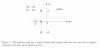
Complex_S_Plane_Fig-1.png

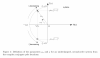
The Complex S-Plane plots damping coeff along the x-axis, and frequency response along the y-axis. Doing 'cuts' into that '3D space' one can see the frequency response. A pole is where the response goes to infinity, and a zero means to zero.

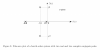
Complex_S_Plane_Fig-2.png

Complex_S_Plane_Fig-3.png

Complex_S_Plane_Fig-4.png

So numerical integration in the S Place means running a 'do loop' while varying filter component values until the circuit is optimized. It's numerically running a La Place integral (summation). In a nutshell.. circuit analysis.

As my dad once said, "it's all written in German." :rflmao:


-Greg
 
Last edited:
One minor correction: $1,699 was the final (1979) price of the MR78 which is ~ $6,000 in today's money. The MSRP in 1972 was not $1,699.

Inflation was very high throughout the 70s and assigning a price to the wrong year makes a significant difference when adjusted to today's funds.
 
Another good example of a La Place transform, which is on topic with FM tuners, is the Impulse function. A LIGHTNING BOLT can be modeled as an IMPULSE function, seen as the first entry in the La Place table below:


That means a sudden SPIKE in time (lightning) results in a VERY broad band disturbance in the frequency domain, causing static in ALL bands, radio, tv, microwave, etc. Putting it in other words, an infinity narrow SPIKE produces an infinity broad frequency spectrum.

La Place reduces complex electrical and mechanical phenomenon to elegantly simple notation, with functions that can be run on a computer.


-Greg
 
Last edited:
To this day, I have never been able to find out exactly what the computer program was actually doing? Was it brute force looping through a wide range of component values and comparing phase shift results?

John, the program...

"Presented.. a procedure for locating the poles of​
minimum-phase constant time delay filters of desired
selectivity, using a FORTRAN digital computer program."


Here are some MR 78 clips from TWO Mc catalogs:

MR78_LD_IF_FIlter_Cat.png

MR78_Sel_IF_FIlter_Cat.png

I have BOTH of these catalogs in the file cabinet.


And a clip from an MR 78 brochure:

MR78_IF_FIlter.png

Let's not get started on outdoor FM Yagi and LPDA antennas.


-Greg
 
Last edited:
They lost me when I read it's an AM/FM tuner.

Yep, it says that in the 1st paragraph:

Photo: HiFiCollector.com
Turn On, Tune In: In the years before Internet radio and streaming music services,
a good FM tuner was a must for audiophiles. None was better than the McIntosh
MR 78, which cost an eye-watering US $1,699 when it was introduced in 1972.

McIntosh’s MR 78 was a trailblazer, the first AM/FM tuner precise enough to tune in the weaker of two radio signals broadcast on very close frequencies.


-Greg
 
They lost me when I read it's an AM/FM tuner.

There... I fixed it!

MR_78_article_fixed_256.png

Any other edits? Yeah I know it's copyrighted.


The doc is in OpenOffice Writer.. only took about 10-15 mins.

The article snapshot above is (or was) a razor-sharp PNG reduced to 256 palette to hold down file size—let's see how AK forum blurs the hell out of it, or in 'audiospeak' converts it from very low distortion to high distortion. :rant:


-Greg
 
Last edited:
Still going at it here.

Let's have a look at the RIMO filters in the MR 78.


Filter location in compartment on chassis behind tuning flywheel.

MR78_RIMO_filters_marked.png


Circuit board layout—NORMAL path is through the lower filters 201-202 & 205-206.

MR78_IF_PCB_corr.png


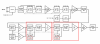
Block diagram—SUPER NARROW filter at input of IF circuit, cascaded NARROW filters downstream, all electronically switched.

MR78_IF_sections.png

What a GREAT design!


Spent a lot of time looking this over yesterday, making figures (graphics) and believe all is correct. Please comment.


-Greg
 
Last edited:
There was a thread a year or two back where someone asked about RIMO filters and what ever happened to them. It is an ironic twist that cheap, tiny, alignment free, low phase shift ceramic filters came out in roughly the time period as the MR78. Mac never used them again. The MR80 used ceramic filters.

I believe the bridge discriminator was never used again either. It had zero distortion but the capture ratio figure was poor (2.5 dB) and I'll bet it was expensive. Most other super tuners typically had a 1.0 dB figure.

Again, I hope an expert chimes in to correct me but I think one little quirk of the RIMO filter was that it was the first IF filter to break the unwritten law that the IF bandpass had to look like a "rectangle" with a flat top. it had a shape similar to a Gaussian distribution.
 
Last edited:
There was a thread a year or two back where someone asked about RIMO filters and what ever happened to them.

Good comments John, here's a SEARCH string for RIMO filters in AK forums.


You have to remember this was back in the days of computer punch cards.


RIMO filters appear to be a type of transformer.

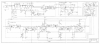
MR78_IF_sect_composite_enh.png

Yeah more image hacking. :cool: err, that schematic didn't come out full scale.


-Greg
 
Last edited:
Had one that two repair places along with McIntosh told me couldn't be repaired. Fremer happened to buy one and listed the contact info where he had his worked on and modified, so I contacted them and sent it to Modafferi for the repair and upgrades. Here's the best part, I received the unit free included with the purchase of two other Mac pieces and a Thorens table.

Best tuner I've ever heard, holographic imaging with the right signal, no not here in the FM wasteland S Florida is.
 
. I can remember sending away for McIntosh catalogues in the 70's when in HS
Me too.
At the time Mcintosh was out of my price range and honestly I didn't care for the look (at least the pictures in the catalog). Its since grown on me quite a bit.
IIRC they also sent a national fm radio station index (atlas?)
It's a shame FM is a fading (mostly faded already) medium.
I can't justify ponying up top dollar for a nice FM tuner (and in fact I have a pretty nice FM tuner which hasn't been powered on in several months), because the local FM content is so poor. I suspect there are still areas getting good stations.
PS
I tried to read the rest of the article but the link gave me a magazine pdf which didn't contain it.
I'd be curious (if just for curious sake) how the 78 compared to the later super tuners turned out after its release.
 
Back
Top Bottom