

You are using an out of date browser. It may not display this or other websites correctly.
You should upgrade or use an alternative browser.
You should upgrade or use an alternative browser.
The "Knob-to-Button Ratio" as a measure "Vintage-ness" in receivers!
- Thread starter illinoisteve
- Start date


shelly_d
Not An Audiophool
Love the subject of this post.
When I started out I built one these:

I always thought that the panel was very nicely and thoughtfully laid out with a knob to switch ratio of 1:1. I built it in 1968. Through the 1970's, the Japanese front panels started appearing and I started thinking that they looked "busy" and overly complicated, with controls in poorly laid out order. I called it the "Japanese look". Not sure that I think that today, but I still appreciate a well laid out panel like the Dynaco PAT5 I used from the mid 70's to just early this year

Knob to button ratio of 6:8 or if we reduce the fraction 3:4.
I have since moved to the McIntosh MA6200 which really needed to lay out the front carefully because it has 10 knobs (one is a double for balance and loudness) and 8 buttons:

for a 10:8 or a 5:4 (if reduced) ratio.
Talk about a busy panel. That beast kind of looks neat and clean but there are more ways to not select what you want then you can shake a stick at.
When I started out I built one these:
I always thought that the panel was very nicely and thoughtfully laid out with a knob to switch ratio of 1:1. I built it in 1968. Through the 1970's, the Japanese front panels started appearing and I started thinking that they looked "busy" and overly complicated, with controls in poorly laid out order. I called it the "Japanese look". Not sure that I think that today, but I still appreciate a well laid out panel like the Dynaco PAT5 I used from the mid 70's to just early this year
Knob to button ratio of 6:8 or if we reduce the fraction 3:4.
I have since moved to the McIntosh MA6200 which really needed to lay out the front carefully because it has 10 knobs (one is a double for balance and loudness) and 8 buttons:
for a 10:8 or a 5:4 (if reduced) ratio.
Talk about a busy panel. That beast kind of looks neat and clean but there are more ways to not select what you want then you can shake a stick at.


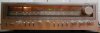
How about no buttons? I have a Zenith MC 7040 receiver with 7 knobs and 8 switches (and even the levers have knobs on them!). Here's a photo I found online (mine has the know on the power switch). This was made in Korea from 1978-80, maybe by Samsung as they own the Zenith brand. Nice little 20 wpc for the extra room.
Attachments


2string1
Super Member
How do you like your 6200?Love the subject of this post.
When I started out I built one these:
I always thought that the panel was very nicely and thoughtfully laid out with a knob to switch ratio of 1:1. I built it in 1968. Through the 1970's, the Japanese front panels started appearing and I started thinking that they looked "busy" and overly complicated, with controls in poorly laid out order. I called it the "Japanese look". Not sure that I think that today, but I still appreciate a well laid out panel like the Dynaco PAT5 I used from the mid 70's to just early this year
Knob to button ratio of 6:8 or if we reduce the fraction 3:4.
I have since moved to the McIntosh MA6200 which really needed to lay out the front carefully because it has 10 knobs (one is a double for balance and loudness) and 8 buttons:
for a 10:8 or a 5:4 (if reduced) ratio.
Talk about a busy panel. That beast kind of looks neat and clean but there are more ways to not select what you want then you can shake a stick at.
2string1
Super Member
Love the subject of this post.
When I started out I built one these:
I always thought that the panel was very nicely and thoughtfully laid out with a knob to switch ratio of 1:1. I built it in 1968. Through the 1970's, the Japanese front panels started appearing and I started thinking that they looked "busy" and overly complicated, with controls in poorly laid out order. I called it the "Japanese look". Not sure that I think that today, but I still appreciate a well laid out panel like the Dynaco PAT5 I used from the mid 70's to just early this year
Knob to button ratio of 6:8 or if we reduce the fraction 3:4.
I have since moved to the McIntosh MA6200 which really needed to lay out the front carefully because it has 10 knobs (one is a double for balance and loudness) and 8 buttons:
for a 10:8 or a 5:4 (if reduced) ratio.
Talk about a busy panel. That beast kind of looks neat and clean but there are more ways to not select what you want then you can shake a stick at.
How do you like the 6200

Eywadude
Lunatic Member
If anybody wants to suggest a new way to state or understand the Ratio...
That there number crunchin' is for them big college mathemagician types. I can't count my own fingers let alone tie my own shoes. lolz

shelly_d
Not An Audiophool
How do you like the 6200
Love it, sorta. I got it in unusable condition. All of those front panel switches had been removed from their circuit board and some of them removed from the mounting frames. Those that were removed were gone and a few were unfix able. Circuit board was gone as well. Those issues were the only reason that I could actually afford the darn thing. I basically had to chuck the whole assembly and start from scratch, with 8 replacement switches, a home made mounting arrangement and a home made circuit board. Also had to give up on the lock outs between the two monitor switches and the 2 dubbing switches from being pressed in at the same time. Now I've just discovered that during my recap (I assume that was what did it) I lost one phono preamp channel. It's going on a love hate relationship here, between all the mis-starts, mistakes and redos I had on that switch board and now the phono board.:sigh: On the bright side, after lusting for a McIntosh for more then 40 years, since I started in this hobby, I finally have one.
It has been a love / hate relationship. I will say this, I have received great customer service from their Parts and Service departments when I needed to pester them for help. Also, when it plays what I want it to, it sounds really fine. My headphones provide more detail then my main speakers and through that Mac they are glorious.
I guess that's much more then your were asking so I'll shut up now.
Shelly_D
BTW: Since I'm posting this from my office you should all know that all of those pics came from the web, not my installation.
Last edited:

shelly_d
Not An Audiophool
Someone should make a graph of the number of buttons and knobs over time or knobs per dollar.
Good idea. Maybe even knobs/buttons/watt to see if there is any correlation between the knobs to buttons ratio and the power output.
Might even be illuminating as opposed to just a fun exercise.
Shelly_D

whoaru99
Epic Member
Do you find the Knob-to-Button ratio a useful shortcut for recognizing "vintageness" in receivers?
I'm not all that much in vintage receivers, but I'd imagine so.
As more was added, up to a certain point, there was room and the functions could be controlled by a knob or switch. However, at some point, the features/setting became too numerous and complex to incorporate a bunch of mechanical knobs and buttons to do it all.
Can you imagine what a current surround sound processor control panel might look like if every function had a knob or switch to control it - if it would be even possible.
shelly_d
Not An Audiophool
I'm not all that much in vintage receivers, but I'd imagine so.
As more was added, up to a certain point, there was room and the functions could be controlled by a knob or switch. However, at some point, the features/setting became too numerous and complex to incorporate a bunch of mechanical knobs and buttons to do it all.
Can you imagine what a current surround sound processor control panel might look like if every function had a knob or switch to control it - if it would be even possible.
There you go:


illinoisteve
Super Member
I think this is a great topic. Back to the OP's original question regarding if there is a correlation between the number of knobs, toggle switch's, and buttons to the quality and sound that is reproduced. I can't answer that with a yes or no but .....
Actually, gbroot, if you read my opening post you will find that I never talk about sound quality in that message. Also I didn't say that the number of all the controls (knobs, toggle, switches and buttons) correlated with better sound quality.
I said that there was a trend of more buttons compared to the number or knobs (and sliders) going from the 70s into the 80s, and I asked whether others thought that the "RATIO" of knobs to buttons might be a useful way to recognize whether a receiver is vintage.
Here is a link to the first posting: http://www.audiokarma.org/forums/showpost.php?p=8997964&postcount=1
The issue of whether vintageness might mean better sound quality for people who especially like vintage equipment, and even the idea that too many controls might indicate lower quality, soon came up as the discussion continued.
Last edited:
illinoisteve
Super Member
The OP is insane... ... ...
An old friend of mine used to say, "There's a fine, thin line between genius and insanity. Therefore, we are not insane, we are merely geniuses who have overstepped our bounds."

c5corvette
Well-Known Member
I am a bit confused. I have this. I believe it is "vintage". Sounds wonderful. Not many knobs, buttons, and switches.


JRhoBurton
All roads lead to music
illinoisteve asked about receivers and people were including things like preamps, so maybe a question that crossed my mind would be appropriate: What turntable has the most bottons and/or knobs? (Is the counterweight a knob?)
Sent from my SAMSUNG-SM-N900A using Tapatalk
Sent from my SAMSUNG-SM-N900A using Tapatalk

chicks
Lunatic Member
-- (1971) Kenwood KR-5150:
Knobs: 7
Sliders: 1
Buttons: 6
Knob-to-Button Ratio: 8/6 *
* Note that I count slider potentiometers as knobs. I would also count joystick controls as knobs, since the joystick on my Fisher 404 Quadraphonic receiver actually controls 4 potentiometers.
Getting a DIV ZERO error here!


