• The move to the new server is done. There are some software and database maintenance updates in process. This has us passing the hat around to help out. We appreciate any donations. Seriously, even a dollar helps. The payment page may be found here - https://www.audiokarma.org/support.html

TL vs Overdamped BR - Opinions?

You answered my question about a commercial design with the AMT3, and wanting to copy it. I also found your other thread. I do remember hearing these in a shop many years ago but am not at all an expert about them.

Seems that many like that OCS woofer, but I wonder if anyone has tried this old Eminence driver, poly cone, rubber edge, raised back plate:
http://meniscusaudio.com/magi-w1038r-p-567.html

This was a highly rated woofer in its day with excellent control at high Xmax. I've used the 8" version and I am impressed with it. I believe the 8 has been used in a Fried TL.

The VC wind is the length of the voice coil and at .75" with a .25" top plate yields a .25" Xmax or about 6mm, that 9 mm figure looks optimistic.
Actually, I suggest a figure, years ago, that I call Xmax50 which is the Xmax at the 50% point on the Bl curve and it would be 9mm for this driver since it is the point where the gap is half filled with VC. The amount added is half of the top plate thickness for an overhung motor.

I would try to find out how and what they were stuffed with originally. I did senior project work on TLs in college and came the the conclusion that damped vented was probably better. But I don't believe that fully stuffed is the best way to go. I can give you some ideas but it would be good to know first what was done originally. Acoustistuff does not have as strong damping properties as fiberglass and so it might not be the best material if the original used FG. There is a good study of damping materials in the LDC, tested in a sealed box but we can extrapolate to vented.

I would not go smaller than a 3" port and you want it heavily flared. Mods like these will simply help the system not loose output, or compress when pushed hard.

Too much damping really kills the output at port tuning and if you want to give up port output it is much better to tune lower, say 25 Hz.

Has anyone measured the original woofers and know if the T&S parameters provided here are correct:
http://www.parts-express.com/wizard...Ext=Mfg&srchMfg=452&Manufacturer=ESS Labs Inc

If the PE numbers are correct, the original woofers had slightly high Qts and extra stuffing directly behind the driver helps to lower the effective Qts. The Eminence replacement doesn't require the extra damping.
 
Last edited:
Man, Ken, you're making me all nostalgic and stuff. About half those pictures could be swapped as-is for pics of the Eminence facility. Pardon me while I go have a flashback...
 
Dnewma both drivers are exactly the same . Both magnets look off centered relative to the pole piece. It could have been a machining error?

That is what I thought.

It would be like taking one circle and another larger circle the magnet and having the magnet circle being misaligned with the center of the smaller circle
A liitle tough to describe.

Years ago I took them to Millersound because the pvc surround was detaching and owner told me to use rubber cement.

I was told they could take more current then the Dynaudio 17 W models he was replacing melted aluminum voice coils on.

If my memory serves me they have under hung voice coils. I don't claim to be an expert in understanding driver design.

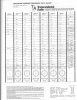
They were nothing like the original Dalesford 6.5" in my first Fried Model C speaker kit purchased around 80-81 which were not the same as the stock units either. I have two spec sheets for stock versions that do not coincide.

No one in UK has any info about them. The 10' look as if they have the stock 12" motor structure. And the Dalesford Speaker book I have shows even different models.

I posted a sheet showing pictures on another thread I can't use again?
 

Attachments

  • DALESFORD-1.jpg
    DALESFORD-1.jpg
    76 KB · Views: 11
  • Dalesfordspecsheet.jpg
    Dalesfordspecsheet.jpg
    120.2 KB · Views: 12
Perhaps an easily pleased genius?

I try never to be condescending, but I know that I don't always communicate well when I am enthusiastic or certain.

-k


Ken do you think I am an easily pleased listener or a genius, ha ha.

Yes it does make sense. One reason why I prefer t-lines and large bandwith drivers in the critical midrange.

The Scan Speak 5" split cone in the Totem Hawk are very musical.
I wish they were not so expensive but you have to earn a living.

I really appreciate the forum users who are true gentleman like Ken. The ones who are not have issues I expect in every day life. Many people asking advice that are new to this hobby deserve to be treated respectfully.

No more then I wouldn't expect a mechanic to make fun of a customer that doesn't understand why their vehicle broke down.

For some reason I have yet to master the quote function.
 
Man, Ken, you're making me all nostalgic and stuff. About half those pictures could be swapped as-is for pics of the Eminence facility. Pardon me while I go have a flashback...


Welcome back from your flashback. (Assuming you survived, and didn't throw yourself into a beater....)


Several of the workstations and all of the materials movement at V/SS is manual. My memory of the Eminence factory is that it was somewhat more automated than the Vifa/SS lines. More like the old Peerless facility. Does this ring true? I have so many hundreds of pictures on random drives. Maybe next I'll post some of Chinese lines, from push to fully automated.

-k
 
Does Ken like underhung voice coils compared to overhung?

Do any of the Scan Speak drivers use underhung voice coils.
.
The area where you were born has become over run with deer I am serious.

You wouldn't believe it

I am iin litigation over my FARMING wildlife management practices for using high frequency noise under the approval of the PA Game Commission.

If you still lived in this area you would be lucky not to have a deer hit your vehicle or contract LYMES disease.

I lost my hearing in one ear and made a full recovery thanks to my wife..
 
Pete B, thanks for the input, especially re the voice coil spec. I
amaze myself with how long I've played with audio to still be a major noob
to T&S theory.
____________________________________________________________
"I would try to find out how and what they were stuffed with originally."
:smoke:
Funny you should say that. That's exactly what I was trying to nail down when
I stumbled into all this TL stuff. I did bump into a guy over @ DIYA
who worked at ESS for a while. He had a couple observations to
contribute, but he worked more on AMT 1's - the 3's and 6's were mostly
before his time.

I especially want to know just how the mid-bass driver
sub-enclosure tube was damped. I would guess foam liner and a full stuff, starting out
light and getting denser toward the back of the tube, as ESS litereature described the
tube as a "transmission line". By which I infer that their
design goal there was to kill off the back wave as much as possible.
_________________________________________________________________
"If the PE numbers are correct, the original woofers had slightly high Qts and extra stuffing directly behind the driver helps to lower the effective Qts. The Eminence replacement doesn't require the extra damping. "
:smoke:
Thanks again. Very good to know.
 
Hannibal the line has to allow a free flow of air.

Area behind driver more heavily stuffed about 50-60% reducing to about 15-20% to line terminus.
 
Most Amt3 transition tubes were 14 1/4" long x 5 7/8" wide. They did use a smaller tube as well, 5 3/4, or 5 1/2, cant recall-but will check.
One pair of mine came with the Peerless rubber surround drivers, and the other a CTS foam surround unit, and both sets of speakers have identical tubes. Basically a thick mailing tubes-like Speaker Lab, and a few others used at the time.
The tubes were sealed and fully stuffed-to the point where there was need to push the driver a bit to affix it to the baffle.
It's not a transmission line-merly a sealed enclosure. The draw back of having a internal box, or square enclosure are that it poses a potential reflection source. The tube is also less expensive, and easier to deal with in production.
The Emminece Alpha 6A is probably the closest modern driver to the ESS O.E driver. Fairly smooth response. It does have a slightly rising output on the high end, but falls off around 5k, which it appears the stock drivers do as well. It also has a 1.5" voice coil like the stock CTS (Peerless was 1"), and a paper cone. From my listening, the rising output seems not to be a problem with the Heil. Very large magnet for a driver this size.
Others have had good luck with the Audax HM100CO. It's output is down slightly compared to the Alpha. It want's to go up to 10k before falling off smoothly. The HM130 has a higher and more even output in the intended range, but again wants to go up to 10K-this unlike the stock drivers again.
I tried a HM130 breifly, it probaly needed to break in more- but it seemed too bright, and perhaps this was in part due to it's extended response-must your result may vary, and worth a try.
The Eminece Alpha 6A is probably your best bet IMHO, unless you cusomize a crossover for the other units, and is a bargin at around $40ea.
It really is a very clear and detailed driver, that's very smooth, despite it's humble apperance. It lets the Heil do it's job-with out calling attention to it's self-like the stock driver.
Beware-you want to use a midwoofer-not a midrange if using the AMT3 design.
The PS1220 had a more dedicated midrange then the AMT3, but it still, as I recall had some audible output in the 100hz range.
All the stock AMT3 drivers had generious overlaps, and 12db crossovers.
If mimicking the AMT3 3 coil crossover, I would also use low ESR 14 ga inductors as well as capacitiors, and 14 gauge internal wiring if you can get away with it to increase your overall efficiency.
The stock AMT is fairly efficient, but it can take some power to play super loud, and a 1-2 db increase is liking getting a new, more powerful amp with a fairly small investment.
This goes for all speakers IMHO-if you can spend a few extra bucks during a crossover overhaul, contemplate making your crossover more efficient with low ESR large gauge inductors and capacitors, and 14 gauge wiring. It really does make a audible difference.
If your going the customize route, I don't think I would worry about stuffing the box so full like ESS did. THE 1040SF ideally should have 2x 3 inch ports to breath properly. I would line the box with egg crate foam. Aurlex foam on the back (or use Sonic Barrier to line the walls)-your just looking at taming the higher frequencie reflection, not absorbing any bass frequencies. I suggested the Aurlex on the rear because this tackles the main direct reflection, the others are easily dealt with 1 1/2 egg crate foam.
A lose filling of Acoustistuff can also help as well to smooth out any impedence/peaks etc. I know it goes against the common thinking, but many are finding combining lining with foam + stuffing on vented speakers can be beneficial. even with larger enclosures, and IMHO is a worth while experiment. You don't want to over damp, or absorb lot's of bass frequencies and squeeze the life out of your speakers. Cleaning up the midbass response and removing any 'boominess" or boxiness is your main objective.
But it all requires experimentation, and fine tuning to your taste-part of the fun!!
http://sound.westhost.com/articles/boxstuff.htm
 
Last edited:
:yes:Good link Automojo. He has a good paper on crossovers also. I like the flat foam better then egg carton for damping the lines. It's easier to calculate foam densities relative to line volume.

Is your avatar a pet? Where I live there are many red tailed hawks, golden and bald eagles.
 
:yes:Good link Automojo. He has a good paper on crossovers also. I like the flat foam better then egg carton for damping the lines. It's easier to calculate foam densities relative to line volume.

Is your avatar a pet? Where I live there are many red tailed hawks, golden and bald eagles.

It's a Jenday Conure. It's my wifes pet- she had him when me met. They really don't talk-but he sure can screech. He has a little parakeet to keep company with- as most birds are highly social.
I think he is around 18-19 years old.
I agree with the flat foam with TL.s in a vented enclosure the wall lining isn't so crtitical, and really more of a experimentation-as with the fill. as each driver type will react a bit different.
I don't really think there is any right or wrong here. You could do measurments, but your ear is probably the best judge-play with each combination for a day or two.
 
Last edited:
Several of the workstations and all of the materials movement at V/SS is manual. My memory of the Eminence factory is that it was somewhat more automated than the Vifa/SS lines. More like the old Peerless facility. Does this ring true? I have so many hundreds of pictures on random drives. Maybe next I'll post some of Chinese lines, from push to fully automated.

-k

Threadjacking here....

I haven't worked at Eminence since the late 90's and haven't been back for a visit/tour in about 3 years. When I worked there it was mostly hands-on work along several production lines. Plenty of things were automated but most of the final assembly (setting coils, spiders, cones, gaskets, etc) was done by hand. The tool room guys were very good and built equipment in-house for running glue beads for cones, dustcaps, etc.

On my last visit things had been updated so that many more tasks were automated but it seemed to be done in a way that didn't eliminate human jobs. As a company, they really care about the employees.

/threadjack


Now back to TLs...The last one that I built was a MLTL using King's sheets (a very old version) for a Fostex FX120. They turned out great and had a lot more bass than that little 4.5" driver had any right to. As expected, they were pretty big considering they only housed a 4.5" driver.

I did a pair a while ago based on Joe D's Thor kit available at Madisound. What I took from his design was using multiple woofers (MTM) spaced along the line to minimize midband ripple. They got some good comments when they got some play time in Newman/Squidward's room at the 08 AK Fest and are currently anchoring an HT system at church for the Kids Zone ministry.
 
The designs that I have stated allow a free flow of air. The walls are never lined. The foam placement is critical . The sound is filterd in stages. All the sound is eventually filtered by the time it reaches line terminus.
 
Last edited:
As far as lining, I was speaking of a ported box, not a TL. Damping is in reality critical with any speaker, but there is some wiggle room for fine tuning, in ported or sealed enclosures. Driver characterisitcs also play a part, some work well for example with a foam piece in back of the woofers-other not so much, as it diminishes useful output, etc.
The fine tuing being room placement-object next to the speaker etc. Sometimes boominess for expmple can be simply cured by moving a few piece's away from the speaker, or add a sheet of foam between the speaker and the piece of furniture. All of this is driver/crossover and enclosure related, some speakers are more sensitive then others, as well as ears.
 
I know what you meant Automojo. I was just stating it for those who may not understand. Many people only read part of a thread. You are quite knowledgeable.

I have been going back and forth with Sreten on another forum. I think he likes me and just won't admit it.

Some people like boominess. I don't that is why I prefer t-lines.
 
There are good ported designs from Totem. I like their 2 ways the best.
The shape of the enclosures have a lot to do with ported designs sound, besides drivers and crossovers.

Tall enclosures in ported have a line but much shorter then 1/4W t-lines.
I think that is why the tall slim designs sound the best.

Technically some of computer designed t-lines have a port instead of an opening at the end of the line.

So they would fall under the definition of ported even though the design theory is different.

I also like being able to vacuum the end of the t-line. If an insect gets inside a port it would be much harder to remove.

Stink bugs have been a problem They came from China and have spread across the country.

I will never have to purchase speakers since I have learned to build them. So I will stick with t-lines.
 
My belief is that a good designer should always think in terms of what the benefits and limitations of each design alternative is. If I start to prioritize things, evangelize technologies, it implies the existence of an idealized optimum design, which is the farthest thing from what I believe. Every seven year old kid, and I was one, draws pictures of battle cars, with the wings of an F22 and the wheels of a Formula 1 car with a tank turret, a rocket engine and a periscope and machine guns facing all directions, etc. Many audio DIY hobbyists seem a bit stuck in that mode: "The coolest speaker would have a 12" polypaper woofer in a folded horn cab made from constrained layer dampothane and microlattice carbon14 with a ScamSqeak mid plus integral high pressure tube amp servo and an Alchotone tweeter wired with cryogenic, hospital grade liquid sodium..." It's just porn, not a rational way to make a speaker.

Anyway, drivers bore me tonight. They are just parts, like a resistor or capacitor, that have few inherent benefits or characteristics when considered seperate from the system they are used in. Hobbyists just can't accept this. The just have to believe that metal tweeters sound metallic and soft domes sound soft and paper woofers sound paper-y and plastic woofers sound plastic-y...

C'mon! ;-)

OK, that's my last iced coffee for the weekend.

-k


Does Ken like underhung voice coils compared to overhung?

Do any of the Scan Speak drivers use underhung voice coils.
.
The area where you were born has become over run with deer I am serious.

You wouldn't believe it

I am iin litigation over my FARMING wildlife management practices for using high frequency noise under the approval of the PA Game Commission.

If you still lived in this area you would be lucky not to have a deer hit your vehicle or contract LYMES disease.

I lost my hearing in one ear and made a full recovery thanks to my wife..
 
I haven't been at Eminence USA in many years. But, you guys were building far too many to be wheeling them all around on racks! Overhead conveyers when I was there. Nothing like that at SS.

The NHT VT-1 was 2x4.5" in a "TL" type column that terminated in a HH resonator. However, the wave lengths involved in pulling an extra octave of bass out of a 4.5" woofer might not scale down to 30 Hertz.

-k

Threadjacking here....

I haven't worked at Eminence since the late 90's and haven't been back for a visit/tour in about 3 years. When I worked there it was mostly hands-on work along several production lines. Plenty of things were automated but most of the final assembly (setting coils, spiders, cones, gaskets, etc) was done by hand. The tool room guys were very good and built equipment in-house for running glue beads for cones, dustcaps, etc.

On my last visit things had been updated so that many more tasks were automated but it seemed to be done in a way that didn't eliminate human jobs. As a company, they really care about the employees.

/threadjack


Now back to TLs...The last one that I built was a MLTL using King's sheets (a very old version) for a Fostex FX120. They turned out great and had a lot more bass than that little 4.5" driver had any right to. As expected, they were pretty big considering they only housed a 4.5" driver.

I did a pair a while ago based on Joe D's Thor kit available at Madisound. What I took from his design was using multiple woofers (MTM) spaced along the line to minimize midband ripple. They got some good comments when they got some play time in Newman/Squidward's room at the 08 AK Fest and are currently anchoring an HT system at church for the Kids Zone ministry.
 
I haven't been at Eminence USA in many years. But, you guys were building far too many to be wheeling them all around on racks! Overhead conveyers when I was there. Nothing like that at SS.

Yeah, I think it was '96 when we had a celebration because we managed a week where we averaged over 10k per day. The overhead conveyor thingy was transportation from the metal parts assembly to the final line. The metal parts came in big wire cages and were assembled on turntables. Coming off the TT they were hung on the conveyor line where they were offloaded automatically onto an elevator (de-elevator?) that spit them out at the front of the final assembly line.

I didn't grok what you meant by material moving. I can see what you meant now. Moving the metal parts from their assembly to the final line on racks would be a nightmare.

The NHT VT-1 was 2x4.5" in a "TL" type column that terminated in a HH resonator. However, the wave lengths involved in pulling an extra octave of bass out of a 4.5" woofer might not scale down to 30 Hertz.

A "TL" column terminated in a HH resonator sounds a lot like what I call a mass loaded TL, as referenced above. It's a 1/4 wave pipe but instead of an open terminus it has a port. I thought I had a pic of them somewhere but I'm not finding it.

I do have a photo of a pair of TL speaks that were pretty popular at AK Fest '09. They were dubbed the Sewer Lines. :)

attachment.php


Incidentally they are now providing music for the showroom of Buckner Plumbing.
 
Back
Top Bottom