• The move to the new server is done. There are some software and database maintenance updates in process. This has us passing the hat around to help out. We appreciate any donations. Seriously, even a dollar helps. The payment page may be found here - https://www.audiokarma.org/support.html

Top 10 holy grail cassette decks?

So you are saying a 5% increase in the size of the tape and hence a 5% increase in the amount of tape to contain the exact same signal as well as a matching 5% increase in the speed of the tape which also put that much more tape through the machine is going to give all the improvement for the cassette to exceed the capabilities of a rtr running .25-inch tape at 7.5 ips is a possibility? You need to check your math.

First thing, physics deals also with logarithms, specially when it come to decibels, you got it?

Second, it didn't take too much effort to reach 20kHz with the standard number...

Third, although the idea was similar to mine, Sony did it WRONG with the EL-CASSETTE in 1976. Too bulky to stick it in your pocket, you know? It was "very possible" to make another cardridge around/at least 4mm tape wide @ 5cm/s speed and numbers would be better! Also, another design to accommodate better 2, 3 or 4 heads...

And, hey!, they could always to add a pitch control knob! :thmbsp:
 
Last edited:
I am surprised the Kyocera D-801 was not mentioned yet. It might not have been as popular but it was a highly regarded deck when it came out.
 
It would have given an overall lower S/N ratio, and all the machines would have been designed around that standard to take advantage of the extra 5% in every area.

I dont think Karl implied that It would rival reel to reel


nice decks Karl definitely some grail status there.

No, not at all. But we would have had a decent small recording media (already at those years) guarantying the 20-20kHz without asking a lot of money that the R2R cost... :scratch2:

And, as I said, Philips engineers "must" have done that at the begining (1963)...
 
Last edited:
I am surprised the Kyocera D-801 was not mentioned yet. It might not have been as popular but it was a highly regarded deck when it came out.

Page 7 you can find some posts on a Kyocera deck, the D-811

Kyocera600Series-01.jpg
 
I would say that the D-811 is the finest two-head deck ever made. Kyocera put the money where they believed it counted the most, and they decided to put it into calibrations controls, a direct-drive transport an particcularly high-quality electronics rather than adding a third head. They have 3-head Nak-class performance, but they don't suffer from Nakamichi's slightly non-standard equalization.

These are indeed great machines. But the lack of a third-head means that tape calibration is a bit of a PITA on these machines.
Exactly! :thmbsp:
 
The increase in the amount of tape containing the signal should improve things but you wanted 90dB and 20kHz. Well it is know that rtr is better than cassette and let's just look at a good one, the Tandberg 10x, its s/n is about 65 for the quarter track machine at 15 ips. not even close to 90. The frequency response goes to 30k, 26k and 20k DIN or 25k, 22k, and 18k ±3 at 15, 7½ and 3-3/4 ips. So I'm having a hard time getting 20k easily. Sure it will be there but down a bit.

I just don't see 10% more tape in a cassette coming close to the much higher amount of tape (the critical issue when putting signal on tape, that is why 30 ips is the standard for professional machines) that passes through an rtr and the cassette able to exceed the specs of a rtr.
 
Several manufacturers had cassette machines that ran at double speed. BIC, Marantz and the Teac portastudios were examples. Suprisingly they didn't perform much better than the the better normal speed 3 headers.
 
I love tape

But, as much as I wish it wasn't so, my digital 24-bit 96 kHz recordings are more accurate. Never-the-less, I enjoy listening to the tapes more than the digital masters. I find the tapes less fatiguing; I would characterize the sound of an excellent tape as smoother then digital.

To address the issue of noise reduction, if Dolby doesn't sound right the deck is not performing properly. Get it serviced or get a better deck. A properly recorded tape should sound the same no matter what deck it is played on. If it doesn’t and you know for certain that the recording deck has proper azimuth and everything else seems to be in order then I would consider having the deck serviced. I might add that any deck that has seen extensive use with misaligned heads may require head replacement due to uneven head wear, so this is something to keep in mind.

Type-I tape is something I try to avoid. The better quality tapes seem to age much better. Some of my 30+ year old Type-I tapes shed iron oxide, which dirties up everything promoting accelerated wear. I can still use these tapes to create excellent recordings, but at what price, accelerated head wear, I don’t want to go there! Type-II & Type-IV tapes seem to age much better, especially the premium tapes like Maxell, “S,” and TDK, “X,” tapes. It is also easier to make very high quality recordings with for example a TDK SA-X then a TDK SA, even though the decks I record on are calibrated for the SA.
 
The increase in the amount of tape containing the signal should improve things but you wanted 90dB and 20kHz. Well it is know that rtr is better than cassette and let's just look at a good one, the Tandberg 10x, its s/n is about 65 for the quarter track machine at 15 ips. not even close to 90. The frequency response goes to 30k, 26k and 20k DIN or 25k, 22k, and 18k ±3 at 15, 7½ and 3-3/4 ips. So I'm having a hard time getting 20k easily. Sure it will be there but down a bit.

I just don't see 10% more tape in a cassette coming close to the much higher amount of tape (the critical issue when putting signal on tape, that is why 30 ips is the standard for professional machines) that passes through an rtr and the cassette able to exceed the specs of a rtr.
True! But I wonder how the heaven such powerful machine like the Tandberg 10X could/can reach 65dB if, at the same time, a Technics M95 did nearly the same at 1⅞ inch per sec (4.76 cm/s)... :dunno: Not to mention the difference of prices...
There's no comparison against the R2R, but it's exercise of imagination. Engineers always found breakthroughs along the way. Pretty sure they knew at a certain point they were quite limited with the original Philips format...
 
Last edited:
And yet it lasted much more with nearly endless options... and very reliable...

Until the other day it was on production...

122mkiiifront.jpg


Three-Head Mechanism
Cobalt Amorphous Record and Play Heads
Advanced FG Servo Direct Drive Capstan Motor
Gear/Clutch Coupled Input Level Controls
Front Panel Bias Calibration Controls
Built In Tone Oscillators
2 Locate Points and RTZ (Return To Zero) Function
±12% Pitch Control w/ Clear On/Off Switch
Precision VU Meters w/ Peak LEDs
Input Monitor Selector
Unbalanced RCA and Balanced XLR Analog I/O
Repeat Function
Parallel Control Port
Fader Start Function
Optional RC-134 Wired Remote
Switchable MPX Filter
Front Panel Line Inputs
Dolby B and C with HX Pro Headroom Extension
Headphone Output w/ Level Control
Wanna a new strong deck? Forget all the previous pictures and buy this one...
 
Last edited:
It's discontinued. Reason why I know. Needed some new decks for a station still reliant on cassettes. I found some used ones with low hours, and we got those. They are doing fine every day. No complaints, otherwise I would have heard them.
 
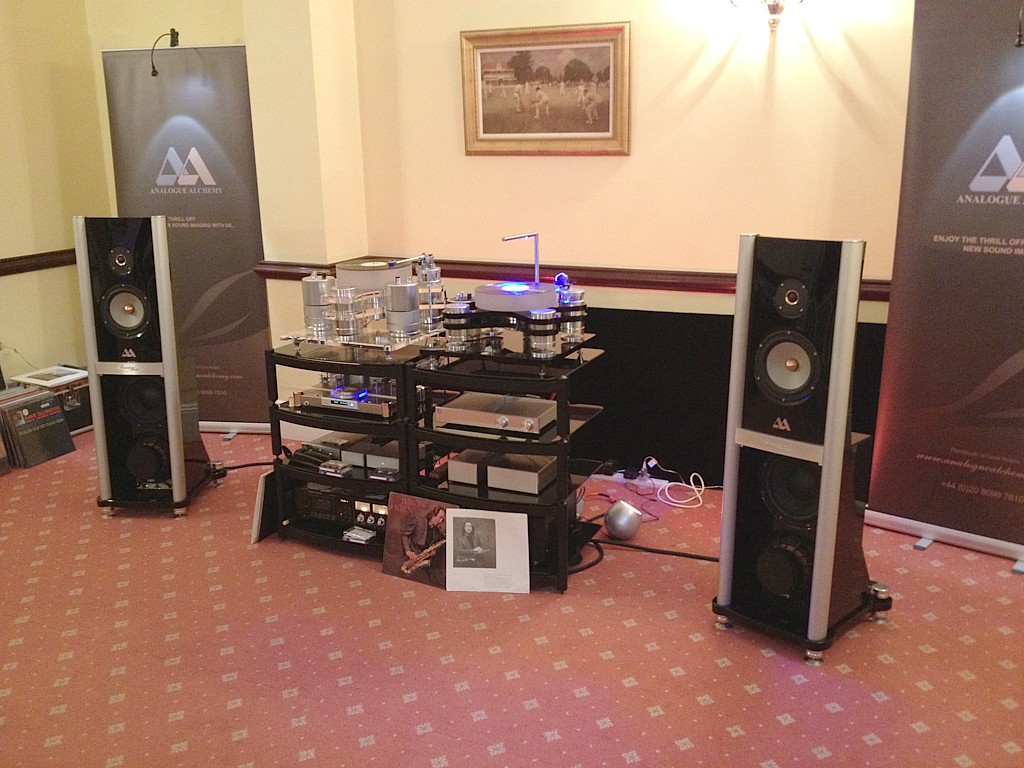
Can you spot something related to this thread on the photo?

It is from the National Audio Show 2012 in the UK. We were using a cassette deck as the second source in that system. No one coming to the room did realise that it was a cassette deck playing when we had it on. No noise reduction, 3.75 ips, about 70dBA dynamic range.

Whittlebury2012_01.jpg


Cheers

Alex
 
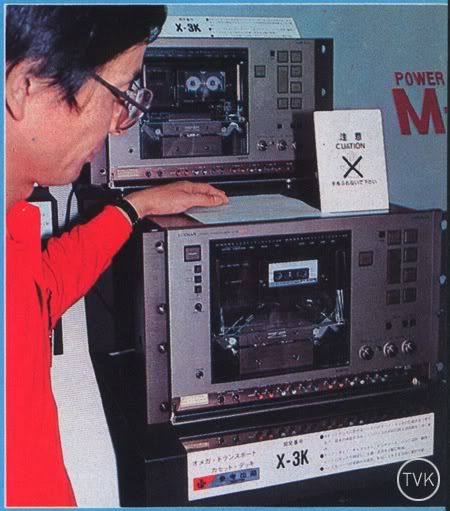
I never understood why Luxman invested that time and money in the X3K right in 1982. But I must say it would be funny seeing Nakamichi trembling from head to toe...
sgrin.gif


luxman-X3K.jpg

That's more than a "rarity"! It's an "impossibility"! It was only ever produced as a prototype. Pure evil. Pure madness. The mechanism that actually "extracted" the tape out of the shell and only then did it go through the tape path!!!

Insane. The Holy Grail, and the Burning Bush all rolled into one! I'd give my left `nad for one!!
 
Last edited:
That's more than a "rarity"! It's an "impossibility"! It was only ever produced as a prototype. Pure evil. Pure madness. The mechanism that actually "extracted" the tape out of the shell and only then did it go through the tape path!!!

Insane. The Holy Grail, and the Burning Bush all rolled into one! I'd give my left `nad for one!!

Well, Luxman still has the papers for that project. You become very rich and famous and ask ($,$$$,$$$) them to assemble another brand new one only for you...
smiley-money-mouth.png


Off thread:
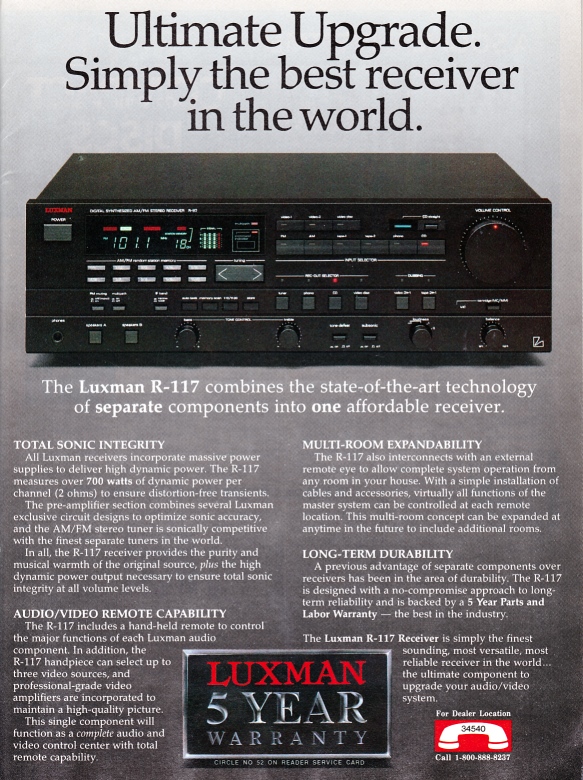
And by-the-way Luxman claims they made the best receiver in the World...

LuxmanR117Ad.jpg
 
Last edited:
I always wonder IF luxmans mechanism actually was able to draw out the tape.

the Luxman X-3K IS the only true HOLY GRAIL status deck that deserves the name.

and if it was made, it would be the absolute best ever made.

its probably locked away in some Raiders Of the Lost Ark style top secret vault warehouse somewhere deep within japan.

"we've got top men working on it"
"who?"

"top...men"
 
What is the advantage of drawing the tape out of the cassette shell? I know that some of my tapes sound much better when put into a decent shell, but that's about it. Any information appreciated. :smoke:
 
Back
Top Bottom