• The move to the new server is done. There are some software and database maintenance updates in process. This has us passing the hat around to help out. We appreciate any donations. Seriously, even a dollar helps. The payment page may be found here - https://www.audiokarma.org/support.html

Top 10 holy grail cassette decks?

that Kyocera IMHO actually does qualify as holy grail status, wether its top 10 or not im not sure, but definitely rare and desireable
Sources tell that Kyocera was behind the scenes in producing late 80s for a bunch of Japanese companies such as Nakamichi, Denon, Teac and even Yamaha very high rigid bases of CD transports costing around $1,000 each piece...

So, no surprises that they had acess to top technology from those companies and could make very reliable machines...
 
Last edited:
Nak1000ZXLnet.jpg


At 48lbs it seems to be able to take on most rivals...:smoke:
 
d811.jpg


The Kyocera D-811 is regarded by many as one of the finest decks ever made. Essential features, extremely reliable...
I would say that the D-811 is the finest two-head deck ever made. Kyocera put the money where they believed it counted the most, and they decided to put it into calibrations controls, a direct-drive transport an particcularly high-quality electronics rather than adding a third head. They have 3-head Nak-class performance, but they don't suffer from Nakamichi's slightly non-standard equalization.

These are indeed great machines. But the lack of a third-head means that tape calibration is a bit of a PITA on these machines.
 
Last edited:
Well, we have two models right now:

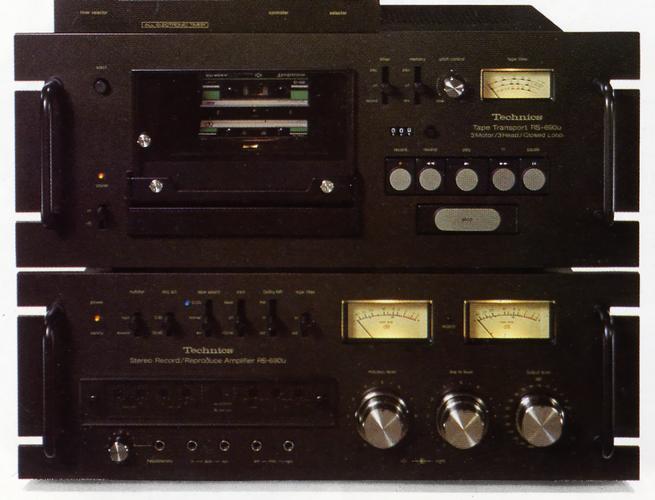
The super-ugly Technics RS-690U
rs-690u.JPG


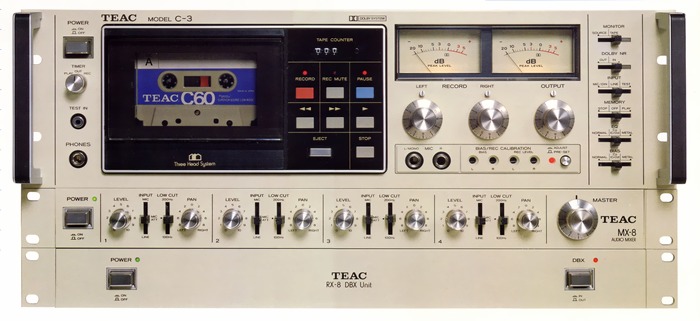
and the ugliest ever Teac Z-7000
4552-teac_Z-7000.jpg


Beasts that can take on various Naks... Specially the Teac...
 
Last edited:
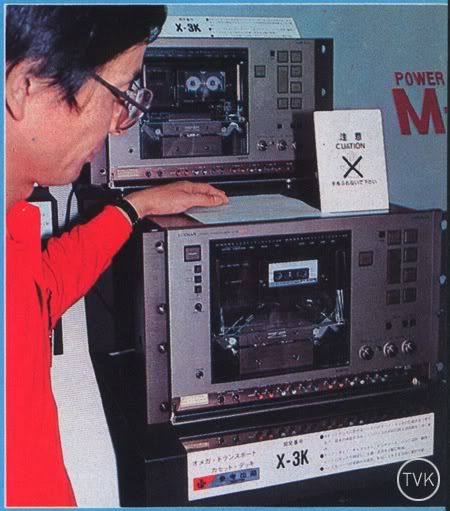
I never understood why Luxman invested that time and money in the X3K right in 1982. But I must say it would be funny seeing Nakamichi trembling from head to toe...
sgrin.gif


luxman-X3K.jpg
 
One thing I want to ask/share with you folks about all these super decks.

If (yes, "IF") Philips, instead of engineering the compact cassette at a 1⅞ inch per sec (4.76 cm/s) speed with 0.150 inch (3.81mm) wide tape, had developed something just like 5 cm/s tape speed in a 4mm wide tape, inside a still compact cassette cartrigde size surely we would have recording machines that could sky-rocket easily the frequency response beyond the 20kHz and a S/N ratio close to 90 dB with type I (normal) cassettes without the need of any bloody Dolby NR...
 
So you are saying a 5% increase in the size of the tape and hence a 5% increase in the amount of tape to contain the exact same signal as well as a matching 5% increase in the speed of the tape which also put that much more tape through the machine is going to give all the improvement for the cassette to exceed the capabilities of a rtr running .25-inch tape at 7.5 ips is a possibility? You need to check your math.
 
It would have given an overall lower S/N ratio, and all the machines would have been designed around that standard to take advantage of the extra 5% in every area.

I dont think Karl implied that It would rival reel to reel


nice decks Karl definitely some grail status there.
 
One thing I want to ask/share with you folks about all these super decks.

If (yes, "IF") Philips, instead of engineering the compact cassette at a 1⅞ inch per sec (4.76 cm/s) speed with 0.150 inch (3.81mm) wide tape, had developed something just like 5 cm/s tape speed in a 4mm wide tape, inside a still compact cassette cartrigde size surely we would have recording machines that could sky-rocket easily the frequency response beyond the 20kHz and a S/N ratio close to 90 dB with type I (normal) cassettes without the need of any bloody Dolby NR...

I've asked this so many times, just the same question. I've even decided that If I had the time machine, I would go back in time to have a talk with philips engineers.
 
Back
Top Bottom