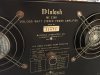
Amps with low damping factor sound totally different than amps with high damping factor depending on the type of speaker you have. If the speaker system has a high q in the bass then the woofer cone is being controlled by the suspension and the loading of the box. There fore the bass from a 2301 with a low damping factor will not sound that much different than the bass from a 7200 with a moderately high damping factor. If your speaker has low Q where the suspension of the woofer is controlled more by the amp then the difference in sound can be quite real. An amp with a damping factor of 12 may have a response of +/- 2.5db due to the reactance of the load, speaker, the amp is driving. An amp with a damping factor of over 200 the response variation could be less than 1/2 db. That's just frequency response. We are not talking about transient response on how fast a cone starts or stops. The higher the damping factor the better the stop and start. There is one issue we haven't covered. Thats the crossover. It can easily influence the sound production of the drivers that are not controlled by the suspension and box. They become sloppy. Take the crossover with all the coils, series resistance and shorten the speaker cables and an amp with a moderate damping factor has a chance to control the woofer. That's why bi-amping horn loaded speakers, Klipsch, Altec, JBL, EV, Tannoy etc etc really improve by taking a way the passive crossovers and using electronic crossovers. Mac speakers where the crossover stays in the circuit improve very little by bi or tri wiring. That is unless the different amps have their own built in different sound, such as tube versus SS or 1st generation SS versus the later balanced and Quad balanced amps. Amps such as Krell and Ayre, sound different because of the different applied theory of operation. Which amp sounds best with a given speaker is the choice of the new owner. For me its SS MC-207's without autoformers and high damping factor, with big wire, bi-amped and tri-amped. If I owned XR290's, I'd have 501's or ,if blessed, 1.2K's. With the runs as short as possible and bigger wire.
Now because the 2300, 2500, and 2600 have low to moderate damping factor all things be equal the 2600 should have the best control of the woofers. With later topology and devices the 2600 is quieter, has a magnitude less distortion and is more speaker friendly with power guard. The highs are so much better unless you start modulating the mids and highs by over driving the amp into pumping with percussive bass which screws up dynamics, imaging, etc etc. In a perfect world are speakers would be full range, handle limitless power, have no distortion, and be very very efficient. We would not need big amps. But as most speaker designers have taken the easy way out to get lower distortion and better bandwidth by using low efficiency speakers we are stuck with big amps. Where are the new reincarnated James Lansing Rudy Bozak, & Frank Mcintosh,to return some sanity in the reproduction of life like sound in the home with out the big $$$$$$$$$$$$$$$$$$$$$.



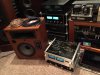
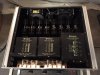
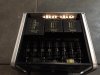
 Just moved it to the audio room, updates tomorrow.