• The move to the new server is done. There are some software and database maintenance updates in process. This has us passing the hat around to help out. We appreciate any donations. Seriously, even a dollar helps. The payment page may be found here - https://www.audiokarma.org/support.html

Using Latex Cement for KLH Cloth Surround Doping

Yes that’s the spider. I’d use Aileen’s Tacky glue if you see any areas that have separated from the basket.
Ok on that adhesive. I see it's a craft adhesive might find it locally. This speaker repair is all new to me.
 
The short answer is "sometimes".
Check carefully around the base of the cone where it intersects with the spider. Sometimes the old adhesive has degraded at this juncture causing uncontrolled cone movement. The other possibility is separation of the voice coil from the voice coil former. The first issue is often repairable, but the second is not.

The 4x used a number of different woofers during its run of around 400,000, so it is not unusual to find different versions.
Roy you were dead on with this. #1 has that exact defect, failed adhesive cone to spider, see photo. I have some of that tacky adhesive coming, suggested by GD70. Should be here tomorrow. You guys are a great resource of information, I owe you a beer... :))
 

Attachments

  • P1010413.jpg
    P1010413.jpg
    70.6 KB · Views: 33
Yes that’s the spider. I’d use Aileen’s Tacky glue if you see any areas that have separated from the basket.
I got the tacky adhesive yesterday and today I am going to try to repair the tear almost all the way around the cone to spider. Any tips doing that? I assume to make sure the cone is in a relaxed state and just apply the tacky to where the old adhesive is and cover as much as possible. This tacky adhesive is really good, I tested it on some paper last night. I wonder if it might be good for installing new surrounds on the other set of speakers I have.
 
I got the tacky adhesive yesterday and today I am going to try to repair the tear almost all the way around the cone to spider. Any tips doing that? I assume to make sure the cone is in a relaxed state and just apply the tacky to where the old adhesive is and cover as much as possible. This tacky adhesive is really good, I tested it on some paper last night. I wonder if it might be good for installing new surrounds on the other set of speakers I have.
It’s the only glue I use for surrounds. Being water soluable, if you end up having VC rub after the glue dries, you can wet it with qtips to soften the glue on the basket, lift the surround lip and reglue once satisfied the VC rub is gone.

For your repair, I’d use qtips to apply and carefully spread the glue.
 
Last edited:
It’s the only glue I use for surrounds. Being water solvable, if you end up having VC rub after the glue dries, you can wet it with qtips to soften the glue on the basket, lift the surround lip and reglue once satisfied the VC rub is gone.

For your repair, I’d use qtips to apply and carefully spread the glue.
Thanks. I just fixed a different speaker which had blown surrounds, I used the other stuff from simply speakers to glue the surround to the frame. It's not very forgiving and tacks up quickly. So I used the tacky for the surround to cone and it went much better. Yes I'll use the tacky for the repair to the AR4x. Thanks so much for the tip about Aleenes Tacky Glue. It's a winner here. I'll use the qtips too... :)
 
I plan to re-dope my KLH woofers with rubber cement. I remember reading about what to use to thin Rubber Cement with, but I cannot find the reference. Does anyone remember or know what solvent to use to thin rubber cement?

Any voiced opinions would be welcomed, but I can say that, due to research done on AK, Aleene's is out as a choice.


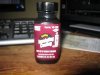
Hey, KingBubba, I was rewinding some AR voice coils recently and wrote it up a little on another post here, and found ANTIQUE ELECTRONICS SUPPLY has the GC TV and Radio cement i needed to make the windings with, and at the same time, also ordered some GC Insulting Coating. It is a syrup consistency sealer with an applicator and all butyl and carbon black, plus lots of non-repeatable bad stuff chemistry, but would work as a substitute for the AR sealer if it were necessary. Wear gloves and have windows open!..... GC pt. no. 10-1762 for 2 oz. size, it's $11.00.
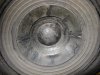
I used it on the AR3's woofer cone diffusors to fill the cracks in them that are getting bigger every year. It blends right in and is barely visible when dry.
 

Attachments

  • IMG_1201.JPG
    IMG_1201.JPG
    59.2 KB · Views: 29
  • IMG_1202.JPG
    IMG_1202.JPG
    151.2 KB · Views: 31
I wondered about that also as I have ADC 303ax w/ cloth doped surrounds.I have no problem w/ them and are still plyable but wondered if old school modeling dope would also work. When I was a kid and built balsa wood bi-planes w/ tissue paper covered wings and fuselage they used clear dope as the sealant. I haven't been to a hobby store in 45 years so I don't know if they still make the stuff. I guess they still do.

http://www.oakridgehobbies.com/guil...ope-3-5-oz-balsa-wood-airplane-model-kit.html
Clear dope for modelling is a lacquer, it will harden, NOT pliable, if that's any help.
 
I find this thread somewhat disturbing! Suddenly some people want to make their own sealant, and share with others versus buying a small jar for $15, shipped no less, coating your woofs, and moving on. The product simply does what it needs to do, albeit in a small purchased amount. Two weeks ago I got my second bottle to redo some 6s, and still have enough between the two bottle I believe to do another pair of 4Xs.

However, the tone of this thread is tacky! :) My 2 cents!
Tacky is dust magnet...:beerchug:.
 
Hey, KingBubba, I was rewinding some AR voice coils recently and wrote it up a little on another post here, and found ANTIQUE ELECTRONICS SUPPLY has the GC TV and Radio cement i needed to make the windings with, and at the same time, also ordered some GC Insulting Coating. It is a syrup consistency sealer with an applicator and all butyl and carbon black, plus lots of non-repeatable bad stuff chemistry, but would work as a substitute for the AR sealer if it were necessary. Wear gloves and have windows open!..... GC pt. no. 10-1762 for 2 oz. size, it's $11.00. I used it on the AR3's woofer cone diffusors to fill the cracks in them that are getting bigger every year. It blends right in and is barely visible when dry.

Uh, no. Hell no. Run away with hands in the air screaming NO NO NO NO NO, a thousand times NO.

I again waste time debunking nonsense which will destroy speakers to protect the unwary.

That product will destroy the drivers by stiffening and hardening the surround, raising Fs, ruining the frequency response. It is NOT butylene rubber!

The Debunking

Unsuitable products are continually resurrected. I don't know why the thread is not read prior to posting nonsense to see if the "substitute" was already addressed and debunked.

The description suggests a viscous synthetic rubber product dissolved in solvent, which dries or cures to a firm consistency, and used to replace electrical tape or vinyl jackets (emphasis added):
https://www.alliedelec.com/m/d/6b7ffb0ebba29cd8eb338c4bb58e1bbb.pdf

Heavy-bodied, black insulating coating which replaces insulating tape in applications where wrap-around tape could not readily be applied. This compound dries quickly to a strong pliable finish that will not crack, peel or chip. It is water and oil proof and may be used outdoors to insulate any electrical terminal,connection or wire splice. Excellent for providing insulation on handles, etc. Voltage rating 1400 v/mil (min.)

I verified the ingredients via the MSDS. The product itself is ≈25% "resins" (likely vinyl resins) dissolved in ≈75% solvents (naphtha, hexane, toluene, methyl ethyl ketone):

This product hardens and will stiffen the surround, raising Fs.

EIGHT YEARS AGO I began addressing this very problem with citations from RoyC's work and Classic Speaker Pages.

See, for example, in this very thread #51 #67, and #120:

How many times is debunking required? How much is enough?

Hardening surrounds ruins the driver's frequency response. This is fact. It is not disputable, arguable, or debatable.

NEVER USE VARNISH, GLUE, CAULK, VINYL, INSULATION, TAPE SUBSTITUTES, ETC. ON A VINTAGE SPEAKER SURROUND. IT WILL DESTROY THE SPEAKER.

RoyC has well documented at Classic Speaker Pages that hardening the surround of a driver raises Fs. This is widely known, not disputed, and ABSOLUTELY TRUE, unlike nearly the entirety of what one reads about surround coatings on the interwebs of a thousand lies. The entirety of the issues were meticulously explained there, earlier in this thread, and in other detailed threads on AK.

These threads tend to run in circles, as earlier debunked material is endlessly recirculated because "helpful" late-comers to the party don't read the earlier postings and instead set forth internet dogma as if it were true.

A simple search with Google can verify all of that information as 100% true and accurate.

I again refer everyone to the "Restoring the AR-3a" document over at Classic Speaker Pages for plenty of information on sealants which is not based in mindless regurgitation of incorrect dogma. RoyC did all the heavy lifting on this, and deserves all the credit. He did the testing of various cements and caulks, proved that Fs was raised with any dopant other than butylene rubber, and that the original dopant is the one to use.

When Roy writes about speaker sealants it is an excellent idea to follow his advice and heed his cautions. To do otherwise will damage your speakers, likely irreparably so.

 
Page 3 of a thread from two years ago describes having to remove cured butylene caulking, which was applied under the misunderstanding it was the same as non-curing butylene rubber:

Kids, stay in school, don't too-loudly play your earbuds, and if anyone offers you some non butylene-rubber dopant for your speaker surrounds, JUST SAY NO!

Yep, you did check the MSDS, as I just did. You are to be commended o' protector of AR cloth surrounds. I get it. I was making a dangerous leap by assuming butyl content. But.. !!.. What makes the cloth surrounds need doping anyway? Doping is reserved for the cones I've always thought. Makes them stiffer. Unless damaged by something, the cloth is the reason they have lasted so long in the first place, assuming all these early AR's are all cloth surrounds, not foam...nearly 70 years! Just brush the dust off of them. Thank you for being on your, ever so nimble, surround saving toes.:thumbsup:
I did use it on the cracking and splitting paper diffusors/dampeners though (on the woofer centers), and it's like nothing's left but a stain, just filled the split's or cracks in a little and not much mass, trying to keep the bits from flaking further. I should have weighed the speakers before and after applying to be sure! :bs:s:bowdown:rry AKer's
 
Doping is required for a few reasons (off the cuff):
(1) Cloth surrounds are porous, so air passes through, which disrupts acoustic suspension. The cabinet must be nearly perfectly sealed -- I have elsewhere explained why a perfectly sealed cabinet causes the cone to act as a barometer -- so the backwave may serve as a restoring force.

(2) The surround damps cone ringing, which pure fabric alone cannot as readily accomplish.

(3) The surround supports the cone and must be readonably uniform in support.​

Cones should not have additional mass added -- yes, certain subwoofer or passive-radiator cones are designed for after-market loading -- because it reduces the ability of the linear motor (voice coil and magnet) to move the cone.

F = m × A, so if mass (m) increases while F (force) of the motor is constant, then A (acceleration) must correspondingly decrease.

The amount of additional mass from a minor repair generally is negligible compared to the existing cone mass, so don't sweat it.
 
You can't get anything from Vintage AR anymore, so you're SOL wherever in the world you may be!
RoyC, a member here and at The Classic Speaker Pages makes the butyl compound that vintage ar used to sell. I suggest sending RoyC a message, but I don't know about shipping outside the US.

I recall reading a post here about a member making his own butyl compound from a butyl sheet and solvent. I believe the key is to use pure butyl, not a butyl containing product.
 
I have now tried Aquaplas with toluene at several different dilutions, it unfortunately dries out and noticeably affects the resonant frequency of the speakers within a week’s time. I reached out to Roy about this and he no longer endorses it based on my experience. I’m not sure what is in the Aquaplas exactly, but it does NOT possess the vital “never drying” capability of Roy’s compound. A warning to anyone who is considering this as an alternative.
 
Thanks for the update, Robbie. I had suggested trying a weak dilution of it, but apparently it too cannot be shipped internationally.

Anyway, I suspect it is better suited for PA type woofers with accordion surrounds, and probably more like other membrane-forming compounds.

Roy
 
Last edited:
Thanks for the update, Robbie. I had suggested trying a weak dilution of it, but apparently it too cannot be shipped internationally.

Anyway, I suspect it is better suited for PA type woofers with accordion surrounds, and probably more like other membrane-forming compounds.

Roy
Oh well, brand new bottle of Aquaplas and Toluene waiting in the basement... but it's now deleterious? Fortunately, not applied yet! I guess that I am better applying nothing on my two sets of KLH's 17?
 
Back
Top Bottom