
• The move to the new server is done. There are some software and database maintenance updates in process. This has us passing the hat around to help out. We appreciate any donations. Seriously, even a dollar helps. The payment page may be found here - https://www.audiokarma.org/support.html

Vacuum record cleaning machine

Question regarding machines that have a vacuum arm over the record: Isn't the platter the record sits on subject to getting contaminated either with dirt from the record (if you are cleaning the record on the machine) or with the cleaning solution (if you cleaned the record in a previous step and then moved it to the vac machine)? It would seem to me that when you clean the first side of a record and then flip it over to clean the second side, you risk transferring dirt from the platter to the clean side. Am I missing something?
No, you're not missing anything. Vacuum cleaners with a full-size platter have this major problem, indeed.
This is why some of them have smaller platters. For instance, the Pro-ject VC-E and VC-S series have a platter the size of the label, precisely for this reason. Nothing touches the recorded surface on either side (well, nothing apart from the felt strip on the vacuum arm, of course).
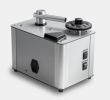
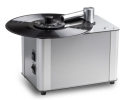
1767607026369.png 1767607160224.png
 
Last edited:
In my experience, vacuuming seemed to do a good job, one would think it was as good a performer.

The reality for me, though, is that often, static buildup was so bad, I had to remove the vacuum entirely.
That's interesting. My experience is limited to a Nitty Gritty model 1.0 with their Pure 2 fluid and, currently, a KAB EV-1 that operates the same way and uses the same Nitty Gritty fluid and brushes, but I've found that the cleaning process removes static rather than creating it. There was a thread a couple years ago in which the OP said he created static with his Record Doctor, but then realized it was only because he was drying the records way too long. Nitty Gritty says three revolutions per side with the vacuum running is enough to dry both the record and the Vac-Sweep fibers. It's been a good cleaner and static remover for me since buying the Nitty Gritty in 2009.
I was enthusiastic about it, until I realized that 30 minutes in my tank with just a tablespoon of jet-dri absolutely removed everything.

I cannot overstate just how good this method works. With that said, you seem happy with your established routine, and I suspect you buy better records than I do.
I don't know about Aerobat, but one reason I bought a Nitty Gritty was because I was bringing home some pretty filthy finds from the bargain bins at used record stores and thrift stores. I didn't care about the dirt as long as there weren't any stylus-destroying gouges in the vinyl. I'm very happy for people who are liking ultrasonic cleaning, but I've been very happy with an rcm. I'm not into making record cleaning a project by cleaning multiple albums at the same time. My stack of new-to-me used records gets whittled down over the course of time by just cleaning and playing one at a time as the mood strikes me. With a Nitty Gritty, it takes just a minute or two to have an album clean, dry, and ready to play, so it barely interferes with a listening session. Each newly cleaned and played record then gets integrated into my collection of previously cleaned albums or, depending on what I hear, possibly thrown away or donated back to a thrift store. This routine works well for me, anyway.
 
That's interesting. My experience is limited to a Nitty Gritty model 1.0 with their Pure 2 fluid and, currently, a KAB EV-1 that operates the same way and uses the same Nitty Gritty fluid and brushes, but I've found that the cleaning process removes static rather than creating it. There was a thread a couple years ago in which the OP said he created static with his Record Doctor, but then realized it was only because he was drying the records way too long. Nitty Gritty says three revolutions per side with the vacuum running is enough to dry both the record and the Vac-Sweep fibers. It's been a good cleaner and static remover for me since buying the Nitty Gritty in 2009.

I don't know about Aerobat, but one reason I bought a Nitty Gritty was because I was bringing home some pretty filthy finds from the bargain bins at used record stores and thrift stores. I didn't care about the dirt as long as there weren't any stylus-destroying gouges in the vinyl. I'm very happy for people who are liking ultrasonic cleaning, but I've been very happy with an rcm. I'm not into making record cleaning a project by cleaning multiple albums at the same time. My stack of new-to-me used records gets whittled down over the course of time by just cleaning and playing one at a time as the mood strikes me. With a Nitty Gritty, it takes just a minute or two to have an album clean, dry, and ready to play, so it barely interferes with a listening session. Each newly cleaned and played record then gets integrated into my collection of previously cleaned albums or, depending on what I hear, possibly thrown away or donated back to a thrift store. This routine works well for me, anyway.
I'm the same way, a record can be filthy and moldy but not damaged, and scrubbing with a good cleaner and a MoFi brush followed by a distilled rinse with a separate brush followed by 3 turns with the vacuum and it's ready to play. I'm not disparaging US cleaning I just find it a hassle.
 
I'm the same way, a record can be filthy and moldy but not damaged, and scrubbing with a good cleaner and a MoFi brush followed by a distilled rinse with a separate brush followed by 3 turns with the vacuum and it's ready to play. I'm not disparaging US cleaning I just find it a hassle.
I'm afraid I don't use any separate brushes and distilled rinses; I just put the filthy record on my EV-1, apply Pure 2 fluid, scrub it a bit, then do three revolutions on each side to dry. Maybe that's wrong, but it's worked fine for me.
 
I'm not disparaging US cleaning I just find it a hassle.
I'd say it's more about the expense than the hassle. A dedicated ultrasonic vinyl cleaning machine is expensive, but it's much less hassle to use than anything else. Place the record on the rollers, push a button, leave the room, then come back in ten minutes to find it perfectly clean and dry, ready to be played or put back in the sleeve. I can hardly imagine anything easier.
I've been using a vacuum cleaning machine (i.e. Pro-Ject VC-E2) for almost a year until I moved on to a HumminGuru. While both are very easy to use, the HumminGuru definitely has the edge. 'Hassle' is the last word that would come to my mind in relation to it. Besides, it's smaller, and thus easier to store when it's not in use.
The trouble is, dedicated ultrasonic vinyl cleaners are expensive. The HumminGuru is not that bad in this respect, but it's still not what you'd call cheap, and it's more the exception than the rule. And if you try to overcome this drawback by making your own US cleaner, MacGyver-style, then it can be a hassle, indeed.
 
Last edited:
I'd say it's more about the expense than the hassle. A dedicated ultrasonic vinyl cleaning machine is expensive, but it's much less hassle to use than anything else. Place the record on the rollers, push a button, leave the room, then come back in ten minutes to find it perfectly clean and dry, ready to be played or put back in the sleeve. I can hardly imagine anything easier.
I've been using a vacuum cleaning machine (i.e. Pro-Ject VC-E2) for almost a year until I moved on to a HumminGuru. While both are very easy to use, the HumminGuru definitely has the edge. 'Hassle' is the last word that would come to my mind in relation to it. Besides, it's smaller, and thus easier to store when it's not in use.
The trouble is, dedicated ultrasonic vinyl cleaners are expensive. The HumminGuru is not that bad in this respect, but it's still not what you'd call cheap, and it's more the exception than the rule. And if you try to overcome this drawback by making your own US cleaner, MacGyver-style, then it can be a hassle, indeed.
I have the Kirmuss and if you follow the instructions it's indeed a hassle.
 
That's interesting. My experience is limited to a Nitty Gritty model 1.0 with their Pure 2 fluid and, currently, a KAB EV-1 that operates the same way and uses the same Nitty Gritty fluid and brushes, but I've found that the cleaning process removes static rather than creating it. There was a thread a couple years ago in which the OP said he created static with his Record Doctor, but then realized it was only because he was drying the records way too long. Nitty Gritty says three revolutions per side with the vacuum running is enough to dry both the record and the Vac-Sweep fibers. It's been a good cleaner and static remover for me since buying the Nitty Gritty in 2009.

I don't know about Aerobat, but one reason I bought a Nitty Gritty was because I was bringing home some pretty filthy finds from the bargain bins at used record stores and thrift stores. I didn't care about the dirt as long as there weren't any stylus-destroying gouges in the vinyl. I'm very happy for people who are liking ultrasonic cleaning, but I've been very happy with an rcm. I'm not into making record cleaning a project by cleaning multiple albums at the same time. My stack of new-to-me used records gets whittled down over the course of time by just cleaning and playing one at a time as the mood strikes me. With a Nitty Gritty, it takes just a minute or two to have an album clean, dry, and ready to play, so it barely interferes with a listening session. Each newly cleaned and played record then gets integrated into my collection of previously cleaned albums or, depending on what I hear, possibly thrown away or donated back to a thrift store. This routine works well for me, anyway.

And this is fantastic! If it works for you, man, have at it. I got a slew of new sleeves (say that 3 times, quickly!) coming in today, and so, yeah, it's a labor of love.
But, and this is the only dog I have in the hunt, ultrasonic is so much better in my personal experience.
Different horses for different courses, and the end result of clean is the goal. ANYTHING is better than one of those carbon brushes, lord how I hate those things. Never do much, in my experience.

I'm the same way, a record can be filthy and moldy but not damaged, and scrubbing with a good cleaner and a MoFi brush followed by a distilled rinse with a separate brush followed by 3 turns with the vacuum and it's ready to play. I'm not disparaging US cleaning I just find it a hassle.

Also, if one is a heavy thrifter (that's me) and you bumble into a honeypot of vinyl that EVERY SINGLE RECORD has the same initials (J.B., whoever you are or were, you had great taste!) written on the cover, and all that is wrong is dishing of the vinyl, you can fix this with the Record Pi. It's a tiny little oven of sorts that fixes mildly warped records.

Little store across the street of my best friend has SO much good stuff, but all of it is filthy, and all records are dished. At .99 cents, I have brought home very good sounding copies of "Street Survivors" by Skynyrd, and recently, a nice cache of Todd Rundgren and Little Feat. After an ultrasonic dunk, and a bake in the Record Pi, these are now quite nice.

I used to do exactly what you're doing. It worked rather well, few complaints.
 
Question regarding machines that have a vacuum arm over the record: Isn't the platter the record sits on subject to getting contaminated either with dirt from the record (if you are cleaning the record on the machine) or with the cleaning solution (if you cleaned the record in a previous step and then moved it to the vac machine)? It would seem to me that when you clean the first side of a record and then flip it over to clean the second side, you risk transferring dirt from the platter to the clean side. Am I missing something?
You're not missing a thing. There's no need for a full size platter with a vacuum RCM. It should have a clamp to protect the label and stabilise the disc during scrubbing, but the platter itself need only be the size of the label.
 
I have the Kirmuss and if you follow the instructions it's indeed a hassle.
Yeah, I looked up the instructions for the Kirmuss, and indeed, it looks like a major pain in the rear to me. I don't think I'd have enough patience to deal with that.
The HumminGuru is just like I said - you place the record, push a button, then ten minutes later you pick up the cleaned and dried record. End of story. So is the Degritter, as I understand. If it weren't like this, then I wouldn't bother with ultrasonics.
 
Why spend money foolishly when simpler devices are available. I found this a decade ago and I still use their early version, still going strong.
One can spend a grand or more but, why? And then what one to three disks only? With the huge number of disks out just begging to be found, I'd be washing vinyl forever

Mine was cheaper ten years ago and it's still going strong. Here; CleanerVinyl - Ultrasonic Vinyl Record Cleaning
Plus, I can do up to ten disks at a time however, I get better results by cleaning 5 to 7 at a time. Those micro-bubbles need room to perform at their best. The actual number of disks depends on their condition but, after much experimentation I prefer to wash as I feel necessary.

Here's another example; Vevor Ultrasonic Vinyl Record Cleaner 6L 40kHz with Mechanical Heater

FM


275
 
Last edited:
Me, I'm old school. I felt that becoming intimate with one record at a time, "me, against you" would be the ultimate expression. With the ultimate end results.

Keep in mind there's folks who own some quite costly RCMs, were they wrong to purchase?

Sure, I'd love me a Clearaudio, Hannl, and along those lines, If money was no object.

One important factor, is how many records do you really need to clean at once?

Cleaning solutions, homemade franken-lab stuff, I'll say the majority aren't worthy to be placed upon a record

Me, and at the end of a cleaning session, I'm happy if I cleaned 4 or 5. And those just cleaned will likely be seeing play time right after. That's the joy I found.

I like doing this. I recall an old Patsy Cline record I found for $3 and gave it the treatment. I was hearing sonics and groove silence with this LP that shamed many of my MOFI-Decca-Columbia-etc Records.
 
I put on a Triumph LP that I bought from the discount bin maybe 10-15 years ago, and it's dead quiet and dynamic. Thin vinyl too. It's always a pleasure. 20260102_183330.jpg
 
Question regarding machines that have a vacuum arm over the record: Isn't the platter the record sits on subject to getting contaminated either with dirt from the record (if you are cleaning the record on the machine) or with the cleaning solution (if you cleaned the record in a previous step and then moved it to the vac machine)? It would seem to me that when you clean the first side of a record and then flip it over to clean the second side, you risk transferring dirt from the platter to the clean side. Am I missing something?
you are correct for roughly 10% which is the surface dirt. The majority of what you are trying to remove is down in the groove. You can do some of it with a VAC machine but really need to move to an US machine to get the majority of it out.
 
you are correct for roughly 10% which is the surface dirt. The majority of what you are trying to remove is down in the groove. You can do some of it with a VAC machine but really need to move to an US machine to get the majority of it out.
I've said this before, so this is me being a "broken record" again.

With either machine type, they're doing maybe 50% of the heavy lifting. The rest relies on the cleaners and their abilities to loosen and lift-detach contaminants from the groove. I'll omit going through lengthy details.
 
The heavy lifting is done through agitation: the vacuum RCM through scrubbing; the hydraulic washer (Gem Dandy) through water pressure; the ultrasonic cleaner through cavitation. Without the agitation, it's just wetting the record.
 
I find that I have less static and cleaner records if I use my US and vacuum dry with a Nitty Gritty. My US is an inexpensive Vevor machine ($145 CDN at Walmart) and I typically do 5 or 6 records at a time. I know, I'm a heretic. It works, the records are clean and have very little static even in the dry winter months.
 
The heavy lifting is done through agitation: the vacuum RCM through scrubbing; the hydraulic washer (Gem Dandy) through water pressure; the ultrasonic cleaner through cavitation. Without the agitation, it's just wetting the record.
I don't feel your statement is accurate-correct. You can scrub the bejesus out of a record all day long, but no brush's bristles get into the groove. Sorry, but that's a fact.

Again, the machine being used is only part of actually getting records "properly" and fully cleaned. The rest is dependent upon the cleaners and rinse waters. And this is where variables step in.
 
You can scrub the bejesus out of a record all day long, but no brush's bristles get into the groove.
While that is indeed true, it's not actually an impediment, because that's not how agitation is supposed to work. The brush is supposed to move the cleaning fluid on the record surface, along the grooves, creating a sort of wave. It's the pressure created by this wave that 'scrubs' the dirt from the bottom of the grooves, even if the bristles aren't physically touching it.
 
Back
Top Bottom