• The move to the new server is done. There are some software and database maintenance updates in process. This has us passing the hat around to help out. We appreciate any donations. Seriously, even a dollar helps. The payment page may be found here - https://www.audiokarma.org/support.html

Vintage Direct Drive turntables 'by reliability'

Zombie thread but for anyone looking in the Kenwood KP-990 would have been the best choice of the options the OP presented, and not by a small margin.

This is what's hiding under the beautiful exterior of the 990
images (10).jpeg

Some like to run them nude and with multiple arms
post-131373-0-70019700-1379498603_thumb.jpg
 
Many direct - drive turntables were reliable . But their current condition strongly depends on the conditions of their storage over the past 30-40 years .
I had several Japanese direct drives ( Sony, Hitachi, Victor, Kenwood , etc . ) . Almost all of them were serviceable , only minor maintenance was required ( lubrication of the motor and microlift , for example ) . It was a simple job .
But some turntables ( Victor QL-7 and Victor QL-Y5) required more thorough repairs due to problems with electronics. This was not a flaw in their design . This is due to the humid Japanese climate and storage conditions in Japan . These are good turntables , but they require more attention . When choosing a turntable , it is necessary to assess the condition of the device .
 
@salamander, never had any issues with my JVC QL-7 series table motor drives. As a matter of fact they have a great reputation for reliability.
Now anything that spent its life in Japan needs to be looked at closely. I have several tonearms purchased from that island, all in great condition but I look at the pictures closely. Any signs of corrosion than I move on.
On edit: Just want to clarify that the TT71 was a popular table drive that was sold here in America. It was used on the QL-A7 model. So purchasing one that spent its life here is much less problematical.

BillWojo
 
In general, the main issues I've seen with Direct Drive turntables from the 70s are, in order of issues I have seen;

1) cueing - The fluid that damps the tonearm drop needs replacing
2) automatic functions need regreasing
3) contacts need cleaning
4) potentiometers for controlling motor speed or tonearm drop need deoxiting
5) replace feet, cracked or scratched dust covers, etc
6) electronics, normally capacitors, but I've seen power switches go as well

Before I buy, I test them out to make sure nothing is off and the motor has plenty of torque. No odors indicating burnt or burning electronics.

Now I live in a fairly temperate area (or used to be) and that is what I see. Your location may indicate more areas to be concerned, for example high salt water content near by and in the air can cause deterioration of various components.

I always have a spare turntable sitting on the shelf in case something does fail.

I second dual direct drives and would add the 621, Sony direct drives are cheap and very good, as are Kenwood, Sansui, Yamaha, Micro Seiki, etc.
 
I've had a few DD QL turntables from Pioneer and Technics. They are generally very reliable and the only problems I've ever had from them were mostly easily remedied. With vintage Technics tables, check the electrolytic capacitors for physical leakage, as they are full of known to leak Matsushita caps. If caught in time, no harm done, but if this condition has been going on for a long time, the corrosive electrolyte creeping down the legs will eventually reach the circuit board and can cause extensive damage to the pads, solder connections and traces, eating them like a cancer.
With the Pioneer tables, deteriorating rubber skin on the suspension feet was one problem with a PL-540 and other models of this vintage, and the previous owner simply removed them and threw them away I guess, as the table had no feet at all when I bought it. I used some economical rubber chair tips to replace them with a not at all bad looking solution. There are threads about that here on this forum. The only technical problems I had with a Pioneer was with a front loading PL-88fs. The first problem was the rubber suspension bushings supporting the platter and drive were sagging and allowing the platter to scrape against the plastic base housing. No replacements are available to my knowledge, so I removed all of them, formed them back into their correct unloaded shapes and spread black RTV adhesive all around them and that worked very well, restoring the correct height. The other problem was that table had a serious W+F problem on 33rpm only, while 45 was perfect. That turned out to be one of the pulse waveform variable resistor settings was wrong. Adjusting it with an oscilloscope according to the service manual's instructions fixed that.
 
Many direct - drive turntables were reliable . But their current condition strongly depends on the conditions of their storage over the past 30-40 years .
I had several Japanese direct drives ( Sony, Hitachi, Victor, Kenwood , etc . ) . Almost all of them were serviceable , only minor maintenance was required ( lubrication of the motor and microlift , for example ) . It was a simple job .
Well said.
Over the years I've owned DD TTs by Yamaha, Mitsubishi, Sony & Denon (still using the wonderful Sony PS-X75 & Denon DP-80).
They have all been quite reliable, though my DP-80 & PS-X75 have both been given the standard clean & lube I would do on any 40yr-old piece of gear (DP-80 also recapped).
The Yamaha linear trackers I've owned were a bit of a maintenance hog (poor belt design on the arm drive IMO), but the Mitsubishi LT-20/22 were all rock solid.
A good cleaning & proper lube and good for many more years in most cases.
 
I would think that the quartz drive ones would be a bit less reliable due to having IC chips. Something like the Technics SL-D2 can run forever.
 
I don't know if this was some kind of survey or what, but I had bought a 1976-1978 vintage Luxman PD-121U about 18 months ago. Yes, it was built by Micro Seiki (to Luxman specs) and it has performed flawlessly under nearly daily use since I got it.
 

Attachments

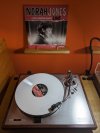
  • NoraJones_LiveAtAllaireStudios.jpg
    NoraJones_LiveAtAllaireStudios.jpg
    78.3 KB · Views: 23
My Sanyo 825d is the most reliable DD turntable I've had, it's built like a tank and weighs like one too. Almost unkillable. Sounds wonderful.
 
The only direct drive turntables that I avoid are the units that rely on less and sensors for the automatic function. The Yamaha p-850 Sansui FRQ-35 are nice units that are more trouble than they are worth.

I have yet to encounter a Technics DD that could not be made to work flawlessly with little to modest effort.
 
Personally, I think a move into the early 80's, like 1981 would be a best bet for you.


Why you want to go the manual...I'll never know. Future probs with more parts to go wrong...I suppose to an extent. But it's tiresome in the long run to dropping the phono arm by hand.

But, if you want the "workhorse" auto, I'd go with the SONY PS-X600. Got one, and only had it service for a lube-job after 40 years. Like last month

Easy to set up. Build like an army-truck. Does the job well, and y'all can look back on the past reviews to check this input out.

Price range is in the $400-$500. New one outta the box just went for $600!


In the end, you'll wish for an auto after a while. The "manual-crowd" may disagree, but I think it's a better option for the records and your patience..

Just my personal take on things; TT.


Choose well! Techs are pricey in today's world.


Q
 
Last edited:
Personally, I think a move into the early 80's, like 1981 would be a best bet for you.


Why you want to go the manual...I'll never know. Future probs with more parts to go wrong...I suppose to an extent. But it's tiresome in the long run to dropping the phono arm by hand.

But, if you want the "workhorse" auto, I'd go with the SONY PS-X600. Got one, and only had it service for a lube-job after 40 years. Like last month

Easy to set up. Build like an army-truck. Does the job well, and y'all can look back on the past reviews to check this input out.

Price range is in the $400-$500. New one outta the box just went for $600!


In the end, you'll wish for an auto after a while. The "manual-crowd" may disagree, but I think it's a better option for the records and your patience..

Just my personal take on things; TT.


Chose well! Techs are pricey in today's world.


Q
The only benefit from a manual TT is exercise.
 
The only benefit from a manual TT is exercise.
Many benefits to manual TTs. The major one is the ability to change tonearms. The simplicity of the tonearm & turntable, as well. However, I will admit that I have one of each and I listen most often to the automatic TT/TA.
 
How would I know anything about reliability on Direct Drives...I have only owned my Micro Seiki DQX500 for 40 years :-D
As have I since 1981, or was it 80?(great piece of machinery with great WAF).
All the vintage DD I have picked up in the last two years have worked flawlessly after some restoration, as listed by BilboBaggins. But so do all the belt drives ;)
My recently aquired ITT HiFi 8015 (quartz lock) needed new belts for the automatic functions, and was of course lubricated, and will get new RIFA capacitors, but runs perfectly. That and the ITT HiFi 8012 and 8013 (quarts lock) are all solidly built turntables. The automatic functions must be serviced with new grease after 40+ years, but any turntable that age will need some attention. If they don't I'm not interested :banana:
 
Last edited:
No issues ever with my 48 year old Technics SL-1100A. All original.
I'm the 2nd owner since the late 90s.
I oil the spindle once a year with the proper Technics mineral oil.

It was $50. bucks when I bought it back then from a guy moving out of state and dumping all his records.
He threw in a Denon DL 160, new in the box.

A few years ago, I was moving some stuff and ran across that NOS cartridge. I set it up and couldn't believe how much better it sounded compared to the Shure V15 Type III that was on the 1100A when I bought it. Sold the Shure...
 
Last edited:
I noticed the 701, 704, 721 aren't QL. Any QL Duals worth considering in this price range? thanks

Ahh, sorry. Missed out on that you´re looking for QL decks. Not sure if and which DD Vintage Duals has that feature. Maybe other AK:ers kan chip in on that one.

Models ending in a Q.

I know this is an old thread but since it resurfaced recently I thought it might be a good idea to dispel a potential misconception. A "Q" in the name of turntable, especially a Dual as mentioned, doesn't necessarily mean Quartz Lock. With Dual it stands for Quadraphonic, as in the low capacitance tonearm wiring was better able to resolve the CD-4 signal plus enhanced anti-skate properties.

Of course in some brands Q or QL did stand for Quartz!
 
Victor or as most folks know the company JVC coined the QL designation.
Victor engineers developed the quartz locked technology that was quickly adopted by everybody.

BillWojo
 
Back
Top Bottom