That's according to Teres.
Not a completely unbiased source then.


That's according to Teres.

Lower mass (I'd not call the platter on my SP-15 exactly "low" compared to some belt drives I've known) and high torque make sense in the fast start/stop, broadcast/DJ environment many of DD tables were meant to work in. Coming from a strictly audiophile standpoint it makes more sense to keep the motor smaller and presumably quieter and increase the mass. I presume those virtually instant starts will be lost, but in the context it is not important.
Don't shoot the messenger. Take it up with the source of the opinion.

No shots fired. Just clarifying. I don't doubt it works well. I just take it with a grain of salt, because I don't know of many manufacturers who will say their newest product is inferior to their previous ones.

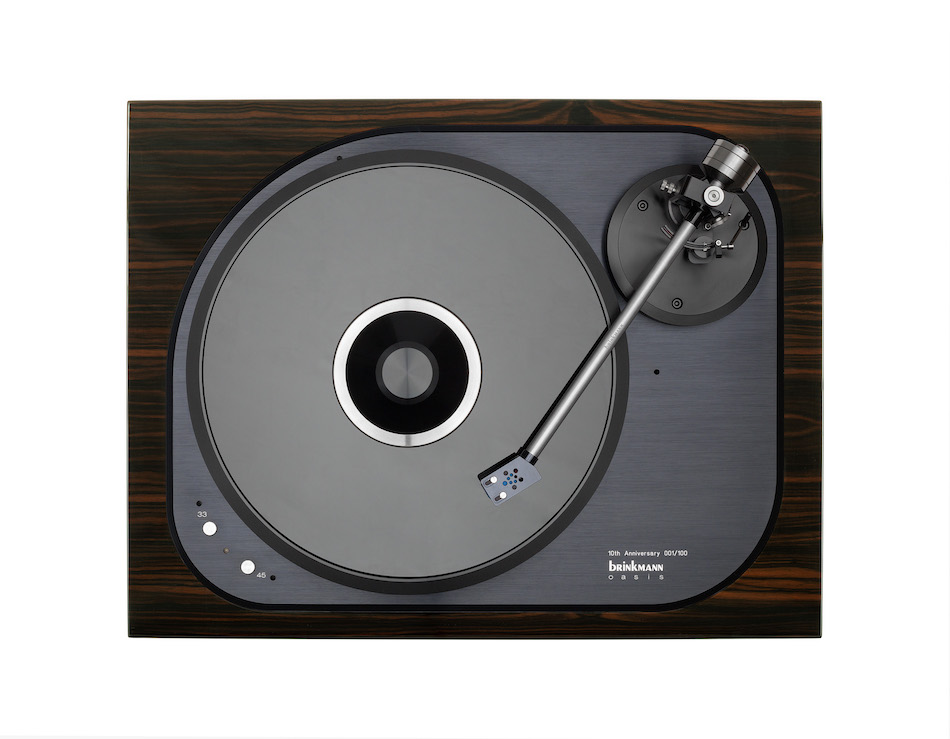
Interesting. I opened the link above and found this statement discussing DD turntables aimed at the broadcast market (I wonder who they meant? :scratch2Brinkmann - Germany about five years ago. The 'Bardo' and the 'Oasis'.
http://www.brinkmann-audio.de/main.php?prod=bardo
 Regarding quick stop and start times they commented: "This caused heavy cogging effects accompanied by high wow & flutter numbers." Leaving the cogging statement aside, let's look at those "high" W&F figures. The Tecnics W&F is listed at 0.025% WRMS. Their Bardo, which supposedly overcomes the problem has a listed W&F of 0.07% linear, 0.035% weighted DIN 45507
  . How is .07%, or even .035% in improvement over .025? The real question is whether these W&F amounts are audible. While we wouldn't want to compound the problem, I imagine these are better figures than the lathes used to cut the master (unless it's the Technics lathe).
Funny what goes around comes around... Sony, et al, discovered the merits of DD decades ago. I wouldn't imagine that anything by VPI would be up to that standard, tho', based on my experience. Just too expensive to get right.
Which VPI tables have you had?
Interesting. I opened the link above and found this statement discussing DD turntables aimed at the broadcast market (I wonder who they meant? :scratch2
Not shabby for RCMs, but their TTs leave a lot to be desired from what I have read. I have the VPI 16.5 RCM and it's good, but I would not want a VPI TT. Then again I wold not want a Rega, Project or Music Hall either. That's just me though.
I assume that your follow-up was to be, if you haven't tried it, how can you make a comparison. I think Littletoot was talking bout the new DD VPI that was just announced. To my knowledge, no one but VPI has that table. Well, that's how I read it at least.
Whatever tickles your fancy.
Reg Gandy the owner and designer at Rega used to say that flutter was more sonically detrimental than wow.

His name is Roy!
My Daddy loved his turntables! :yes:
Phyllis
Interesting. I opened the link above and found this statement discussing DD turntables aimed at the broadcast market (I wonder who they meant? :scratch2

All I know is, this looks fantastic.