• The move to the new server is done. There are some software and database maintenance updates in process. This has us passing the hat around to help out. We appreciate any donations. Seriously, even a dollar helps. The payment page may be found here - https://www.audiokarma.org/support.html

VPI To Market A Direct Drive Turntable

Sometimes, I do wonder about some of the published W&F specs. For instance, the W&F measured on the GT-2000 (and this is not meant to be a shot at GT-2000 owners) were measured at the electronics. While I have no doubt the W&F were vanishingly low even while using an industry standard, my objective nature winces at the thought that they would publish those numbers as W&F for the turntable. Other turntables measured with this method usually have a JIS standard measurement of about 4-5x as high. The GT-2000 likely being .015-025 is still very impressive, it's not the .005 that is published in various documentation.

Beyond that, I don't think once you reach a tiny level of W&F that most tables are capable above, that going further gets you a nice spec to publish, but perhaps not any sonic improvement. I still wouldn't mind a Pioneer P3 with it's published .003% W&F or the GT-2000 and it's .005%.

I hate to say it, but I am totally in agreement with you, Dave. Been happening too often lately! I've often wondered at the accuracy of figures shown, especially at a time when spec sheets were used as sales tools. Marketing material is not released under oath.

Also, I have a hard time believing that any equipment that is 30 years old would match the specifications released by the manufacturer when the item was new.
 
Also, I have a hard time believing that any equipment that is 30 years old would match the specifications released by the manufacturer when the item was new.
I'd have to have a better understanding of the technology to determine if age would degrade the W&F specs. I would think there would be more possibility of performance degradation in a rim drive turntable given the more mechanical nature of the drive system (idler wheel wear, deterioration, etc.) compared to a DD with speed control established electronically.

This does raise an interesting point. How would you go about determining how close to spec the 30 (or 40) year old TT finds itself? I thought about looking at sine waves from a test record after transcribing to a computer, but how would I know I'm seeing W&F from the TT and not the cutting lathe?

Anyway, I thought it interesting that they "overcame" a W&F defect of DD broadcast TT's, which they described as "high", then posted specs worse than that of a turntable (SP-15) in the group they were describing.

They make a lovely TT which I'm sure sounds great, but I don't think I'll ever have the jack to spring for one.

I prefer to listen to music than to read specs anyway.
 
"Harry told us that the wholesale cost of the motor to his factory is over $4000, so this is not going to be a cheap turntable."

It's commendable that VPI is endeavoring to improve speed stability with DD, but $4000 seems a bit steep. Curious to know what unit sales break-even point is for this table.
 
Doug,

Your point about the cutting lathes is a good one. I'd one of the reasons why getting W&F results below ~.02% pretty difficult to measure. The SP-10mKIII was about as good as it got from the cutting lathe side and their use wasn't widespread. Most test discs will have more W&F recorded into them than what some of the turntables being tested.

I'd agree that the wording was odd, but you gotta love marketing. :)

As far as the 30 year old technology thing. I'd have to give that some thought, too.
 
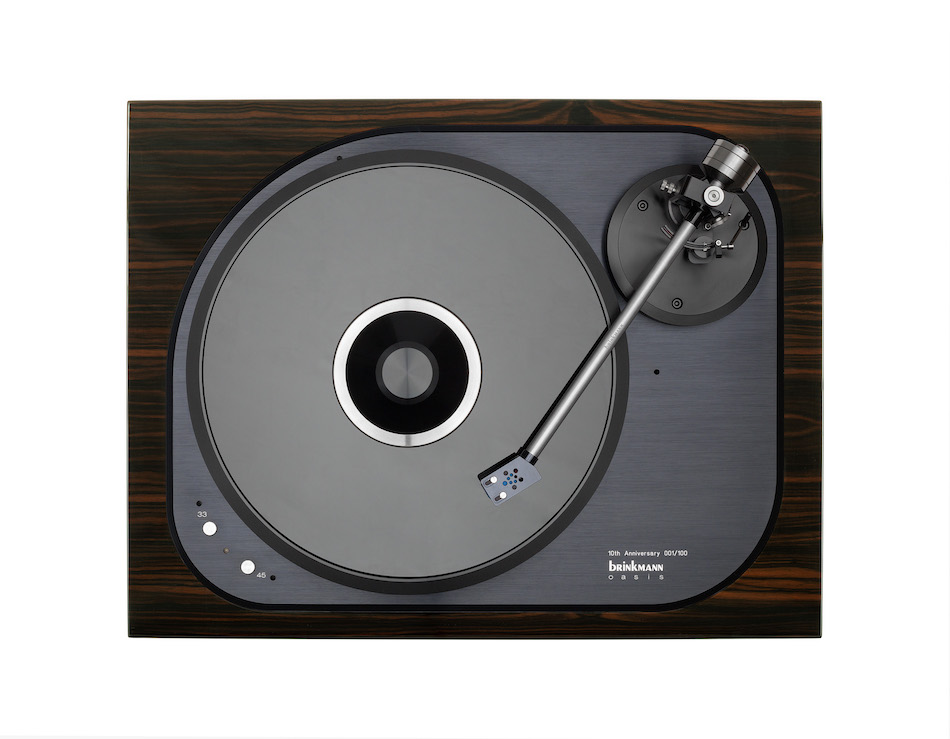
All I know is, this looks fantastic.

oasis.jpg

As Art has remarked, very high on the lustometer.
 
Maybe a few AK members are aware that Harry/VPIs first turntables were TOTL (not statement) Japanese direct drives. Nothing that I'v read by informed people that reside in Japan would indicate that the performance numbers were ever fudged, ie shootouts between the top direct drive turntables with rankings were published, the Japanese when it comes to audio take a lot of pride and to me it is very doubtful they would fake the numbers. Unless you have English/Japanese interpeter it is difficult to find a lot of technical information on the direct drives, like the GT2000 the top players were Japan only and for the most part only the mid line models were exported. As a few have stated the final test is with our ears and the top line Japanese direct drives IMO pass the test with flying colors.
 
Majick47, they aren't "fake" numbers by any stretch, they just measured and published w&f numbers that didn't comply with any industry standards. For isntance, the Pioneer P3, AFAIK, had the best w&f specs of the era, a published .003%. The industry standard measurement on this table was .015%, IIRC. When everyone else was following a standard and getting .015-.03% type w&f numbers, it seems to me they should follow and publish the same standards. To Pioneers credit, they published both the reading at the electronics and also published the numbers following the standard.

Perhaps Yamaha did, as well, I just haven't seen it.
 
Majick47, they aren't "fake" numbers by any stretch, they just measured and published w&f numbers that didn't comply with any industry standards. For isntance, the Pioneer P3, AFAIK, had the best w&f specs of the era, a published .003%. The industry standard measurement on this table was .015%, IIRC. When everyone else was following a standard and getting .015-.03% type w&f numbers, it seems to me they should follow and publish the same standards. To Pioneers credit, they published both the reading at the electronics and also published the numbers following the standard.

Perhaps Yamaha did, as well, I just haven't seen it.

It would be nice if someone creates a collection of results from high resolution (> 1M points) FFT of 1 kHz test record. That way you can compare apples with apples. It is easy to see all problems with speed variations, cogging and friction in drive unit, tonearm resonances etc.

Turntables went out of mainstream use just before high precision digital signal analysis became affordable. That is why we never saw really good objective data about TT performance.
 
Their is a lot of love for Rega you simply need to find the apprpriate thread and you will find plenty of it. There is a thread at present on British Audio subforum with lots of pics from people here at AK and their Rega products.

Hi! :banana:
I was just curious why that poster was so animate about not caring for them is all.
Just the general nature of his dislike.
Phyllis
 
Sometimes, I do wonder about some of the published W&F specs. For instance, the W&F measured on the GT-2000 (and this is not meant to be a shot at GT-2000 owners) were measured at the electronics. While I have no doubt the W&F were vanishingly low even while using an industry standard, my objective nature winces at the thought that they would publish those numbers as W&F for the turntable. Other turntables measured with this method usually have a JIS standard measurement of about 4-5x as high. The GT-2000 likely being .015-025 is still very impressive, it's not the .005 that is published in various documentation.

Beyond that, I don't think once you reach a tiny level of W&F that most tables are capable above, that going further gets you a nice spec to publish, but perhaps not any sonic improvement. I still wouldn't mind a Pioneer P3 with it's published .003% W&F or the GT-2000 and it's .005%.

W&F specs? IMO the issue happens at a far smaller lever than that could ever measure.

Arthur said it this way "Effective torque, in effect, is required to properly "initiate" a musical note (or passage). Since a continual stream of new notes must appear while the LP is being played, adequate ET is a necessity at all times. Without the proper amount of ET, the sound will vary, depending on the amount, and type, of notes (resistive changes) coming into play (as various physical changes in the groove). It's this variance, or musical inconsistency (distortion), which good idler-drives diminish better than any other design"

marc mc
 
All I kept seeing was "it will not be inexpensive", "it will not be inexpensive". In other words this won't be a table I can afford, lol.
 
W&F specs? IMO the issue happens at a far smaller lever than that could ever measure.

Arthur said it this way "Effective torque, in effect, is required to properly "initiate" a musical note (or passage). Since a continual stream of new notes must appear while the LP is being played, adequate ET is a necessity at all times. Without the proper amount of ET, the sound will vary, depending on the amount, and type, of notes (resistive changes) coming into play (as various physical changes in the groove). It's this variance, or musical inconsistency (distortion), which good idler-drives diminish better than any other design"

marc mc

Who's Arthur?
 
Hi! :banana:
I was just curious why that poster was so animate about not caring for them is all.
Just the general nature of his dislike.
Phyllis

I don't "hate" those tables, I just don't like the build on them and they don't sound good on stock form either. I've demoed a few. I also put my Pioneer PL510A with AT95E cart all stock up against a entry level Rega and the Pioneer sounded way better, (it also held speed better), even the dealer was as surprised as I was. (We did not expect my 30 year old TT to give the Rega a run for its money, let alone best it). That said, had the Rega not been entry level or had all the upgrades done to it, the outcome would have most likely been different. Also, we are talking about a DD vs a belt drive, so it's apples to oranges I think.
The main problem I have with the Regas and the like is that you have to sink a lot more money into them beyond purchase price to get them to sound good, at least to my ears. However, everyone's ears are different, so like I said, I don't "hate" them, I just don't think they are all that and a bag of chips and I don't want one. If I'm laying out that kind of bread I want it to work correctly out of the box and allow me to freely think of upgrades later, not in urgent neccessity.
Just my opinion and experience, YMMV.:yes:
 
Last edited:
I don't "hate" those tables, I just don't like the build on them and they don't sound good on stock form either. I've demoed a few. I also put my Pioneer PL510A with AT95E cart all stock up against a entry level Rega and the Pioneer sounded way better, even the dealer was as surprised as I was. (We did not expect my 30 year old TT to give the Rega a run for its money, let alone best it).
The main problem I have with the Regas and the like is that you have to sink a lot more money into them beyond purchase price to get them to sound good, at least to my ears. However, everyone's ears are different, so like I said, I don't "hate" them, I just don't think they are all that and a bag of chips and I don't want one. If I'm laying out that kind of bread I want it to work correctly out of the box and allow me to freely think of upgrades later, not in urgent neccessity.
Just my opinion and experience, YMMV.:yes:

The last sentence is key, of course. I have heard a number of stock regas that sounded very good. I have heard them sound better than old direct drives I've owned like my old PL-560 and I've heard them outperformed by turntables like my former DP-62L and a JVC QL-Y66F I owned. When I read your account of your test, my first reaction was surprise, but like anything else, if the pioneer/AT combo just works for your preferences that's all that matters.
 
Last edited:
My first impression of Salvatore's ideas was that it was more elevator thinking when I heard it a year or two back. I read it, I understand it, I know he is trying to describe why an idler or rim drive have more "slam" or whatever word you want to use, but it's just a made up reason that seems to make sense to him and some others. I guess I can't read that description and take away anything of value other than it makes me think and maybe that will help stave off alzheimers. :)
 
I could never afford one and i'm not sure that i'd want one even if I could, but I see all efforts to continue pushing the envelope with our hobby as a good thing. The worst that could happen to the hifi/turntable enthusiast scene is for it to become stagnant.
 
W and F specs are not all created equal. The two most popular are JIS (Japanese Industrial standards) and DIN (German Institute for standardization). But they are completely different in how they are weighted.

JIS standards are easier (meaning they will be lower than when using DIN standards)

DIN standards are harder (meaning they will be higher than when using JIS standards)

Without scientific equations the difference is roughly .03% for every .07% going from JIS to DIN.

So a table that measured .07% W and F using JIS will measure .1% using DIN standards. A table that measured .1% using DIN will measure .07% using JIS. I get that from tables that have listed both in their specs. The .03 seems to be pretty standard as I have found multiple examples.

Personally I don't take w and f specs to heart much. To many variables and to many different ways to measure it. Plus if I stay away from knowing what w and f does to pitch and speed I am way less likely to hear a difference. That's why some people think their .2% JIS spec'ed table is the end all be all of turntables. :thmbsp:
 
When was the last time a modern Direct Drive turntable was produced somewhere other than China? (...)

It's just currently happening again - as Dualfred is already pretty close to releasing his own design. And when I say his own design, that also includes both the motor control and the motor itself. Unfortunately that thingy won't really be inexpensive either - but definitely not as costly as the VPI...

Greetings from Munich!

Manfred / lini
 
Back
Top Bottom