Kreshna
...but I have to know.
I read good things about Class D chip amps like Tripath and TPA, so I eventually decided to buy a 2 x 100 WPC TPA 3116D2 in 2018. Unfortunately the amp has loose heatsink (it's very cheap anyway), which hasn't been re-glued until recently.
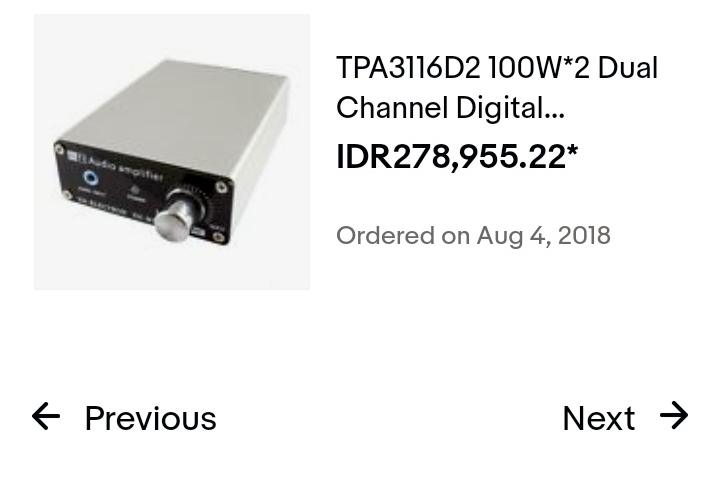
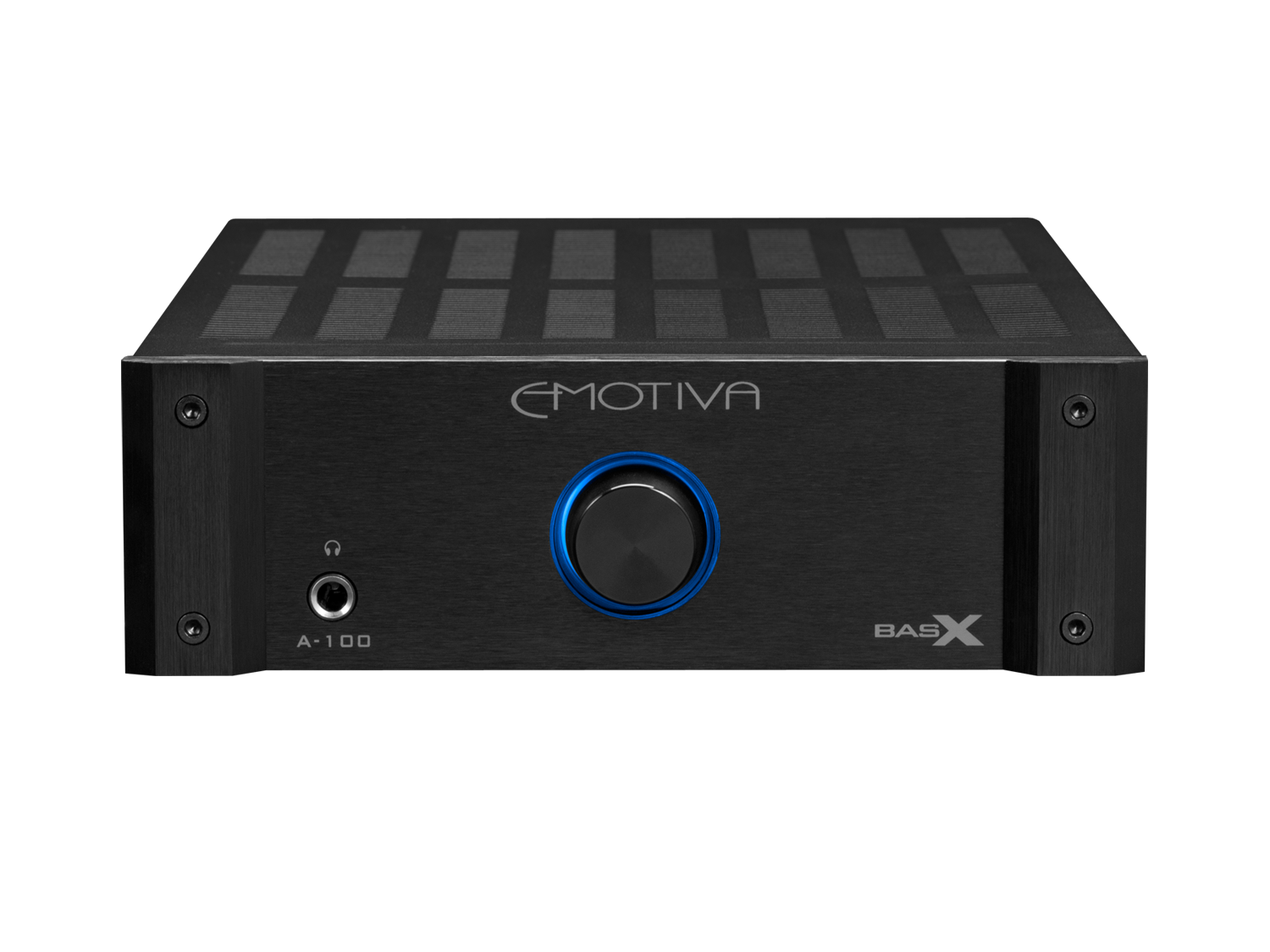
Indeed, the amp is very cheap.
In any case, the heatsink has been re-attached, so I tried to use the TPA3116 to drive my JBL L20Ts (titanium dome tweeter). The combo sounds very harsh. The amp sounds bright, with loud and crisp highs, very detailed mids, and no bass at all. On the positive side, I notice some midrange details that I couldn't even discern on my Sansui AU-7900. On the negative side, the total lack of bass and the overall harshness really hurts my ears.
But then I switched speakers to B&W DM302s.
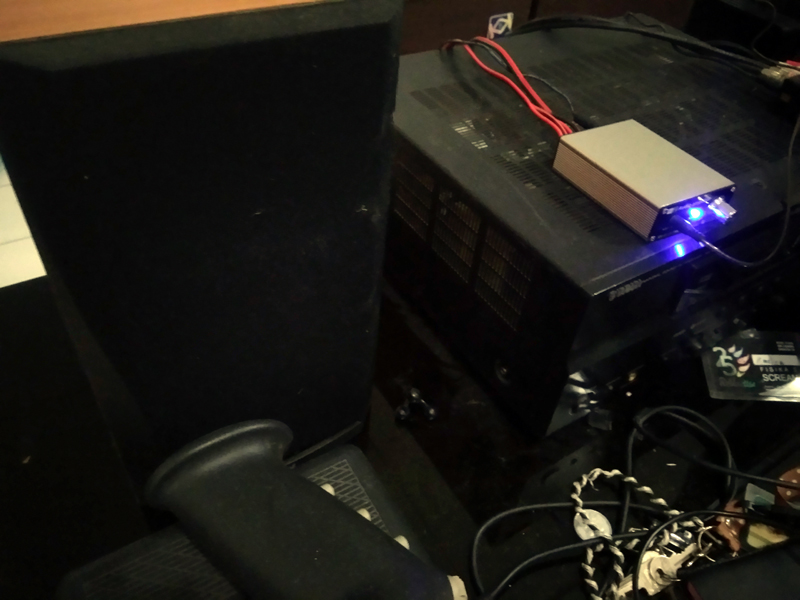
The TPA3116D2, driving my B&W DM302s.
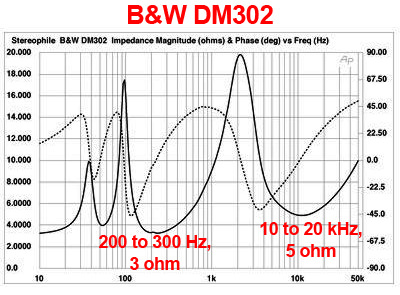
In general, B&W DM302s tend to sound very sweet, very organic, quite midrangey, and sometimes too chocolatey --for lack of better words. The DM302s tend to gloss over poor source materials with their inherent warmth and sweetness. The highs tend to roll off and are not airy enough, the mids tend to sound boxy, and there is very noticeable LF bump a.k.a. fake bass that makes them sound like cheap multimedia speakers. When driven by Sansui AU-7900 the DM302s sound very laid back, but the speakers can sound harsh when driven by lesser amplifiers, probably due to their unforgiving impedance dip.
Much to my surprise, TPA3116 sounds really nice when driving B&W DM302s.
First, the TPA's brightness actually works well to compensate the DM302s' chocolatey sound. Like I said on this thread, cymbals on the DM302s sound less airy, less crisp, but with more "body". And that's why I prefer JBL titanium dome tweeters for cymbals. But when the DM302s are driven by TPA3116, cymbals become very crisp, very airy, that it is almost indistinguishable from JBL L20Ts driven by Sansui AU-7900. Highs become crisper, more extended, and less rolled-off.
Second, B&W DM302s exhibit much less nasality when driven by TPA3116, which is a good thing. An example is Miriam Makeba's self-titled 1960 album; for some unknown reason her vocals can sound strained in certain songs, which is annoyingly noticeable on B&W DM302s. When driven by TPA3116, however, the strain reduces significantly. Again, it is like listening with JBL L20Ts driven by Sansui.
Third, the LF bump. Like I said, when driving JBL L20Ts, the TPA3116 has no bass at all. However, such lack of bass actually work pretty well to reduce the DM302's LF bump, making the bass sounds more natural and less fake.
But what really puzzles me that the TPA3116 drives the DM302s effortlessly. With such unforgiving impedance dip, B&W DM302s are quite current-hungry, that even Rotel RB-985 sounds strained sometimes. However, TPA3116 never exhibits such strain, even when playing this song's intro. And what puzzles me is TPA3116 has never been advertised as "high current amplifier" --yet it drives the DM302 pretty much effortlessly.
To be fair, Sansui AU-7900 also drives B&W DM302s effortlessly, but the resultant sound is far too laid back. And the AU-7900 doesn't alleviate the DM302s' chocolatey sound signature either. With TPA3116, highs become airier and more extended, mids become less chocolatey, and LF bump is reduced to more acceptable level. The overall sound is more dynamic and detailed than that of the AU-7900.
That's not saying TPA3116 sounds better than AU-7900. In fact, it's quite the opposite. For starter, TPA3116 still sound harsher and grainier than AU-7900. Also, while AU-7900 works well with various kinds of speakers, TPA3116 seems to only work well with midrangey, chocolatey-sounding speakers. TPA3116 also hisses noticeably, and it also has exaggerated, unnatural-sounding sibilance.
Then I could help but wonder: is such brightness the reason Class D chip amps like TPA3116 are much favored by full range single-driver enthusiasts? That the amplifier's brightness actually gives extended highs to otherwise midrangey-sounding full range single-driver speakers?
Or perhaps the TPA3116 I bought is a defected product, and TPA3116 is actually not supposed to sound like that?
Thoughts? Opinions?
But nonetheless, it sounds unexpectedly good when driving B&W DM302s. In any case, what are your "unexpectedly good" combos?
Indeed, the amp is very cheap.
In any case, the heatsink has been re-attached, so I tried to use the TPA3116 to drive my JBL L20Ts (titanium dome tweeter). The combo sounds very harsh. The amp sounds bright, with loud and crisp highs, very detailed mids, and no bass at all. On the positive side, I notice some midrange details that I couldn't even discern on my Sansui AU-7900. On the negative side, the total lack of bass and the overall harshness really hurts my ears.
But then I switched speakers to B&W DM302s.
The TPA3116D2, driving my B&W DM302s.
In general, B&W DM302s tend to sound very sweet, very organic, quite midrangey, and sometimes too chocolatey --for lack of better words. The DM302s tend to gloss over poor source materials with their inherent warmth and sweetness. The highs tend to roll off and are not airy enough, the mids tend to sound boxy, and there is very noticeable LF bump a.k.a. fake bass that makes them sound like cheap multimedia speakers. When driven by Sansui AU-7900 the DM302s sound very laid back, but the speakers can sound harsh when driven by lesser amplifiers, probably due to their unforgiving impedance dip.
Much to my surprise, TPA3116 sounds really nice when driving B&W DM302s.
First, the TPA's brightness actually works well to compensate the DM302s' chocolatey sound. Like I said on this thread, cymbals on the DM302s sound less airy, less crisp, but with more "body". And that's why I prefer JBL titanium dome tweeters for cymbals. But when the DM302s are driven by TPA3116, cymbals become very crisp, very airy, that it is almost indistinguishable from JBL L20Ts driven by Sansui AU-7900. Highs become crisper, more extended, and less rolled-off.
Second, B&W DM302s exhibit much less nasality when driven by TPA3116, which is a good thing. An example is Miriam Makeba's self-titled 1960 album; for some unknown reason her vocals can sound strained in certain songs, which is annoyingly noticeable on B&W DM302s. When driven by TPA3116, however, the strain reduces significantly. Again, it is like listening with JBL L20Ts driven by Sansui.
Third, the LF bump. Like I said, when driving JBL L20Ts, the TPA3116 has no bass at all. However, such lack of bass actually work pretty well to reduce the DM302's LF bump, making the bass sounds more natural and less fake.
But what really puzzles me that the TPA3116 drives the DM302s effortlessly. With such unforgiving impedance dip, B&W DM302s are quite current-hungry, that even Rotel RB-985 sounds strained sometimes. However, TPA3116 never exhibits such strain, even when playing this song's intro. And what puzzles me is TPA3116 has never been advertised as "high current amplifier" --yet it drives the DM302 pretty much effortlessly.
To be fair, Sansui AU-7900 also drives B&W DM302s effortlessly, but the resultant sound is far too laid back. And the AU-7900 doesn't alleviate the DM302s' chocolatey sound signature either. With TPA3116, highs become airier and more extended, mids become less chocolatey, and LF bump is reduced to more acceptable level. The overall sound is more dynamic and detailed than that of the AU-7900.
That's not saying TPA3116 sounds better than AU-7900. In fact, it's quite the opposite. For starter, TPA3116 still sound harsher and grainier than AU-7900. Also, while AU-7900 works well with various kinds of speakers, TPA3116 seems to only work well with midrangey, chocolatey-sounding speakers. TPA3116 also hisses noticeably, and it also has exaggerated, unnatural-sounding sibilance.
Then I could help but wonder: is such brightness the reason Class D chip amps like TPA3116 are much favored by full range single-driver enthusiasts? That the amplifier's brightness actually gives extended highs to otherwise midrangey-sounding full range single-driver speakers?
Or perhaps the TPA3116 I bought is a defected product, and TPA3116 is actually not supposed to sound like that?
Thoughts? Opinions?
But nonetheless, it sounds unexpectedly good when driving B&W DM302s. In any case, what are your "unexpectedly good" combos?