You are using an out of date browser. It may not display this or other websites correctly.
You should upgrade or use an alternative browser.
You should upgrade or use an alternative browser.
What Record Are You Hearing Now?
- Thread starter zeplin43
- Start date


GerardG
KBO
Linda Ronstadt, & The Nelson Riddle Orchestra

The second park visited was the Walton Lighthouse. An original structure from the late 1800s.

Turning one way is the Walton lighthouse.

Turning the other way is Walton Bay. The tide is coming in at this point.

The inside of this late 19th century structure brought both a smile and a tear. All old lighthouses have that same particular aroma of whale oil, kerosene, and mercury. Every light I ever visited or lived in or next to smelled like this. Above is an 80 imperial gallon tank for kerosene oil original to the tower.
Beacons first shone using whale oil a very smoky, dirty fuel. After kerosene was invented (by a Nova Scotian no less) it was used as it burned longer, hotter, and cleaner casting a light far brighter than whale oil through the fresnal lens that amplified the beacon's light.
The heavy crystal like glass and brass fresnal lenes actually floated in mercury "baths" that allowed the hand wound clock works in each tower to turn the lens. The mercury was kept in steel cans that the light keeper would pour into the bath.
Mercury a highly toxic heavy metal evaporated surprisingly quickly requiring the bath to need to be filled often. The metal would slop out everywhere. I used to play with it as a boy because it was shiny and heavy and great fun to roll around in my hands. Back in the mid 1960s spills were never cleaned up. No hazardous materials training was offered. No protective gloves, suits, or respirators were suggested, given, or mandated. My sister tested positive for both toxic lead and mercury levels. I tested negative. I do however have hearing loss acquired at the age of 3 from an omni-directional acetyline fog cannon (same decibel level as a 155mm howitzer that could fire every couple minutes for up to a month) and later directional diaphone foghorns. The Canadian government later denied responsibility for my father's advanced deafness.
The length and frequency of flashes and pauses unique to each light flash told mariners what lighthouse they were seeing. Their charts then told them of safe channels to follow and dangerous shoals to avoid.

Above is a roadside view of the Minas basin at low tide. At low tide the ocean is two kilometers (1.3 miles) away. At high tide it laps at the stone seawall I'm standing on.
The second park visited was the Walton Lighthouse. An original structure from the late 1800s.
Turning one way is the Walton lighthouse.
Turning the other way is Walton Bay. The tide is coming in at this point.
The inside of this late 19th century structure brought both a smile and a tear. All old lighthouses have that same particular aroma of whale oil, kerosene, and mercury. Every light I ever visited or lived in or next to smelled like this. Above is an 80 imperial gallon tank for kerosene oil original to the tower.
Beacons first shone using whale oil a very smoky, dirty fuel. After kerosene was invented (by a Nova Scotian no less) it was used as it burned longer, hotter, and cleaner casting a light far brighter than whale oil through the fresnal lens that amplified the beacon's light.
The heavy crystal like glass and brass fresnal lenes actually floated in mercury "baths" that allowed the hand wound clock works in each tower to turn the lens. The mercury was kept in steel cans that the light keeper would pour into the bath.
Mercury a highly toxic heavy metal evaporated surprisingly quickly requiring the bath to need to be filled often. The metal would slop out everywhere. I used to play with it as a boy because it was shiny and heavy and great fun to roll around in my hands. Back in the mid 1960s spills were never cleaned up. No hazardous materials training was offered. No protective gloves, suits, or respirators were suggested, given, or mandated. My sister tested positive for both toxic lead and mercury levels. I tested negative. I do however have hearing loss acquired at the age of 3 from an omni-directional acetyline fog cannon (same decibel level as a 155mm howitzer that could fire every couple minutes for up to a month) and later directional diaphone foghorns. The Canadian government later denied responsibility for my father's advanced deafness.
The length and frequency of flashes and pauses unique to each light flash told mariners what lighthouse they were seeing. Their charts then told them of safe channels to follow and dangerous shoals to avoid.
Above is a roadside view of the Minas basin at low tide. At low tide the ocean is two kilometers (1.3 miles) away. At high tide it laps at the stone seawall I'm standing on.
Last edited:


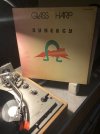
Led Zeppelin

More images
Label: | Atlantic – 8122796640 |
|---|---|
Format: | Vinyl, LP, Album, Reissue, Remastered, 180 Gram |
Country: | US |
Released: | 2022 |
Genre: | Rock |
Style: | Blues Rock, Hard Rock |


Love the pictures and first hand stories about the lighthouses!Linda Ronstadt, & The Nelson Riddle Orchestra
View attachment 3851659
The second park visited was the Walton Lighthouse. An original structure from the late 1800s.
View attachment 3851660
Turning one way is the Walton lighthouse.
View attachment 3851661
Turning the other way is Walton Bay. The tide is coming in at this point.
View attachment 3851662
The inside of this late 19th century structure brought both a smile and a tear. All old lighthouses have that same particular aroma of whale oil, kerosene, and mercury. Every light I ever visited or lived in or next to smelled like this. Above is an 80 imperial gallon tank for kerosene oil original to the tower.
Beacons first shone using whale oil a very smoky, dirty fuel. After kerosene was invented (by a Nova Scotian no less) it was used as it burned longer, hotter, and cleaner casting a light far brighter than whale oil through the fresnal lens that amplified the beacon's light.
The heavy crystal like glass and brass fresnal lenes actually floated in mercury "baths" that allowed the hand wound clock works in each tower to turn the lens. The mercury was kept in steel cans that the light keeper would pour into the bath.
Mercury a highly toxic heavy metal evaporated surprisingly quickly requiring the bath to need to be filled often. The metal would slop out everywhere. I used to play with it as a boy because it was shiny and heavy and great fun to roll around in my hands. Back in the mid 1960s and spills were never cleaned up. No hazardous materials training was offered. No protective gloves, suits, or respirators were suggested, given, or mandated. My sister tested positive for both toxic lead and mercury levels. I tested negative. I do however have hearing loss acquired at the age of 3 from an omni-directional acetyline fog cannon (same decibel level as a 155mm howitzer that could fire every couple minutes for up to a month) and later directional diaphone foghorns. The Canadian government later denied responsibility for my father's advanced deafness.
The length and frequency of flashes and pauses unique to each light flash told mariners what lighthouse they were seeing. Their charts then told them of safe channels to follow and dangerous shoals to avoid.
View attachment 3851663
Above is a roadside view of the Minas basin at low tide. At low tide the ocean is two kilometers (1.3 miles) away. At high tide it laps at the stone seawall I'm standing on.
Here in California, we also have a few, but the best one I have been to is the Pigeon Point Lighthouse:

Here is the history: Pigeon Point Lighthouse and Pigeon Point Light Station State Historic Park
It is a very beautiful area and at certain times of the year, you can see whales in the distance.

GerardG
KBO
Thank you so much for the link. I read it and learned much about the Pigeon Point lighthouse. Like most places of its kind it is beautiful and has seen its share of tragedy too. Shipwrecks, accidental deaths, and a long line of keepers. I'm impressed how the website has an extensive history and list of keepers and assistant keepers. The NSLPS, Nova Scotia Lighthouse Preservation Society, listing of light towers in this province is nowhere near as complete. It should be.Love the pictures and first hand stories about the lighthouses!
Here in California, we also have a few, but the best one I have been to is the Pigeon Point Lighthouse:
Here is the history: Pigeon Point Lighthouse and Pigeon Point Light Station State Historic Park
It is a very beautiful area and at certain times of the year, you can see whales in the distance.
Again thank you for this. I enjoyed reading it.
Gerard


v8peters
Lunatic Member

Piano Rags (Volumes I & II)
Scott Joplin (1868-1917)
Joshua Rifkin, piano
1974 Nonesuch HB-73026

My CD/LP/Tape Collection