• The move to the new server is done. There are some software and database maintenance updates in process. This has us passing the hat around to help out. We appreciate any donations. Seriously, even a dollar helps. The payment page may be found here - https://www.audiokarma.org/support.html

When is it justifiable to go for high end crossover components?

Electrical components in parallel in the crossover, are part of the signal path.

They still "see" the AC audio information. And therefore can affect that signal.
Yes. The argument that I hear is not that parallel caps have ZERO impact. It is that they have a good amount less impact than the series caps.
 
Tried Jantzen superior, Clarity cap MR, Mundorf classic resistors and mills mra, and Jantzen air core inductors on treble and bass all worthwhile imho. If you're going to listen to them for part of your life, and cheap compared to equivalent, commercial speakers.

I recently posted a thread myself trying to fathom the benefits of foil inductors the verdict I think was go air core wire, foil not so much. It is very difficult to measure inductance and DCR properly maybe think twice before ordering foils if they're that expensive.

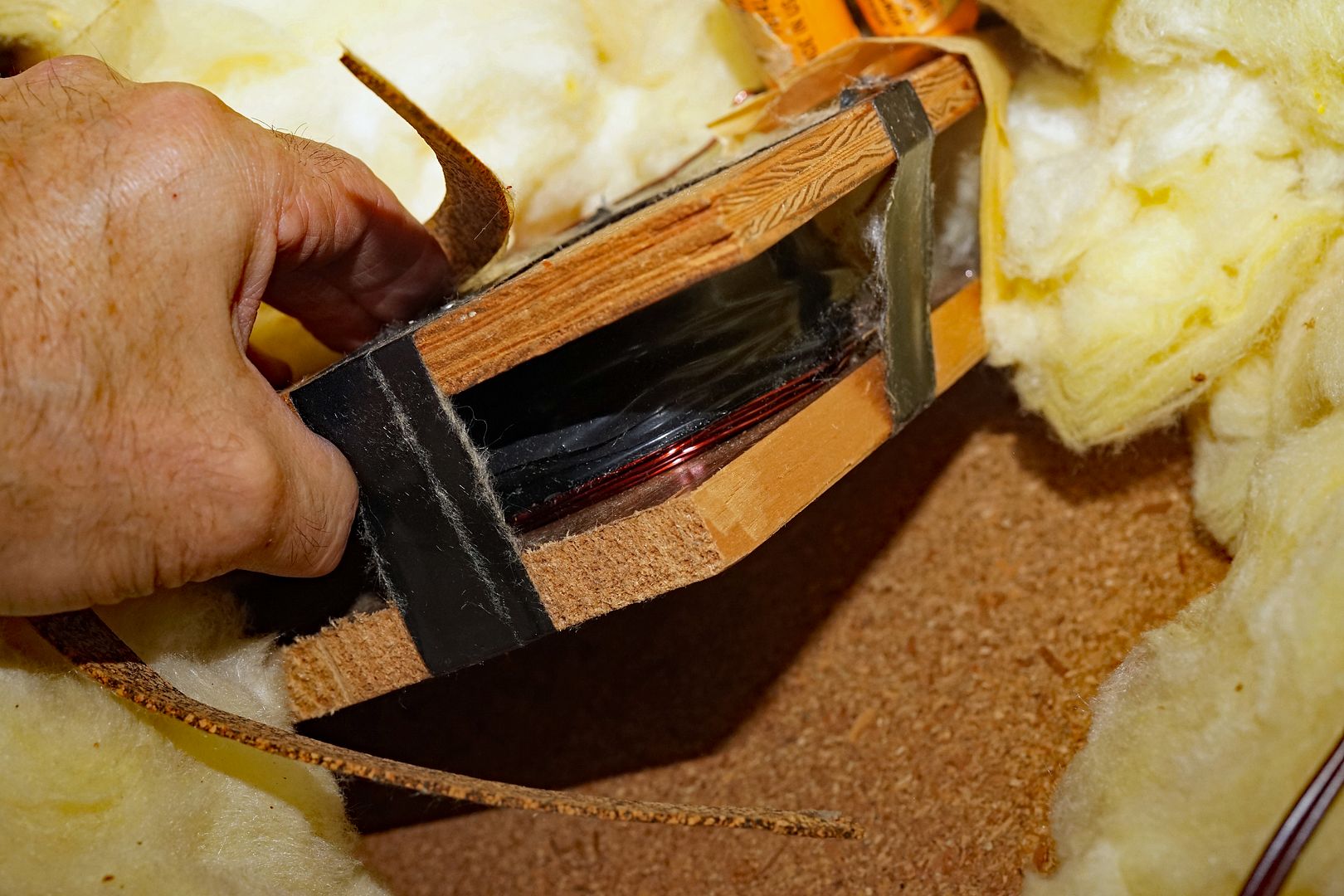
Problem is, I can’t find an air core wire inductor that has a value of 1.5mh and 0.12 DCR. I can get pretty darn close with a 12 gauge foil inductor.
 
I would use the Daytons, etc on normal speakers (like the ones I have- my most expensive were $5K a set) ... now if I were rebuilding the crossovers on a pair of $25,000 KEF Blades, I'd spring for the expensive stuff.
 
Yes. The argument that I hear is not that parallel caps have ZERO impact. It is that they have a good amount less impact than the series caps.
As far as I know, caps and chokes are placed in parallel or in series, depending on the crossover frequency you are designing them for.

tweeter and midrange crossover (simple).jpg
A simplified diagram.
 
As far as I know, caps and chokes are placed in parallel or in series, depending on the crossover frequency you are designing them for.

View attachment 3731124
A simplified diagram.
Yes, but that’s not what we are talking about. À theory out there is that it is MORE WORTH IT to buy exotic crossover parts for the series components than it is for the parallel components. This is what we are talking about.
 
Problem is, I can’t find an air core wire inductor that has a value of 1.5mh and 0.12 DCR. I can get pretty darn close with a 12 gauge foil inductor.
The hificollective site has an inductor filter where you can see whats available in that inductance. Assuming its bass you could probably go lower dcr, whats 0.01ohm after all, its the inductance thats doing the job of rejecting the HF. The basic iron cores of Jantzen, Mundorf etc are likely better quality iron and wire than what Jbl fitted.
 
Last edited:
I've read more than once about the benefit of using two parallel caps vs a single call to achieve needed values. Can't remember exactly what it was supposed to do, but it was quantifiable on some level.

Another option op, you could wind your own air core inductor. Would save you cash, though foil might cease to be an option.

Mixing values lets you better zero in on a common value (i.e., put the cap that's most "overspec" with the cap that's most "under spec" to get the values between the two speakers to be most similar.

Smaller caps "react" differently that larger caps (e.g., by-pass caps) and the combination can give you the "best of both worlds."

As for winding your own inductors, I found that I was able to buy a "roll" of enameled wire and when I put my induction meter on it, I just ended up cutting a bit off to get to the desired value.
 
As for "parallel" (i.e., conjugate) caps, in the included diagram there is a very specific relationship between the choke, the cap, and the resistance of the driver. If C2 is too big for L2 and the resistance provided by the woofer, you will create a hump in the frequency response just below the crossover frequency. The bigger C2, the bigger and broader the hump. So C2 has a direct impact on what is getting to the woofer and not merely by-passing the higher frequencies to ground. I take advantage of this characteristic in my crossovers to bring out the vocal range if desired.
tweeter-and-midrange-crossover-simple-jpg.3731124
 
Some say that when a component is a n series with the voice coil that it is effectively IN the signal path far more so than a parallel component thus it effects the sound more. Something like that. Thus, more worthy exotic parts.
That nonsense is based on a totally erroneous concept of electrical circuits. The people who believe it think that an electrical circuit is like plumbing, with electricity acting like water. They think that the signal comes through a series component to the loudspeaker (or other load) and therefore that "bit of pipe" should be clean so as not to contaminate the signal. They think the parallel component is just a way of flushing the unwanted part of the signal down the drain (to earth), never to be seen again, so that bit of pipe can be dirty.
It's nonsense. Consider the circuit in post #25. C1 and L1 form a frequency-dependant potential divider. The voltage at the junction depends on both C1 and L1. How could it not? Any non-linearity or parasitic element in either component will have an impact on the voltage at the junction, regardless of whether it's the series component or the parallel component.
 
The basic iron cores of Jantzen, Mundorf etc are likely better quality iron and wire than what Jbl fitted.
Don't iron-core chokes have a hysteresis issue, which may be bad for accurate speaker reproduction? I've always used air-core chokes in crossovers.

From: The Loudspeaker Crossover Part II.

"On the face of it, the magnetic core choke seems to be a better deal all the way around. So, why then, with all these advantages, would anybody use anything but Magnetic core chokes? There are two reasons. Saturation (an effect of running out of permeability by the ferrous core) and hysteresis, the storage of energy, are present in all magnetic materials.

Which problem is worse for the crossover designer: loss of signal due to higher resistance, or the nonlinearity of the magnetic core choke? That depends largely on the magnitude of the difference. That is why small-value chokes are almost always air-core, while very large-value chokes are almost always magnetic-core. I dislike taking sides in such debates when both approaches have distinct advantages.

Personally, I can easily hear the distortion from iron- and steel-core chokes. I would rather live with the higher cost and higher (but relatively constant) resistive losses in an air-core choke than hear the distortion in a magnetic-core choke. Unfortunately, at very high inductance values, air core chokes quickly become impractical because of their weight, size, and cost."
 
Consider the circuit in post #25. C1 and L1 form a frequency-dependant potential divider. The voltage at the junction depends on both C1 and L1. How could it not? Any non-linearity or parasitic element in either component will have an impact on the voltage at the junction, regardless of whether it's the series component or the parallel component.
Correct! This is an LC(R) time-constant circuit. All components are equally important.

:thumbsup:
 
This is the current crossover set-up on the Mermans. (I am still waiting for the 3.5 ohm Mills for the tube simulator.) Why so many pieces? Fine tuning from years of listening.

Note that with this much variety, I can listen to a different set of speakers by flipping a couple switches anytime I desire. And those cuts that need a bit of je ne cest quois can be accommodated. For example, the tube simulation will take out the top end "edge" found is so many cuts.

80-2026_03_31_14_06_03_101b01ce701a6fe5e2aa9f219cd89f862f68ec33.jpg
 
Last edited:
How much do you notice differences in other upgrades you have made? Are you sensitive to other changes you make in your system? I'm not and tend to go with solid daily drivers than exotica as my point of diminishing returns is pretty low these days. If you have other things that might bring you more joy over the longterm vs. $300 extra for exotic components.

I'd suggest you opt for the journeyman parts and give them a shot. But if you notice subtities and nuances easily, then perhaps go for the exotica, but with the caveat of which exotica as your experience is that focused. That's a whole new rabbit hole.
 
Back
Top Bottom