• The move to the new server is done. There are some software and database maintenance updates in process. This has us passing the hat around to help out. We appreciate any donations. Seriously, even a dollar helps. The payment page may be found here - https://www.audiokarma.org/support.html

When is it justifiable to go for high end crossover components?

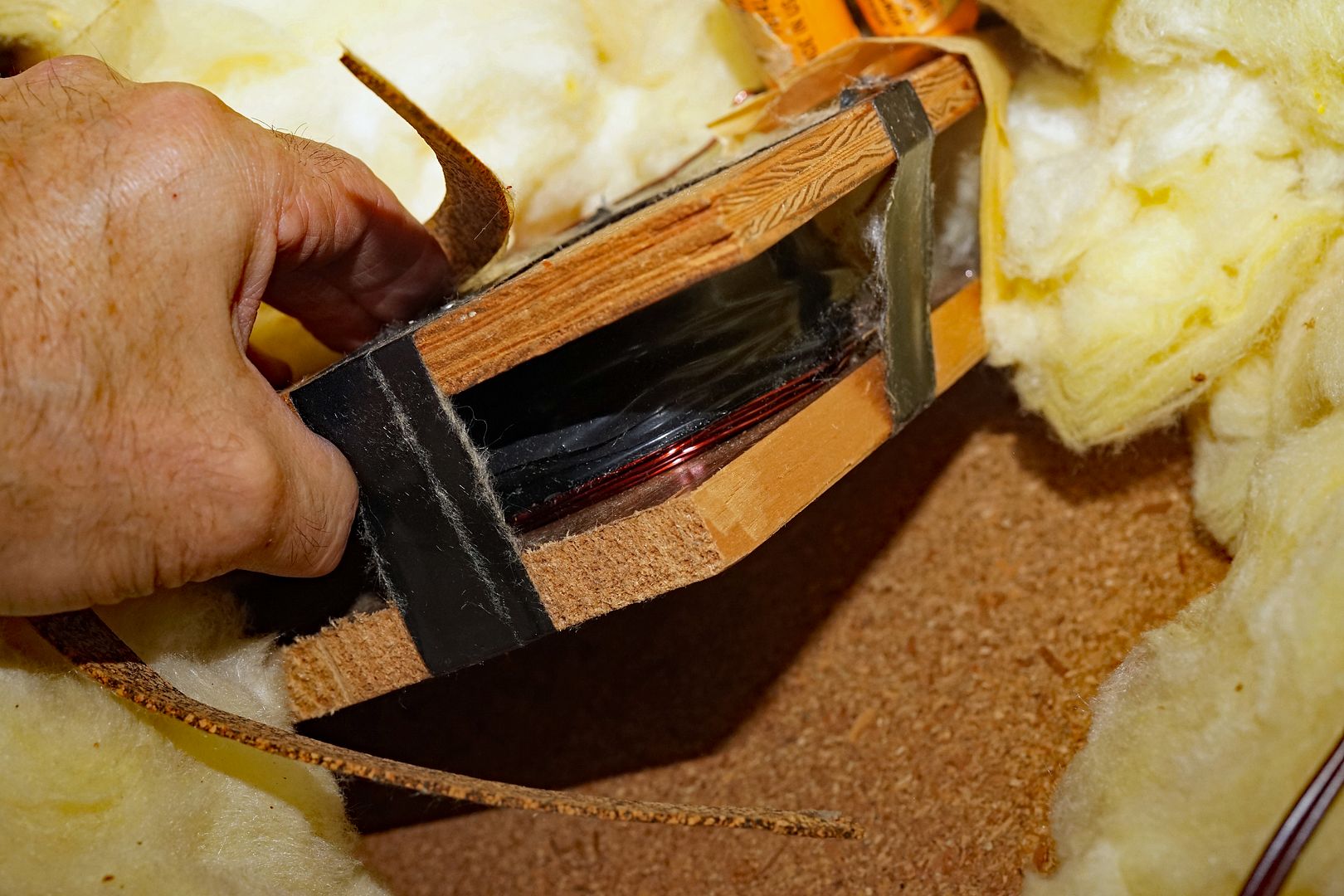
BTW... for my subwoofers, I had to wind my own air-core chokes, since 12-gauge, 20 mH ones were prohibitively expensive at the time.

32f149fd-c53f-45f7-b620-9f1dbd862292.jpg
I priced out some laminated wire to do this as no cost wasn’t much cheaper than buying the inductors. And I don’t see anyone making WIRE inductors, 12 gauge.
 
I priced out some laminated wire to do this as no cost wasn’t much cheaper than buying the inductors. And I don’t see anyone making WIRE inductors, 12 gauge.
They were available on the commercial market at that time. I don't remember what the application was. They were very expensive, almost mil-spec quality.
I bought 5-pound rolls of Belden enamelled single-stranded copper wire and wound them to the specs a friend calculated for me.

______________________________________
"JBL didn’t fit anything with these drivers. They played a full range. 1 cap on the mid, 1 cap on the tweeter, nothing on the woofer."


I don't know where you heard that JBL doesn't use chokes or caps in the woofer crossovers. That might be true for the 1970s-vintage L100, but not for all their speakers.

JBL L300 3133-xover.jpg
Early three-way floor speaker crossover.
______________________________________

JBL l166 crossover.jpg
Even the L166 bookshelf had a choke inline with the woofer.
 
Last edited:
They were available on the commercial market at that time. I don't remember what the application was. They were very expensive, almost mil-spec quality.


"JBL didn’t fit anything with these drivers. They played a full range. 1 cap on the mid, 1 cap on the tweeter, nothing on the woofer."


I don't know where you heard that JBL doesn't use chokes or caps in the woofer crossovers. That might be true for the 1970s-vintage L100, but not for all.
The woofer I am using here (2213h) and talking about here is from 4311b, same crossover as L100. Woofer plays wide open.
 
The woofer I am using here (2213h) and talking about here is from 4311b, same crossover as L100. Woofer plays wide open.
Okay.

You may want to consider a choke inline with that 2213H. The choke on my L166 (2 mH) tightens the bass compared to my 1970s-era L100 (no choke).

Put the choke inline so you can easily bypass it if you want.
 

When is it justifiable to go for high end crossover components?​

I figure it one of two ways:

Either you don't need any justification and do it because you can/want to. Or, one tries it for themself and decides if it's worth it or not in their own context, gaining direct experience for next time.
 
Historically, I have always used Dayton, audyn q4, crosscap, solen. I’ve never opted for high end.

Although I have used Mills resistors and some 14awg to 20awg air core inductors.

For my next crossover build (ewave, JBL 2213h woofer) I am tempted to go for the likes of Duelund caps, 12awg foil air core inductors, mills resistors etc.

But there is a part of me that wonders if it is a waste.

The biggest expense would be the 1.5mh foil inductors at $100 each. There is one of those per crossover. A comparable iron core comes in at about $23.

Duelund caps will run me $50-$75 each compared to less that $10 for Dayton.

I have never gone with exotic parts before and I am tempted just to see what it’s all about.

Has anyone gone with exotics and regretted it? Is a JBL 2213h based ewave worthy of it in your opinion?

Before you dive into exotic parts, there are some things to consider. This is even more important when you get into the really expensive stuff where a crossover can easily cost a couple of grand or more.

Is the room acoustically treated? And, in a perfect world, it would be a dedicated room.
Has the speaker placement been optimized? See comment above, dedicated rooms give you the ultimate freedom in speaker placement.
Are the system components, source, DAC, preamp, amp, etc... of sufficient quality/performance to let you hear the improvements.
Lastly, are the drivers worthy of the crossover quality. As an example it probably doesn't make sense to connect a $10 tweeter and a $15 woofer to a $2,000 crossover.

If the above boxes can't be checked, stick with good quality affordable parts. If you do want to spend a little extra, mills resistors for the high frequency section of the circuit are great and recommended (also not crazy expensive).
 
Before you dive into exotic parts, there are some things to consider. This is even more important when you get into the really expensive stuff where a crossover can easily cost a couple of grand or more.
I try to use quality, known-reliable parts. I do not want to be putzing around taking the crossover in and out of the cab.

You'd be surprised, sometimes expensive, boutique parts are not the most reliable in the long run. :idea:
 
My take is that it's worth putting another higher-quality small value bypass cap of an equal (or ideally better) material in parallel with another less expensive base-value cap, to either combine to equal the required capacitance of the original cap that was removed, or have it in such a small value such as 0.15uF so as to not make much difference to the overall capacitance. Smaller value caps of a superior material can help bring out better HF response characteristics in tweeter circuits from what I've found. One nice thing about getting a really nice bypass cap is that it will be much cheaper in a very small capacitance value -so you can save some money in doing this way instead of having it be your main cap at a much higher capacitance (and cost). Some examples of this bypass cap material could include materials such as pio, teflon, mkp silver oil or even polystyrene if you can find it in a high enough value to equal something like 0.1-0.15uF; maybe Russian K71 or similar.
 
I just had a look at the three way crossover in my KEF R7 Meta speakers (now $6K a pair) and it is a pretty standard 3-way crossover: two iron core inductors, one air core inductor, one ceramic resistor, and two M.D.L. bi-polar capacitors (which you can buy from MadiSound for $3 each)... the damn things sound marvelous.

crossover 001.jpg
 
I just had a look at the three way crossover in my KEF R7 Meta speakers (now $6K a pair) and it is a pretty standard 3-way crossover: two iron core inductors, one air core inductor, one ceramic resistor, and two M.D.L. bi-polar capacitors (which you can buy from MadiSound for $3 each)... the damn things sound marvelous.

View attachment 3732233
There used to be ERSE, USA-made caps. They were very reliable and reasonably priced. I used them for many of my crossovers (cars and home).

Unfortunately, they changed ownership, and as far as I know, all caps are now made in Asia. :(
 
I just noticed that one of the inductors in my KEF R7 Meta is not an iron core inductor (there is one iron, one air, and one WTF ?) It appears that copper wires are wrapped around a plastic core then covered with a thick rubber type of material, what kind of inductor is that, a different type of Air Core ???
crossover 005.jpg
 
Last edited:
I just noticed that one of the inductors in my KEF R7 Meta is not an iron core inductor (there is one iron, one air, and one WTF ?) It appears that copper wires are wrapped around a plastic core then covered with a thick rubber type of material, what kind of inductor is that ?
View attachment 3732341
Plastic core is an air-core. The core needs to be ferromagnetic to be considered an iron-core choke.

:thumbsup:
 
I just noticed that one of the inductors in my KEF R7 Meta is not an iron core inductor (there is one iron, one air, and one WTF ?) It appears that copper wires are wrapped around a plastic core then covered with a thick rubber type of material, what kind of inductor is that, a different type of Air Core ???
View attachment 3732341
Isn't that just the bass filter? Is the furry stuff the "meta-material"? I would expect to see a separate, more complex board for the mid/high crossover.
My B&W 703 S3s have a similar filter for the bass:

B&W 703 S3 bass xover.jpg

And a bit more complicated circuit for the mid/high:

B&W 703 S3 mid-high xover.jpg
 
Back
Top Bottom