• The move to the new server is done. There are some software and database maintenance updates in process. This has us passing the hat around to help out. We appreciate any donations. Seriously, even a dollar helps. The payment page may be found here - https://www.audiokarma.org/support.html

Why doesnt *everyone* make 'high current' amps ?

Sorry - I was being a little sarcastic - should have used *sarcasm on/off*

Sorry about that, usually my sarcasm detector works pretty well. I should have known. At first I was kind of like WTF, he should know I'm not like that.:thmbsp:
 
I have a brief sidetrack. In the same topic line. A tube amp with 4,8,and16 ohm taps driving a 6 ohm speaker, should it be 4 or 8 ohm tap? Sorry about the tangent.
 
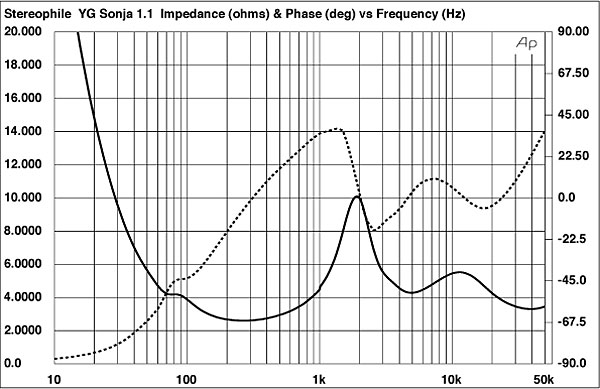
This is what a difficult load looks like. It's not the low impedance, it's the +/-45° phase angle at the same time as the low impedance, forcing the amp to dissipate far more power:

713YGS13fig02.jpg


Articles:
http://sound.westhost.com/patd.htm
http://www.stereophile.com/reference/707heavy

A tube amp with 4,8,and16 ohm taps driving a 6 ohm speaker, should it be 4 or 8 ohm tap?
There are many threads on that topic.
 
I have a brief sidetrack. In the same topic line. A tube amp with 4,8,and16 ohm taps driving a 6 ohm speaker, should it be 4 or 8 ohm tap? Sorry about the tangent.

You can choose either the 4 or the 8 ohm tap depending on which you prefer. I too own 6ohm speakers and it doesn't much matter - some prefer it with the 4ohm but others swear by 8ohm. If your 6ohm rated speaker dips to around 3ohms then you may want the 4 ohm tap if you listen loud.
 
I remember an argument on another forum about amplifiers. The head of Audio Note UK was discussing SET versus transistor amplifiers about the issue of impedance. AN UK makes some of the more exotic SET/Tube amps on the market.

This was part of Audio Note's reply about low impedance speakers and and the ability to drive them.

Your pendant for generalization is truly astonishing, listen to this,

1.) Tube amplifiers self destruct on turn on.

2.) They are load incompatible.

3.) They have high distortion.

4.) They suffer from microphony.

5.) Low power!

6.) The non-feedback types are unstable.

7.) Performance is temperature dependent.

Bad engineering are the only real causes of these ailments with the exception of 5.) which is only a problem if you have inefficient speakers (now why you would strive for efficiency in the amplification only to squander this by using lossy speakers is beyond me, but then applying a consistent logic across the system perhaps never occurred to you??).

Now, to condemn a technology on the basis that many examples are badly engineered look more to me like a way promoting your beliefs by ridiculing and putting the opposition down by selectively using the worst samples as illustration of why, not a credible method.

Point 6.) is interesting, as it truly demonstrates how incredibly ignorant you are about how a properly designed non-feedback SET works.

You obviously buy into the claims by many of the transistor amplifiers manufacturers about the stability of their amplifiers,

"Absolutely stable into any load!" Is the claim.

Any load?

How about a dead short? Is my question to that.

Ahem, says the claimant, that is not what I meant, well says I, so what you are telling me is that a screwdriver across the speaker terminals is not a load??

Why do you think most of these amplifier have sophisticated protection circuits, would they be needed if the amplifier was truly stable??

Answer that question, please.

Now take any one of my 300B SETs for example, I can leave any of them switched on without a load or shorted for a month without any problem.

Try that with one of your favourite transistor amplifiers, after you have removed the protection circuits and then see how long it lasts!


:D

The 8 watt massive beasties may not bring watts but...
 
well says I, so what you are telling me is that a screwdriver across the speaker terminals is not a load??
Screwdrivers don't sound very good.

I totally lost whatever point he was trying to make. Something about bad engineering? That he makes totally bitchin' amps and everyone else blows? Some vague point about SS vs tube? Maybe I need another coffee...
 
Screwdrivers don't sound very good.

I totally lost whatever point he was trying to make. Something about bad engineering? That he makes totally bitchin' amps and everyone else blows? Some vague point about SS vs tube? Maybe I need another coffee...

I think we made a small detour from engineering into marketing spin.
 
I don't think it was too difficult to follow - albeit half a conversation. But The point was that you could take the 1ohm Apogee Scintilla and you could drive his 300B SETs (or any competently designed SET amp) and drive the Scintilla at full level for a month straight and not blow the amplifier.

99+% of all SS amps would blow their circuit breaker or shut down or blow up/catch fire. I tried my Pioneer Elite receiver with a panel and it shut down never to be started again. My Sugden would blow a fuse at 2 ohms.

The SET may operate with something like 85% distortion but it will drive any load.

The issue IME is that lower/no feedback amplifiers sound the best (and have been born out in level matched blind auditions) repeatedly over the years. Lower feedback generally means lower power and lower damping factors (much lower). Since there is zero sonic advantage in choosing speakers that REQUIRE high power then don't choose such speakers. Then you can buy amplifiers for their sound quality instead of dumping sound quality to maximize the ability to move a driver operating at 1ohm.

It's pretty telling when some of the top SS manufacturers/engineers under blind conditions wound up choosing a competing low powered Tube amp for a fraction of the price of their SS amplifiers.

http://www.stereophile.com/reference/70
 
I buy into the logic that an amp shouldn't 'sound' like anything (preamps and upstream gear as well). Or put another way, I don't want preamps or amps that color the sound. Take the signal, give it gain (or just extract the signal or whatever) and no other alterations. That'd be ideal.

So, in buying into that argument... I don't base my system on my amplifiers' sound. It's based on speakers, which have many colors and I think that it's ok that they do.

The speakers that I like best are inefficient... I'm not buying them to be efficient, I'm buying them to make sound. (If you want efficiency go headphones)

I think bass sounds best out of acoustic suspension type setups... guess what... that comes at a cost of lower efficiency.

I see nothing wrong with picking the speakers I like and then finding the proper amp to drive them safely and to levels that achieve satisfaction on my end. In my opinion there is nothing wrong with people who like inefficient speakers. Please stop talking down on us because our opinions on what's important differs from yours.

I guess everyone who owns classic flagship infinity's is mentally defective because a 2w tube amp can make some other brand of speakers sound good in someone else's opinion.

I guess I should keep my opinion out of this, sell off the RS 4.5's and Threshold S500 and go back to the chorus II & MC 40 setup that I detested... because after all it's more efficient.

Sorry if it seems like I'm giving off attitude, I'm really not mad nor do I take any of this seriously to the point of getting bunched up panties... but the way this discussion has been going seems just plain wrong and I think I'm allowed to say it.

Back to the topic of the OP... dunno, I wish all (or more) amps were capable of driving my speakers well though.

I perhaps wouldn't have said it quite so forcefully, but I agree (even though I own very efficient speakers). Speakers seem to my ears (and limited experience) to be the most important link. If I like the speakers, I can find amps that play well with them. If I don't like the speakers, I'm not sure any amount of amp and source matching is going to make me like them.
 
Back
Top Bottom