• Please note that Audiokarma will be offline briefly for updates early on Monday morning, September 28th.

Why the hell won’t they give us meters?

tom67

Well-Known Member
Everyone likes meters. No McIntosh owner would be happy without those blue meters Yamaha requires about $3000 for an amplifier with meters.Back in the late 70s. I had a pioneer SX 780. It had 3 meters,one of which was a center channel tuning meter that receiver cost about $200. I am attaching a review on some freestanding meters. This company makes a variety of meters for about $100 Meters are simply not that expensive. Why don’t more manufacturers incorporate them in their average priced products? If I had a choice between two mid priced receivers and one had meters, I would probably choose that one.
 
Register to hide this ad
Got one of those VU switches, good unit , but the LEDs cause hum in some phono cartridges.
 
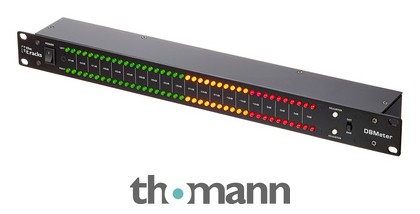
Because now you can buy things like this that look almost as cool..

387660.jpg
 
Because they are mechanical and that makes them prone to failure and possibly additional returns/warrentee work (=>cost/unit to produce). I've had two amps with meters that failed.
 
Probably because while they might be pretty to look at, they don't provide much useful info.
I believe they can tell you if you are clipping and how hard you are pushing your amp. Yeah, they may be largely eye candy but most still like them. It is curious that the more you spend, the more likely you are to get meters, so the audiophile crowd obviously values them. It least they have some value. If you want to talk about worthless, how about all the cheap, guady LED lights on Lincolns and Cadillacs.
 
I always get a bang out of people when they say Mac meters don't give much use full information. The amps with the older meters you could easily see a 1 or 2 db imbalance issue. If your amps are larger than the rating of your speakers which is very common now days they give you an idea when you should take your foot off the gas pedal . Kind of similar to your speedometer. Keeps you from blowing up drivers. They will also reveal the dynamics of the music you are listen, too and when there fore to further back off the controls or maybe allow you to add a bit more. Seeing recordings where the dynamic range is over 50 db is surprising to a lot of folks. Also when playing pop music seeing the meters barely move more than 6 db is quite revealing also. They can reveal other things too. Tonal imbalance, and in conjunction with the Power Guard lights when you have it just turned up to damn loud. They also reveal that your speakers can be dynamically challenged and should be replaced with more efficient speakers. This is especially true when you see the meters barely moving and yet you don't hear anything. The same thing could be true when you have blown a driver and haven't realized it. Sometimes woofers won't function at very low levels having been compromised and the meters will reveal this. They will also reveal when you have your speakers connected out of phase. See the needles pump with the bass and you don't hear the bass you know you have an issue. Polarity most likely.

If you have balanced your system left to right and the meters are not equal you personally have an issue, your speakers do or speakers are not placed symmetrically and should be. AS my speakers are not placed symmetrically and I use room equalization to correct the issue my meters reveal that in the bass region the left channel requires 4 to 6 db more power depending on the type of bass line being performed.

You can also see when the recording engineers have pushed the recording levels so hard limiting is present and to much compression is being used also. The MC 3500 was famous for being rated at 350 watts but capable of 490 watts before clipping. During live concerts it wasn't unusual to see the 3500 meters go to +1.5 db and the meter lamps start to dim telling you were right on the edge before clipping would take place. Unlike the SS amps that when pushed hard clipped easily and could be heard if the drivers didn't fail first. The 3500 gave you a warning. With digital recordings being the rage today the meters display has been widened from 25 db to 60 db so closer examination is required today to see some issues. I prefer meters on top of each other. having mono amps stacked for instance. Its easier to see small differences in meter reading for me. I also loved when meters worked up and down and were placed very close together mirroring each other. Similar to the level columns placed side by side on my MPI_4. Maximum performance indicator and large advanced mixing consoles. Mcintosh 8207 and 7106 are famous for their vertical column meters.

All that said I leave my meters off with familiar music. New performances always get metered for the initial audition. When I suspect something is wrong the meters get turned on. Keeps me from having to drag out the test equipment.
 
Last edited:
Way beyond my pay grade …but having had and looked into the eyes of the Phase Linear 400 in my past I would love to cobble together those meters/ faceplate with a modern hypex amplifier just to admire it across the room.
 
Back
Top Bottom