• The move to the new server is done. There are some software and database maintenance updates in process. This has us passing the hat around to help out. We appreciate any donations. Seriously, even a dollar helps. The payment page may be found here - https://www.audiokarma.org/support.html

Yamaha M-5000

Yamahalic

Super Member
I rarely check out the more current Yamaha HIFI lines, but I decided to check them out today and discovered the M-5000 amp...WOW!!! Retro style with some serious design seriousness for a modern age (specs below from Yamaha website)
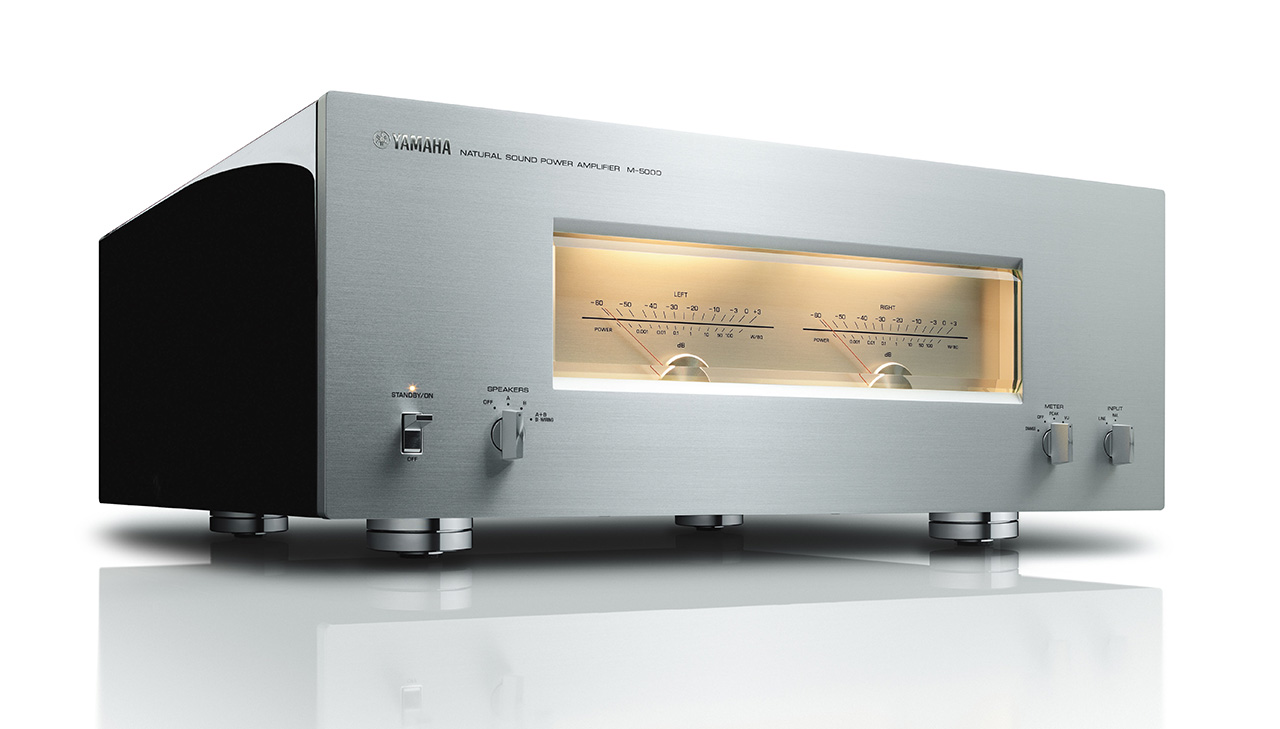
  • 200 W + 200 W (4 ohm, 20 Hz-20 kHz, 0.07% THD, 2-channel driven)
  • 100 W + 100 W (8 ohm, 20 Hz-20 kHz, 0.07% THD, 2-channel driven)
  • Meticulously designed, balanced signal transmission
  • Floating and balanced power amplifier layout for improved drivability
  • Perfectly symmetrical design for isolating left and right channels
  • Low impedance design with shortened signal and power supply paths
  • Improved construction delivers state-of-the-art rigidity
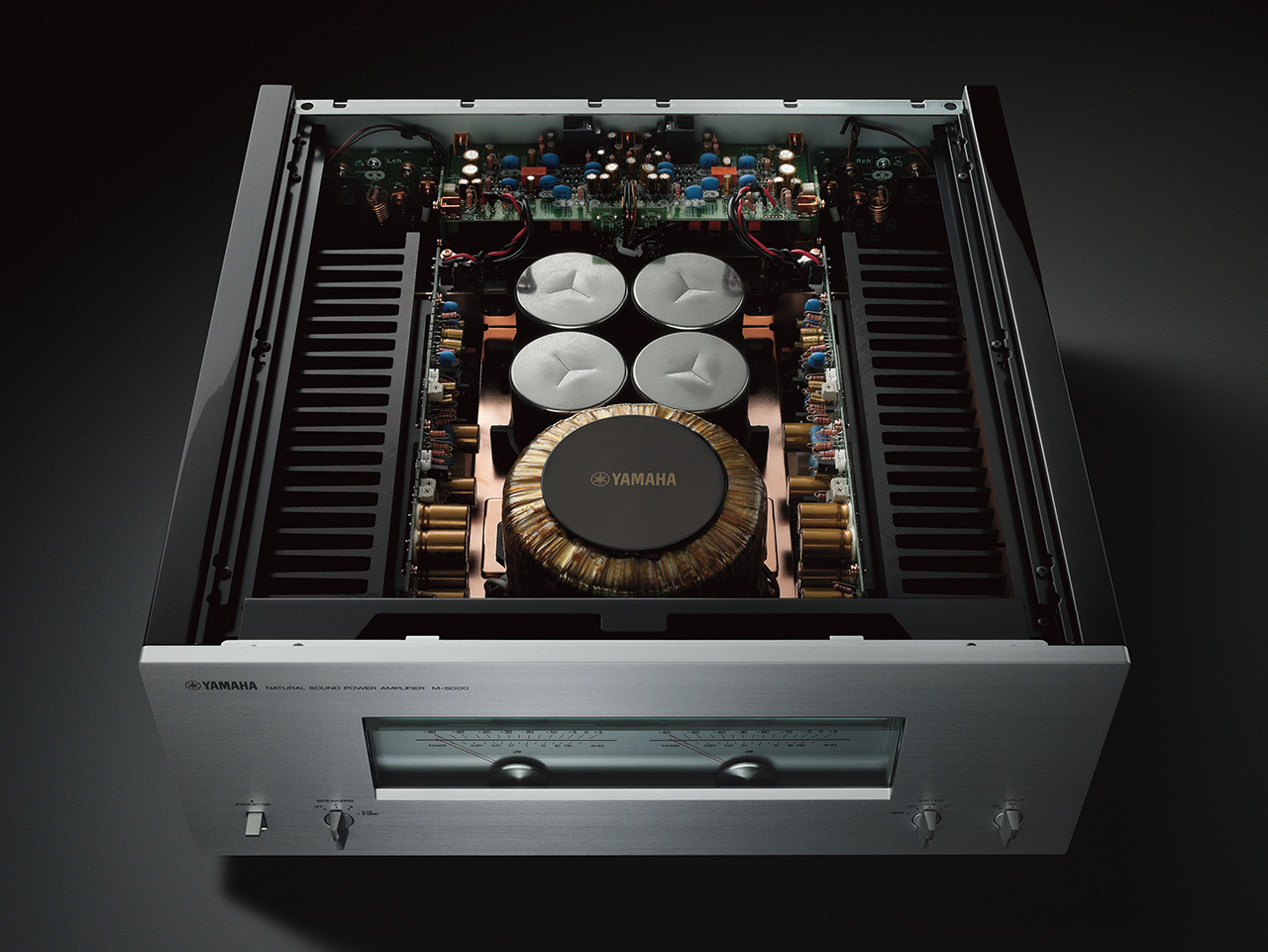
  • Massive toroidal core power transformer
Yamaha-M-5000-02.jpg

Yamaha-M-5000-01.jpg

yamaha-m5000.jpg
 
Register to hide this ad
I have seen pics of this amp, and the specs online. I'm sure it is nice, but is it really better than older amps from Yamaha? 100W/ch into 8ohms is not as powerful as most of Yamaha's older amps. The M-65 that I use is 170W/ch into 8ohms, and it was not TOTL. Why so little power?

Older amps usually had some feature such as "Zero Distortion Rule" (ZDR), "Hyperbolic Conversion Amplification" (HCA), "Total Purity Audio Reproduction Technology" (ToP-ART)... (any others?). So, what does this M-5000 have? It has the feature called "Full floating and balanced transmission from input to output", but what is this? How does it compare with the older ZDR, HCA, ToP-ART and others? How do they all compare to each other?

Most of the high-end Yamaha amps of the past had two transformers, but the M-5000 has just this one toroidal. Do two transformers make any difference? I think the older amps did not have toroidal. With only 100W/ch 8ohms, maybe the M-5000 just doesn't need two transformers? I am guessing that the M-5000 is much more power-efficient than the older high-end amps, and that may have been part of the design.

I wonder how the M-5000 compares to a B-2x, and which is better? I'm sure it depends on what speakers you have (whatever sounds best to you is the best!).

I would guess that the M-5000 is designed for the NS-5000 speakers. But maybe this guess is wrong. The NS-5000 specs are 200W into 6ohms nominal input power, but the M-5000 specs are 170W into 6ohms dynamic power (nominal is even less). The M-5000 would clip trying to drive the NS-5000 within nominal power of the speakers?

The M-5000 can be run in DUAL MONO BRIDGE mode that doubles the power when using two M-5000 amps. The problem is that DUAL MONO BRIDGE mode is for 8ohm and higher speakers, and NS-5000 is 6ohms. So, it seems that dual mono bridge mode is not supported with the NS-5000 speakers? So, this seems strange. Are the M-5000/NS-5000 really designed for each other?

The front-panel meters are the old analog type (galvanometer). They respond slowly, making it harder to see dynamics in the sound. It is a retro look that people like, but maybe not really as good as newer displays. Yamaha could have designed a new high-res LED meter or something (something reliable). I like the meters on the MX-1000! LCD may not have been used since they are not so reliable long-term. At least galvanometers are fairly reliable.

Anyhow, is the M-5000 really superior to the older Yamaha amps? Is it really a good match for the NS-5000?
 
Anyhow, is the M-5000 really superior to the older Yamaha amps?
Also is the 5000 series worth 40-60kAUD?
Had a good listen to the 5000 series at a hifi show. Scores 10/10 for lust however somewhat disappointed with the sound
(neutral, un-musical,,,) certainly the listening room did it no favours. Happy to listen to my CX-1000 paired with Cit 19 or CA-2010
or...
 
...The front-panel meters are the old analog type (galvanometer). They respond slowly, making it harder to see dynamics in the sound. It is a retro look that people like, but maybe not really as good as newer displays. Yamaha could have designed a new high-res LED meter or something (something reliable)...

Like I am seeing on a lot of recent automobile IPs, I would LOVE to see a high-res selectable digital display that can be switched between display versions. So, maybe you can select an old school analog meter digital representation, or a bar graph (like MX-1000), or like a speedometer, or ? The only limit is the creativity of the designers, but the options would appeal to a wide range of enthusiasts. Here are some reviews that can give some more info on the M-5000:

http://www.theabsolutesound.com/art...er-amp-ns-5000-loudspeaker-gt-5000-turntable/
https://www.lbtechreviews.com/test/hi-fi/yamaha-m-5000-and-c-5000
https://www.soundstageaustralia.com...000-preamplifier-m5000-stereo-power-amplifier
 
I rarely check out the more current Yamaha HIFI lines, but I decided to check them out today and discovered the M-5000 amp...WOW!!! Retro style with some serious design seriousness for a modern age (specs below from Yamaha website)
  • 200 W + 200 W (4 ohm, 20 Hz-20 kHz, 0.07% THD, 2-channel driven)
  • 100 W + 100 W (8 ohm, 20 Hz-20 kHz, 0.07% THD, 2-channel driven)
  • Meticulously designed, balanced signal transmission
  • Floating and balanced power amplifier layout for improved drivability
  • Perfectly symmetrical design for isolating left and right channels
  • Low impedance design with shortened signal and power supply paths
  • Improved construction delivers state-of-the-art rigidity
  • Massive toroidal core power transformer

M-60: 0.003% THD 8Ohms. Did they change the way they are measured? I'm not sure what all the stuff listed below the top lines do if the THD is that much higher? (Besides make it look and feel very desirable and somehow justify the price?)

upload_2020-11-29_20-37-52.png
 
I have seen pics of this amp, and the specs online. I'm sure it is nice, but is it really better than older amps from Yamaha? 100W/ch into 8ohms is not as powerful as most of Yamaha's older amps. The M-65 that I use is 170W/ch into 8ohms, and it was not TOTL. Why so little power?

If you look at the Lab Report in the Hi-Fi News review of it, you'll find that it can deliver 995W into 1 Ohm - https://www.hifinews.com/content/yamaha-c-5000m-5000-prepower-amplifier-lab-report

As it says at the end - this is one very capable '100 Watter'!
 
In the 80s the Japanese manufacturers were crazily hunting for super low THD‘s, the same time the musicality of their amplifiers degraded. These fancy ZDR circuits, or whatever they called them, seemed to strangulate the musicality a bit. The B-2, for example does not shine with low distortion values, but is one of the best amps they ever made.
Owing some vintage Yamaha amps and a brand new A-S3200, which is basically a M-5000, I have enough opportunity to compare. Trust me, these ultra low distortion values are only good for the brochures and Hi-Fi magazines.
 
In the 80s the Japanese manufacturers were crazily hunting for super low THD‘s, the same time the musicality of their amplifiers degraded. These fancy ZDR circuits, or whatever they called them, seemed to strangulate the musicality a bit. The B-2, for example does not shine with low distortion values, but is one of the best amps they ever made.
Owing some vintage Yamaha amps and a brand new A-S3200, which is basically a M-5000, I have enough opportunity to compare. Trust me, these ultra low distortion values are only good for the brochures and Hi-Fi magazines.
right-on!
I think the emphasis for the Vfet amps was to get them to sound as natural and as musical as possible, rather than hit lab targets, albeit, the B-2 (with proper TLC) hits some low THD numbers as well.
 
Like I am seeing on a lot of recent automobile IPs, I would LOVE to see a high-res selectable digital display that can be switched between display versions. So, maybe you can select an old school analog meter digital representation, or a bar graph (like MX-1000), or like a speedometer, or ? The only limit is the creativity of the designers, but the options would appeal to a wide range of enthusiasts. Here are some reviews that can give some more info on the M-5000:

http://www.theabsolutesound.com/art...er-amp-ns-5000-loudspeaker-gt-5000-turntable/
https://www.lbtechreviews.com/test/hi-fi/yamaha-m-5000-and-c-5000
https://www.soundstageaustralia.com...000-preamplifier-m5000-stereo-power-amplifier
According to the absolute sound we should buy the Simaudio 760a and save $2k.
upload_2020-11-30_21-45-9.png
 
I have seen pics of this amp, and the specs online. I'm sure it is nice, but is it really better than older amps from Yamaha? 100W/ch into 8ohms is not as powerful as most of Yamaha's older amps. The M-65 that I use is 170W/ch into 8ohms, and it was not TOTL. Why so little power?

Older amps usually had some feature such as "Zero Distortion Rule" (ZDR), "Hyperbolic Conversion Amplification" (HCA), "Total Purity Audio Reproduction Technology" (ToP-ART)... (any others?). So, what does this M-5000 have? It has the feature called "Full floating and balanced transmission from input to output", but what is this? How does it compare with the older ZDR, HCA, ToP-ART and others? How do they all compare to each other?

Most of the high-end Yamaha amps of the past had two transformers, but the M-5000 has just this one toroidal. Do two transformers make any difference? I think the older amps did not have toroidal. With only 100W/ch 8ohms, maybe the M-5000 just doesn't need two transformers? I am guessing that the M-5000 is much more power-efficient than the older high-end amps, and that may have been part of the design.

I wonder how the M-5000 compares to a B-2x, and which is better? I'm sure it depends on what speakers you have (whatever sounds best to you is the best!).

I would guess that the M-5000 is designed for the NS-5000 speakers. But maybe this guess is wrong. The NS-5000 specs are 200W into 6ohms nominal input power, but the M-5000 specs are 170W into 6ohms dynamic power (nominal is even less). The M-5000 would clip trying to drive the NS-5000 within nominal power of the speakers?

The M-5000 can be run in DUAL MONO BRIDGE mode that doubles the power when using two M-5000 amps. The problem is that DUAL MONO BRIDGE mode is for 8ohm and higher speakers, and NS-5000 is 6ohms. So, it seems that dual mono bridge mode is not supported with the NS-5000 speakers? So, this seems strange. Are the M-5000/NS-5000 really designed for each other?

The front-panel meters are the old analog type (galvanometer). They respond slowly, making it harder to see dynamics in the sound. It is a retro look that people like, but maybe not really as good as newer displays. Yamaha could have designed a new high-res LED meter or something (something reliable). I like the meters on the MX-1000! LCD may not have been used since they are not so reliable long-term. At least galvanometers are fairly reliable.

Anyhow, is the M-5000 really superior to the older Yamaha amps? Is it really a good match for the NS-5000?

Yeah, I agree. For 10K I'm going to need more than 100W. If I'm spending 10k on a power amp, the speakers are going to be 1.5x more at least and I doubt that 100W is going to be enough... I'd rather have a modern Class D with 200-300W. Spend the extra money on a DSP to equalize the room...
 
Yeah, I agree. For 10K I'm going to need more than 100W. If I'm spending 10k on a power amp, the speakers are going to be 1.5x more at least and I doubt that 100W is going to be enough... I'd rather have a modern Class D with 200-300W. Spend the extra money on a DSP to equalize the room...
According to Absolute Sound...., means Absolutely nothing! IMHO, all these high-end equipment reviews magazines are highly questionable for reasons I rather not bring to a public forum, but I am almost certain that I am not the only one that thinks or knows this.

I much rather believe my own ears or ears of people I trust, such as some experts on this forum.

I too, was not impressed by the latest and greatest from Yamaha, but I cannot tell that the showroom was optimized for the system. Also, what sounds OK to my ears, might sound sublime to others..who knows. Bottom line is that If I were to buy that system I would want to listen to it and like it myself rather than take the word of a review magazine.

In the case of the 5000 series I was genuinely interested to see if I am missing anything between the new gear and the vintage gear in terms of sound. I wanted to know if I should exchange my vintage collection for a modern set of hi-fi. My conclusion based on this experience is that I am not missing anything and reinforced the fact that that I would actually be shorting myself by doing the switch. Going from vfet sound to anything else is a difficult change. I am assuming that good tube gear would probably be comparable in terms of sound, but thinking that I would need to worry about tube replacements and tube matching, gives me a headache. Nonetheless, tube gear is something I would explore next, rather than go back to testing more modern SS hi-fi.

I also do not see the need for something with more than 100W. Unless one plans to test the structural integrity of their house of plans to use hi-fi equipment in a club, 100W should be plenty.
One of my "test subjects" at the moment is a set of Stax DA-100M monoblocs. These are rated at 100W Class A or AB. One of the front panel LED indicators should turn on when delivering 25W then a second indicator should turn on when delivering full 100W . Since during normal listening levels I never reach 25W, I was not able to see if the LEDs work on my new test subjects. To satisfy my curiosity without bringing the units on the bench, I needed to wait for my family to leave the house, so I could test that functionality. I made it to 25W and did not have the "ear drums apatite" to test the 100W indicator...will do some other time or on the bench. I also noted that since my room is not very large ( ~14 X 17ft) and not well conditioned for listening, the louder the sound, the less enjoyable the experience.
 
Last edited:
I also do not see the need for something with more than 100W. Unless one plans to test the structural integrity of their house of plans to use hi-fi equipment in a club, 100W should be plenty..

I'm guessing you think that the 16,000W I have in my 33 x 14ft lounge is a bit excessive, then? ;)
 
I disagree that reviews and THD mean absolutely nothing. They are data points to take into consideration. I agree that the final assessment should be made by the users ears, with their speakers in their listening room, but we can't have all this equipment to demo so we need to start somewhere. I read the reviews that Yamaholic posted, and despite all the normal stereo reviewer dribble I got at least one thing that several reviewers said. It's not enough power. And while I agree that 100W for most situations is enough, if I am going to spend 10k (10k!) I want the ability to run those difficult speakers, or to have the headroom for those occasions when no one is home. As far as THD, y'all act like there is some new circuit design here, and they made design choices in other directions instead of THD. This amp does run down in the ~.007 THD range, they just decided to tell you it is a 100W amp, but to do so they had to take that point at a much higher distortion number. This is from the A-S3200 (Nearly the same amp, right?), but if you used the same standard as we did with the M-60 then this amp is a 87-90W amp, not a 100W amp:
upload_2020-12-1_9-9-23.png

IMO it looks like the innovation here is in the marketing department, not the engineering lab. It is short on power, so they are messing with the rating method. The circuit doesn't look particularly innovative, but they put expensive materials all around it. (It is beautiful to look at, I can imagine it is very impressive in person).

I think I am the target audience. I grew up lusting for higher end Yamaha, and now that I can afford things like this I am (was) pretty interested in this amp. But after looking into it, I think it comes up short.

I think HiFi is about the journey, not the destination. This amp circuit design does not seem to be significantly different from Solid State amps of yesterday. I'd rather expand my horizons by getting into some of the new Class D stuff or as Rottalpha is thinking looking into tubes. Seems like valve amps and the appropriate speakers would be really interesting. Certainly from the modern perspective DSP room correction and bass management is the most impactful thing to come along to improve the sound. Lot's of people using tubes and DSP as well.
 
If one looks at the rms power specs of all of the amps we love from for instance the '80s I don't recall any of them that show a doubling of max rated rms power when moving from 8 ohm to 4 ohm speakers with the same THD.

2nd thought concerning power. Going from using my AX-1090 integrated to my M-70 I noticed an improvement in the quality of bass that my speakers produced at the same listening/loudness level. Note that this was decoupling the power section of the 1090 and using it through the same pre-amp that was later connected to the M-70. It is my strong opinion that having more power on tap is quite useful to deliver tight bass.

Cheers,
James
 
the highest THD happens at very low levels for most amp deigns and it is true across the board with ALL Yamaha designs.

I disagree that reviews and THD mean absolutely nothing.
I agree with you to some extent and here is where I see THD making a difference:
  • Add vs Even harmonics.
  • if THD is above ~1% or where is perceivable by human ear.
 
I disagree that reviews and THD mean absolutely nothing. They are data points to take into consideration. I agree that the final assessment should be made by the users ears, with their speakers in their listening room, but we can't have all this equipment to demo so we need to start somewhere. I read the reviews that Yamaholic posted, and despite all the normal stereo reviewer dribble I got at least one thing that several reviewers said. It's not enough power. And while I agree that 100W for most situations is enough, if I am going to spend 10k (10k!) I want the ability to run those difficult speakers, or to have the headroom for those occasions when no one is home. As far as THD, y'all act like there is some new circuit design here, and they made design choices in other directions instead of THD. This amp does run down in the ~.007 THD range, they just decided to tell you it is a 100W amp, but to do so they had to take that point at a much higher distortion number. This is from the A-S3200 (Nearly the same amp, right?), but if you used the same standard as we did with the M-60 then this amp is a 87-90W amp, not a 100W amp:
View attachment 2051621

IMO it looks like the innovation here is in the marketing department, not the engineering lab. It is short on power, so they are messing with the rating method. The circuit doesn't look particularly innovative, but they put expensive materials all around it. (It is beautiful to look at, I can imagine it is very impressive in person).

I think I am the target audience. I grew up lusting for higher end Yamaha, and now that I can afford things like this I am (was) pretty interested in this amp. But after looking into it, I think it comes up short.

I think HiFi is about the journey, not the destination. This amp circuit design does not seem to be significantly different from Solid State amps of yesterday. I'd rather expand my horizons by getting into some of the new Class D stuff or as Rottalpha is thinking looking into tubes. Seems like valve amps and the appropriate speakers would be really interesting. Certainly from the modern perspective DSP room correction and bass management is the most impactful thing to come along to improve the sound. Lot's of people using tubes and DSP as well.
What do you want to tell us with this? That a 97-90W amp is inferior to a, in your opinion "genuine" 100W amplifier?
We had the opportunity to extensively compare the predecessor, the A-S3000 (which, in contrast to the A-S3200 was highly recommended in a Stereophile review, so much for the subject of hifi reviews) with some really demanding speakers, like the Focal Utopia Maestro or the Cabasse Murano Alto. The candidates were the MX-1 and the M-2, both rated @ 200W/ch. Despite it's lower nominal power output and higher THD specs, the A-S3000 outperformed the competition with it's relaxed, less constrained, warm and absolutely clear reproduction. A bass to die for. Keep in mind, the power supply with it's big transformer and 4x22000 uF filter caps is capable of delivering lot's of current.
 
What do you want to tell us with this? That a 97-90W amp is inferior to a, in your opinion "genuine" 100W amplifier?
We had the opportunity to extensively compare the predecessor, the A-S3000 (which, in contrast to the A-S3200 was highly recommended in a Stereophile review, so much for the subject of hifi reviews) with some really demanding speakers, like the Focal Utopia Maestro or the Cabasse Murano Alto. The candidates were the MX-1 and the M-2, both rated @ 200W/ch. Despite it's lower nominal power output and higher THD specs, the A-S3000 outperformed the competition with it's relaxed, less constrained, warm and absolutely clear reproduction. A bass to die for. Keep in mind, the power supply with it's big transformer and 4x22000 uF filter caps is capable of delivering lot's of current.

It doesn't have higher THD, they just chose to quote the maximum power value at a higher THD.

The OP presented the M-5000 for discussion. As a long time user and fan of Yamaha gear my 2¢ is that I am disappointed that a 10k ToTL amp from Yamaha doesn't have more power. I feel like Yamaha is using a bit of slight of hand to give it a higher rating. IMO it's not worth it's price and there are a lot of options on the market. I think it's great that your A-S3200 sounds as wonderful as it does for you, it and the M-5000 are beautiful pieces. I however, think that Yamaha lost me, and my journey will take me other places. I have been reliving my glory days of youth when I wanted big Yamaha amps and Technics turntables. Probably described better as MidFi. As I have been exploring modern options it seems that these brands are less relevant, and that is a bit disappointing.
 
Back
Top Bottom