• The move to the new server is done. There are some software and database maintenance updates in process. This has us passing the hat around to help out. We appreciate any donations. Seriously, even a dollar helps. The payment page may be found here - https://www.audiokarma.org/support.html

Yamaha RX V-2095 Error Code

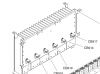
Similar wires on the right channel AMPPOWER(3)
- Yellow
- Orange
- White
- Blue
- Red
- Violet
Below is my take on the OLV test points. For the left channel AMPPOWER(2) board
In turn, measure the dc voltage between indicated wire and chassis/ground.
 
I have found the 5th and 6th output transistors to be shorted.

Any guesses as to cause of failure? What else do I need to check?
c-e short or b-e short?

Certainly check the emitter resistors, 2x0.22ohms looking for open but check it hasn't drifted high.
Check the 4.7ohm resistors that connect to the base of these transistors, also diode test the driver
transistors (A1859, C4883) that connect to these output transistors.

As for cause, maybe people fiddling with speaker wires with unit powered on or maybe powering low impedance
speakers at high volumes, transistors are in the middle of the heat shink, ie, the hottest...
 
c-e short or b-e short?

Certainly check the emitter resistors, 2x0.22ohms looking for open but check it hasn't drifted high.
Check the 4.7ohm resistors that connect to the base of these transistors, also diode test the driver
transistors (A1859, C4883) that connect to these output transistors.

As for cause, maybe people fiddling with speaker wires with unit powered on or maybe powering low impedance
speakers at high volumes, transistors are in the middle of the heat shink, ie, the hottest...
c-e short or b-e short? b-e 8.2ohm c-e 0.2ohm
 
diode test the driver transistors (A1859, C4883)

Are these the driver transistors? These do all test fine.
upload_2021-6-15_22-15-56.png
 
As for cause, maybe people fiddling with speaker wires with unit powered on or maybe powering low impedance
speakers at high volumes, transistors are in the middle of the heat shink, ie, the hottest...

I don't believe that any speakers were ever connected to this channel
 
c-e short or b-e short?

Certainly check the emitter resistors, 2x0.22ohms looking for open but check it hasn't drifted high.
Check the 4.7ohm resistors that connect to the base of these transistors, also diode test the driver
transistors (A1859, C4883) that connect to these output transistors.

As for cause, maybe people fiddling with speaker wires with unit powered on or maybe powering low impedance
speakers at high volumes, transistors are in the middle of the heat shink, ie, the hottest...
Are you available to answer questions?
 
I long onto AK when I have the time/interest etc... my day job gets in the way.
Others online always welcome to chime in.

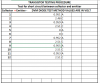
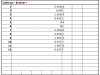
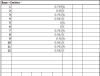
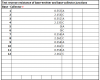
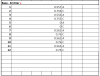
I'm guessing that post#48 is results of incircuit diode testing of output transistors.
Table 1 shows 3 sets of results, 0.95, 2.5 and 0
Table 2 shows 3 sets of results, 2.69, 0.94 and 0
likewise the other tables

Transistos in positions 5&6 clearly hace c-e shorts and should be replaced.
Need to question why they failed, perhaps "someone" (driver transistor?) was
asking them to work too hard, so upstream transistors etc... should also be checked.

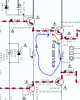
Incircuit transistor testing can be tricky, you need to look for alternate paths
eg, wanting to test e-b (red) of transistor below, expect OL however alternate
path in blue will give a non-OL result
upload_2021-6-20_8-46-39.png

Any ideas where to source:

2SA1859
2SC4883
2SA2121
2SC5949

If transistors are not available via mouser or digikey then I would be looking for modern day replacements.
Others welcome to suggest subs. Some people use BDENT.com, I've not used them.

 
Back
Top Bottom