

You are using an out of date browser. It may not display this or other websites correctly.
You should upgrade or use an alternative browser.
You should upgrade or use an alternative browser.
Yes: A Musical Journey
Yes (1969)
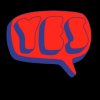
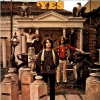
The first album, simply titled Yes, was released in the UK on the 25th July 1969 and in the US on 15th October 1969. It was recorded at Advision and Trident Studios, London, England and produced by Paul Clay. The images show the UK album cover and the US.
The album contained 8 tracks:
1. "Beyond & Before" Squire, Bailey 4:58
2. "I See You" McGuinn, Crosby 6:54
3. "Yesterday and Today" Anderson 2:53
4. "Looking Around" Anderson, Squire 4:18
5. "Harold Land" Anderson, Squire, Bruford 5:45
6. "Every Little Thing" Lennon, McCartney 5:46
7. "Sweetness" Anderson, Squire, Bailey 4:35
8. "Survival" Anderson 6:23
Further reading at YESWORLD
The first album, simply titled Yes, was released in the UK on the 25th July 1969 and in the US on 15th October 1969. It was recorded at Advision and Trident Studios, London, England and produced by Paul Clay. The images show the UK album cover and the US.
Banks was unsure as to how Clay became involved in the album, and deemed Clay unfit for the job as he had worked on film soundtracks and knew "a lot about cottages" but little about working with rock bands which caused the album to lack in quality as a result, with Bruford's drums sounding "like biscuit tins" and his guitar sounding "clangy". - Morse, Tim (1996). Yesstories: "Yes" in Their Own Words.
Accordingly we were assigned someone called Paul Clay, a bit like those movies where the cop says to the bad guy “You’re entitled to legal representation; if you don’t have a lawyer, the Court will appoint you one”. Clay ensured that the stuff got safely to tape, with some sort of stereo image and not too much distortion. That was about the extent of that. I don’t remember attending any mixing sessions. - Bruford, Bill. "Life In A Covers Band: The First Yes Album (1969)"
The album contained 8 tracks:
1. "Beyond & Before" Squire, Bailey 4:58
2. "I See You" McGuinn, Crosby 6:54
3. "Yesterday and Today" Anderson 2:53
4. "Looking Around" Anderson, Squire 4:18
5. "Harold Land" Anderson, Squire, Bruford 5:45
6. "Every Little Thing" Lennon, McCartney 5:46
7. "Sweetness" Anderson, Squire, Bailey 4:35
8. "Survival" Anderson 6:23
On their debut album, Yes were vocalist Jon Anderson, guitarist Peter Banks, keyboardist Tony Kaye, bassist Chris Squire, and drummer Bill Bruford. At the time of its release, they were a fast-rising band on the London scene, with a few prominent gigs under their belt, most notably opening for Cream at that group's final concerts. They were also a much more conventional rock band than they'd become in the early 1970s.
The album includes covers of the Byrds' "I See You" and the Beatles' "Every Little Thing." The former features Bruford whipping up a surprisingly swinging groove, over which Banks takes an extended, jazzy solo; meanwhile, the vocal harmonies recall the Fifth Dimension. The latter, while also interpolating the riff from "Day Tripper," begins as a hard-charging instrumental, mostly driven by Squire's thundering bass and Bruford's barrage of (very slightly phased) drums; the vocals don't begin until the two-minute mark. Once they kick in, the arrangement begins to stop and start, lurching forward at speed, then halting, then resuming.
The Yes originals are interesting in that they barely display any of the characteristics of the band's classic-era music. "Yesterday And Today" is a quiet, acoustic guitar/piano/vibes ballad, while "Beyond And Before" and "Looking Around" are fast, uptempo rockers with a few changes here and there, but the complexity their work would exhibit in the coming years is barely present. "Harold Land" has nothing to do with the hard bop saxophonist for whom it's named; it's a character study, like something Genesis or Pink Floyd might have done at the time. "Sweetness" is another soft-focus ballad, and "Survival," the album's closing track, features a jazz-rock arrangement and high, pristine vocal harmonies. - Freeman, Phil (2015) STEREOGUM
Further reading at YESWORLD


For me "The Yes Album" is their definitive work. I enjoyed the lineup with Tony Kaye and Bill Bruford, and always preferred Bruford's drumming to that of Alan White. Nothing personal Alan, or his admirers. I listened to a lot more Yes music than that of either Pink Floyd or Led Zeppelin.

IPADave
Turning a whiter shade of pale.
For me "The Yes Album" is their definitive work. I enjoyed the lineup with Tony Kaye and Bill Bruford, and always preferred Bruford's drumming to that of Alan White. Nothing personal Alan, or his admirers. I listened to a lot more Yes music than that of either Pink Floyd or Led Zeppelin.
I also prefer Bruford to White. White is a very good drummer, but Bruford has a style that sets him apart.
-Dave

Delmarva
Lunatic Member
2. Chris Squire
Born on 4th March 1948 to Peter and Joanne Squire, Christopher Russell Edward Squire was a founding member of Yes, and the longest serving member, remaining with the band until his death from acute erythroid leukaemia on 27th June 2015.
Squire's musical career started not with the bass guitar, but as a vocalist in school and church choirs. He took up the bass guitar, purchasing his trademark Rickenbacker 4001 from his then employer, Boosey & Hawkes, Regent Street, London.
Squire's first band was The Selfs, which later transformed into The Syn, first playing Tamla Motown covers and then psychedelic rock. Peter Banks became a bandmate during Squire's time with The Syn. The band performed at the Marquee in Soho and were contracted to Deram Records.
Squire and Banks joined Mabel Greer's Toyshop in late 1967, and met Jon Anderson, who was working in a bar close to the Marquee. The track "Sweetness", that would appear on the first Yes album, was composed at this time.
Mabel Greer's Toyshop changed their name to Yes, Bill Bruford and Tony Kaye were added and the initial line-up was in place.
Away from Yes, Squire produced some solo work. In 1975, with help form Bruford and Patrick Moraz from Yes, and Andrew Jackman from The Syn, he produced Fish Out Of Water. In 1981, with Alan White and Jimmy Page, he was a member of XYZ. Squire and Billy Sherwood formed Conspiracy, and released two albums, the first self titled in 2000 and the second, The Unknown, in 2003.
In 2005 The Syn re-formed and released Syndestructible.
Chris Squire's Swiss Choir was released in 2007, and a collaboration with Steve Hackett, formerly of Genesis, resulted in A Life Within A Week, attributed to Squackett, in 2012.
Squire never left Yes. Having been diagnosed with leukaemia, he took a break for treatment, but succumbed to the illness. He was posthumously inducted into the Rock and Roll Hall of Fame, as a member of Yes, in 2017 by Geddy Lee and Alex Lifeson of Rush. Squire's place at the R&RHoF performance was taken by Geddy Lee.

Believe it or not, Chris Squire and Greg Lake of ELP once shared a flat in London. Lake said of Yes that though they were certainly rivals, it was a friendly rivalry. The boys in Yes called ELP, "Henderson, Snake & Charmer", while ELP called Yes "Maybe".
Bill Bruford also shared a home with Chris at one time. He said that Squire was known for taking long soaks in the bathtub, and that his nickname "The Fish" was a result of his time in the tub.
Believe it or not, Chris Squire and Greg Lake of ELP once shared a flat in London. Lake said of Yes that though they were certainly rivals, it was a friendly rivalry. The boys in Yes called ELP, "Henderson, Snake & Charmer", while ELP called Yes "Maybe".
Bill Bruford also shared a home with Chris at one time. He said that Squire was known for taking long soaks in the bathtub, and that his nickname "The Fish" was a result of his time in the tub.
Thanks for that, Frank. Great info.
Time And A Word (1970)

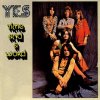
Time And A Word was recorded during breaks between gigs at Advision, and released in the UK in July 1970, and in the US in November. It charted in the UK, peaking at #45, but did not chart in the US. The cover art was deemed unsuitable for the American release and the photograph of the band, featuring Steve Howe, was used instead.
The album features orchestral content by members of the Royal College of Music, orchestrated and conducted by Tony Cox, which was partly responsible for the departure of Peter Banks, who felt that the orchestral instrumentation simply took away from the organ and guitar parts. Banks also disagreed with the choice of Tony Colton as producer. Tensions within the band increased and he was asked to leave.
Eddie Offord, who would become a familiar name on the credits of Yes albums, assisted Colton as engineer.
Reception to the album was mixed at the time. Roy Carr of the New Musical Express was enthusiastic about the album, calling it "one of the best releases of the year". However, all was not well with the band's relationship with Atlantic. After two disappointing chart performances, the label was considering dropping the band.
Time And A Word, like Yes before it, had six original tracks and two cover versions, "No Opportunity Necessary, No Experience Needed" by Ritchie Havens and "Everydays", written by Stephen Stills.
Track listing:
1. "No Opportunity Necessary, No Experience Needed" Havens 4:48
2. "Then" Anderson 5:44
3. "Everydays" Stills 6:08
4. "Sweet Dreams" Anderson, Foster 3:51
5. "The Prophet" Anderson, Squire 6:34
6. "Clear Days" Anderson 2:06
7. "Astral Traveller" Anderson 5:53
8. "Time and a Word" Anderson, Foster 4:31
Further reading at YESWORLD
Time And A Word was recorded during breaks between gigs at Advision, and released in the UK in July 1970, and in the US in November. It charted in the UK, peaking at #45, but did not chart in the US. The cover art was deemed unsuitable for the American release and the photograph of the band, featuring Steve Howe, was used instead.
The album features orchestral content by members of the Royal College of Music, orchestrated and conducted by Tony Cox, which was partly responsible for the departure of Peter Banks, who felt that the orchestral instrumentation simply took away from the organ and guitar parts. Banks also disagreed with the choice of Tony Colton as producer. Tensions within the band increased and he was asked to leave.
Eddie Offord, who would become a familiar name on the credits of Yes albums, assisted Colton as engineer.
Reception to the album was mixed at the time. Roy Carr of the New Musical Express was enthusiastic about the album, calling it "one of the best releases of the year". However, all was not well with the band's relationship with Atlantic. After two disappointing chart performances, the label was considering dropping the band.
Time And A Word, like Yes before it, had six original tracks and two cover versions, "No Opportunity Necessary, No Experience Needed" by Ritchie Havens and "Everydays", written by Stephen Stills.
Track listing:
1. "No Opportunity Necessary, No Experience Needed" Havens 4:48
2. "Then" Anderson 5:44
3. "Everydays" Stills 6:08
4. "Sweet Dreams" Anderson, Foster 3:51
5. "The Prophet" Anderson, Squire 6:34
6. "Clear Days" Anderson 2:06
7. "Astral Traveller" Anderson 5:53
8. "Time and a Word" Anderson, Foster 4:31
Even without Wakeman or Howe, this rates easily alongside The Yes Album, Fragile and Close to the Edge as one of the quintessential early prog-rock albums. Not only is it near-impossible to find a flaw, but every song is both great and succinct, yet the album retains an exceptional cohesiveness. Chris Squire still considers this his favorite Yes album. As much as I love all the others, I'm tempted to agree. - maani PROGARCHIVES
Time And A Word is definitely a "difficult second album," a document of a band attempting to expand its sonic purview and simultaneously figure out exactly where it fit into an at-the-time wide-open rock music landscape. As such, it shouldn't be anybody's first Yes album. But once you've heard and absorbed the classic early- to mid-'70s work, Time And A Word will be there waiting for you. - Freeman, Phil (2015) STEREOGUM
Further reading at YESWORLD
Last edited:
Yes established a presence with their first two albums, but their future was by no means certain. It's worth pointing out a few things at this stage. Music in the late 1960s and early 1970s was in development. Prog rock was a new phenomenon. What we take for granted 50 years later was new and highly experimental at the time.
Communication between the band members was quite difficult. It might seem surprising as we chat around the world that people within a single small country found each other's accents difficult to comprehend. At the time, travel within the UK was nothing like as prevalent as it is now. The BBC controlled the national airwaves and regional accents were not heard very much. BBC announcers still used RP, or "received pronunciation", which is often referred to as BBC English. Independent television was regional in scope, so the opportunity to hear how people spoke in different parts of the country was not as common as might be suspected. Jon Anderson's Lancashire accent would probably have needed concentration to be fully comprehended by his southern bandmates.
Added to this was the social differences between the members. The boarding school educated Bill Bruford probably felt this more than most. Anderson was not formally trained in music, unlike most of the other members of the band. He knew what he wanted to hear, but found it difficult to make others understand what he was trying to convey.
With the departure of Peter Banks and the entry into the band of Steve Howe, the band needed to make an impression with Atlantic, in order to secure some sort of future. I'll take a look at the new guitarist before continuing with the discography. Although I have my own ideas as to which version of Yes is THE definitive version, I'm hoping to be able to write these posts bearing in mind that others do not agree with me. Yes is many things to many people, which is not surprising with a 50 year history.
Communication between the band members was quite difficult. It might seem surprising as we chat around the world that people within a single small country found each other's accents difficult to comprehend. At the time, travel within the UK was nothing like as prevalent as it is now. The BBC controlled the national airwaves and regional accents were not heard very much. BBC announcers still used RP, or "received pronunciation", which is often referred to as BBC English. Independent television was regional in scope, so the opportunity to hear how people spoke in different parts of the country was not as common as might be suspected. Jon Anderson's Lancashire accent would probably have needed concentration to be fully comprehended by his southern bandmates.
Added to this was the social differences between the members. The boarding school educated Bill Bruford probably felt this more than most. Anderson was not formally trained in music, unlike most of the other members of the band. He knew what he wanted to hear, but found it difficult to make others understand what he was trying to convey.
With the departure of Peter Banks and the entry into the band of Steve Howe, the band needed to make an impression with Atlantic, in order to secure some sort of future. I'll take a look at the new guitarist before continuing with the discography. Although I have my own ideas as to which version of Yes is THE definitive version, I'm hoping to be able to write these posts bearing in mind that others do not agree with me. Yes is many things to many people, which is not surprising with a 50 year history.
6. Steve Howe
Stephen James Howe was born on the 8th April 1947 in Holloway, North London. He became interested in the guitar at an early age, and received his first (acoustic) at the age of 12, a gift from his parents. He taught himself to play and joined bands while still at school, playing in youth clubs, bars and Pentonville Prison.
Aged 17, he joined his first professional band, The Syndicats, later renamed Tomorrow, and began playing as a session musician. He played on Keith West's "Excerpts From A Teenage Opera", which hit #2 in the UK chart. Howe continued to work with West after Tomorrow split. In 1968 he joined Bodast. Following the insolvency of Tetragrammaton Records, the band split.
In 1970, Jon Anderson approached Howe and asked him to join Yes. He was in no hurry to join a band without giving careful consideration to its potential, and had just turned down an offer to join The Nice. Jon Anderson was excited to have Howe join Yes, due to his all round dexterity. Anderson claimed that Peter Banks was a great guitarist, but Steve Howe was all the greats rolled into one. Howe stayed with Yes until 1981, releasing his first solo album Beginnings, when Yes took a break during which all of the members pursued solo projects.
In 1981, Howe joined Asia, with John Wetton, Carl Palmer and Geoff Downes. The debut album, five of whose nine tracks were attributed to Howe, sold 4 million copies in North America alone. Howe left Asia in 1983
In 1984, he played on Welcome To The Pleasuredome, by Frankie Goes To Hollywood. The album was produced by Trevor Horn.
1985 saw the birth of another supergroup with Steve Hackett, GTR (GuiTaR). Following the success of the band's only album, Hackett quit to pursue other interests. Howe attempted to keep the band alive but, in the end, decided to dissolve the band.
In 1988, Howe teamed up with former Yes colleagues to form Anderson Bruford Wakeman and Howe. The band released one self-titled album and worked towards another.
In 1990, the members of ABWH rejoined Yes for the Union project. Howe left the band again after not being asked to contribute to Talk.
In 1992, he rejoined Asia and contributed to the Aqua album.
In 1995 he rejoined Yes for Keys To Ascension and remains with the band. In 2007, he formed his own jazz band, the Steve Howe Trio. Throughout, he has continued to work on his solo material.
Howe contributed the flamenco guitar section to Queen’s Innuendo.
Steve Howe was enrolled in 2017 to the Rock & Roll Hall of Fame, as a member of Yes.
Stephen James Howe was born on the 8th April 1947 in Holloway, North London. He became interested in the guitar at an early age, and received his first (acoustic) at the age of 12, a gift from his parents. He taught himself to play and joined bands while still at school, playing in youth clubs, bars and Pentonville Prison.
Aged 17, he joined his first professional band, The Syndicats, later renamed Tomorrow, and began playing as a session musician. He played on Keith West's "Excerpts From A Teenage Opera", which hit #2 in the UK chart. Howe continued to work with West after Tomorrow split. In 1968 he joined Bodast. Following the insolvency of Tetragrammaton Records, the band split.
In 1970, Jon Anderson approached Howe and asked him to join Yes. He was in no hurry to join a band without giving careful consideration to its potential, and had just turned down an offer to join The Nice. Jon Anderson was excited to have Howe join Yes, due to his all round dexterity. Anderson claimed that Peter Banks was a great guitarist, but Steve Howe was all the greats rolled into one. Howe stayed with Yes until 1981, releasing his first solo album Beginnings, when Yes took a break during which all of the members pursued solo projects.
In 1981, Howe joined Asia, with John Wetton, Carl Palmer and Geoff Downes. The debut album, five of whose nine tracks were attributed to Howe, sold 4 million copies in North America alone. Howe left Asia in 1983
In 1984, he played on Welcome To The Pleasuredome, by Frankie Goes To Hollywood. The album was produced by Trevor Horn.
1985 saw the birth of another supergroup with Steve Hackett, GTR (GuiTaR). Following the success of the band's only album, Hackett quit to pursue other interests. Howe attempted to keep the band alive but, in the end, decided to dissolve the band.
In 1988, Howe teamed up with former Yes colleagues to form Anderson Bruford Wakeman and Howe. The band released one self-titled album and worked towards another.
In 1990, the members of ABWH rejoined Yes for the Union project. Howe left the band again after not being asked to contribute to Talk.
In 1992, he rejoined Asia and contributed to the Aqua album.
In 1995 he rejoined Yes for Keys To Ascension and remains with the band. In 2007, he formed his own jazz band, the Steve Howe Trio. Throughout, he has continued to work on his solo material.
Howe contributed the flamenco guitar section to Queen’s Innuendo.
Steve Howe was enrolled in 2017 to the Rock & Roll Hall of Fame, as a member of Yes.
Last edited:

That was a hellava performanceJon's performance at the HoF was undeniably great. I felt for some years that he had lost it, but that clearly proved me wrong. It was great to see Geddy Lee performing with his heroes, but of course, it would have been better yet had Chris Squire still been around.
Re: dingbat - Rick Wakeman claims that the best way to describe Jon is that he tries to save this planet while living on another one.
Delmarva
Lunatic Member
Steve Howe has voiced displeasure for years over Atlantic Records use of that band photo for the U.S. release of Time And A Word. Can't say as I blame him seeing as he didn't play a note on the album and wasn't even in the band yet. Actually he was very nearly a member Of Keith Emerson's band The Nice at the time as he had a very successful audition with them and met with their management, but then had second thoughts and didn't join. Jetrho Tull was courting Howe at the time as well.Time And A Word (1970)
View attachment 1216174 View attachment 1216175
Time And A Word was recorded during breaks between gigs at Advision, and released in the UK in July 1970, and in the US in November. It charted in the UK, peaking at #45, but did not chart in the US. The cover art was deemed unsuitable for the American release and the photograph of the band, featuring Steve Howe, was used instead.
The album features orchestral content by members of the Royal College of Music, orchestrated and conducted by Tony Cox, which was partly responsible for the departure of Peter Banks, who felt that the orchestral instrumentation simply took away from the organ and guitar parts. Banks also disagreed with the choice of Tony Colton as producer. Tensions within the band increased and he was asked to leave.
Eddie Offord, who would become a familiar name on the credits of Yes albums, assisted Colton as engineer.
Reception to the album was mixed at the time. Roy Carr of the New Musical Express was enthusiastic about the album, calling it "one of the best releases of the year". However, all was not well with the band's relationship with Atlantic. After two disappointing chart performances, the label was considering dropping the band.
Time And A Word, like Yes before it, had six original tracks and two cover versions, "No Opportunity Necessary, No Experience Needed" by Ritchie Havens and "Everydays", written by Stephen Stills.
Track listing:
1. "No Opportunity Necessary, No Experience Needed" Havens 4:48
2. "Then" Anderson 5:44
3. "Everydays" Stills 6:08
4. "Sweet Dreams" Anderson, Foster 3:51
5. "The Prophet" Anderson, Squire 6:34
6. "Clear Days" Anderson 2:06
7. "Astral Traveller" Anderson 5:53
8. "Time and a Word" Anderson, Foster 4:31
Further reading at YESWORLD
Definitely a confusing album cover with two different incarnations of the band depicted. Rather confusing music as well on the first two albums with the band doing covers of The Beatles, The Byrds, Ritchie Havens and Buffalo Springfield.
Clearly a band in search of an identity.

It's kind of like that Beatles album with the baby butchers. Atlantic effectively pasted a picture over the original front cover but kept the same back cover.

Last edited:
Delmarva
Lunatic Member
That's a rather remarkable photo. Generally, at six feet tall, Greg is the tallest person in any photo with him. Squire's 6' 4" frame makes Greg look rather squatty.Thanks for that, Frank. Great info.

Dusty Ol'Man
Yes, Still trudging along.
Kevin, thanks for all this. I wanted to share my collection here. Hope no one minds. Every album pictured is a first release in the US.
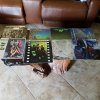

I never got a chance to see Yes live, but I did get the chance to see Flash in 1973. Great band in their own right with Banks and Kaye. I've got Steven Wilson's 5.1 mix of Close to the Edge on it's way. Looking forward t it as I love his work on Fragile and some Gentle Giant albums.
The Yes Album (1971)
The Yes Album hit the stores on the 19th February 1971. It was the first to feature Steve Howe on guitar and contains a solo by Steve played live at the Lyceum in London. Clap was written to celebrate the birth of Howe's son. The Yes Album was the first to contain only original work. No cover versions appear. It would also be the last album to feature Tony Kaye. He would not be seen again until 1983 and 90125. The Yes Album was an instant success and consolidated the band's position with Atlantic. The album reached #4 in the UK and #40 in the US and is certified platinum in the US for achieving sales over 1 million. The cover art features a photograph of the band. The photograph was taken during a hurried photo shoot after the members left hospital. The band had been involved in a car accident after a gig in Basingstoke, which is the reason that Tony Kaye's foot is in plaster on the album cover.
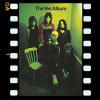
Part of the success of The Yes Album may be the fact that there was a postal strike in the UK at the time of its release. The normal method of counting sales, using stores across the UK, couldn't be used and album sales were counted only from London. By the time the strike was over, the album was heading up the charts and its apparent success generated more sales.
The future may have looked more secure for the band, but they were running out of money and were forced to go on the road. To many people, this is where the Yes story really starts, but albums like The Yes Album don't come out of fresh air. The talent pool had been put in place by people who were prepared to give everything they had and take advice from their colleagues, putting their own ideas on the back burner if necessary and letting the music become the prime mover.
Track Listing:
1. YOURS IS NO DISGRACE
(Jon Anderson/Chris Squire/Steve Howe/Tony Kaye/Bill Bruford)
2. CLAP
(Steve Howe)
3. STARSHIP TROOPER
(words by Jon Anderson/Chris Squire;
music by Jon Anderson/Chris Squire/Steve Howe)
a. LIFE SEEKER
(Jon Anderson)
b. DISILLUSIONED
(Chris Squire)
c. WÜRM
(Steve Howe)
4. I’VE SEEN ALL GOOD PEOPLE
(Jon Anderson/Chris Squire)
a. YOUR MOVE
(Jon Anderson)
b. ALL GOOD PEOPLE
(Chris Squire)
5. A VENTURE
(Jon Anderson)
6. PERPETUAL CHANGE
(Jon Anderson/Chris Squire)
Further reading, and details of reissues at YESWORLD
The prog world was in a state of flux at the time and Tony Kaye was about to be replaced as keyboard player. Next post will take a look at his replacement, Rick Wakeman, before diving back into the albums.
The Yes Album hit the stores on the 19th February 1971. It was the first to feature Steve Howe on guitar and contains a solo by Steve played live at the Lyceum in London. Clap was written to celebrate the birth of Howe's son. The Yes Album was the first to contain only original work. No cover versions appear. It would also be the last album to feature Tony Kaye. He would not be seen again until 1983 and 90125. The Yes Album was an instant success and consolidated the band's position with Atlantic. The album reached #4 in the UK and #40 in the US and is certified platinum in the US for achieving sales over 1 million. The cover art features a photograph of the band. The photograph was taken during a hurried photo shoot after the members left hospital. The band had been involved in a car accident after a gig in Basingstoke, which is the reason that Tony Kaye's foot is in plaster on the album cover.
Part of the success of The Yes Album may be the fact that there was a postal strike in the UK at the time of its release. The normal method of counting sales, using stores across the UK, couldn't be used and album sales were counted only from London. By the time the strike was over, the album was heading up the charts and its apparent success generated more sales.
The future may have looked more secure for the band, but they were running out of money and were forced to go on the road. To many people, this is where the Yes story really starts, but albums like The Yes Album don't come out of fresh air. The talent pool had been put in place by people who were prepared to give everything they had and take advice from their colleagues, putting their own ideas on the back burner if necessary and letting the music become the prime mover.
Track Listing:
1. YOURS IS NO DISGRACE
(Jon Anderson/Chris Squire/Steve Howe/Tony Kaye/Bill Bruford)
2. CLAP
(Steve Howe)
3. STARSHIP TROOPER
(words by Jon Anderson/Chris Squire;
music by Jon Anderson/Chris Squire/Steve Howe)
a. LIFE SEEKER
(Jon Anderson)
b. DISILLUSIONED
(Chris Squire)
c. WÜRM
(Steve Howe)
4. I’VE SEEN ALL GOOD PEOPLE
(Jon Anderson/Chris Squire)
a. YOUR MOVE
(Jon Anderson)
b. ALL GOOD PEOPLE
(Chris Squire)
5. A VENTURE
(Jon Anderson)
6. PERPETUAL CHANGE
(Jon Anderson/Chris Squire)
Further reading, and details of reissues at YESWORLD
On their first two records, Yes proved themselves an excellent force, and certainly that incarnation could have made more music worth listening to – perhaps we have some sense of subsequent directions in the albums by Flash, the post-Yes group formed by original guitarist Peter Banks. But “phase 1” of Yes was a psychedelic band; with the addition of Steve Howe in place of Banks, the band took a major step toward full-blown progressive rock. - Martin, Bill ALBUMLINERNOTES
The prog world was in a state of flux at the time and Tony Kaye was about to be replaced as keyboard player. Next post will take a look at his replacement, Rick Wakeman, before diving back into the albums.

MarkD
Super Member
I was really into Yes in High School. The first concert I went to was a Yes show at Boston Garden in I think 1975. My high school bus driver had an extra ticket and I went with him and another friend. I've seen them 2 other times, all at the garden, once with the rotating stage. My sister embroidered a Yes logo onto my Levi's jacket that I wore for years. I don't play them as much, but they still are in the regular LP rotation. Close to the Edge and Tales are my favorites.

I was really into Yes in High School. The first concert I went to was a Yes show at Boston Garden in I think 1975. My high school bus driver had an extra ticket and I went with him and another friend. I've seen them 2 other times, all at the garden, once with the rotating stage. My sister embroidered a Yes logo onto my Levi's jacket that I wore for years. I don't play them as much, but they still are in the regular LP rotation. Close to the Edge and Tales are my favorites.
I saw the TFTO tour at the Garden. Thanks to google it was Feb 26, 1974:
https://www.yessongs.nl/05-TFTO.html
I remember the elaborate stage props, Steve Howe's virtuosity on guitar and Chris Squire's virtuosity on bass. I saw a lot of shows at Boston Garden. No wonder I have tinitus...
7. Rick Wakeman
Richard Christopher Wakeman was born on the 18th May 1949 as noted on his website:
He was apparently a loud child, wont to scream from dawn to dusk, with the result that his mother parked him in the garden shed to get some peace. At 7 years of age, he began piano lessons under Dorothy Symes, and at 12 also took up the clarinet, followed by the church organ. The urban legend stating that he cannot, and never learned to, read music is completely untrue. It came about because he often plays with his eyes closed.
While at school, he joined several bands; Brother Wakeman and the Clergymen, Atlantic Blues, The Concordes (Concorde Quartet), Curdled Milk and the Ronnie Smith Band.
He intended to become a concert pianist and entered the Royal College of Music, studying piano, clarinet, orchestration and modern music, but the curse which had followed him throughout school and lessons with Dorothy Symes followed him, and he lapsed into putting in just enough effort and spending the remainder of his time in the pub. He also took to hanging out in a local music store, with the result that he was offered session work, which he accepted, skipping school in order to meet engagements.
Wakeman left the Royal College of Music in 1969 and started work as a full-time session musician. He soon made a name for himself as a musician who had the ability to deliver his promises in a short period of time, earning the nickname "One Take Wakeman".
He continued with his session work while working as a member of The Strawbs between 1969 and 1971, playing Mellotron on David Bowie's Space Oddity and working with many other artists and bands including Magna Carta, Brotherhood of Man, Paper Bubble, Shawn Phillips, White Plains, Cat Stevens, Elton John, more work for David Bowie and T. Rex.
He was famously omitted from the credits on Cat Stevens' "Morning Has Broken", in spite of supplying most of the content of the song and refused, as a result, to play it on the BBC's Top Of The Pops when it went to Number 1. He also notes that the record company forgot to pay him his GBP9 session fee. Whether it still bothers him or not is open to question, but he prefaces his performance of the song at his concerts with the tale.
In 1971, he received an offer from David Bowie, who wanted him to join his band, The Spiders From Mars. The same day, he was offered a place in Yes by Chris Squire. Having made the decision to turn down Bowie's offer, he left The Strawbs and joined Yes, working with the existing members on the next Yes album, Fragile. In the same year he signed a contract with A&M for five solo albums.
Attempting to cover Rick's solo work in this thread will be difficult, since he has released more than 90 solo albums, so I'll link to his website which lists his solo work and leave it at that.
The list of performers with whom Wakeman has worked reads like a Who's Who of the music industry for the past 50 years. Discogs list 349 albums on which he has a performance credit.
Outside of the music industry, Rick has been busy as a TV and radio presenter and author, having written three books to date.
Wakeman has been a member of Yes on 5 separate occasions as well as performing with his own band The English Rock Ensemble. Legal wrangles at one point prevented use of the name Yes, resulting in the Anderson Bruford Wakeman and Howe (ABWH) name being used until that band amalgamated with Chris Squire's Yes for Union. Wakeman is currently a member of the latest incarnation of Yes (featuring Jon Anderson, Trevor Rabin and Rick Wakeman).
He was inducted into the R&RHoF in 2017 as a member of Yes, and took the opportunity to talk to the audience about his recent prostate exam. ROLLING STONE
This post is necessarily short. To fully explore Rick Wakeman's contribution to music, or even to Yes, would result in pages of information that would probably become tedious reading. Since the thread is about the band and it's music, I'll leave it here, but encourage everyone to explore this amazing character.
Rick's own website can be found here. His current activities and past exploits can be found there.
There's an interesting interview here by Redbeard, and 4 of the core members of the band. I'll return to it later since it's specific to Close To The Edge, but goes some way to explaining the prog scene at the time.
Richard Christopher Wakeman was born on the 18th May 1949 as noted on his website:
1948 - Somewhere, around about August/September, Mildred and Cyril Wakeman have an early night and Richard Christopher Wakeman is conceived. (Incidentally, anyone calling him Richard these days is likely to get ignored)
1949 - At Perivale maternity hospital in Middlesex on May 18th (presents and cards always welcome), a boy was born to Mildred Helen and Cyril Frank Wakeman. Mildred wanted a girl and Cyril wanted a boy. They said in later years that it was amazing that they were both disappointed! Dad wanted to call him Simon and Mum wanted to call him Dianne - rwcc.com
He was apparently a loud child, wont to scream from dawn to dusk, with the result that his mother parked him in the garden shed to get some peace. At 7 years of age, he began piano lessons under Dorothy Symes, and at 12 also took up the clarinet, followed by the church organ. The urban legend stating that he cannot, and never learned to, read music is completely untrue. It came about because he often plays with his eyes closed.
While at school, he joined several bands; Brother Wakeman and the Clergymen, Atlantic Blues, The Concordes (Concorde Quartet), Curdled Milk and the Ronnie Smith Band.
He intended to become a concert pianist and entered the Royal College of Music, studying piano, clarinet, orchestration and modern music, but the curse which had followed him throughout school and lessons with Dorothy Symes followed him, and he lapsed into putting in just enough effort and spending the remainder of his time in the pub. He also took to hanging out in a local music store, with the result that he was offered session work, which he accepted, skipping school in order to meet engagements.
Wakeman left the Royal College of Music in 1969 and started work as a full-time session musician. He soon made a name for himself as a musician who had the ability to deliver his promises in a short period of time, earning the nickname "One Take Wakeman".
He continued with his session work while working as a member of The Strawbs between 1969 and 1971, playing Mellotron on David Bowie's Space Oddity and working with many other artists and bands including Magna Carta, Brotherhood of Man, Paper Bubble, Shawn Phillips, White Plains, Cat Stevens, Elton John, more work for David Bowie and T. Rex.
He was famously omitted from the credits on Cat Stevens' "Morning Has Broken", in spite of supplying most of the content of the song and refused, as a result, to play it on the BBC's Top Of The Pops when it went to Number 1. He also notes that the record company forgot to pay him his GBP9 session fee. Whether it still bothers him or not is open to question, but he prefaces his performance of the song at his concerts with the tale.
In 1971, he received an offer from David Bowie, who wanted him to join his band, The Spiders From Mars. The same day, he was offered a place in Yes by Chris Squire. Having made the decision to turn down Bowie's offer, he left The Strawbs and joined Yes, working with the existing members on the next Yes album, Fragile. In the same year he signed a contract with A&M for five solo albums.
Attempting to cover Rick's solo work in this thread will be difficult, since he has released more than 90 solo albums, so I'll link to his website which lists his solo work and leave it at that.
The list of performers with whom Wakeman has worked reads like a Who's Who of the music industry for the past 50 years. Discogs list 349 albums on which he has a performance credit.
Outside of the music industry, Rick has been busy as a TV and radio presenter and author, having written three books to date.
Wakeman has been a member of Yes on 5 separate occasions as well as performing with his own band The English Rock Ensemble. Legal wrangles at one point prevented use of the name Yes, resulting in the Anderson Bruford Wakeman and Howe (ABWH) name being used until that band amalgamated with Chris Squire's Yes for Union. Wakeman is currently a member of the latest incarnation of Yes (featuring Jon Anderson, Trevor Rabin and Rick Wakeman).
He was inducted into the R&RHoF in 2017 as a member of Yes, and took the opportunity to talk to the audience about his recent prostate exam. ROLLING STONE
This post is necessarily short. To fully explore Rick Wakeman's contribution to music, or even to Yes, would result in pages of information that would probably become tedious reading. Since the thread is about the band and it's music, I'll leave it here, but encourage everyone to explore this amazing character.
Rick's own website can be found here. His current activities and past exploits can be found there.
There's an interesting interview here by Redbeard, and 4 of the core members of the band. I'll return to it later since it's specific to Close To The Edge, but goes some way to explaining the prog scene at the time.
Last edited:
Fragile (1971)
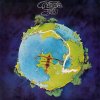
Fragile reached #7 in the UK chart and #4 in the US. It has been certified double platinum by the RIAA and silver by the British Phonographic Industry. It was the first album featuring Rick Wakeman on keyboards after Tony Kaye was fired over his reluctance to use instruments beyond the piano and Hammond organ. Wakeman had no such qualms and had already found success in the use of synthesizers, most notably on David Bowie's Space Oddity. Of the 9 tracks on the album, 4 are efforts by the entire band, while the other 5 are mainly individual efforts, following a suggestion from Chris Squire that the album be used to showcase the individual talents of the band members, as well as save some money on studio time. The album apparently cost $30,000 to produce, so cost-cutting was probably a good idea. The album was produced by Eddie Offord. Advision Studios was once again the venue used for recording.
Wakeman's piece was his arrangement of Brahms' Symphony #4 in E minor, third movement, due to contractual difficulties, rather than one of his own compositions. Bill Bruford's contribution, Five Per Cent For Nothing, was only 35 seconds long but, as he noted, we all have to start somewhere. Jon Anderson's piece was We Have Heaven, which was reprised as part of Heart Of The Sunrise and not mentioned as a separate item on the track listing. Chris Squire contributed The Fish (Schindleria Praematurus) and Steve Howe rounded out the solo pieces with Mood For A Day. Reissues included extra track, including Yes' cover of Paul Simon's America, which also appears on the Yes compilation album, Yesterdays. It was originally recorded for inclusion on "The New Age Of Atlantic"
The album received generally good reviews and consolidated Yes' position as one of the up and coming prog rock bands. Squire answered such negative criticism as there was with the brutal truth. A new album was necessary because there were a lot of mouths to feed. The band had found it necessary to buy equipment for Wakeman and had already gone through a period of financial uncertainty. Bruford's composition "Five Per Cent For Nothing" was named after a promise made to former manager Roy Flynn of 5% of future royalties Flynn had attempted to finance the band out of his own pocket, but was ultimately unable to continue. Artwork was created by Roger Dean and intended to show a fragile Earth.
Track Listing:
1. ROUNDABOUT
(Jon Anderson/Steve Howe)
2. CANS AND BRAHMS
(Extracts from Brahms’ 4th Symphony in E minor, Third Movement)
(Arranged by Rick Wakeman)
3. WE HAVE HEAVEN
(Jon Anderson)
4. SOUTH SIDE OF THE SKY
(Jon Anderson/Chris Squire)
5. FIVE PER CENT FOR NOTHING
(Bill Bruford)
6. LONG DISTANCE RUNAROUND
(Jon Anderson)
7. THE FISH (SCHINDLERIA PRAEMATURUS)
(Chris Squire)
8. MOOD FOR A DAY
(Steve Howe)
9. HEART OF THE SUNRISE
(Jon Anderson/Chris Squire/Bill Bruford)
Further reading and details of rereleases at YESWORLD
Since there were no lineup changes following Fragile, there will be no necessary introductions before we take a look at Close To The Edge.
Fragile reached #7 in the UK chart and #4 in the US. It has been certified double platinum by the RIAA and silver by the British Phonographic Industry. It was the first album featuring Rick Wakeman on keyboards after Tony Kaye was fired over his reluctance to use instruments beyond the piano and Hammond organ. Wakeman had no such qualms and had already found success in the use of synthesizers, most notably on David Bowie's Space Oddity. Of the 9 tracks on the album, 4 are efforts by the entire band, while the other 5 are mainly individual efforts, following a suggestion from Chris Squire that the album be used to showcase the individual talents of the band members, as well as save some money on studio time. The album apparently cost $30,000 to produce, so cost-cutting was probably a good idea. The album was produced by Eddie Offord. Advision Studios was once again the venue used for recording.
Wakeman's piece was his arrangement of Brahms' Symphony #4 in E minor, third movement, due to contractual difficulties, rather than one of his own compositions. Bill Bruford's contribution, Five Per Cent For Nothing, was only 35 seconds long but, as he noted, we all have to start somewhere. Jon Anderson's piece was We Have Heaven, which was reprised as part of Heart Of The Sunrise and not mentioned as a separate item on the track listing. Chris Squire contributed The Fish (Schindleria Praematurus) and Steve Howe rounded out the solo pieces with Mood For A Day. Reissues included extra track, including Yes' cover of Paul Simon's America, which also appears on the Yes compilation album, Yesterdays. It was originally recorded for inclusion on "The New Age Of Atlantic"
The album received generally good reviews and consolidated Yes' position as one of the up and coming prog rock bands. Squire answered such negative criticism as there was with the brutal truth. A new album was necessary because there were a lot of mouths to feed. The band had found it necessary to buy equipment for Wakeman and had already gone through a period of financial uncertainty. Bruford's composition "Five Per Cent For Nothing" was named after a promise made to former manager Roy Flynn of 5% of future royalties Flynn had attempted to finance the band out of his own pocket, but was ultimately unable to continue. Artwork was created by Roger Dean and intended to show a fragile Earth.
Track Listing:
1. ROUNDABOUT
(Jon Anderson/Steve Howe)
2. CANS AND BRAHMS
(Extracts from Brahms’ 4th Symphony in E minor, Third Movement)
(Arranged by Rick Wakeman)
3. WE HAVE HEAVEN
(Jon Anderson)
4. SOUTH SIDE OF THE SKY
(Jon Anderson/Chris Squire)
5. FIVE PER CENT FOR NOTHING
(Bill Bruford)
6. LONG DISTANCE RUNAROUND
(Jon Anderson)
7. THE FISH (SCHINDLERIA PRAEMATURUS)
(Chris Squire)
8. MOOD FOR A DAY
(Steve Howe)
9. HEART OF THE SUNRISE
(Jon Anderson/Chris Squire/Bill Bruford)
Further reading and details of rereleases at YESWORLD
Since there were no lineup changes following Fragile, there will be no necessary introductions before we take a look at Close To The Edge.
Last edited: