• The move to the new server is done. There are some software and database maintenance updates in process. This has us passing the hat around to help out. We appreciate any donations. Seriously, even a dollar helps. The payment page may be found here - https://www.audiokarma.org/support.html

Yes: A Musical Journey

BTW:
Thanks Kevin for all the time you put into threads such as this. :)

No problem, Bill. The research is very educational. The Rush thread is all but finished and, having neglected this one for a while, I thought it was time for a return. The hiatus did me good and I've made better progress than I dared hope. I'll return to the Queen thread in the near future too. I want to get that one finished, because I have a new project in mind, and I don't want to have too many works in progress.

Next post from me in this thread will take a look at Alan White. He may have some surprises in store for anyone not too familiar with him.
 
No problem, Bill. The research is very educational. The Rush thread is all but finished and, having neglected this one for a while, I thought it was time for a return. The hiatus did me good and I've made better progress than I dared hope. I'll return to the Queen thread in the near future too. I want to get that one finished, because I have a new project in mind, and I don't want to have too many works in progress.

Next post from me in this thread will take a look at Alan White. He may have some surprises in store for anyone not too familiar with him.

Great, I think I have 2 LP’s by Alan White
 
8. Alan White

Alan White was born on the 14th June 1949, in Pelton, County Durham, in the north of England. From the age of 6 he had taken piano lessons, but his uncle noted that he played percussively and suggested that the drums might be his instrument. He received his first drum kit from his parents at the age of 12. His first Ajax kit was later replaced by a Ludwig set. He began, almost immediately, to develop his own style of play, not wishing to become a clone of his instructor.

Aged 13, he joined his first band, The Downbeats, covering such acts as The Beatles and Gerry and the Pacemakers, playing in working mens' clubs and dance halls up to 7 nights a week. Alan was busted by his teachers when the band was featured in the local newspaper. Changing their name to Blue Chips, the band travelled to London and entered a competition organized by Melody Maker. Following the success in that competition, the band recorded several singles, but none charted and the band split after returning to the north.

At 17, White joined Billy Fury's The Gamblers, then Happy Magazine (Griffin) and The Alan Price Set.

In 1969, he joined The Plastic Ono Band on the invitation of John Lennon. He also played as a session musician on Lennon's "Imagine" and George Harrison's "All Things Must Pass".

He worked with Denny Laine in his band Balls and Ginger Baker's Air Force and also with Steve Winwood and Terry Reid.

While playing as a member of Griffin, White shared a flat with Eddie Offord and became acquainted with the members of Yes through him, filling in for Bill Bruford on one occasion when Bill has to leave during a rehearsal of Siberian Khatru. When Bruford left Yes, White was offered his position and had a week to learn the band's material for the upcoming tour in support of Close To The Edge. White's drums are first heard on Yessongs, the resulting live album from that tour. He has continued to be associated with various incarnations of Yes ever since.

He played on solo works by several Yes members; Steve Howe's Beginnings and The Steve Howe Album, Rick Wakeman's Criminal Record, Six Wives of Henry VIII and Trevor Rabin's Can't Look Away.

In 1976, he released his only solo work, Ramshackled.

He has played with Seattle bands, MerKaBa and Treason. In 2003, work on a MerKaBa album resulted in the formation of the band White. Alan has also been associated with Billy Sherwood and Tony Kaye in CIRCA.

In 2017, Alan White was inducted into the Rock & Roll Hall of Fame as a member of Yes. He chose not to delight the audience with details about his bodily functions.

More details of Alan White's work can be found on his website here.

 
The Yes Album (1971)

The Yes Album hit the stores on the 19th February 1971. It was the first to feature Steve Howe on guitar and contains a solo by Steve played live at the Lyceum in London. Clap was written to celebrate the birth of Howe's son. The Yes Album was the first to contain only original work. No cover versions appear. It would also be the last album to feature Tony Kaye. He would not be seen again until 1983 and 90125. The Yes Album was an instant success and consolidated the band's position with Atlantic. The album reached #4 in the UK and #40 in the US and is certified platinum in the US for achieving sales over 1 million. The cover art features a photograph of the band. The photograph was taken during a hurried photo shoot after the members left hospital. The band had been involved in a car accident after a gig in Basingstoke, which is the reason that Tony Kaye's foot is in plaster on the album cover.

index.php


Part of the success of The Yes Album may be the fact that there was a postal strike in the UK at the time of its release. The normal method of counting sales, using stores across the UK, couldn't be used and album sales were counted only from London. By the time the strike was over, the album was heading up the charts and its apparent success generated more sales.

The future may have looked more secure for the band, but they were running out of money and were forced to go on the road. To many people, this is where the Yes story really starts, but albums like The Yes Album don't come out of fresh air. The talent pool had been put in place by people who were prepared to give everything they had and take advice from their colleagues, putting their own ideas on the back burner if necessary and letting the music become the prime mover.
Getting caught up with the latest postings Kevin. Great work. :bowdown:

I remember once, decades ago having a near out of body experience kicked back in a bean bag chair listening to Starship Trooper on a buddies crap system with one speaker disconnected due to it's being blown.. Of course a decent amount of chemical inducement was provided by Mexico and Milwaukee. . It was the use of a Bell Flanger on Steve's guitar that provided the rest.
Here's a track by track breakdown of The Yes Album by Steve Howe himself...in all honesty, for me, The Yes Album was the FIRST Yes album.
https://www.musicradar.com/news/guitars/steve-howe-talks-the-yes-album-track-by-track-568616
001.jpg

002.jpg
 
Fragile (1971)

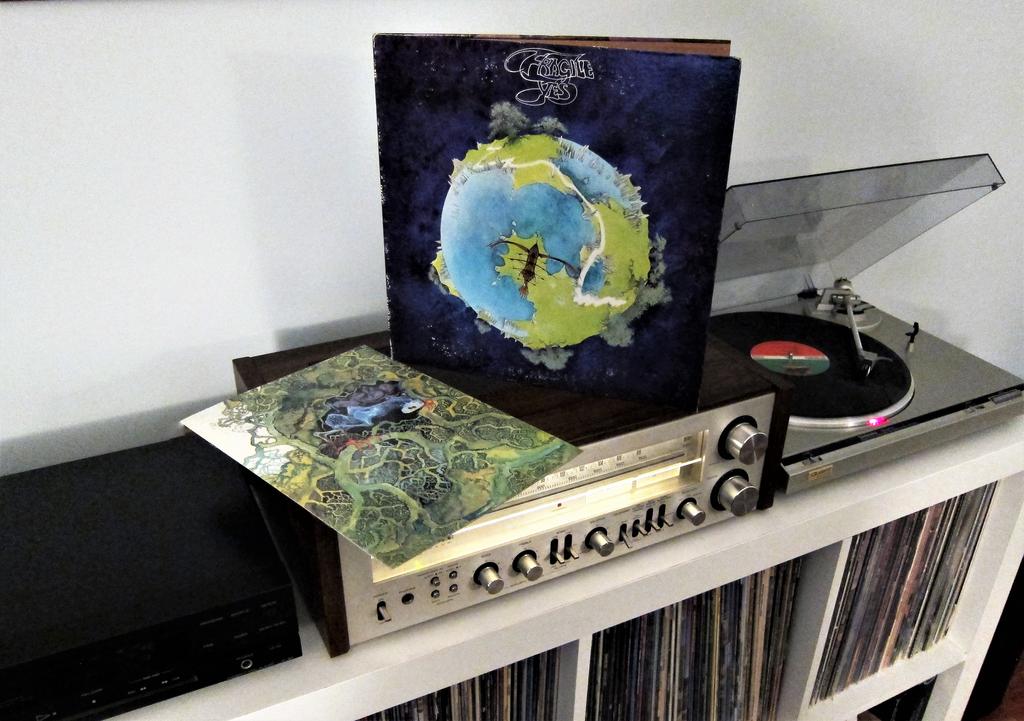
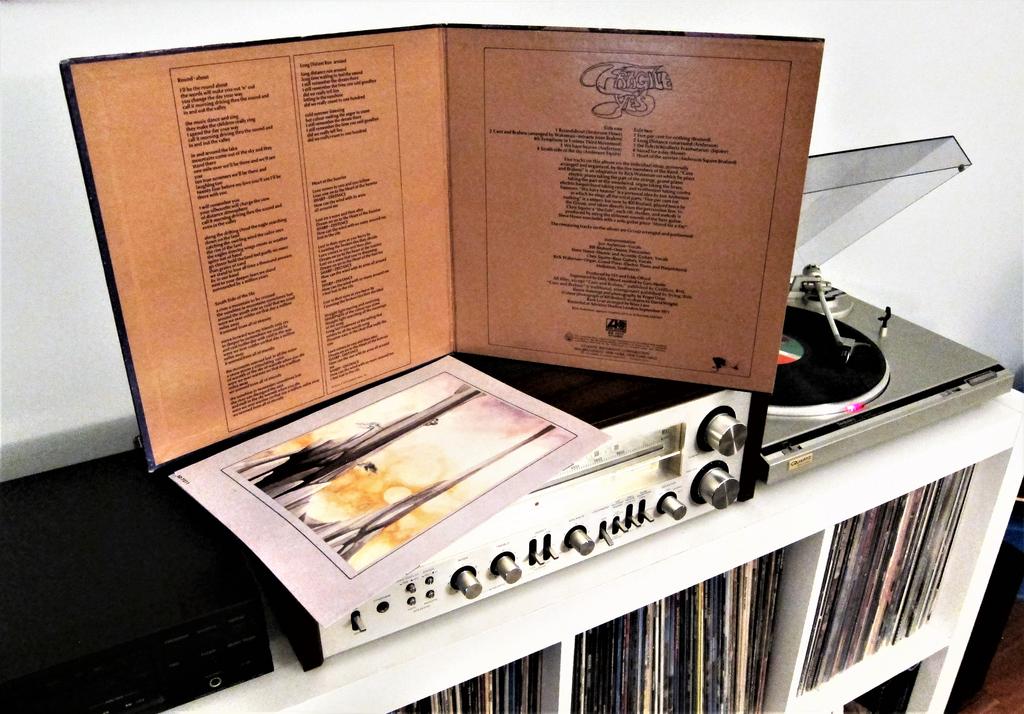
Fragile reached #7 in the UK chart and #4 in the US. It has been certified double platinum by the RIAA and silver by the British Phonographic Industry. It was the first album featuring Rick Wakeman on keyboards after Tony Kaye was fired over his reluctance to use instruments beyond the piano and Hammond organ. Wakeman had no such qualms and had already found success in the use of synthesizers, most notably on David Bowie's Space Oddity. Of the 9 tracks on the album, 4 are efforts by the entire band, while the other 5 are mainly individual efforts, following a suggestion from Chris Squire that the album be used to showcase the individual talents of the band members, as well as save some money on studio time. The album apparently cost $30,000 to produce, so cost-cutting was probably a good idea. The album was produced by Eddie Offord. Advision Studios was once again the venue used for recording.

Wakeman's piece was his arrangement of Brahms' Symphony #4 in E minor, third movement, due to contractual difficulties, rather than one of his own compositions. Bill Bruford's contribution, Five Per Cent Of Nothing, was only 35 seconds long but, as he noted, we all have to start somewhere. Jon Anderson's piece was We Have Heaven, which was reprised as part of Heart Of The Sunrise and not mentioned as a separate item on the track listing. Chris Squire contributed The Fish (Schindleria Praematurus) and Steve Howe rounded out the solo pieces with Mood For A Day. Reissues included extra track, including Yes' cover of Paul Simon's America, which also appears on the Yes compilation album, Yesterdays. It was originally recorded for inclusion on "The New Age Of Atlantic"

The album received generally good reviews and consolidated Yes' position as one of the up and coming prog rock bands. Squire answered such negative criticism as there was with the brutal truth. A new album was necessary because there were a lot of mouths to feed. The band had found it necessary to buy equipment for Wakeman and had already gone through a period of financial uncertainty. Bruford's composition "Five Per Cent Of Nothing" was named after a promise made to former manager Roy Flynn of 5% of future royalties Flynn had attempted to finance the band out of his own pocket, but was ultimately unable to continue. Artwork was created by Roger Dean and intended to show a fragile Earth.

index.php
My first Yes purchase back when I could start earning money and buying stuff.

Atlantic SD 7211. I assume this is the 1975 repress. I bought it new at Peaches around 1977-78
https://www.discogs.com/Yes-Fragile/master/34934
007.jpg

005.jpg
 
Time And A Word (1970)

View attachment 1216174 View attachment 1216175

Time And A Word was recorded during breaks between gigs at Advision, and released in the UK in July 1970, and in the US in November. It charted in the UK, peaking at #45, but did not chart in the US. The cover art was deemed unsuitable for the American release and the photograph of the band, featuring Steve Howe, was used instead.

The album features orchestral content by members of the Royal College of Music, orchestrated and conducted by Tony Cox, which was partly responsible for the departure of Peter Banks, who felt that the orchestral instrumentation simply took away from the organ and guitar parts. Banks also disagreed with the choice of Tony Colton as producer. Tensions within the band increased and he was asked to leave.

Eddie Offord, who would become a familiar name on the credits of Yes albums, assisted Colton as engineer.

Reception to the album was mixed at the time. Roy Carr of the New Musical Express was enthusiastic about the album, calling it "one of the best releases of the year". However, all was not well with the band's relationship with Atlantic. After two disappointing chart performances, the label was considering dropping the band.

Time And A Word, like Yes before it, had six original tracks and two cover versions, "No Opportunity Necessary, No Experience Needed" by Ritchie Havens and "Everydays", written by Stephen Stills.

Track listing:

1. "No Opportunity Necessary, No Experience Needed" Havens 4:48
2. "Then" Anderson 5:44
3. "Everydays" Stills 6:08
4. "Sweet Dreams" Anderson, Foster 3:51
5. "The Prophet" Anderson, Squire 6:34
6. "Clear Days" Anderson 2:06
7. "Astral Traveller" Anderson 5:53
8. "Time and a Word" Anderson, Foster 4:31


Further reading at YESWORLD
Listened to this recently, Excellent album, So good I ordered a copy. Very glad to have discovered YouTube complete albums!
 
Fragile (1971)

Fragile reached #7 in the UK chart and #4 in the US. It has been certified double platinum by the RIAA and silver by the British Phonographic Industry. It was the first album featuring Rick Wakeman on keyboards after Tony Kaye was fired over his reluctance to use instruments beyond the piano and Hammond organ. Wakeman had no such qualms and had already found success in the use of synthesizers, most notably on David Bowie's Space Oddity. Of the 9 tracks on the album, 4 are efforts by the entire band, while the other 5 are mainly individual efforts, following a suggestion from Chris Squire that the album be used to showcase the individual talents of the band members, as well as save some money on studio time. The album apparently cost $30,000 to produce, so cost-cutting was probably a good idea. The album was produced by Eddie Offord. Advision Studios was once again the venue used for recording.

Wakeman's piece was his arrangement of Brahms' Symphony #4 in E minor, third movement, due to contractual difficulties, rather than one of his own compositions. Bill Bruford's contribution, Five Per Cent Of Nothing, was only 35 seconds long but, as he noted, we all have to start somewhere. Jon Anderson's piece was We Have Heaven, which was reprised as part of Heart Of The Sunrise and not mentioned as a separate item on the track listing. Chris Squire contributed The Fish (Schindleria Praematurus) and Steve Howe rounded out the solo pieces with Mood For A Day. Reissues included extra track, including Yes' cover of Paul Simon's America, which also appears on the Yes compilation album, Yesterdays. It was originally recorded for inclusion on "The New Age Of Atlantic"

The album received generally good reviews and consolidated Yes' position as one of the up and coming prog rock bands. Squire answered such negative criticism as there was with the brutal truth. A new album was necessary because there were a lot of mouths to feed. The band had found it necessary to buy equipment for Wakeman and had already gone through a period of financial uncertainty. Bruford's composition "Five Per Cent Of Nothing" was named after a promise made to former manager Roy Flynn of 5% of future royalties Flynn had attempted to finance the band out of his own pocket, but was ultimately unable to continue. Artwork was created by Roger Dean and intended to show a fragile Earth.

View attachment 1219720

Track Listing:

1. ROUNDABOUT
(Jon Anderson/Steve Howe)

2. CANS AND BRAHMS

(Extracts from Brahms’ 4th Symphony in E minor, Third Movement)
(Arranged by Rick Wakeman)

3. WE HAVE HEAVEN
(Jon Anderson)

4. SOUTH SIDE OF THE SKY

(Jon Anderson/Chris Squire)

5. FIVE PER CENT FOR NOTHING

(Bill Bruford)

6. LONG DISTANCE RUNAROUND
(Jon Anderson)

7. THE FISH (SCHINDLERIA PRAEMATURUS)
(Chris Squire)

8. MOOD FOR A DAY
(Steve Howe)

9. HEART OF THE SUNRISE

(Jon Anderson/Chris Squire/Bill Bruford)

Further reading and details of rereleases at YESWORLD

Since there were no lineup changes following Fragile, there will be no necessary introductions before we take a look at Close To The Edge.
The year I graduated from AM top 40, To album listening, And this was a hard earned purchase, Along with LED ZEP IV, And The Who, Who’s Next, Quite a summer
 
No problem, Bill. The research is very educational. The Rush thread is all but finished and, having neglected this one for a while, I thought it was time for a return. The hiatus did me good and I've made better progress than I dared hope. I'll return to the Queen thread in the near future too. I want to get that one finished, because I have a new project in mind, and I don't want to have too many works in progress.

Next post from me in this thread will take a look at Alan White. He may have some surprises in store for anyone not too familiar with him.
Kudos to you Kevin for this undertaking.

I’d enjoy your take on Jethro Tull if that band floats your boat. Lots of rich history there.
 
Yessongs (1973)

The sixth album from Yes, and the first live album, was Yessongs, featuring material from the Fragile and Close To The Edge Tours. Alan White plays drums on most of the tracks, but Bill Bruford can be heard on Perpetual Change and Long Distance Runaround/The Fish (Schindleria Praematurus). The album was originally released as a three LP set. The album reached #7 in the UK and #12 in the US, and was certified gold in 1974 by the RIAA, and platinum in 1998.

Eddie Offord was in charge of sound, leaving recording to Geoff Haslam and Mike Dunn. Mixing and editing was done at Advision by Offord and the band. Offord was determined to achieve the best sound possible and used recordings from two separate venues for the two parts of "I've Seen All Good People". Rick Wakeman's keyboard solo was similarly treated. Album art was by Roger Dean.

Yessongs_front_cover.jpg

Track listing:

Side 1:

1. "OPENING" (Excerpt from "The Firebird Suite") 3:47
(Igor Stravinsky)


2. "SIBERIAN KHATRU" 9:03
(Jon Anderson, Steve Howe, Rick Wakeman)


3. "HEART OF THE SUNRISE" 11:33
(Jon Anderson, Bill Bruford, Chris Squire)


Side 2:

1. "PERPETUAL CHANGE" 14:12
(Anderson, Squire)

2. "AND YOU AND I" 9:33


I. "Cord of Life"
II. "Eclipse"
III. "The Preacher The Teacher"
IV. "The Apocalypse"
(Jon Anderson, Bill Bruford, Steve Howe, Chris Squire)

Side 3:


1. "MOOD FOR A DAY" 2:53
(Steve Howe)

2. "EXCERPTS FROM The 'Six Wives Of Henry VIII'" 6:37
(Rick Wakeman)

3. "ROUNDABOUT" 8:33
(Jon Anderson, Steve Howe)


Side 4:

1. "I'VE SEEN ALL GOOD PEOPLE" 7:09

a. "Your Move"
b. "All Good People"
(Jon Anderson, Chris Squire)


2. "LONG DISTANCE RUNAROUND"/"THE FISH (Schindleria Praematurus)" 13:37
(Jon Anderson, Chris Squire)


Side 5:

1. "CLOSE TO THE EDGE" 18:13

I. "The Solid Time of Change"
II. "Total Mass Retain"
III. "I Get Up, I Get Down"
IV. "Seasons of Man"
(Jon Anderson, Steve Howe)

Side six


1. "YOURS IS NO DISGRACE" 14:23
(Anderson, Squire, Howe, Bruford, Tony Kaye)


2. "STARSHIP TROOPER" 10:08

a. "Life Seeker"
b. "Disillusion"
c. "Würm"
(Jon Anderson, Steve Howe, Chris Squire)

Further reading at YESWORLD
 
Bill Bruford also shared a home with Chris at one time. He said that Squire was known for taking long soaks in the bathtub, and that his nickname "The Fish" was a result of his time in the tub.

When Yes did an in-store performance at Tower Records on Sunset Blvd in LA in 1996, they allowed the fans in attendance to go through an autograph line afterwards. When I got up to the tables where they were seated, Rick Wakeman was first with Chris Squire next to him. While getting their autograph, I asked Chris if the tale about is nickname was attributed to his lengthy stents in the bathtub and Rick (without missing a beat) chimed in with "that's nothing...you should see the scuba gear". Priceless.
 
The Yes Band Tree is as diverse as it gets .
I agree, although King Crimson may be in the running! I’ve always been a fan of Yes from the first album on. Steve Howe has been one of the biggest influences on my guitar playing due to the fact that he played so many styles and brought so many sounds which is something I have tried to emulate for a very long time.
Great thread OP!
 
The fifth album was released on 13th September 1972, and reached the highest chart positions yet; #3 in the US and #4 in the UK, and was certified platinum by the RIAA in 1998. The album consisted of three long tracks, with the majority of the compositions done by Anderson and Howe. In spite of the extreme length of the track, And You And I was squeezed onto a single with Roundabout on the B-side (UK version). The track was split on the US version and occupied both sides of a single. The album art was designed by Roger Dean and was the first to use his design for the band's logo. Eddie Offord once again produced the album and recording was at Advision. Steve Howe said of Offord, "At the time he was an integrated part of the recording experience, and then he’d become part of the life experience as well."

Rick Wakeman played his church organ parts at the church of St. Giles-without-Cripplegate. The parts were recorded onto tape in the church and mixed into the recording at the studio.

The album name was suggested by Bill Bruford, as a commentary on the state of the band at the time. Bruford decided to leave the band at the end of recording and would be replaced by Alan White, who would take Bruford's place in the subsequent tour to promote the album. Bill had become frustrated with the laborious methods of composition and recording. In part, this was caused by Jon Anderson's lack of formal training in music. He could hear the melodies in his head, but could not play them well to the rest of the band. Bruford contrasted the discussion of, seemingly, every note with the approach employed by King Crimson, where everyone simply knew what to do and did it. Bill left the band on good terms and would rejoin for Union.

index.php

001.jpg

004.jpg


Roger Dean said that after doing the Fragile album cover, he decided Yes needed a logo. He wasn't even sure if they would ever use him again but he designed the logo anyways while traveling by train to Brighton. He had an idea that the three letters could all be intertwined together. By the time he got to Brighton it was pretty much complete.
Of course Yes did approach him to create the art for CTTE. His green cover is meant to replicate the look and feel of one of his leather bound sketchbooks. The inspiration for the inner gatefold came from visits to England's Lake District in the north western, mountainous part of the country and the lakes north of Ullapool, Scotland.


Most of you know me as AK's most devoted ELP fan, but even I'll admit that Close To The Edge is quite probably Prog Rock's finest moment.
 
Last edited:
In Roger Dean's book, Views he included these sketches of the Yes logo's development. This has to be drawings from the train ride to Brighton although there is nothing written about them.

Brighton is of course the seaside town in the movie Quadrophenia where the mods and rockers have their epic battle.
010.jpg
 
Last edited:
001.jpg

004.jpg


Roger Dean said that after doing the Fragile album cover, he decided Yes needed a logo. He wasn't even sure if they would ever use him again but he designed the logo anyways while traveling by train to Brighton. He had an idea that the three letters could all be intertwined together. By the time he got to Brighton it was pretty much complete.
Of course Yes did approach him to create the art for CTTE. His green cover is meant to replicate the look and feel of one of his leather bound sketchbooks. The inspiration for the inner gatefold came from visits to England's Lake District in the north western, mountainous part of the country and the lakes north of Ullapool, Scotland.


Most of you know me as AK's most devoted ELP fan, but even I'll admit that Close To The Edge is quite probably Prog Rock's finest moment.

In Roger Dean's book, Views he included these sketches of the Yes logo's development. This has to be drawings from the train ride to Brighton although there is nothing written about them.

Brighton is of course the seaside town in the movie Quadrophenia where the mods and rockers have their epic battle.
010.jpg


Good stuff! When you mentioned Brighton the first thing that I thought of was "Quadrophenia".

-Dave
 
Back
Top Bottom