Can't get much better than "awesome"!Just found a ADC 10E MK IV with 104DE stylus. The sound is awesome. Do I need a lightweight arm to get even BETTER sound?


You are using an out of date browser. It may not display this or other websites correctly.
You should upgrade or use an alternative browser.
You should upgrade or use an alternative browser.
ADC's Bricks
- Thread starter wualta
- Start date
I have a Jelco arm on another table and I'll and see if it sounds as good.Can't get much better than "awesome"!
Thanks for the hint. BTW, How does the ADC XLM series sound and track in comparison to the "bricks"? I would like to try one if I can ever find one that's not so $$$$.empireman..that adc won't last long on a massy technics arm. the suspension of the cartridge will fail. something like a grace 707 or one with similar low mass is the arm you want.
https://www.google.com/search?q=garace+707+tonearm+pics&espv=2&tbm=isch&imgil=8WAktDy4QyqrRM%3A%3B5zlWm5UUfVVY4M%3Bhttp%253A%252F%252Fvinylnirvana.com%252Fvintage-turntables-for-sale%252Fthe-master-thorens-td-125-w-upgraded-grace-707-arm%252F&source=iu&pf=m&fir=8WAktDy4QyqrRM%3A%2C5zlWm5UUfVVY4M%2C_&usg=__zsNlr-C2CMtFLEYtC654m4k9jk4=&biw=1269&bih=615&ved=0ahUKEwi5_Zv4yp_TAhWMKJQKHeGbCCgQyjcINg&ei=-3buWPmTHozR0ATht6LAAg#imgrc=8WAktDy4QyqrRM:

hifitommy
Super Member
the XLM was one of my all time favorites of the MMs. and it tracks it all. one test is the steely dan-royal scam-which has cymbal torture tracks on either haitian divorce or caves of altamira (cut 2 on each side). if your cart can track these, they can track anything. if it doesnt track, increase the vtf to the highest recommended by the manuf.
the imaging and soundstaging are outstanding, instuments are palpable. dynamics are all there.
the imaging and soundstaging are outstanding, instuments are palpable. dynamics are all there.

Empireman: Apology for the late response.
Since the original XLM came out of the thinking that produced the 10E Mk IV, the two are comparable in sound and performance. The earlier top-line 25/26/27 also sound and track well. The real-world difference is that the Bricks, no matter which model, are all significantly heavier than the XLM, which means that in an undamped arm, they'll be bouncing around at a natural resonant frequency lower than you'd get with the XLM. The lower the resonant frequency, the more warps (even little ones) will excite bouncing. The more bouncing, the less happy the stylus and the more strained the sound, in my experience with ADCs. So play to a Brick's strength and always put it in the lightest arm you can. Add arm-motion damping if you can. The original XLM, though still picky about arm mass, is a little easier to please. You're far more likely to be able to find one of the later XLMs, which are even less picky but still benefit from low-mass arms.
If you have a chance to play with a Brick, do. The most common ones, beige-colored, were very inexpensive back in the late '60s; think of them as the equivalent of the Ortofon Omega or the A-T AT95E of today. You might be surprised by how good they sound 50 years later. Try to find a 550XE stylus with the orange dot. It'll fit any of the beige-colored Bricks. That was apparently (by specs and by original MSRP) the top model among the "beiges".
Since the original XLM came out of the thinking that produced the 10E Mk IV, the two are comparable in sound and performance. The earlier top-line 25/26/27 also sound and track well. The real-world difference is that the Bricks, no matter which model, are all significantly heavier than the XLM, which means that in an undamped arm, they'll be bouncing around at a natural resonant frequency lower than you'd get with the XLM. The lower the resonant frequency, the more warps (even little ones) will excite bouncing. The more bouncing, the less happy the stylus and the more strained the sound, in my experience with ADCs. So play to a Brick's strength and always put it in the lightest arm you can. Add arm-motion damping if you can. The original XLM, though still picky about arm mass, is a little easier to please. You're far more likely to be able to find one of the later XLMs, which are even less picky but still benefit from low-mass arms.
If you have a chance to play with a Brick, do. The most common ones, beige-colored, were very inexpensive back in the late '60s; think of them as the equivalent of the Ortofon Omega or the A-T AT95E of today. You might be surprised by how good they sound 50 years later. Try to find a 550XE stylus with the orange dot. It'll fit any of the beige-colored Bricks. That was apparently (by specs and by original MSRP) the top model among the "beiges".
Last edited:
8g effective mass? Sounds like an arm that would stay out of the 10E Mk IV's way.
Original NOS styli are still available. One trusted vendor is thevoiceofmusic.com. You'd want the 107-DEX. Shipping's a little over $4 in the US.
Original NOS styli are still available. One trusted vendor is thevoiceofmusic.com. You'd want the 107-DEX. Shipping's a little over $4 in the US.
You might get away with 0.7g with careful setup, meaning getting the azimuth spot on, measuring the VTF very accurately, getting the antiskate just right and making sure air currents in the room can't reach the turntable! Try 0.7 and see what happens. The cartridge is from 1971, when records weren't as demanding as they would shortly become, so be prepared to go up to 1.0g.
I haven't tried the EVG-Japan 4104 styli thevoiceofmusic sells, but the financial risk is small, and the vendor stands behind his sales.
I haven't tried the EVG-Japan 4104 styli thevoiceofmusic sells, but the financial risk is small, and the vendor stands behind his sales.
Okay, I got a r15e for one of my adc 10e mkiv bodies. It's not bad at all. Has a real nice balance. at .9grams and 47k/265pf. Low end is very nice after living with a ortofon om30 for awhile. It's not overly bloated though. It was a bit of a pain to setup though because it was hard for me to see the stylus tip with my protractors/old eyes because of it being a bit more recessed than other carts but that's a one time ordeal.
In a light arm (preferably damped) with excellent bearings, this cartridge can be surprisingly good, even on tough modern records. Looks like the you have the loading in the right ballpark.
You're right, alignment is tricky without a mirrored protractor, but at least the sides are straight.
You're right, alignment is tricky without a mirrored protractor, but at least the sides are straight.
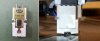

Here is the ADC Model 26 with OEM .3x.7mil elliptical stylus. The 26 is the same as the Model 25 but with only one stylus instead of the 3 different styli included with the 25.
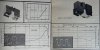
It has a tracking force of 0.5 to 1.25 grams with a compliance of 50. Even though its published frequency response is 10 -24k Hz +/- 2 dB, the test results show a -5dB drop at 20 Hz and a -10 dB drop at 20k Hz. The cartridge maintains the stated +/- 2dB limits from 50 Hz to 12k Hz, but definitely not the extended response of the manufacture’s specifications. I included a graph for the 10E as a comparison. As you can see, the 10E does have a 20-20k Hz frequency response. Because of its high compliance and heavy mass (8.8 grams), it is only compatible with a few low mass tone arms. In medium to heavy tone arms, there are resonance and inertia problems that cause the cartridge to mis-track and become unstable while playing warped records.
The Model 25/26 is meant to be played at less than 1 gram tracking force. Unfortunately, at those low forces, my medium mass tone arm becomes very unstable and the slightest outside movement will cause the cartridge to skip. Stability improves significantly at 1 gram, however, the stylus retracts into the stylus grip such that the bottom of the cartridge barely clears the record surface; the cartridge will actually scrape the surface if the record is warped.
Seeing the sharp drop below 80 Hz, I was curious to see how the cartridge sounds playing low frequency music. My go-to record for testing the entire frequency range is the recording of Saint-Saens Organ Symphony (San Franciso Symphony, Raffitti Pipe Organ) Philips Imported Pressing. The organ has a 32 ft. pipe that produces a 16 Hz tone (it’s more of a rumble than a tone). I don’t have a sub-woofer but I still feel the pedal notes through my system. The organ plus the other instruments covers most of the musical frequency range: each instrument should be distinct and localized even when the entire symphony is playing.
The Model 26 played the record with no distortion. The bass is strong and the higher registers (violins, piano) are clean and airy, the timpani at the end of the piece have the power and punch that I expect. However, the pedal notes are thin and there is hardly any “feel” that comes through with other cartridges.
It’s possible that the lack of low frequency punch could be due to the heavy cartridge weight and the high compliance; that combination is unique to the 26 and is not an issue with my other cartridges.
But other records sound very good. Vocals and other types of music have a very open and clean sound. There is no harshness and total lack of distortion. With the sharp drop above 12k Hz, I would expect a lack of brightness or a dull sound with orchestral bells, but there were no deficiencies in the higher frequencies. I would characterize the sound as warm although I wouldn’t say this cartridge lacks any brilliance.

Doug G.
Lunatic Member
Pre-Brick Alert:
Last night I decided to put my little old 220 on my TT and listen. I am still amazed at how good it sounds especially considering it only cost $9.95 in 1969.
I think I have told the story about how I bought it to replace an Astatic 133D ceramic cartridge in my VM turntable and bought a little preamp from Olson Electronics but the hum was so bad from the unshielded motor, I couldn't use it. And then, somehow, the diamond got broken off and it sat for many years until I finally got a replacement stylus for it about five-ten years ago.
Doug
Last night I decided to put my little old 220 on my TT and listen. I am still amazed at how good it sounds especially considering it only cost $9.95 in 1969.
I think I have told the story about how I bought it to replace an Astatic 133D ceramic cartridge in my VM turntable and bought a little preamp from Olson Electronics but the hum was so bad from the unshielded motor, I couldn't use it. And then, somehow, the diamond got broken off and it sat for many years until I finally got a replacement stylus for it about five-ten years ago.
Doug
Huzzah! Three questions:
What VTF are you using?
Is yours the original style with the little gold metal ADC cover over the terminal block, or the later style with the black-plastic cover?
Have you ever used, or considered trying to find, an R-5E stylus (from the gray 550/E) on/for the 220?
What VTF are you using?
Is yours the original style with the little gold metal ADC cover over the terminal block, or the later style with the black-plastic cover?
Have you ever used, or considered trying to find, an R-5E stylus (from the gray 550/E) on/for the 220?
Doug G.
Lunatic Member
Huzzah! Three questions:
What VTF are you using?
Is yours the original style with the little gold metal ADC cover over the terminal block, or the later style with the black-plastic cover?
Have you ever used, or considered trying to find, an R-5E stylus (from the gray 550/E) on/for the 220?
I am using 2.5 grams VTF. I still have the original package for the cartridge (a blister style package) and it says 2 - 5 grams for a range. Almost all replacements for it say something like 1.5 - 3 grams. 2.5 works well.
Mine has the black cover with ADC embossed. I bought it in 1969 which I believe was a few years after its introduction, right? It originally had a little gold sticker on the front with "220" in black letters which fell off shortly after I took it out of its package. You'd think I would have glued it back on right away so it wouldn't have gotten lost. But nooooooooo and it has been gone for many years.
I have considered getting an R-5E stylus for it. I just haven't yet.
Doug
Last edited:
Yep, ADC's big red 220 was announced late in 1966 for the 1967 model year. HiFi/Stereo Review's test appeared in July 1967, along with an article about records (ie, vinylz) that were recorded using this newfangled thing called Dolby Noise Reduction. Don't know when ADC switched from the metal ID plate to the black plastic one. 1969 maybe?
Last edited: