• The move to the new server is done. There are some software and database maintenance updates in process. This has us passing the hat around to help out. We appreciate any donations. Seriously, even a dollar helps. The payment page may be found here - https://www.audiokarma.org/support.html

Advent Loudspeakers (smaller advent)

That's what I would do if the crossovers appear unmolested. Advent was known to make changes during production runs so they may have put two 8uF caps. in there.

If the resistors are not burnt and measure within tolerance, I wouldn't even replace them. They'll be fine.

Doug
 
Thanks, I just ordered the parts...hoping this tames them down, bass is bloated and the highs are a little shrill.
 
bamark's pic (8 and 16uF caps) looks just like the x-o's from my early Smaller Advents (1972) with green tweeter, and spkrdtr's description (4 and 8uF caps) is consistent with many of the later red tweeter versions.

My 1977 red/orange tweeter version had two 8uf caps in each crossover. They were the original caps so I replaced them with Solen 8uf caps. They seem to lack that clear high frequency they are known for. I was wondering if changing out one of the caps for a 4uf would correct the problem? Any advice is appreciated...
 
My 1977 red/orange tweeter version had two 8uf caps in each crossover. They were the original caps so I replaced them with Solen 8uf caps. They seem to lack that clear high frequency they are known for. I was wondering if changing out one of the caps for a 4uf would correct the problem? Any advice is appreciated...

When I recently recapped mine, I replaced the original caps with parts express electrolytics, the same values. It sounded amazing.
I haven't tried the Solen, but I didn't want to make the Smaller Advents sound any brighter or different really, so I opted for the inexpensive, same type replacements.
Give yours some time to break in, 20 to 30 hours minimum, before you really decide on the caps.
I like to play continous pink noise through speakers to break them in, you can do this in a place of the house where it wouldn't bother anyone if the speakers are playing at low - medium levels for a couple days straight. You can also set the speakers up facing each other, one out of phase, and drape a blanket over them if necessary.
 
The issue I have is I can't find any threads that state having (2) 8mfd caps in each speaker.
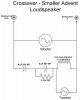
I really don't have any new information, but I did once save this schematic found somewhere online and it shows (2) 8uF caps, so you are not the only one to have encountered this particular assembly - - I think we can agree there were several versions. Also, it is doubtful that the resistors will require replacement, but that is your call. BTW, all magnets on my 1975 red tweeters have the larger 3" magnets, and Yikes!!! .......it is one year since post #32 and I still haven't re-measured the DCR on those green tweeters.

Smaller Advent crossover.jpg
 
I really don't have any new information, but I did once save this schematic found somewhere online and it shows (2) 8uF caps, so you are not the only one to have encountered this particular assembly - - I think we can agree there were several versions. Also, it is doubtful that the resistors will require replacement, but that is your call. BTW, all magnets on my 1975 red tweeters have the larger 3" magnets, and Yikes!!! .......it is one year since post #32 and I still haven't re-measured the DCR on those green tweeters.

View attachment 1155286
I will wait then, I was thinking I just got a fluke pair but the caps must be picked based on an individual basis during measurements at assembly. SWAG or maybe just a WAG...but thanks for all the information.
 
Parts Express has two different Dayton 8.,2uF 250V caps: the standard polypropylene cap and a more expensive "precision audio" version., Is the precision audio cap that much better or does it really matter? Also, is it necessary to replace the resistors?
 
Parts Express has two different Dayton 8.,2uF 250V caps: the standard polypropylene cap and a more expensive "precision audio" version., Is the precision audio cap that much better or does it really matter? Also, is it necessary to replace the resistors?

The "precision audio" version has a 1% tolerance, the other is 5%.

I wouldn't use either.

For a bit more cash this is a much better sounding cap.

https://www.partsconnexion.com/CLARITY-82488.html

Upgrade those resistors to Mills. They're cheap enough.
 
Haven't ever replaced resistors (or capacitors) yet. Is it just a matter of clipping off the wire points and soldering the new resistor at those points?

If it's a printed circuit board desolder the caps and resistors from the board.
 
Resurrecting this old thread...

I am restoring some Smaller Advents and full size Advents. The Larger are pretty straightforward: 16uF and 8uF caps in them.

The Smaller apparently weren't a matched set.

One (SN #214xxx) has the later yellow foam, an orange fried egg tweeter, and a crossover with 8uF and a 4uF caps - very standard

The other is earlier - (SN #184xxx - date stamp May 6 1975), and it has the same orange tweeter, but with pink fiberglass fill, and the crossover has 8uF and 5uF caps - which I have not seen referenced anywhere else. The crossover & caps are clearly original, so it isn't a matter of a mismatch by a PO.

I had only opened the first one before ordering the caps, so I have two sets of Dayton Precision 8.2uF and 4uF enroute -- rookie mistake!

Any thoughts on the 5uF cap? I guess replacing it with a 4uF to match the other speaker is not a sound move? Or would it actually make them blend better? The crossover design looks pretty similar. Should I just get a 5uF cap (a big PITA since the order is on the way...)

Open to suggestions!


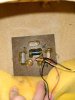
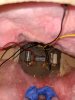
.20210615_132521.jpg 20210615_132615.jpg
 
I just picked up two free pair of The Smaller Advent's today, an early pair (1973) refoamed with green tweeters and a later pair with red tweeters and no woofers. I haven't opened up the 73's yet but the later pair have a 4 and and an 8uF caps in them with foam insulation. I hooked the 73's up to a Sony 2650 I have in a spare room replacing a pair of Dynaco A35's, initially I wasn't impressed but after they played for a while I began to change my mind. I listened to the OLA's / Sansui 555A in the bedroom for a while moving room to room and they sounded similar with deep bass and laid back highs but I think the amp was making the biggest difference. When I get a chance I'll A/B them against the Dynaco's and the OLA's. I didn't need them but thought I'd add them to the Advent collection I didn't know I'd started, I now have OLA's, The Smaller Advent, 2's, 3's and their cousin DQ-20's.
 
After rereading the last part of this thread and all the posts about "...replace the original capacitors with XXX.... capacitors..." or "...should I replace XXX with YYY" or similar, I want to repeat what I have written elsewhere: Just replace any parts, including capacitors, with the same types as was originally used by Advent if you want to be assured of them sounding original.

If you find different values in different units, just put, in the given unit, the same values originally in there.

Forget about supposedly superior caps and all that nonsense. Just because a given type of capacitor is supposed to be superior, it doesn't mean it will work better in all applications. These speakers were voiced by Advent to sound right and you may totally mess up the overall sound by dinking around with "audiophile" parts. It's silly.

I don't mean to offend anybody but if we are going to restore these Advent speakers, they should at least be restored to original configuration, initially. Then, if we/you are dissatisfied with any particular aspect of their sound, THEN experiment with different values/types.

The instance with the 5uF cap. in there may seem strange but it appears to be original. Heck, it's pure speculation as to what happened. Maybe Advent ran out of 4uF caps. and decided to sub 5uF caps. until they got more 4uf caps., judging that the extra 1uF wasn't going to make enough difference for users to detect or that the speakers still met spec. with the 5uF caps. Maybe they hand-selected caps, from 5uF examples which were in tolerance for the 4uF cap. spec. If there's any question, it can be measured to see where its value lies.

Doug
 
Last edited:
I really don't have any new information, but I did once save this schematic found somewhere online and it shows (2) 8uF caps, so you are not the only one to have encountered this particular assembly - - I think we can agree there were several versions. Also, it is doubtful that the resistors will require replacement, but that is your call. BTW, all magnets on my 1975 red tweeters have the larger 3" magnets, and Yikes!!! .......it is one year since post #32 and I still haven't re-measured the DCR on those green tweeters.

View attachment 1155286
The 3 ohm resistor attenuates the tweeter output and the cap across it brings
the tweeter back up in a shelved way at the top end. The size of the cap
determines the half way point for the shelf. The cap value change is analogous
to the 16/16 vs. the 16/8 for the OLA they decided to shelf up at a higher frequency.
Also, I've seen Small Advents with the "dot" type of tweeter inductor, but the
picture in this thread shows the much better (heavier wire) bar type of inductor.

This is all very similar to what was done in the OLA. See Figure 1 vs. Figure 2
on this page: http://baselaudiolab.com/ADVENT_LA_XO.html

I suggest using the least expensive, decent quality, film caps that you can find, then there
will be no need to recap them ever again. There is virtually no difference in the sound,
I've done the experiment. Make the caps the same on both sides and I'd use the
smaller value since these tend to be bright speakers. This is analogous to the
Normal vs. Extended switch position for the OLA. Leaving out the cap across the
resistor would be like the Normal position.

 
Last edited:
I have an early pair of "The Smaller Advent", they have the green colored tweeters and 2-1/2" square magnets, stamped "1972", they measure 3 ohms.

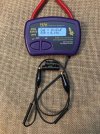
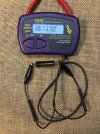
I pulled the crossover capacitors and resistor to measure them and they all tested within spec, pretty amazing for a 53 year old speaker. My guess is that crossover capacitors don't get stressed like amplifier caps do which would account for their longevity.

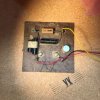
smaller advent crossover.JPG


4uF + 12uF

4 + 12 uF caps.JPG


8uF

8 uF cap.JPG
 
Last edited:
Back
Top Bottom