COOL!bowtie427ss said:That's most impressive............... so much so that i'm going to scratch up the admission fee and see the show!
Just reading about that........ i'm a semi-retired machinist so i have metric hardware on hand.1) Those are metric bolts to mount the driver.
Voice of a bad experience?and if you get the terminals very hot, they will pull out.
Zilch said:Well, for ~$250 the pair, you can be the first AKer to try this in their existing sytem, and then tell the forum at large whether the Zilchster's got his head up his ass or not.... :thmbsp:
[I don't sell none of this stuff, folks....]
The diaphragm plays to the rear of the driver, where the sound is radially summed and fires back out the front from the center. You'll find the mechanics of it intriguing, very likely, and clever. You can see the radial soundpath through the transparent diaphragm in the pic there.
It's a series notch filter across the driver to knock down the 6 dB, 19 kHz peak the BMS drivers seem to all have. I developed it empirically, and have yet to put it into Spice to confirm the values. Is it close to correct?Steve O said:Did I get that right? By my quick calcs, the notch is resonant at ~7kHz. If so, what anomaly is being corected by this.
Well, part of the price is that you post your findings here.bowtie427ss said:Lots of interesting reading there, particularly interesting are the large format coaxial drivers............ many thanks:thmbsp:
Zilch said:It's a series notch filter across the driver to knock down the 6 dB, 19 kHz peak the BMS drivers seem to all have. I developed it empirically, and have yet to put it into Spice to confirm the values. Is it close to correct?
http://audioheritage.org/vbulletin/showthread.php?p=160865#post160865
Yes, that's correct, but I believe both of us have slipped a decimal, 0.0395 mH, originally, no? And the final value was 0.08 mH, not 0.8; my legend is wrong on that value, sorry. Does that calc out any better?Steve O said:After checking out the link you provided I think I now understand what you're doing. You're using a series resonant filter parallelled across the BMS driver, not a parallel resonant filter in series with the driver. This is after passing thru the hipass portion of the N1201-A, right?
I will happily oblige.................Well, part of the price is that you post your findings here.
Question, should anyone be concerned about this peak at 19khz, I don't know about you but I can't hear crap at much above 15khz, I guess our pets will appreciate this?? :scratch2:bowtie427ss said:I understand i need to cut 6db at ~19khz, what kind of slope, or how wide or narrow should that filter be?
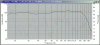
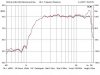
The voltage drive curve is attached to post #70. That'll get you close. Ignore everything above 20 kHz; that's just me and Steve determining what's going on.bowtie427ss said:I'll be running active and i'd like to simulate the compensation circuit thru the use of PEQ in my digital crossover, can you tell me the parameters of the compensation circuit?
There are theories as to how we perceive frequencies above what we can actually hear. Without even getting into that thesis, I made the decision to pursue it after looking at the distortion curves. The second harmonic tracks that peak, telling me that it's an artifact deserving some attention.dgwojo said:Question, should anyone be concerned about this peak at 19khz, I don't know about you but I can't hear crap at much above 15khz, I guess our pets will appreciate this?? :scratch2:
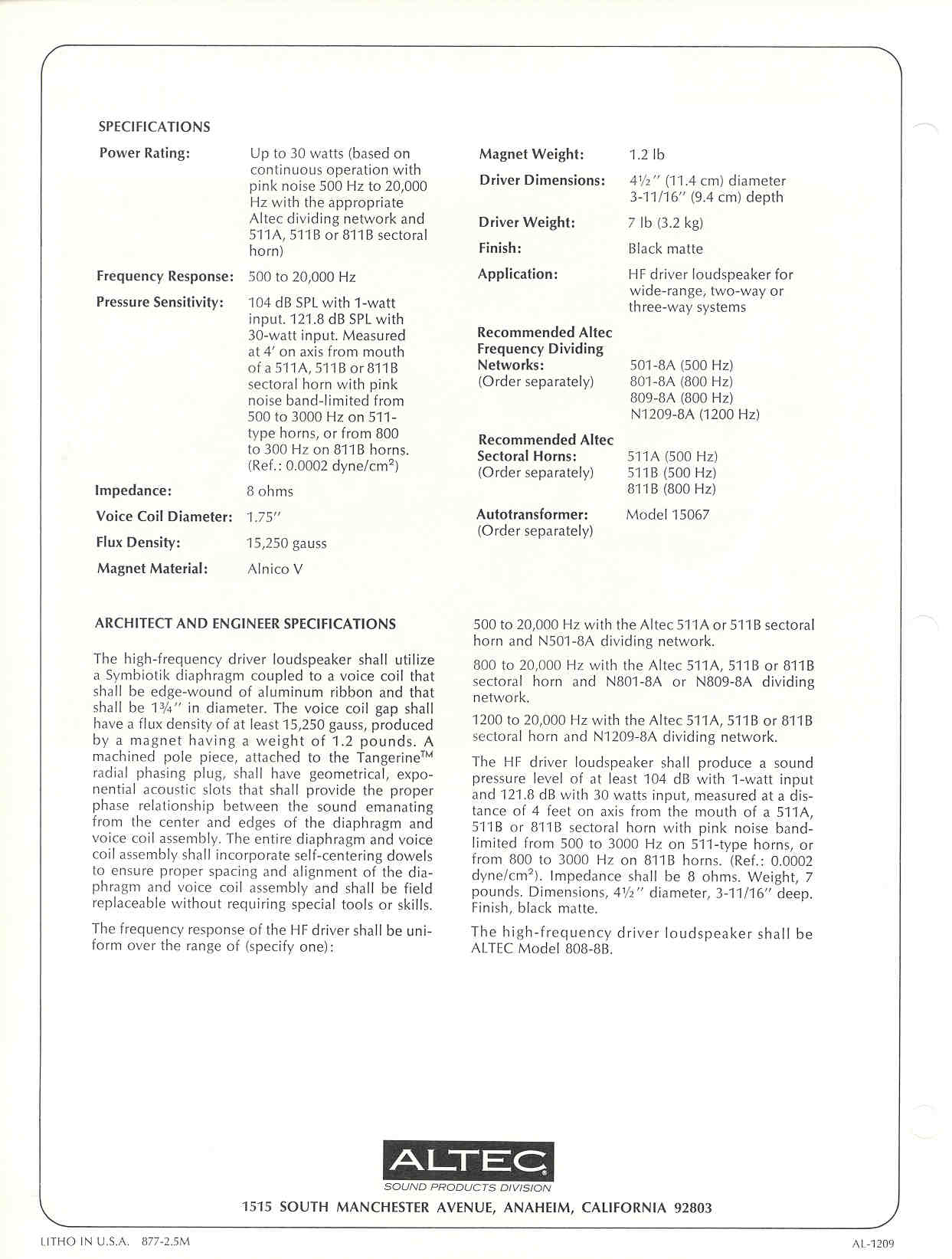
I hear you, no pun intended, I've heard the symbiotik diaphragm 808's and although they claim to hit 16khz they really seem to lack the crispness of the aluminum phragm 802's that go a little higher. Yes, many woman have hearing like cats!!Zilch said:There are theories as to how we perceive frequencies above what we can actually hear. Without even getting into that thesis, I made the decision to pursue it after looking at the distortion curves. The second harmonic tracks that peak, telling me that it's an artifact deserving some attention.
I can't hear whether it's there or not, but I'm an objectivist when it comes to the fundamentals; the curves don't lie.
Also, the fair sex hears higher than us knuckle-draggers. They count in this....![]()

Zilch said:Yes, that's correct, but I believe both of us have slipped a decimal, 0.0395 mH, originally, no? And the final value was 0.08 mH, not 0.8; my legend is wrong on that value, sorry. Does that calc out any better?
snip....
Thanks, Steve.Steve O said:Your tweaked values produce a sharper "peak" than the values originally suggested by "Xover3P" and this makes sense too considering the relative sharpness of the 19KHz peak in the BMS4550 response.
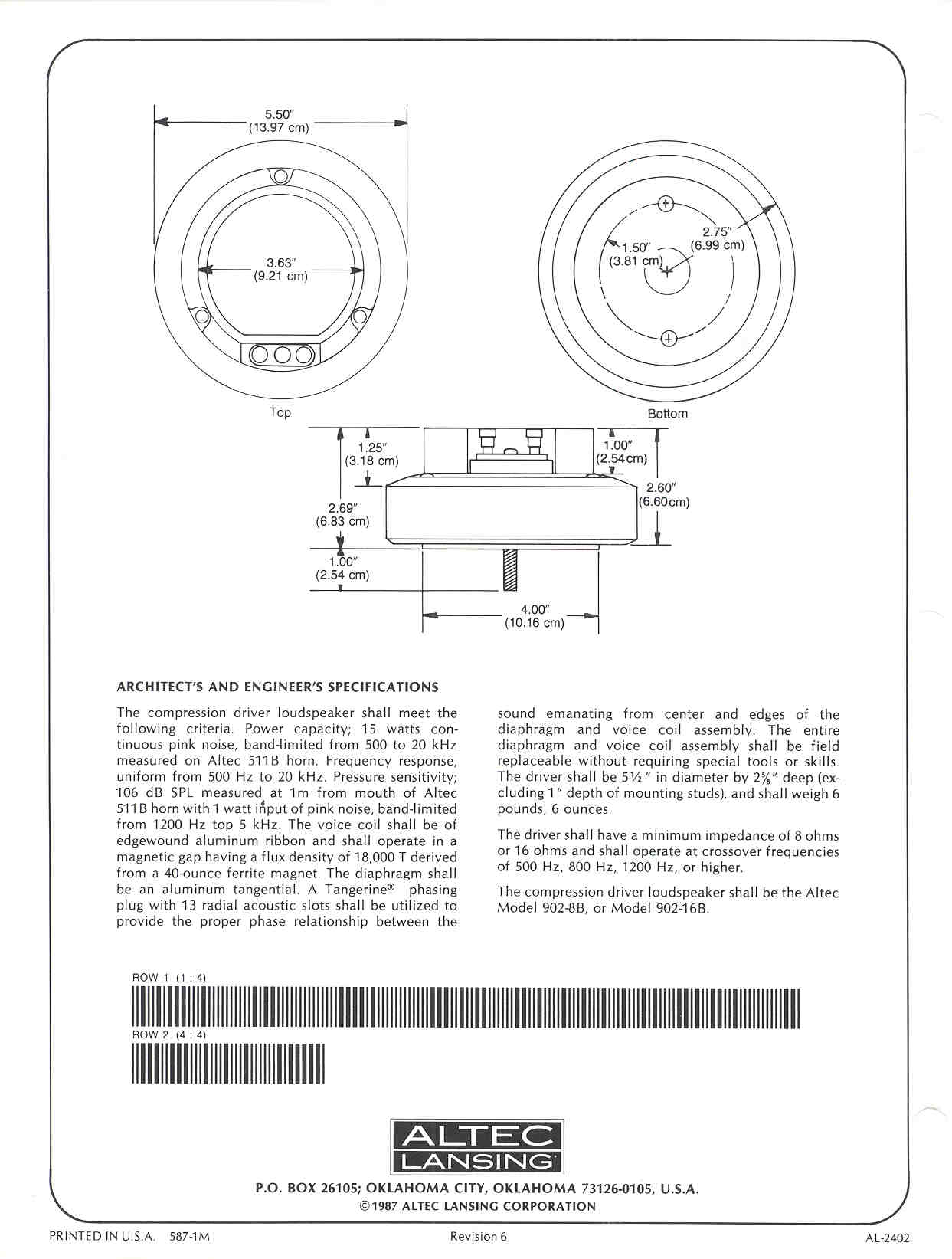
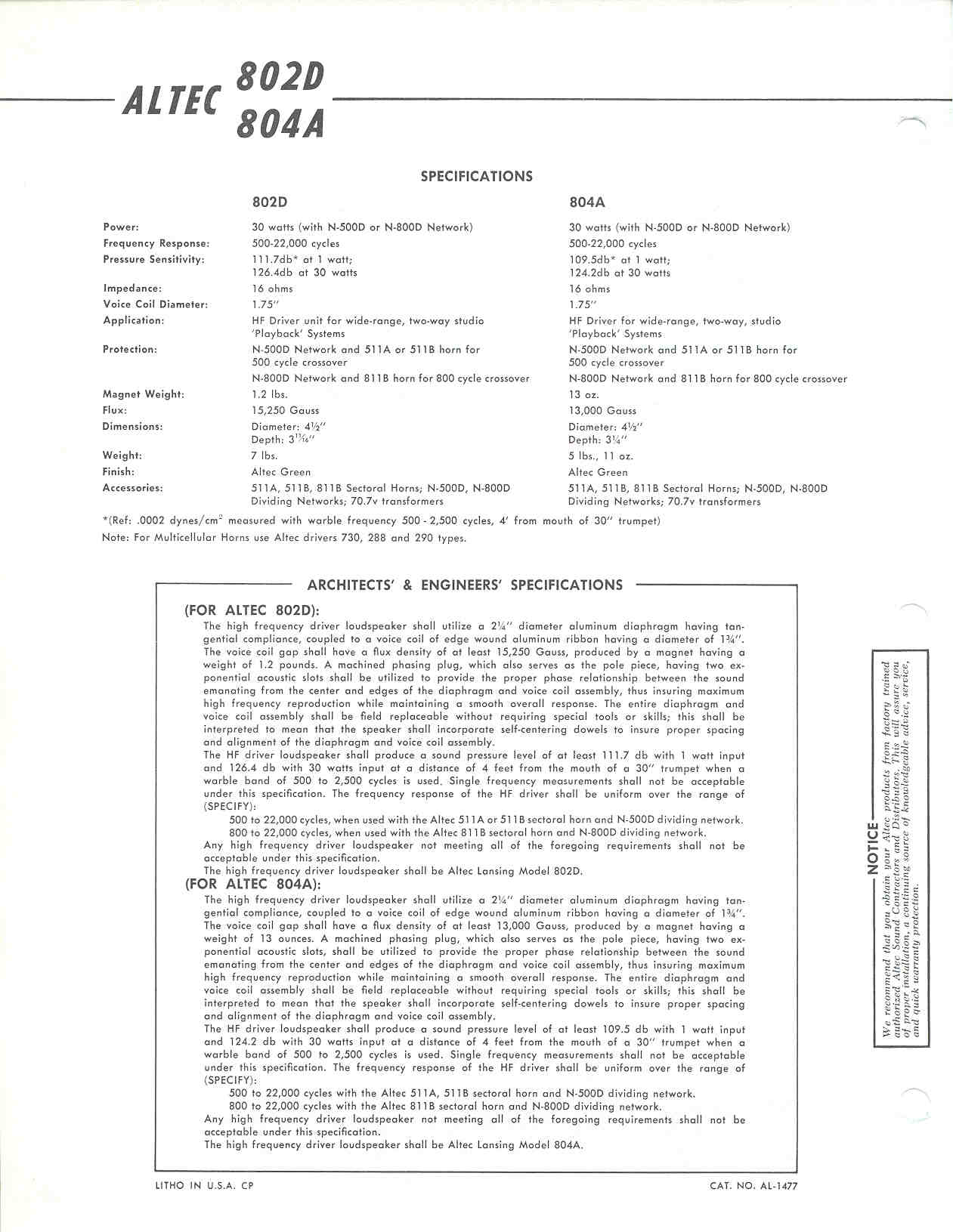
If you want to send them out here, I'll be pleased to measure them for you.dgwojo said:Zilch, I wish I lived closer to you, it'd be really neat to pit the 802-8G alnico against the 902-8B ferrite magnet drivers, as much as I miss the shielding of the 802 the 902 still sounds best to my ears, maybe the 18,000 gauss of the 902 vs the 15,250 gauss of the 802 makes the difference??
I am certainly enjoying them, and the 511s, also. They are top tier. :thmbsp:Richard C. said:Zilch, Your testing has made me like my Altec 811's even more, now! A little damping and they won't ring.
The diaphragms are new "standard" ones installed by GPA. I also have a vintage "light" one, which I'm going to try in an older (non-tangerine) 802 motor.Richard C. said:Do you know which diaphragms were in the 802-8G that you tested?

Right.Richard C. said:Lots of possibilities with Altec drivers.