• The move to the new server is done. There are some software and database maintenance updates in process. This has us passing the hat around to help out. We appreciate any donations. Seriously, even a dollar helps. The payment page may be found here - https://www.audiokarma.org/support.html

ALTEC 846B Trouble/week sound?

With all of the variants, the Altec approach is thus far a bag of snakes. I sure wish someone would send me some Altec drivers that measured well so I'd have an answer that I can recommend....

I wish I could send you a couple of 902's, but I am 3000 miles away and the shipping costs back and forth. :sigh: They also have large unshielded magnets, so I would want them packed tight, in the center of a large box, so as not to bother sensitive equipment during shipping.

I need to get my TrueRTA and calibrated mic going...

My interest in all of your testing, is the "lack of testing" I have seen so far in the Altec world. Mostly there are guys posting what they like! Always what sounds good to their ears AND by using some "special" amp. I would rather see some "real" response charts, first. It narrows things down.

This kinda reminds me of your testing of the JBL 076 tweeter. It didn't seem to be anything special, except for the shape, and the price.:yikes:

Richard C.
 
Richard C. said:
My interest in all of your testing, is the "lack of testing" I have seen so far in the Altec world. Mostly there are guys posting what they like! Always what sounds good to their ears AND by using some "special" amp. I would rather see some "real" response charts, first. It narrows things down.
I was quite taken aback by the dearth of quantitative information relating to Altec performance. No problem, we can now generate it ourselves, for better or worse.

[I'm finding plenty of both.... :yes: ]

Richard C. said:
I need to get my TrueRTA and calibrated mic going...
It'd be great if more audio hobbyists got set up to do it. Measuring and figuring this stuff out certainly adds another dimension of fun to it all.... :thmbsp:
 
The Cliff's Notes Version...

Let's see if I've got the two-way version of this correct (because this is what interests me at the moment).

1. 8 ohm version of Altec 846 (Valencia)
2. BMS 4550 driver replacing Altec 806
3. Altec N1201-8A or home brew equivalent repl N800(?) stock xover
4. Zilchlab series resonant trap placed across 4550 terminals (0.75uF + 0.08mH + 6 ohm) to tame 19-20KHz peak

If #3 is correct, is the N1201-8A implemented as on schematic complete with level controls and strange lowpass takeoff point?

This pan-forum, stream-of-consciousness, cross-linked thread has not been real easy to follow esp wrt conclusions and recommendations. Hope I got the two-way part correct because I think I'm going to try a variation of it on my Carmels. If I got it wrong, correction appreciated.

Thanks for the insights so far.
 
I think it's time. I'm ordering my BMS (4550) drivers and compensation parts this week. I will be using them with my A7's.
 
Steve O said:
This pan-forum, stream-of-consciousness, cross-linked thread has not been real easy to follow esp wrt conclusions and recommendations. Hope I got the two-way part correct because I think I'm going to try a variation of it on my Carmels. If I got it wrong, correction appreciated.
Please understand that this is a group project, work in progress, and you are a participant. :thmbsp:

1) The 846A (16-Ohm) HF is basically done, using BMS 4550-16 plus a simple parallel notch filter for compensation, and that is presently undergoing "proof-of-concept" listening evaluation. The 19 kHz spike is only minimally addressed in that implementation, and we have not worked on optimizing the LF/HF transition using the stock crossover.

2) For 846B (8-Ohm), I've done preliminary work on the HF using N800-8K crossover clone and BMS 4550-8, applying the same approach. The purpose with both 846A and B is to provide a quick and simple "fix" for the HF problem of Valencia and similar Altec two-ways. Merely swapping the BMS 4550-x driver in place of the 806A alone confers substantial performance improvement. Whether users will "like" the character of the sound of the Mylar diaphragm itself is indeterminate.

3) I evaluated the potential of a pair of GPA-refurbished 802-8G with new standard (not "light," which is unavailable new,) as alternative to BMS 4550. The answer is "No, not without the N1201-8A crossover," and the results even with that were marginal. However, using that crossover (stock) with the BMS 4550 driver, I was easily able to produce an excellent FR result. The added series notch filter developed literally just days ago addresses the 19 kHz BMS driver spike.

For now, I'm keeping the controls, but separating the HF section from the LF so it can operate "stand-alone." Spice tells me that's fine; nobody seems to have a logical explanation as to why Altec interconnected it in the first place. This allows independent evaluation and development of filters appropriate for various LF drivers and boxes. It appears that the compensation portion may also be parsed out for use with active filters, but I have not thoroughly evaluated that option as yet.

So, while not specifically developed for 846 Valencia upgrades, the combination of BMS 4550-8 and N1201-8A HF (LF too, perhaps,) provides an opportunity for DIY with other systems. It works quite well with either 811B or 511 horns.

And finally, to toss in another option, the neodymium-magnet BMS 4552 version of this driver provides additionally improved HF detail via higher flux in the gap. However, the minimum recommended crossover frequency is 1 kHz as opposed to 800 Hz; if you're working at 1.2 kHz, spend the additional money to get those.... :yes:

 
Whether users will "like" the character of the sound of the Mylar diaphragm itself is indeterminate.

You might want to have a fall back position with an improved HF network for those who don't like them. Can't hurt.

we have not worked on optimizing the LF/HF transition using the stock crossover.

You may not be able too without changes there as well. That transition through the midrange will be more important than being down 10Db at 20Khz. Won't be easy to measure well either figure you will need to get down at least an octave and an half below.


Rob:beer:
 
Robh3606 said:
That transition through the midrange will be more important than being down 10Db at 20Khz. Won't be easy to measure well either figure you will need to get down at least an octave and an half below.
Not my job.

[Steve O's gonna do that part.... :huge: ]
 
So much for the Cliff's Notes Version...

Zilch said:
Please understand that this is a group project, work in progress, and you are a participant. :thmbsp:

1) The 846A (16-Ohm) HF is basically done, using BMS 4550-16 plus a simple parallel notch filter for compensation, and that is presently undergoing "proof-of-concept" listening evaluation. The 19 kHz spike is only minimally addressed in that implementation, and we have not worked on optimizing the LF/HF transition using the stock crossover.

2) For 846B (8-Ohm), I've done preliminary work on the HF using N800-8K crossover clone and BMS 4550-8, applying the same approach. The purpose with both 846A and B is to provide a quick and simple "fix" for the HF problem of Valencia and similar Altec two-ways. Merely swapping the BMS 4550-x driver in place of the 806A alone confers substantial performance improvement. Whether users will "like" the character of the sound of the Mylar diaphragm itself is indeterminate.

big snip...

I guess I'm in dense mode today...I still don't quite understand what's being evaluated in #1 or being prepared for #2. I can't figure out what xover is being used (stock N800-F with 10uF or 4uF HP caps???), or what the compensation network is (19KHz peak tamer or padding down midrange). Can you provide a diagram? Even a crude one would clear things up for me.

Sorry if I'm missing the obvious but today it isn't (obvious).

Thanks
 
Steve O said:
Sorry if I'm missing the obvious but today it isn't (obvious).
Not obvious, never posted:

Parallel trap filter: 4 uF, 1 mH, 28 Ohms. Also, 0.08 mH in the other leg knocks down the spike ~2 dB.
 
Well, I have learned a lot here...

SO much so, that I ordered a pair of APT-80's from Parts Express! I think they will work well with my 902 Altec drivers - I just wonder where to mount them. Won't they cause a "shadow" in the mid-range, if placed "in" the bell of the 811? I plan to build a tall (~50"), pair of 9 cu. ft. cabinets for my 416-8B's, and my 902/811B horns.

I know, I didn't order the BMS drivers, but I will add the APT-80 tweeters, if I need more highs.

The price is very good though, for what the BMS drivers do. The 19 kHz peak wouldn't bother me, cause it's narrow enough, and can be dealt with. Maybe next time.

Richard C.
 
Richard C. said:
Won't they cause a "shadow" in the mid-range, if placed "in" the bell of the 811?
Yes, but time and phase alignment were more significant issues when I tried it. Within the bell seemed to be the best location.

Try that, and also the BMS solution. That's what the present comparative listening tests are about, but you might make the determination yourself and report it here as well.... :thmbsp:
 
Anyone from this board coming to the A/B/C listening party over at Jacks House in Prescott, Arizona?

I will be bringing my 846B's with EV T-35 tweeters for testing...

Lets get some more people and make this a party to remember!

;)

-Storm
 
Valencia 846B Driver/Crossover Upgrade

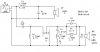
Add-on compensation for BMS 4550 driver is everything to the right of the HF L-pad:
 

Attachments

  • N800-8A Circuit.jpg
    N800-8A Circuit.jpg
    20.2 KB · Views: 90
  • 846B Voltage Drive.jpg
    846B Voltage Drive.jpg
    42.3 KB · Views: 44
  • 846B Attenuation 10.jpg
    846B Attenuation 10.jpg
    59.3 KB · Views: 57
bowtie427ss said:
That's most impressive............... so much so that i'm going to scratch up the admission fee and see the show!

Best response graph i've seen until now is of the PSD2002 on the 811 w/Pi Speakers 1K6 XO (see attached), but the 1600hz bottom end limitation just won't do.

View attachment 45812


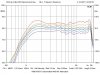
The 1600 hz rolloff is the crossover working as designed. You can build a similar crossover, same compensation, as low as 1200 hz with that driver and horn combo.
 
Zilch said:
I don't get it.

How can they claim that driver has usable frequency response out to 20 kHz in light of their own published curves for it?

The average buyer never looks at the specs. He just goes :banana:

But it does respond just a little at 20 KHz. Down 25 db or so ain't totally bad, is it? It worked for Altec for years. :yes:
 
I don't get it.

How can they claim that driver has usable frequency response out to 20 kHz in light of their own published curves for it?

http://www.eminence.com/proaudio_dri...link=PSD200 2

Very interesting Zilch! i just looked at their graphs and it sure looks to me like they don't roll off so much as take a steep dive above 14k or so.

I would just note that eminence really didn't provide enough information with those graphs to really be sure.

I wonder if the HF roll off is the result of limitations of their test equipment or procedures, it sure is steep and consistent.
 
jackgiff said:
Down 25 db or so ain't totally bad, is it?

:lmao:​

bowtie427ss said:
Very interesting Zilch! I wonder if the HF roll off is the result of limitations of their test equipment or procedures, it sure is steep and consistent.
Those curves are obviously taken on some unspecified horn, not a plane wave tube, as there's no mass breakpoint in evidence. It looks like an exponential doing the compensation by progressively narrowing the beamwidth with increasing frequency, or an indeterminate network included.

Compare to the Pi Speakers curve for that driver. Same deal -- 811B horn? How much compensation was required to get it flat like that? UHF augmentation would be required to make a system using it play full range.

Clearly, 20 kHz could be "boosted" the requisite additional 14 dB, but it'd likely be a fruitless endeavor. On the optimum constant-directivity horn/waveguide, one MIGHT be able to make a viable two-way, but the 1200 Hz "recommendation" on the low end is a serious limitation. They're saying 1600 Hz, actually, with a 12 dB/octave highpass.

Perhaps all that is so that users don't blow them up in SR applications, but it's still a titanium diaphragm, and may not be suitable for home listening in any case. :dunno:
 
jackgiff said:
The average buyer never looks at the specs. He just goes :banana:

It worked for Altec for years. :yes:
Well, the subject of this thread is Valencias, and there's probably few more experienced with these than yourself, after 40 years of listening to them.

I don't know who I'd be more pissed at -- the marketeers playin' fast and loose with the specs, or the "Ignore the numbers, trust your EARS, it's the MUSIC, stupid" subjectivists perpetuating the myth:

http://www.harman.com/wp/pdf/AudioScience.pdf
 
Back
Top Bottom