• The move to the new server is done. There are some software and database maintenance updates in process. This has us passing the hat around to help out. We appreciate any donations. Seriously, even a dollar helps. The payment page may be found here - https://www.audiokarma.org/support.html

Amp with variable loudness as peak limiter (?) + mids control for intelligibility. For use with headphones, mainly speech.

Well.. my budget is not THAT tight, so 300-400 EUR (or even a little more) will be fine. And the amp will need to do well almost exclusively on the headphone out. As @BmWr75 says, a Marantz 1060 may work for example (thinks for the recommendation!).
I have to consider actual availability, and I'll clearly prefer local sources (I'm in the EU), so that's a factor too. There is e.g. a Marantz SR-620 available that's within budget.


Is there a database where I could search for amps with the features that I want, perhaps? That could be useful. And then I would check availability and reviews.

A Marantz 1060 will be above your budget. By 200 or more Euros. Sansui in any good model is up there. You might in Europe. find a Sony integrated of the 1971-1973 period possibly. Maybe a TA-1130 or TA-1140 as some good options. The Marantz tax is wicked high, and Marantz in Europe in the 1971-1978 time frame was uncommon from what I know.
 
Frankly, it sounds like one of the aforememtioned preamps checks the majority of the boxes without being digital, without involving SW, without being too futzy, etc.
My only issue with them is that they would be a potentially pricey device that I would not be able to use much for anything else. I have a newish Sony stereo amp, that unfortunately does not have physical tone controls (only on the remote). It is also new, so not as great for headphones as vintage pre-1980 amps.
Btw, I'll use 70Ohm Senheiser H 25s for work. Not high-impedance ones. The reason is again that high-impedance ones are are all big over-ears, and so not practical.

I'll look into these pre-amps just in case... I'm curious now.
 
A Marantz 1060 will be above your budget. By 200 or more Euros. Sansui in any good model is up there. You might in Europe. find a Sony integrated of the 1971-1973 period possibly. Maybe a TA-1130 or TA-1140 as some good options. The Marantz tax is wicked high, and Marantz in Europe in the 1971-1978 time frame was uncommon from what I know.
Thanks, that's really good practical advice. Yeah,I checked some Sansuis, and they cost a lot more. I can only see an AU-216 that's quite cheap. Not sure it's the one I want.
Marantz ones I see available locally: PM-420, PM-630, PM-200, PM-550DC (with 5-band EQ.), 1515, PM-250, 2216 and 2216B, 1090... and that's the last one I would consider because of the price.
Sony: TA F-35, TA 2650

Only a few have mids control, and often a loudness button as opposed to a knob.
 
Thanks, that's really good practical advice. Yeah,I checked some Sansuis, and they cost a lot more. I can only see an AU-216 that's quite cheap. Not sure it's the one I want.
Marantz ones I see available locally: PM-420, PM-630, PM-200, PM-550DC (with 5-band EQ.), 1515, PM-250, 2216 and 2216B, 1090... and that's the last one I would consider because of the price.
Sony: TA F-35, TA 2650

Only a few have mids control, and often a loudness button as opposed to a knob.
Also do some study, avoid models which use IC output modules (STK and proprietary similar kinds). Those are far more involved, rare and difficult to work around. Discrete transistor best. Be careful about post 1973 cost cut build and engineering. Some thoughts.
 
I'm surprised that with all of the gizmos loaded onto audio gear these days that some kind of a compression adjustment isn't a common feature. If you're watching a movie and don't want to disturb others in the house, it would be handy to have some adjustment where you could compress the soft and loud sounds, so that you're not turning it up to hear dialog one moment and then being bombarded with loud special effects the next. Movies these days seem to have more dynamic range than they ever had before, so the time is right for this kind of thing. Oddly enough, while the dynamic range of movies has increased, music has gone the opposite way.
 
Also do some study, avoid models which use IC output modules (STK and proprietary similar kinds). Those are far more involved, rare and difficult to work around. Discrete transistor best. Be careful about post 1973 cost cut build and engineering. Some thoughts.
Thanks a lot, this is the kind of stuff that I would never find out myself, and I'm a little concerned about it. Vintage amps need a lot more care and attention, and even selecting the right one is an art unto itself.
 
I'm surprised that with all of the gizmos loaded onto audio gear these days that some kind of a compression adjustment isn't a common feature. If you're watching a movie and don't want to disturb others in the house, it would be handy to have some adjustment where you could compress the soft and loud sounds, so that you're not turning it up to hear dialog one moment and then being bombarded with loud special effects the next. Movies these days seem to have more dynamic range than they ever had before, so the time is right for this kind of thing. Oddly enough, while the dynamic range of movies has increased, music has gone the opposite way.
Even my old DVD player that had an integrated DD/DTS decoder had this option, and AVRs definitely have them too.

I'm considering using some form of software volume equalisation for my work, because hearing damage is unfortunately a very real risk in remote interpreting (and even in on-site work, to some extent). And the reason is two-fold: there can be dangerously loud volume spikes if there is no dynamic range compression, but if there is, the mid-range frequencies (so human voices that I'm working with as an interpreter) can be "overenergised", which can cause hearing damage even at lower volumes. I'm not entirely sure how that happens, but it definitely does happen.
The reason why I'm considering vintage amps is that they tend to have a warmer, more natural, less analytical sound, and could potentially improve on the compressed and often unprofessional sound I have to work with instead of enhancing every little imperfection.
The goal is to improve the sound enough to make it natural and pleasant, and phsycally more similar to live human voices, because - we're entering psychoacoustics here - the brain's ability to make sense of human speech deteriorates if voices do not sound natural.

There is a LOT to consider...
 
EQ/loudness will do nothing regarding peak limiting. An outboard compressor might be an option, but would add expense and complexity. A software compressor might be a possibility though. Or maybe a peak limiter isn't necessary anyway.
How about a small mixer? That would have more EQ flexibility than an integrated amp, and pretty much all mixers come with a headphone output. Add any amplifier if you want speakers, or just add powered speakers.
Think about a mixer. There are lots to choose from and they're cheap.
Since you're in the UK, you may be interested in this company:

They may not respond to you, they don't always do. And they sell at their discretion, so there is no public webshop.
They would be my best shot at a limiter probably, but seeing how difficult they are to reach, I won't get my hopes up.
 
EQ/loudness will do nothing regarding peak limiting. An outboard compressor might be an option, but would add expense and complexity. A software compressor might be a possibility though. Or maybe a peak limiter isn't necessary anyway.
How about a small mixer? That would have more EQ flexibility than an integrated amp, and pretty much all mixers come with a headphone output. Add any amplifier if you want speakers, or just add powered speakers.
Think about a mixer. There are lots to choose from and they're cheap.
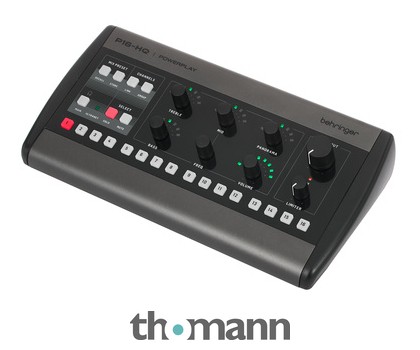
This is the product that comes closest to what I need. It is essentially ideal... except it is not a stand-alone product, and it cannot be connected to anything but its own dedicated system.

If this came with a decent integrated USB DAC and could be connected to a laptop, I'd order it in a heartbeat.
 
It's very common in home theater AVRs/processors, but not in typical home audio 2-ch gear that I'm aware of.
This is how little I actually know about AVRs! I just hook up my newer (but still some years old) Roku-capable TV up to my vintage Marantz receiver (though a DAC, of course) and I'm fine with the sound, though of course it isn't surround sound. I figure that I have to have something extra to look forward to when I see a movie at a theater.
Even my old DVD player that had an integrated DD/DTS decoder had this option, and AVRs definitely have them too.

I'm considering using some form of software volume equalisation for my work, because hearing damage is unfortunately a very real risk in remote interpreting (and even in on-site work, to some extent). And the reason is two-fold: there can be dangerously loud volume spikes if there is no dynamic range compression, but if there is, the mid-range frequencies (so human voices that I'm working with as an interpreter) can be "overenergised", which can cause hearing damage even at lower volumes. I'm not entirely sure how that happens, but it definitely does happen.
The reason why I'm considering vintage amps is that they tend to have a warmer, more natural, less analytical sound, and could potentially improve on the compressed and often unprofessional sound I have to work with instead of enhancing every little imperfection.
The goal is to improve the sound enough to make it natural and pleasant, and phsycally more similar to live human voices, because - we're entering psychoacoustics here - the brain's ability to make sense of human speech deteriorates if voices do not sound natural.

There is a LOT to consider...
I can't really say too much about the subject here, but I will say that my limited experience with AVRs has told me that they don't sound that great to me. I sold a pair of Wharfedale bookshelf speakers to a friend and he had them hooked up to a brand new, definitely not bottom of the line AVR type thing, a Denon, I think. I helped him hook these things up and went through the menus, finding the right settings for a simple set of stereo speakers, but even with all of the tweaking that I did, those speakers sounded totally different than they did with my Marantz receiver, and not in a good way. I don't quite buy the idea that the Marantz has some kind of warm "vintage magic," just that the sound of that Denon, at least with that one pair of speakers, was really thin.

I really don't think that you necessarily need to go vintage to get that fuller, warmer type sound that you're looking for, just that newer, cheaper amps can sound rather thin, but there are lots of options, though likely not so many with the kind of dynamic range limiting options that you're looking for.

I wonder if there's some kind of studio rack unit compressor that would work? There's so many of those kinds of things available, and it's true that they can do pretty radical things to the sound, which is not likely to be desirable, but there may be something that's designed to work with a stereo mixdown that's more subtle and would do the trick that you're looking to have it do perfectly. You then could just buy the amp of your choosing and run everything though that thing...
 
To be honest, I really don't understand your logic at all. You're considering old integrated amps which are obviously completely analogue with no DAC or USB connections etc., but as soon as mixers are mentioned you want a DAC, USB connectivity etc. Why? A simple 4 channel analogue mixer will do what you want, and a compressor could be used at the insert point or via another send/return loop. Yes, you'll have extra channels which (probably) won't get used, but so what? They're cheap enough for it not to matter.
 
I'm afraid it seems the OP may be stuck in the pursuit of perfection for what sounds like an extremely use-case specific device, borderline totally custom, vs good to excellent options that could cover the essential functions.

If such a plug and play device existed, considering the OPs capacity and knowledge within that industry/line of work who better would (should?) know than he and or colleagues?
 
To be honest, I really don't understand your logic at all. You're considering old integrated amps which are obviously completely analogue with no DAC or USB connections etc., but as soon as mixers are mentioned you want a DAC, USB connectivity etc. Why? A simple 4 channel analogue mixer will do what you want, and a compressor could be used at the insert point or via another send/return loop. Yes, you'll have extra channels which (probably) won't get used, but so what? They're cheap enough for it not to matter.
Fair points... so here's what I think.
I could use a vintage amp with speakers as a second system, and their sound is considered warmer and less analytical than the sound of modern equipment. Two things that are important. The sound I work with is often not very good, and compressed, so it needs some improvement, it needs to sound more natural. Tone control is essential, but not enough sometimes.

If I go with a mixer, I won't be able to use it for anything else. Which isn't a huge problem as long as value for money is good enough, and I don't need a bunch of other things to make it work, and the functions I actually need and use are not a fraction of what I'm ending up paying for. I stood in a store with a sound guy, told him everything he needed to know, and he only had one big mixer with loads of tiny knobs that he could recommend. All others had some issue. Compressors have the usual wide rack format, which is not the best for tabletop applications, and the sound I get is already compressed, which is NOT good, and it's actually not safe. The sound needs to be made more natural, richer, fuller. So I need the full range, but with a limiter that protects me from volume spikes.

I also clearly wouldn't expect a vintage amp to have a DAC, because it's not possible. With new equipment, I think the expectation is realistic, esp. with mixers. There are many mixers with a USB in, so I think I'm not being unrealistic. The problem with them is that they are primarily not intended for monitoring but mixing, so some of them e.g. mix channels by default and there is no way to NOT mix them, and they may not have tone control on the monitor out, etc.

BUT... if you can recommend a few things, I'll have a look. I would even call, to be honest. I really want to find a solution.

 
Even my old DVD player that had an integrated DD/DTS decoder had this option, and AVRs definitely have them too.

I'm considering using some form of software volume equalisation for my work, because hearing damage is unfortunately a very real risk in remote interpreting (and even in on-site work, to some extent). And the reason is two-fold: there can be dangerously loud volume spikes if there is no dynamic range compression, but if there is, the mid-range frequencies (so human voices that I'm working with as an interpreter) can be "overenergised", which can cause hearing damage even at lower volumes. I'm not entirely sure how that happens, but it definitely does happen.
The reason why I'm considering vintage amps is that they tend to have a warmer, more natural, less analytical sound, and could potentially improve on the compressed and often unprofessional sound I have to work with instead of enhancing every little imperfection.
The goal is to improve the sound enough to make it natural and pleasant, and phsycally more similar to live human voices, because - we're entering psychoacoustics here - the brain's ability to make sense of human speech deteriorates if voices do not sound natural.

There is a LOT to consider...
Effective compressor/limiters which work properly are and have been the purview of broadcast/high end recording studios. Those are unfortunately the units you happen to really need. And they have never been inexpensive ever. The lesser ones pump and breathe annoyingly.

A note about some of my history. I used to volunteer for Recording For The Blind & Dyslexic. I recorded many readers with different voices. Lots of gain riding. This studio tried Shure Level-Loc compressors. They were as much or more hindrance as they helped. They were not very effective. Note, this was in acoustically treated booths, and using Sennheiser MD 414 microphones. Those of us recording used Sennheiser HD-414 headphones. This was under far better conditions than your Zoom meetings, interpreting. I don't envy your job and it's challenges. And your command with foreign language is far superior to mine. I know some German, but far from fluent. Further note: I have multiple physical challenges of my own. My speech has it's challenges as well. I am extremely good at understanding a Cerebral Palsy quadriplegic with speech issues (that he can't help) as I had several of my classmates and friends with this issue.
 
I'm afraid it seems the OP may be stuck in the pursuit of perfection for what sounds like an extremely use-case specific device, borderline totally custom, vs good to excellent options that could cover the essential functions.

If such a plug and play device existed, considering the OPs capacity and knowledge within that industry/line of work who better would (should?) know than he and or colleagues?
Oh yes. I need a pro solution where one does not exist. And you know how many of my colleagues are facing this issue? Nobody has a solution, we keep asking each other. few have a big home studio that although it is a total overkill, at least it does what we need well. I don't have the space for that. Some go for the likes of Fosi Audio just because it's cheap and has tone controls. Never mind peak limiting and actual nice, natural sound. Some use LimitEar's limiters, but they are not easy to get. And some simply suffer. I'm not going to do that either.

This is professional work we're talking about, not a hobby. I can invest in it if the solution is really what I need, but if it not completely that, I'll keep my investments low. I won't pay much for imperfect solutions or ones where I'd use about 10% of the functions and even then I'd have to accept compromises that make my work more complicated.

I started looking into this many, many times over the years, always found out new things, but never found anything really practical.
 
Effective compressor/limiters which work properly are and have been the purview of broadcast/high end recording studios. Those are unfortunately the units you happen to really need. And they have never been inexpensive ever. The lesser ones pump and breathe annoyingly.

A note about some of my history. I used to volunteer for Recording For The Blind & Dyslexic. I recorded many readers with different voices. Lots of gain riding. This studio tried Shure Level-Loc compressors. They were as much or more hindrance as they helped. They were not very effective. Note, this was in acoustically treated booths, and using Sennheiser MD 414 microphones. Those of us recording used Sennheiser HD-414 headphones. This was under far better conditions than your Zoom meetings, interpreting. I don't envy your job and it's challenges. And your command with foreign language is far superior to mine. I know some German, but far from fluent. Further note: I have multiple physical challenges of my own. My speech has it's challenges as well. I am extremely good at understanding a Cerebral Palsy quadriplegic with speech issues (that he can't help) as I had several of my classmates and friends with this issue.
Thanks for your kindness (honestly). Unfortunately, that's how things are.

Sitting in a meeting with people without any amplification or headphones is still my favourite kind of interpreting. But I also love booth-work, in professional interpreting booths with conference audio systems. Everything started go bad with covid, when our in-person interpreting assigments moved online. Initially, the IT solutions were amateurish, but they caught on. There are now online interpreting platforms, and Zoom also has professional conference interpreting functions (not for free). Thing is however, our needs and safety were not considered. There have been cases of intepreters suffering acoustic shock and being hospitalised in several countries. All because of poor unnatural compressed sound and a total disrespect for health and safety. And because the online interpreting solutions/platforms were not designed by interpreters or by sound engineers, but IT guys.
It was pure luck that I did not get any online remote interpreting assignments right at the beginning when they became a thing, because I probably would be living with hearing damage now. And because I still haven't found a decent safe solution, I'm not offering these services all that enthusiastically. It would be good for business though, which is why I want a definiteve solution. I'm digging as deep now as I have to, and will take as much time as I have to. And then hopefully I won't have to do any more digging into this ever again, and just enjoy my work that I love.
I also love music and film, so I know a little about sound, but going into all this detail is not usually what I do.

Thanks for sharing your experience too! I'm proficient in three languages, but mostly use two for work. I have a fourth that I only translate from (in writing). I speak and understand several more at a lower level.
 
This is professional work we're talking about, not a hobby. I can invest in it if the solution is really what I need, but if it not completely that, I'll keep my investments low. I won't pay much for imperfect solutions or ones where I'd use about 10% of the functions and even then I'd have to accept compromises that make my work more complicated.
Which is precisely why I said what I did.

It seems every option is an imperfect solution because the perfect one apparently does not exist, thus the circularity of it all.
 
The sound I work with is often not very good, and compressed, so it needs some improvement, it needs to sound more natural.

... the sound I get is already compressed, which is NOT good, and it's actually not safe.
If the sound is already compressed, I'm not sure how adding another compressor would help. I'm not sure why it isn't safe either.
Sounds like a parametric EQ or EQ with sweepable mids is what you need.
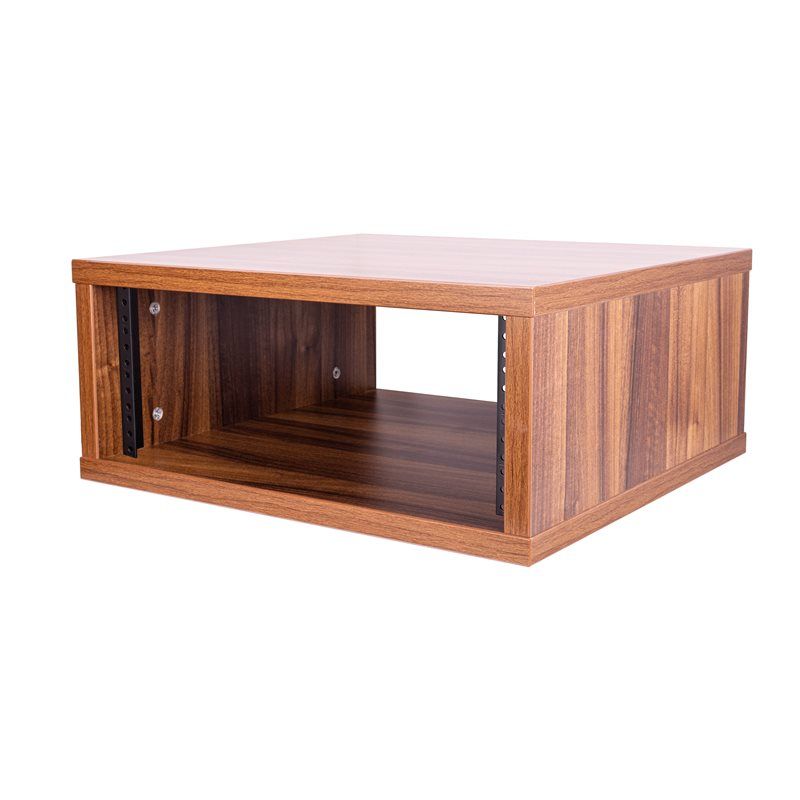
Something like a 4u rack unit could house the gear you need and probably wouldn't take up excessive room on your work surface.
R8600-500-4UTW_R8600-500-4UTW-00.jpg
 
Which is precisely why I said what I did.

It seems every option is an imperfect solution because the perfect one apparently does not exist, thus the circularity of it all.
But that does not mean I'm stuck in anything... I'm looking for an acceptable compromise, as there are only compromises. I can't do anything else, that's all I've got. See my comment on how it all started during covid and all the interpreters who have suffered permanent hearing damage.

Vintage amps seem like a more pleasant compromise than DJ mixers or a crappy chi-fi DAC/AMP with tone control.
MIDI controllers are another contender, they really do work, but again they are the least functional outside of my work, and the good ones are not cheap and unnecessarily big.

Conference tech providers know what we need, but they haven't ventured into remote interpreting yet.

There are more professional interpreters in the world than you'd think probably... Think of NATO, the UN and the EU and there is the huge international freelance market. We actually have ISO standards in place for interpreting gear, which the above organisations who employ a lot of interpreters and contract even more freelancers will have to abide by. But I'm not employed, and our clients in the freelance market have zero idea about ISO. I don't think they know enough about our work in most cases to be much help anyway. We have to educate clients all the time. The result is that they don't get the best interpreting they potentially could, and we get to deal with the health risks and the frustration.
 
Back
Top Bottom