• The move to the new server is done. There are some software and database maintenance updates in process. This has us passing the hat around to help out. We appreciate any donations. Seriously, even a dollar helps. The payment page may be found here - https://www.audiokarma.org/support.html

AR-2ax Speaker - what kind of wood veneer? Pine?

Doing the math, these caps had a life expectancy of 28.9 years. These are 58 years old. And my math is exactly correct for the environment, as is the rest of what I already explained in more detail than was necessary.

And your point is what? That I was wrong to change these caps? That your “math” or analyses is superior, so my caps should be good, and my tweeters good??

Why the rant? What are you attempting to prove here? Does it add any value? If it does, I don’t see it.
 
You are correct in replacing the capacitors.
They are new, but that does not indicate that they are good or bad, just new. I buy more than I need when replacing and test them all for ESR and capacitance to find a matched pair as close as possible. Did you do the same? I personally am not judging your technical abilities, but just trying to give you suggestions that may or may not help you, carry on...
 
Okay, why are you so hesitant to pull the tweeter out of the other cabinet to test it and compare it to the current one you are working on???
I think I already explained this.

That next tweeter may be fine as is. If so, no wasted effort, right? If it’s bad, no wasted effort to repair it, right? And I’ll have a standard to compare to, right?

IMO/IME, too many folks go head over heals to change out components, then when they’re finished doing both, they talk about how great the sound is….Yet have no standard to A/B the before and after.

I decided to do one speaker at a time, when I had no idea what I’d find. Now, I can A/B any improvements I make. I can even do an A/B comparison of the refurbished tweeter vs an unmolested one. I can even clean the pots on the 2nd speaker and run it with the original caps, to test the difference. In every way, I’ll know absolutely what I had, and what I’ve got now.

But once I have this first speaker sounding right, I can record a comparison of before, and after. Maybe useful to that next guy who buys a pair of these.
 
Cymbal freq covers a wide range. 500-600Hz all the way up to 6K to 8K. Normally, to boost volume in that range sound engineers boost eq the mix in the 6K to 8K range. If your tweeters do well in that range, hearing cymbals shouldn't be an issue. Also, as mentioned on CS page, the AR midrange goes a lot higher than new style mids and therefore handles a lot of the high freq. I personally run mids a lot higher - say 10:00 on a 12:00 scale. Tweeter set as high or all the way up. Having both speakers recaped and pots set in this manner may give you the sound you seek. The AR tweeter is really more of a super tweeter adding just a bit of sparkle to the mix. Set the mids higher and turn tweeters to full. Might be worth a try before tearing into them?
 
Cymbal freq covers a wide range. 500-600Hz all the way up to 6K to 8K. Normally, to boost volume in that range sound engineers boost eq the mix in the 6K to 8K range. If your tweeters do well in that range, hearing cymbals shouldn't be an issue. Also, as mentioned on CS page, the AR midrange goes a lot higher than new style mids and therefore handles a lot of the high freq. I personally run mids a lot higher - say 10:00 on a 12:00 scale. Tweeter set as high or all the way up. Having both speakers recaped and pots set in this manner may give you the sound you seek. The AR tweeter is really more of a super tweeter adding just a bit of sparkle to the mix. Set the mids higher and turn tweeters to full. Might be worth a try before tearing into them?

Already did that. The pots and caps work 4.0 . I have the tweeter pot set to max “Increase” position, which gives max voltage to the tweeter across the voltage divider. If I turn the mid pot to max “Increase” it sounds “honky” and blares. It sounds best at about the 65% position.
 
Keep up the good work. Just picked up a pair of AR-2a speakers, connected to a source, and only heard music from the woofers. Removed a woofer from one of the cabinets and tested the capacitors. Not good. The 6 uFD measured 21.2 uFD (ESR = 0.68 ohms) and the 4 uFD measured 12.8 uFD (ESR = 0.66 ohms). The two potentiometers were severely corroded and after cleaning still measured open between the wiper and the pads. Some pits were found under the corrosion. Each pot measured 16 ohms but no change was achieved when moving the wiper. Didn't bother to open the second one; an order was placed with Parts Express for L pads and caps.

Good luck with your restoration.
AR 2a (1).JPG
 
At this point, there is only 1 tweeter. The other speaker cabinet hasn’t been opened. This is by design. I want to be able to A/B the speakers. Both arrived with identical symptoms: Low mid output, no tweeter output.

Already been there, done that. Actual capacitance value is written to the left of each printed value:

View attachment 2842780

LCR meter:
View attachment 2842786

What is your resistance reading between one of the locations you are currently connected to and the wiper (yellow lead)? The connections you currently have your meter on will never change when the wiper is moved.
 
I think I already explained....

IMO/IME, too many folks go head over heals to change out components, then when they’re finished doing both, they talk about how great the sound is….Yet have no standard to A/B the before and after.

You are totally missing my point, and also on your own journey here sir.

I was wrong about your pots also, not!

Best of luck, over and out...
 
Keep up the good work. Just picked up a pair of AR-2a speakers, connected to a source, and only heard music from the woofers. Removed a woofer from one of the cabinets and tested the capacitors. Not good. The 6 uFD measured 21.2 uFD (ESR = 0.68 ohms) and the 4 uFD measured 12.8 uFD (ESR = 0.66 ohms). The two potentiometers were severely corroded and after cleaning still measured open between the wiper and the pads. Some pits were found under the corrosion. Each pot measured 16 ohms but no change was achieved when moving the wiper. Didn't bother to open the second one; an order was placed with Parts Express for L pads and caps.

Good luck with your restoration.
View attachment 2842942
If you go with the L pads vs replacement pots, the suggested L pad is a 8 ohm 15 watt mono L-pad. Classic Speaker Pages suggests a resistor on the midrange. 25 OHM, 10 watt resistors I believe.
 
Last edited:
If you go with the L pads vs replacement pots, the suggested L pad is a 8 ohm 15 watt mono L-pad. Classic Speaker Pages suggests a resistor on the midrange. 25 OHM, 10 watt resistors I believe.

Thanks Bill, I will look into that. One question though. Since the originals are 16 ohm, why would an 8 ohm replacement be recommended?
 
What is your resistance reading between one of the locations you are currently connected to and the wiper (yellow lead)? The connections you currently have your meter on will never change when the wiper is moved.

That pic was just to show use of the LCR meter. I was reading the resistance coil end-to-end.

But just to put to bed all the skepticism, here is a short video of me testing the AR pot. I tested both, several times.

Here, I turn the pot Counter Clockwise from 0 to 15 ohms very slowly, then from 15 ohms back to 0 ohms at a little faster pace.

I have no idea why all the skepticism in here. Nor do I understand why anyone would be critical of my slow, careful pace and doing only 1 speaker at a time, instead of doing both simultaneously. Even after explaining my reasons…. Bottom line is, I want a very clear before and after look and listen to these. (Plus, I make any mistakes only once, not twice!)

CB273CBB-873A-44BC-AB2C-97471FC015AE.jpeg


https://youtube.com/shorts/vTmYuQsl9wE?feature=share
 
Not judging Ham, just asking. I see no reason to question your methodology about doing one at a time. Since only the woofers work in my pair and the tested capacitors in the first one are so far off, I will do both of them at the same time. You probably have a better starting point then I do.
 
Thanks Bill, I will look into that. One question though. Since the originals are 16 ohm, why would an 8 ohm replacement be recommended?

L-pads are different from potentiometers. An L-pad is designed to present a constant resistance as seen by the XO (capacitor and/or inductor). As you turn an L-pad, it presents a constant 8 ohms to the XO, while still attenuating the speaker.

A potentiometer, as used in these AR speakers, presents a varying load on the XO. So as you turn the pot, you actually change the XO frequency as well.

If you use an L-pad, the 25 ohm shunt (parallel) resistance to the tweeter/midrange makes the total load on the XO look similar to the load using the pot.

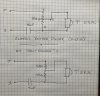
That varying load can be seen in this illustration; the total circuit resistance changes as the pot is turned: (Below)
15DA8F68-082A-4602-84BC-C19160CEAC7E.jpeg
 
Not judging Ham, just asking. I see no reason to question your methodology about doing one at a time. Since only the woofers work in my pair and the tested capacitors in the first one are so far off, I will do both of them at the same time. You probably have a better starting point then I do.

You’re fine!

It was doctorolds I was referring to re: skepticism:

You are totally missing my point, and also on your own journey here sir.

I was wrong about your pots also, not!

Best of luck, over and out...
 
IDK? I used the AR replacements. Jkent sells them to members here and on Classic Speaker pages for a nice discount.
https://community.classicspeakerpages.net/topic/10088-ar-2ax-pots-vs-l-pads/#comment-119573
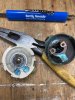
Since I haven’t opened up my second speaker yet, I went ahead and bought 2 new pots. I didn’t get mine from JKent, I bought mine from Harfington. A little cheaper, and 20 ohm vs 25 ohm, so a tad closer in value to the 15 ohm AR pots. Only difference is, they are “open back.” So I’ll have to put a cheap protective cover on them. Cardboard or plastic will work; it’s just a cover to prevent the fiberglass from getting into the rotating parts. Free shipping. (That little locking tab is removable!)

3673EE71-2999-4409-8C75-15BB80B89E1D.jpeg
 
L-pads are different from potentiometers. An L-pad is designed to present a constant resistance as seen by the XO (capacitor and/or inductor). As you turn an L-pad, it presents a constant 8 ohms to the XO, while still attenuating the speaker.

A potentiometer, as used in these AR speakers, presents a varying load on the XO. So as you turn the pot, you actually change the XO frequency as well.

If you use an L-pad, the 25 ohm shunt (parallel) resistance to the tweeter/midrange makes the total load on the XO look similar to the load using the pot.

That varying load can be seen in this illustration; the total circuit resistance changes as the pot is turned: (Below)
View attachment 2843151

Thanks for the clarification on the difference regarding L pads versus pots. Have only restored a couple pairs of speakers and have always used pots. I will need to regroup on this AR 2a restoration.
 
And, here is a short video clip of my speaker as it is now. I put my phone to within 1” of the tweeter dome. (Max setting on tweeter pot, 65% on the midrange.) You can hear the tweeter, but it doesn’t put out very much. I’ve been advised by Roy on CSP that that is about correct for this tweeter (super tweeter).

 
Since I haven’t opened up my second speaker yet, I went ahead and bought 2 new pots. I didn’t get mine from JKent, I bought mine from Harfington. A little cheaper, and 20 ohm vs 25 ohm, so a tad closer in value to the 15 ohm AR pots. Only difference is, they are “open back.” So I’ll have to put a cheap protective cover on them. Cardboard or plastic will work; it’s just a cover to prevent the fiberglass from getting into the rotating parts. Free shipping. (That little locking tab is removable!)

View attachment 2843169
I believe Jkents are 15 ohm. I have them in my restored 2ax.
 
Back
Top Bottom