


You are using an out of date browser. It may not display this or other websites correctly.
You should upgrade or use an alternative browser.
You should upgrade or use an alternative browser.
Boston recommendations
- Thread starter ajward549
- Start date

ajward549
Super Member
Once again, thanks everyone! I haven’t been to Boston since the mid 90s, so I’m looking forward to being in the city!
I will be staying at the conference hotel directly downtown, across river from
Cambridge. There will definitely not be any last calls for this guy. I’m typically in bed and snoring by 10 pm!
I will be staying at the conference hotel directly downtown, across river from
Cambridge. There will definitely not be any last calls for this guy. I’m typically in bed and snoring by 10 pm!

If you can make it up to the north shore, the Record Exchange us definitely worth the ride
https://www.vinylworld.org/record-shop/the-record-exchange-3/
https://www.vinylworld.org/record-shop/the-record-exchange-3/

If you're still going to be in town on the morning of the 18th, cross the Smoot Bridge into Cambridge and check out the (in)famous MIT Swapfest in their Albany Street parking garage. I tell people two things about the MIT Swap:
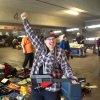
 Here's a photo taken there a few years ago of me holding a Suzuki Unisynth XG-1 electronic guitar synthesizer thingy I'd just bought:
- You're going to see at least one thing there you've never seen anywhere else.
- You're going to see at least one person walking out of there carrying something you'd never dream of buying.
Here's a photo taken there a few years ago of me holding a Suzuki Unisynth XG-1 electronic guitar synthesizer thingy I'd just bought:
ajward549
Super Member

If you're still going to be in town on the morning of the 18th, cross the Smoot Bridge into Cambridge and check out the (in)famous MIT Swapfest in their Albany Street parking garage. I tell people two things about the MIT Swap:
I'm sure I've fit at least one person's definition of #2 at several of the shows I've attended.
- You're going to see at least one thing there you've never seen anywhere else.
- You're going to see at least one person walking out of there carrying something you'd never dream of buying.
View attachment 2657244
OF COURSE IM GOING TO MISS THIS
Bummer, man.
OF COURSE IM GOING TO MISS THIS
It's one of my favorite swapmeets in the area. One nice thing about it is that it's held the third Sunday of every month between April and October (even if it happens to coincide with holidays like Easter or Mother's Day), and during some of the summer months, it's the only thing going on swapmeet-wise. Hopefully you'll find a way to re-visit this area at some point, and be able to make it.  For now, enjoy a set of photos I took at the Swapfest way back in 2006 using a digital camera which was outdated even then: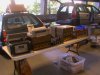
Last edited:

Gotta hit the Union Oyster House. Cool old vibe. Newbury St is interesting. I had relatives visit here from Michigan and we did the Duck Boats. Much better than I thought it would be and crams a lot of history in without walking 10 miles. Fanual Hall - Quincy Market are the pretty good on a nice day.


+1 on the New England Aquarium. Follow that visit with a trip to Legal Sea Foods if seeing all those aquatic beauties gives you an appetite for a fish dinner.Museum of Science and the Aquarium should also be on your list.
The John F. Kennedy Presidential Library and Museum is also well worth seeing. The architecture is stunning and the historical presentation in the exhibit is superb, if memory serves.

jblnut
Don't Overthink It
If you are an outdoorsy type, the Arnold Arboretum is a spectacular park on the city's SW edge (It's over in the Brookline/Jamaica Plain area). A quick taxi/Uber ride and you'll be presented with a world class collection of trees all laid out among very nice trails with some great views of the city up on the hill.
https://arboretum.harvard.edu/visit/
The Mt Auburn cemetery in Cambridge is equally stunning and a reasonable walk from Harvard square.
https://mountauburn.org/
jblnut
https://arboretum.harvard.edu/visit/
The Mt Auburn cemetery in Cambridge is equally stunning and a reasonable walk from Harvard square.
https://mountauburn.org/
jblnut
Last edited:

cubiclecrush
Well-Known Member
South Street Diner is a good recommendation - great breakfast but small - get there early.
https://southstreetdiner.com/
North End Italian food is classic, expensive, and often hard to get into. I like D'Parma in Maverick/East Boston - an easy walk from the subway.
https://dparmarestaurant.com/
Chinatown can be a good experience too.
https://southstreetdiner.com/
North End Italian food is classic, expensive, and often hard to get into. I like D'Parma in Maverick/East Boston - an easy walk from the subway.
https://dparmarestaurant.com/
Chinatown can be a good experience too.
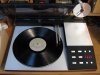
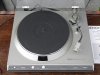
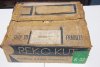
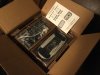
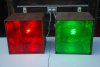
Yep, I've parted ways with quite a bit of my dough at these 'Swapfests' over the years. A lot of the stuff I bought was computer related, but there's always at least some audio gear to be seen at these shows. Here's a sampling of the audio (and audio-related) gear I've bought there over the years:Thanks for sharing those photos! Looks like a gathering where I would be in good company and where I could part with a lot of dough!

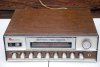
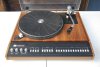


@AdamAnt316: I wasn't aware that Hallicrafters made stereo receivers. My earliest acquaintance with the brand came from a TV that my parents owned. It was an 18" diagonal B&W set with a VHF-only tuner in a blond fine furniture cabinet, and I would guess that it was made in the early-to-mid 1950s. I did more than a few tube tests and replacements on that set to keep it running into its old age.
As far as I know, the CR-3000 was Hallicrafters' only foray into the world of stereo receivers, though they apparently offered at least one mono audio amplifier during the early hi-fi era in the A-84 (and its matching A-85 preamp and ST-83 tuner). For 30+ years, all of the receivers they produced were primarily intended to receive shortwave radio signals, which generally don't require much in the way of "fidelity". Most of them, like the SX-28 and SX-42, were much too large for the average audio rack not only in terms of size, but also weight, as they generally weigh more than 60lbs.@AdamAnt316: I wasn't aware that Hallicrafters made stereo receivers. My earliest acquaintance with the brand came from a TV that my parents owned. It was an 18" diagonal B&W set with a VHF-only tuner in a blond fine furniture cabinet, and I would guess that it was made in the early-to-mid 1950s. I did more than a few tube tests and replacements on that set to keep it running into its old age.

My first shortwave receiver was a Hallicrafters S-118 from the early '60s; a step above the entry-level S-120 (itself the successor to their S-38 line of basic shortwave radios), it used a mere five tubes plus silicon diodes, though it employed a 6AQ5 for audio output, which isn't too shabby. One odd aspect of it is that it employed a single RCA jack on the back labeled "TUNER OUTPUT AND PHONO INPUT", which normally acts as a line-level output, but switches to being a line-level input when the receiver is switched to 'standby'. Using this, I fed the output of an old Harman-Kardon A200 AM/FM tuner (one of their first products) into it, and then added a portable CD player to the mix, sort-of making it my first tube audio setup.
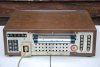
Getting back to the CR-3000, it was made for Hallicrafters by Sharp in the waning days of the company's existence, not long before Halli stopped offering consumer products altogether. Its innards appear to be based on the earlier WR-4000 portable shortwave receiver they offered, as it features the same band coverage and rotating drum dial. Definitely one of the few stereo receivers you'll see with an RF gain control or a BFO function on its front panel. Here are a few more photos:


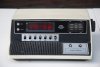
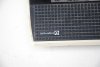
And for extra added fun, another late-stage Hallicrafters product I own, a model 7002 digital clock radio from the early-mid '70s:
Similar threads

- Replies
- 13
- Views
- 641


- Replies
- 22
- Views
- 880


