• The move to the new server is done. There are some software and database maintenance updates in process. This has us passing the hat around to help out. We appreciate any donations. Seriously, even a dollar helps. The payment page may be found here - https://www.audiokarma.org/support.html

Bozak B-4000 Questions

fjdds

Active Member
Hello all.

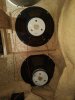
I recently acquired the B-4000's sight unseen, not knowing what I was getting into.

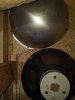
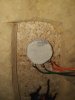
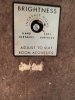
I connected to a Philips 787 (recently overhauled) to check them out. First impression-Meh. Expected for speakers made in 1963 that I knew would need work, or perhaps this receiver wasn't up to the task. I started messing with the brightness controls, and realized that they were part of the problem. When turning to max, for example, tweeters on one completely cut out. I bypassed it on one of the speakers, and a big difference, although a bit screechy.

Starting trying various types of music, and eventually played a piece with nothing but cello and piano, and I nearly fell off my chair. It was as if there was a cello in the room with me. That's when I realized the potential of these things.

I have a few questions for the experts out there. (I'm new to this so forgive me if these are dumb.)

1 I've read much about the flowerpot cover for the mids. Is it recommended to replace the spherical covers on them now?

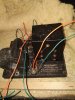
2. I know the caps on the x-over should be replaced, as they're 57 years old. What is the general effect of the Tobin modification? For example, should I leave the current crossover design and just replace the L-pad?

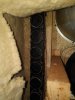
3. Since these are pretty much original, I think, is there any other suggested items that I should check out?

4. Any thoughts on adding a supertweeter to these to get a little more crispness at the top end.

Thanks!
 

Attachments

  • IMG_20201004_1246458.jpg
    IMG_20201004_1246458.jpg
    100.7 KB · Views: 160
  • IMG_20201004_1247058.jpg
    IMG_20201004_1247058.jpg
    92.2 KB · Views: 142
  • IMG_20201004_1247482.jpg
    IMG_20201004_1247482.jpg
    93.9 KB · Views: 147
  • IMG_20201004_1248316.jpg
    IMG_20201004_1248316.jpg
    127.2 KB · Views: 146
  • IMG_20201004_1248559.jpg
    IMG_20201004_1248559.jpg
    137.1 KB · Views: 147
Register to hide this ad
Hey, first, welcome to AK! Glad to have you checking out this corner of the interwebs!

I’m FAAAAR from an expert on Bozaks but have two pair and can share what several of the experts shared with (taught) me.

First things first, I wouldn’t worry about ANYTHING else until you replace the old, out of spec electrolytic capacitors inside those metal boxes. If you stay with modern electrolytic and buy from Parts Express you are in for very little money (relative to changing to Metal Polys, etc) and almost assuredly a marked “refresh” of the original Bozak sound much as Rudy Bozak himself intended them to sound. II would very much recommend you do that first and foremost, then give yourself a solid week or more of listening to them and just enjoy them.

AFTER that... there are a whole host of prioritized modifications but if all of the drivers are working, just refresh the caps and listen to some music for a while. Make some notes based on what type of music you listen to and most often, what you are hearing and IF you feel like anything is missing. The changes and modifications are all tweaks based off of the foundational sound and can be implemented step by step IF and AS you identify any perceived shortcomings in what you are hearing.

Also, please be sure and consider STRONGLY both speaker placement and the room in which you have and will be listening to these, both elements often impact the sound quite substantially and many, many folks spend hundreds and thousands of dollars on speakers, amps, wires, isolation devices and power cords and are missing the basics with regard to speaker placement and room acoustics.

Hopefully this is genuinely helpful and looking forward to your impressions on your Bozak Symphonies, they can be absolutely stunning sounding (and looking) speakers. Enjoy them!
 
Thanks for your reply!
Makes sense.

I'm not so sure I'd trust me with a soldering iron here. No experience at all.
I guess I can learn how to do it, or maybe just find someone who can do it for me.

Anyone you'd recommend?
 
connected to a Philips 787 (recently overhauled) to check them out. First impression-Meh. Expected for speakers made in 1963 that I knew would need work, or perhaps this receiver wasn't up to the task. I started messing with the brightness controls, and realized that they were part of the problem. When turning to max, for example, tweeters on one completely cut out. I bypassed it on one of the speakers, and a big difference, although a bit screechy.
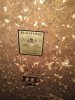
what brightness control are you taliking about there are no controls on the speakers ( well at least stock b4000 symphonies.yours might of been modded. got some pictures of the controls?
 
Yep.
 

Attachments

  • IMG_20201005_2314155.jpg
    IMG_20201005_2314155.jpg
    139.7 KB · Views: 111
  • IMG_20201005_2315058.jpg
    IMG_20201005_2315058.jpg
    101.4 KB · Views: 101
'68 Symphonies, there was a brightness control, said so right on the back
EE716138-FAD6-4AF5-9116-8A97EA036C9A.jpeg 5E743ED7-6A48-4CF2-BCE6-EC82739B08CA.jpeg
The domes you have are the original item, flower pots are a work around. Take the advice about refreshing the crossovers seriously. It took me about a year to get around to that, I shouldn't have waited so long. You can try to fix the soft high end by adding super tweeters or even replacing the tweeters with more modern units but really, fix the crossovers and I doubt you will feel the need. It's a classic speaker, etched is not what they are about, buttery mid-range with wonderful bass is. Enjoy.

And IMHO, real radios not only glow in the dark (because of the tubes), they also have speakers, and shortwave bands

A5A89911-CC33-4FB2-9495-C6BE0538690F.jpeg
 
'The domes you have are the original item, flower pots are a work around.

Well, I would take issue with the phrase "work around", as the flower pot truly is the superior solution.

The flower pot turns out to be the ideal cover because the non-parallel sides eliminate the problems of reflected waves, as encountered with the original hemispheric dome as well as the parallel-sided shapes. Jim Moriyasu did the heavy lifting on that in Speaker Builder in 2000.

I summarized those details back in 2017 when I first proposed the flower pot modification for Bozak. Here's one of the early postings I made on the subject in May 2017:

If the flower pot had been, instead, marketed as a "non-resonant, non-conductive. non-toxic, molded midrange cover, only available in terra-cotta for superior sonics, pre-loaded with electrons for a month in our proprietary Faraday cage to eliminate break-in!" and priced at $299 (USD) apiece, $500 for the pair!, it would receive far more respect. :) I gave up my chance for a Bozak midrange-cover empire when I told the truth about its lowly garden-center origins. Sigh.

Bozak did not internally line the hemispheric domes used on the Concert Grand, an upgrade which should be done if the original covers are used. Just be careful when removing and replacing the dome, as the old styrene used by Bozak is quite brittle and fragile. (Unlike the exceptionally robust polyethylene flower pot; just try to cut the edge if it doesn't fit and you'll see just how tough it is!)
 
When we sold Symphonies we told the owners to exercise the controls twice a year. If they left them wide open then we would by pass them to get rid of the headaches. I added Vifa super tweeters with a 10 KHZ crossover for a lot of folks. Some folks wanted two or more if they played the system loudly or played a lot of music with synthesizers and other electronic effects. Over half the Symphonys were bi amped some using all tubes some SS and some with tubes for the HF and SS for the woofers. The tobin mod with out the tweeter control just suppresses the 3 to 10 KHZ range a bit to make it seem there are more highs. , I prefer adding the appropriate super tweeters. Some of the early 4000's have the full range *" B-800 and some have the well damped B-800 A midrange driver. I prefer the damped version . I also prefer a 250 hz 12/db octave crossover which means you leave the polarity of the midrange inverted. It cleans up some of the softness of the B-199 woofer especially if you are using a tube amp for bi-amping. Yes all caps need to be replaced and all solder connections touched up, too. Be careful with the salad bowls, they are very delicate. Mark them so you you get the correct bowl oriented properly in the correct speaker. I always add four more holes around the periphery . I am not fond of Symphonys with the 6" B-209Bc midrange unless you bi-amp and back off the HF a couple of DB and add a super tweeter. I don't like to push Symphonies or any Bozak much below the rated low frequency limit so I use HP filters. 25 HZ for Grands and 32 to 35 for Symphonies and 305's and 45 or 50 HZ, for 302's and 313's. The woofers are rated at 18 watts RMS each for the early B-199 woofers, later woofers were redesigned so they would not bottom out damaging the voice coil former. later woofers were rated at 25 watts RMS each. So I run Mac amps with power guard to protect my speakers. 100 watts RMS for Grands means my 207's putting out about 240 watts won't damage anything. I would recommend a Mac amp like a 7100 for the woofers or 7200 if you keep an eye on things. High damping factor gets rid of the tube bloom that Symphonies had with MC 240's, 275's Marantz 8B and Model 9's. Citations were OK, too. If you want to use tubes for the HF spectrum to calm the slight peak around 4500 to 8000, HZ its a good idea. Personally I prefer SS direct coupled amps for the woofers and if you want to amps with Autoformers for the HF go for it. There is a members group on Face book and one of Bozaks speaker designers chips in his thoughts when he thinks its necessary. He also has a Bozak web site where explains why the midrange should remain connected with the polarity reversed and why 305's, 302's. 313's and 312's should have the midrange x-over changed from 800 HZ to 400 Hz. The are other interesting articles, too. I really liked my Symphonys and I prefer them over Grands right out of the box. but with a little tweaking a Grand is just more solid than a Symphony, especially for low end dynamics. Two grands fairly close to gether will couple down to 16 Hz which is amazing to me. A gentleman in Dallas expanded his Grands enclosures to 32 cu ft and could easily reach below 20 HZ with his speakers spread way apart. The Facebook Group website will have schematics for the Sym and the tobin mod.
 
no flowerpot offense intended, however, for the non-unicorn fur wearing among us, the upgrade from the OEM domes may be more than is really needed. Upgrade the wiry bits tho, and the difference would be easy to spot, even by your tone-deaf mother-in-law. For the gentleman who was just lucky enough to pick up a set of Symphonies, that would be were I would suggest your time, money, efforts be spent first. If that doesn't float your boat, a tweeter transplant may be in order tho in my case anyway, with better crossover bits, the desire to play with the high end subsided rather quickly. They really are very nice vintage speakers but as with a lot of vintage speakers, their true potential is held back by some less-than-fresh crossover bits.
 
no flowerpot offense intended, however, for the non-unicorn fur wearing among us, the upgrade from the OEM domes may be more than is really needed.

But I did not suggesting such an upgrade; not at all. My point was that the flower pot is not a hacked up "work around" for the lack of midrange bells in the Bozak line, and that the OEM bells were the optimal path; the flower pot is actually the superior solution to the midrange bell issue, and Bozak owners should not pay staggering premiums for brittle bowls.

They really are very nice vintage speakers but as with a lot of vintage speakers, their true potential is held back by some less-than-fresh crossover bits.

No disagreement on that point.
 
The tobin mod with out the tweeter control just suppresses the 3 to 10 KHZ range a bit to make it seem there are more highs.

Sort of, but not exactly. The Tobin attenuator compensates for the B-200Y's increased SPL/Watt (9 dB greater) compared to the B-200X and thus better balances the drivers. The capacitor bypass does reduces attenuation with frequency, so it technically boosts the high-frequency response, but the tweeters are so spikey and irregular, plus having a drop-off in SPL, that this adjustment is of relatively little merit and utility.

The general consensus on AK, and elsewhere, is that the Tobin attenuator was created for different goals — a drop-in crossover with better tweeter balance without any need for a hole or, external wires, to accommodate an L-pad — and that an L-pad to balance the Y tweeter without bypass and a super-tweeter truly is the superior path. His attenuator uses a single standardized resistor value for each of the three resistors and thus slightly alters the impedance from the calculated values, shifting the crossover point. I've extensively analyzed this and somewhere posted the results on AK.

Tobin, again, had different goals, so this analysis is not intended to disparage his design.

I concur that a super-tweeter is the only viable solution, particularly given the poor performance of the Bozak tweeters up around 10k Hz.

The Facebook Group website will have schematics for the Sym and the tobin mod.

All of the requisite information is fully and readily available on AK, trivially accessible using the search box.

The Facebook group is useless as it lacks search functionality, links to previously answered questions, or, indeed, much in the way of analysis or formatting. Facebook, as a general rule, is unsuitable as a forum as It continually forces members to repost the same information to continually generate advertisement impressions and thus enrich Facebook. Few with knowledge are willing to engage in that continual reposting and rehashing of issues already well settled. Facebook is, in essence, a time-expired way to sell advertising. And, as I always suggest, if one is going to use it,

The result is a far lower level volume and quality of postings and expertise on Facebook than is available than on AK. No need to direct anyone to Facebook.
 
I've learned more since I first posted from you all than in all the other research I've done!

I'm starting with the crossover update, adding batting to both sides of the mid cover (which is metal, actually), and just going to enjoy them for awhile, as several of you suggested.

Unrelated question: The wood on the bottom of the speakers, and to a much lesser extent on the rear, is chipping and peeling. Has anyone experienced this and, if so, how did you rectify it. (Ok, not technically what is normally discussed here, but I thought perhaps someone had the same experience.)

Thanks.
 
I have Urban's which came with a little ~3"step back, cabinet-like stand, one of which was broken. I removed them entirely and got them up about 20" by setting them on some Altec's I had. Not exactly audiophile approved but I like the way the sound that way better (bass a little less pronounced, tweeter up above ear level.
51DA7D46-CB7E-400A-A6DF-D25F8AB80270.jpeg
(the tweeter above was removed after I upgraded the crossovers, I just didn't feel I needed it any more). For other cabinet damage the proper way is to splice in some
veneer. I, being more concerned with sonics than appearance (and a lazy bastard to boot), find some walnut jell stain works just fine.
 
Back
Top Bottom