• The move to the new server is done. There are some software and database maintenance updates in process. This has us passing the hat around to help out. We appreciate any donations. Seriously, even a dollar helps. The payment page may be found here - https://www.audiokarma.org/support.html

Calling All Motorola Consoles!!!

IMG_1803 (1).jpg IMG_1804 (1).JPG IMG_1805 (1).JPG IMG_1808 (1).JPG IMG_1809 (1).JPG IMG_1811 (1).JPG IMG_1816 (1).JPG IMG_1817 (1).JPG IMG_1818 (1).JPG
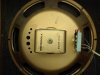
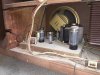
SK163 came with the HS-1239 amp chassis. Pretty good unit if that's what is in it. Pull the back off and post some snaps of the amp.
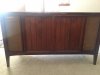
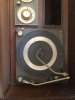
I'm new to this site and just so happen to have picked up a SKR163W today for free (you'll see why in a bit). I'll try to post some pics if I can figure out how. Unfortunately the console is in non-working order because someone along the way decided to lop off the power cord. The internals seem dusty but otherwise ok, in my uneducated opinion. I've never owned a console like this, nor any other old stereo equipment before so I'm trying to learn as much as possible before digging in and possibly screwing something up. At this point I've been on the internet for hours trying to get more info on what I picked up. Any insight or links to pointers on refurbishing these would be greatly appreciated. On a side note, I see that mooreda2627's console was built in Franklin Park, IL, which is where I live and a town over from where I acquired my console. There's no indication mine was made there but it'd be a pretty big coincidence if it wasn't.
 
Last edited:
In short: everything haha. I'd guess that I'm on the very beginning of the Kruger-Dunning slope, unfortunately. From the limited reading I've done so far, it seems that if the tubes are intact you may be able to just replace the resistors and capacitors and hopefully the units should work okay. Obviously I'll have to clean and troubleshoot the components before I get that far, and to be anywhere at all I'll first have to get some power back into the machine by replacing that cord. I suppose the best and easiest things I could ask for are sources of further information; whether it be a blog or vlog site that does repairs or refurbishments on these old consoles, or a database or website that would know what needle (or any other model-specific part besides tubes, as those I can search for if any are bad) I'd need. Re: needles, I did a cursory search and the first sites I went to weren't much help in that regard, likely due to the age of the console. Also any source of information for Motorola consoles in general would be much appreciated. Luckily, I think the only pieces this console is missing to be able to operate (in theory) at this point are the power cord and turntable needle.
 
In short: everything haha. I'd guess that I'm on the very beginning of the Kruger-Dunning slope, unfortunately. From the limited reading I've done so far, it seems that if the tubes are intact you may be able to just replace the resistors and capacitors and hopefully the units should work okay. Obviously I'll have to clean and troubleshoot the components before I get that far, and to be anywhere at all I'll first have to get some power back into the machine by replacing that cord. I suppose the best and easiest things I could ask for are sources of further information; whether it be a blog or vlog site that does repairs or refurbishments on these old consoles, or a database or website that would know what needle (or any other model-specific part besides tubes, as those I can search for if any are bad) I'd need. Re: needles, I did a cursory search and the first sites I went to weren't much help in that regard, likely due to the age of the console. Also any source of information for Motorola consoles in general would be much appreciated. Luckily, I think the only pieces this console is missing to be able to operate (in theory) at this point are the power cord and turntable needle.

Congrats on getting your first stereo console. You should find it a fascinating experience to get yours up and running again. Kind of a mixture of hobbies really - refinishing midcentury furniture as well as dealing with vintage electronics. There are a number of sources you can get information for your console. Your record changer is likely a V-M changer. You are in luck because there is a V-M website that will provide all the info you need as well as instructions for refurbishing your changer and spare parts as well. You have the model number for your Motorola. Good news here too. Service manuals are available online as well - just Google it and you should find SAMS and other stuff as well. Lastly, you are correct about replacement of capacitors and resistors - that's high priority for these consoles. A bad filter can capacitor will fry your transformer and then you're screwed. Luckily again you can Google such things like replacing capacitors and measuring resistors as well as watch Youtube videos. There is a learning curve but you'll find it very satisfying when you finally switch it on and the music starts playing...
 
Radio Museum has the HS-1239A schematics for the amplifier. I would start with downloading. These are super easy to pull the amp and do the recaps. If you are unsure, or are a super nube at soldering, take your time and learn, Not very difficult. One thing to remember - these units have high voltage - and can seriously hurt you. Always remember that. Capacitors hold a charge, even when not plugged in. Read up, Follow the great advice from this forum and I think you will find a very rewarding, satisfying hobby. Beware the rabbit hole.
 
Radio Museum has the HS-1239A schematics for the amplifier. I would start with downloading. These are super easy to pull the amp and do the recaps. If you are unsure, or are a super nube at soldering, take your time and learn, Not very difficult. One thing to remember - these units have high voltage - and can seriously hurt you. Always remember that. Capacitors hold a charge, even when not plugged in. Read up, Follow the great advice from this forum and I think you will find a very rewarding, satisfying hobby. Beware the rabbit hole.
Don't worry about the rabbit hole. Weather's just fine down here!
 
I recently purchased this Motorola SK77 in a Drexel cabinet from the Declaration line. It's my first venture into vintage audio equipment and I haven't had it long enough to learn much about it.My first steps will be replacing the power cord and determining what capacitors need replacing.
2019-08-31 13.41.51-2 (640x561) - Copy.jpg
 
Last edited:
I recently purchased this Motorola SK77 in a Drexel cabinet from the Declaration line. It's my first venture into vintage audio equipment and I haven't had it long enough to learn much about it.My first steps will be replacing the power cord and determining what capacitors need replacing.
View attachment 1622131
Congrats! The Sk77 is a great console to start with. Classic styling and great sound too. You can easily find schematics online. You will also find there is a large community of console lovers out there who will happily give you advice. The capacitors you will want to especially target for replacement are the electrolytics, which will include the speaker crossovers and most likely the the filter (can) capacitor. The record changer is by Voice of Music and you can get schematics, parts, and how-to instructions for restoration online as well. And once you are all done, you will probably find you want to do it all over again...
 
I need to correct my first post. The correct model number is SK77-2. My understanding is the SK77 and SK77-2 use different amp chassis. It has the Vibrasonic and FM multiplex chassis.
 
I need to correct my first post. The correct model number is SK77-2. My understanding is the SK77 and SK77-2 use different amp chassis. It has the Vibrasonic and FM multiplex chassis.
You are right. The SK77 is a 1962 model and theSK77-2 is a 1963 model. They have different guts but both have the Vibrasonic spring reverb.
 
A quick look shows the amp chassis is stamped HS-1048. The unit also has the FM-Stereo Multiplex chassis and Vibrasonic unit, in addition to the tuner. I obtained a schematic for HS-1048 which also has the schematic for HS-1050 Preamp. If I'm reading this correctly, the preamp is part of the tuner. Is this correct? I've had a couple of opinions as to what year my console is, but I believe it to be 63 or 64. The tuner and turntable lids have the finger notches on the side and the tuner has the large tuning dials if that info helps.
Is there a recommended starting point, amp, tuner?
 
Hi everyone, I'm new; I made an account to ask about this console, in fact. I got one of these Motorola consoles from a guy on CL the other day at a decent price. The cabinet is in excellent shape with the exception of a couple of minor surface scratches/paint marks that I'll want to get refinished/cleaned off at some point. When I bought it, the person who sold it to me said that there was only sound coming from the right channel, and nothing from the other two, so I was prepared to have to dig into figuring out what might be causing that. However, last night I found out that they actually work just fine — they were just muted via the built-in channel tester/isolating buttons by the record changer! This thing sounds fantastic. I don't think the record changer itself works (thus the turntable perched on top of the console), so that will need to be looked at. The RCA tape input works just fine, as does the Vibrasonic module and the built-in AM/FM tuner + Magic Eye.

The console doesn't seem to have a model number on it anywhere at this point, but from looking around and given that the amp is an HS-839A, I am assuming that this is an SK-52W? It looks like it was produced in September 1960.

I'm totally new to the world of tube audio, so my question is really just: given that everything (minus the record changer) seems to be working well, what should be looked at regardless to make sure this thing has a clean bill of health going forward? Should I replace the capacitors just as a matter of course? I noticed what was called a "Circuit Guard" in the lower center cabinet — does that mean I don't need to put in a fuse as protection, I guess? As for audio quality, I think it sounds nice but I don't know what it's capable of sounding like, so I'm not sure what I should do as far as that is concerned. I am considering limiting the bass by one means or another because I do feel that it's pretty intense and maybe a little bit muddy, but generally everything sounds great. Tubes rock.
 

Attachments

  • sk52_1.jpg
    sk52_1.jpg
    94.4 KB · Views: 72
  • sk52_2.jpg
    sk52_2.jpg
    51 KB · Views: 67
  • sk52_3.jpg
    sk52_3.jpg
    60.9 KB · Views: 66
  • sk52_4.jpg
    sk52_4.jpg
    90.9 KB · Views: 72
As long as its working now and the main can capacitor is not getting warm, then its fine for now but if you want, just replace the can capacitor. In my experience, almost all of these amplifiers use those flat ceramic coupling capacitors that hardly ever give any problems. Aside from the can replacement, have the tubes checked as they could be tired.

With the Motorola 3 channel amps, they use a filter and crossover circuit that combines the left & right channels for a single channel called the bass channel or channel 3. The Left & right speakers (channels 1 & 2) carry no bass but only the mid and treble signals. This is why almost all Motorola 3 channel amps are not good candidates for a stereo stand alone amplifier unless you are very tech savvy and know how to convert it to 2 channel stereo.
 
Last edited:
As long as its working now and the main can capacitor is not getting warm, then its fine for now but if you want, just replace the can capacitor. In my experience, almost all of these amplifiers use those flat ceramic coupling capacitors that hardly ever give any problems. Aside from the can replacement, have the tubes checked as they could be tired.

With the Motorola 3 channel amps, they use a filter and crossover circuit that combines the left & right channels for a single channel called the bass channel or channel 3. The Left & right speakers (channels 1 & 2) carry no bass but only the mid and treble signals. This is why almost all Motorola 3 channel amps are not good candidates for a stereo stand alone amplifier unless you are very tech savvy and know how to convert it to 2 channel stereo.

Great info, thanks!

I did notice a few quirks last night while testing the console. As I mentioned, I'm totally new to this so maybe these things have obvious causes, but here goes:

First, I noticed that when switching between sources with the selector dial, each time I change over to a new source there is a strange, fairly loud echo/reverb-y popping noise. I lowered the Loudness dial to zero when switching, but that doesn't seem to affect it.

Second, there is an ongoing very low hum when the console is turned on, which also doesn't track with the Loudness dial. I guess this is probably a grounding issue as the wall plug is only two prong? It's not terribly distracting and is soft enough to only be noticeable when nothing is playing, so I haven't thought much about it until now.

Third, when I was listening for a longer period of time yesterday, after about an hour or two there started to be a random crackle coming from the speakers, and some minor distortion in the upper low end. I think it's limited to the Center channel, but I'm not certain about that. It was present both over the Tape input and over the FM radio input.
 
1) Switches could probably use a good cleaning. The echo is the built in reverb unit which Motorola calls Vibra-Sonic.

2) The hum is usually caused from a bad can capacitor.

3) Any crackling could be a loose or dirty tube socket or a noisy resistor somewhere. If it happens again, just lightly rock the tubes in their sockets. Yes, they will be hot so be careful. Maybe use a towel or hanky or something so you don't burn your fingers.
 
Hi everyone, I'm new; I made an account to ask about this console, in fact. I got one of these Motorola consoles from a guy on CL the other day at a decent price. The cabinet is in excellent shape with the exception of a couple of minor surface scratches/paint marks that I'll want to get refinished/cleaned off at some point. When I bought it, the person who sold it to me said that there was only sound coming from the right channel, and nothing from the other two, so I was prepared to have to dig into figuring out what might be causing that. However, last night I found out that they actually work just fine — they were just muted via the built-in channel tester/isolating buttons by the record changer! This thing sounds fantastic. I don't think the record changer itself works (thus the turntable perched on top of the console), so that will need to be looked at. The RCA tape input works just fine, as does the Vibrasonic module and the built-in AM/FM tuner + Magic Eye.

The console doesn't seem to have a model number on it anywhere at this point, but from looking around and given that the amp is an HS-839A, I am assuming that this is an SK-52W? It looks like it was produced in September 1960.

I'm totally new to the world of tube audio, so my question is really just: given that everything (minus the record changer) seems to be working well, what should be looked at regardless to make sure this thing has a clean bill of health going forward? Should I replace the capacitors just as a matter of course? I noticed what was called a "Circuit Guard" in the lower center cabinet — does that mean I don't need to put in a fuse as protection, I guess? As for audio quality, I think it sounds nice but I don't know what it's capable of sounding like, so I'm not sure what I should do as far as that is concerned. I am considering limiting the bass by one means or another because I do feel that it's pretty intense and maybe a little bit muddy, but generally everything sounds great. Tubes rock.
I would also make sure you replace the electrolytic crossover caps for the speakers. They've probably dried out by now. Once they have been replaced, you'll be surprised by the dynamic range the console has.
 
Joined the Motorola console crew recently with this one: SK 31-M. All original and working, needs some refinishing love and a recap. 1959 model, three channel.
 

Attachments

  • IMG_20190915_140325.jpg
    IMG_20190915_140325.jpg
    70 KB · Views: 38
  • IMG_20190915_153137.jpg
    IMG_20190915_153137.jpg
    84.5 KB · Views: 44
  • IMG_20190915_153217.jpg
    IMG_20190915_153217.jpg
    63.5 KB · Views: 42
Digging seeing everyone’s beautiful Motorola pieces. Got my Motorola baby a couple years ago. She’s a Blonde SK28. The person I purchased from did a great refurb on the console and added a Bluetooth player.

Lately I’ve been having an issue when trying to play a record. The plate itself is jumping. Has anyone seen this before? Can anyone here recommend any fixes? I have a video and can send if you want to see.

Thanks for your help! Happy to have found this community online.
 

Attachments

  • 370B5514-BF5F-459D-BC5E-95637E89A9CD.jpeg
    370B5514-BF5F-459D-BC5E-95637E89A9CD.jpeg
    94.1 KB · Views: 51
Welcome to AK! The video of the issue might help understand what you are experiencing. Also would be helpful to advise what brand/model turntable.

Note: to continue to discuss and troubleshoot your issue this should be in a separate thread.
 
Back
Top Bottom