• The move to the new server is done. There are some software and database maintenance updates in process. This has us passing the hat around to help out. We appreciate any donations. Seriously, even a dollar helps. The payment page may be found here - https://www.audiokarma.org/support.html

Denon DP80 & DP75 Owner's Thread

Also verify the output voyage of the step down. It may be too high as it won’t have anywhere near its rated load.
Appreciate the input! If all I need to do is connect the turntable motor ground to the phono ground post then can I just use one of the lower powered wall wart type things? What do you guys use for 100v Japanese turntables?
 
Appreciate the input! If all I need to do is connect the turntable motor ground to the phono ground post then can I just use one of the lower powered wall wart type things? What do you guys use for 100v Japanese turntables?

This one has powered by SP-10MK3 for about eight years now. The only appreciable current draw is during power on, start/stop, or a speed change.


IMG_3219.jpeg
 
This one has powered by SP-10MK3 for about eight years now. The only appreciable current draw is during power on, start/stop, or a speed change.


View attachment 3135097
Appreciate it! Thanks for the picture, it helps. I saw something similar on eBay (another Sanyo) and I almost pulled the trigger on it, but then I picked the larger Sanyo to be on the safe side… This does mean however I could import some more Japanese electronics, since I now have this Sanyo..
 
I’m very excited as I just received a Denon DP-80 from Japan. I’ve got the DP-75 already in the DK-300 plinth which is my main player and I love so much. But in the end, I want to make sure I have the best one and it feels like the ones from Japan will dry up at some point and they will then become impossible to find.

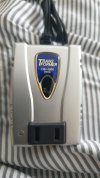
I also bought myself a 100v transformer, going by a couple of threads on AK, I got myself a Sanyo TSD N06U which puts out I think 600 watts, 660vac and 6.6A that I hope is way overkill as the DP-80 tells me it has an 8 watt motor.

But looking at this thing, it’s clear I ground the turntable to the grounding post on it… but does anyone know if this Sanyo unit needs to be grounded from that post to the wall too? What I read about Japanese electronics is they have a slightly more inconvenient system and there’s a separate wire for grounding and they don’t do a 3 prong plug. Anyone know what is the correct grounding method for this in the USA? Here’s a pic of the Sanyo. It’s got a two prong plug.

View attachment 3135010

Your Sony is designed with 2 prong plug and nothing needed to connect further to the mains.

Not needed also but if you have humming or simply wish to experiment if your music will be quieter with a common ground, you can connect its ground post to your phono stage that JP had rightfully advised where your tonearm cable ground should be connected to.

Cheers.
 
This one has powered by SP-10MK3 for about eight years now. The only appreciable current draw is during power on, start/stop, or a speed change.


View attachment 3135097
Hi Matteos, I am using the same but 230v version in Singapore for my 2 units of dp-47f in their plinths and planning the same for my DP-80 with it buried into the dk-300 plinth.

35VA i.e. 30w is more than ample at almost 4x for 8w rating of dp-80 unlike amplifier that you may wish for more headroom.

I have this same used 120v version shown by JP that I have no use for which came with the 230v version and do shoot me a pm with address if you wish for it with mailing $ of usd15 for 14 days registered mailing with tracking # via Singpost to usa.

Cheers.
 
I have this same used 120v version shown by JP that I have no use for which came with the 230v version and do shoot me a pm with address if you wish for it with mailing $ of usd15 for 14 days registered mailing with tracking # via Singpost to usa.

Cheers.

Hi Matteos,

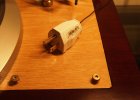
Seems I cannot attached photos of my kashimura 35VA TI-101 in our PM and here it is to answer to your queries.

Cheers.

17093453229126883215210237608925.jpg17093453420147041032671126776082.jpg
 
What I read about Japanese electronics is they have a slightly more inconvenient system and there’s a separate wire for grounding and they don’t do a 3 prong plug. Anyone know what is the correct grounding method for this in the USA?

First time connecting the DP80 ground wire along with the tonearm ground wire to the ground lug of my integrated amp resulted in fireworks. A spark emitting from the end of the DP80 ground wire. Clearly not the correct approach! Leaving it dangling resulted in hum noise.

When I investigated what to do with ground wire of Japanese appliances common recommendation was it should be connected to a ground lug of an electrical outlet box. To make it easier to disconnect the table from the mains I dug out a three prong plug from my electrical odds and ends box. Connected the DP80 ground wire to the ground pin of the plug, then plugged that into my powerbar. No more sparking, no more hum noise.

P3020562.JPG
 
Last edited:
First time connecting the DP80 ground wire along with the tonearm ground wire to the ground plug of my integrated amp resulted in fireworks. A spark emitting from the end of the DP80 ground wire. Clearly not the correct approach! Leaving it dangling resulted in hum noise.

When I investigated what to do with ground wire of Japanese appliances common recommendation was it should be connected to a ground lug of an electrical outlet box. To make it easier to disconnect the table from the mains I dug out a three prong plug from my electrical odds and ends box. Connected the DP80 ground wire to the ground pin of the plug, then plugged that into my powerbar. No more sparking, no more hum noise.

View attachment 3135509
Hmmmh .. we use both 2 prong (class 2) vde/european plug or ul/usa or pse/jap together with "official" 3 pins plug (class 1) in singapore's 230v mains.

Your bad experience is beyond my understanding since your integrated amp's ground should be the same as outlet ground if shared. Even if not shared, the worse case is ground loop and not mentioned spark unless there is something abnormal with a significant enough ground voltage difference for it to spark

Cheers.

Screenshot_20240302-211524_Chrome.jpg
 
Last edited:
Your bad experience is beyond my understanding since your integrated amp's ground should be the same as outlet ground if shared. Even if not shared, the worse case is ground loop and not mentioned spark unless there is something abnormal with a signficant enough ground voltage difference for it to spark

Leakage voltage, static electricity, etc.
 
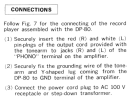
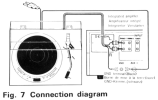
As per diagram is exactly what I initially attempted. But as soon as the DP80 motor ground approached the integrated amp ground lug a spark would leap across the air gap. I did initially consider maybe a one off static discharge, but it would happen repeatedly, indicating presence of a steady differential voltage potential. When mixing 2 and 3 prong devices potential differences can arise, the essence of a ground loop.
 
A loop requires more than a single connection - the motor is floating. The intent of grounding the motor isn't for electrical safety, rather for the same reason you ground the tonearm so that its potential is referenced to signal ground at some point in order to reduce noise.

AC leakage wouldn't be a one-off, and it's also possible something isn't quite right with your unit. Without being able to measure a few things there's no way to know.
 
AC leakage wouldn't be a one-off, and it's also possible something isn't quite right with your unit.

My DP80 holds perfect speed both settings, the strobe is working perfectly, and there is zero noise that I can detect. If someone else encounters similar odd behavior I share my solution as potential remedy. I simply share my experience.
 
A loop requires more than a single connection - the motor is floating. The intent of grounding the motor isn't for electrical safety, rather for the same reason you ground the tonearm so that its potential is referenced to signal ground at some point in order to reduce noise.

AC leakage wouldn't be a one-off, and it's also possible something isn't quite right with your unit. Without being able to measure a few things there's no way to know.

Herein lay my confusion as I had assumed the motor grounding was for electrical safety. This has all been very helpful.
 
Herein lay my confusion as I had assumed the motor grounding was for electrical safety. This has all been very helpful.

Indeed absolutely safe electrically ... certified class 2 appliances without ground are designed as such with due considerations .. hence they exist but key word is certified i.e. with associated safety label and not diy or from dubious part of the world. In fact, it is preferred in some instances for appliance to be designed without grounding depending on application i.e. mentioned floating ground by JP. Cheers.
 
Look what just arrived. Denon DK-2000G plinth. Got this for $100, so I’m pretty pleased with that! This is a 2 arm board and the DP-80 fits in there perfectly. Veneer is a touch rough but a lot better than I thought it would be. I’m not a fan of the weird gold corner things, I don’t think they are original. But even if they are… still not a fan.

IMG_4806.jpeg
 
Look what just arrived. Denon DK-2000G plinth. Got this for $100, so I’m pretty pleased with that! This is a 2 arm board and the DP-80 fits in there perfectly. Veneer is a touch rough but a lot better than I thought it would be. I’m not a fan of the weird gold corner things, I don’t think they are original. But even if they are… still not a fan.

View attachment 3139442
Corner covers are not original, perhaps covering up some damage. Nevertheless, a lot of lumber for $100!
 
Look what just arrived. Denon DK-2000G plinth. Got this for $100, so I’m pretty pleased with that! This is a 2 arm board and the DP-80 fits in there perfectly. Veneer is a touch rough but a lot better than I thought it would be. I’m not a fan of the weird gold corner things, I don’t think they are original. But even if they are… still not a fan.

View attachment 3139442

I am also looking at my dk300 with isolated areas with delaminated veneer and still pondering on its refurbishment.

Not a fan of wooden plinth and current brownish stock one .. seems easiest way out will be to have it automative spray painted and quite surprised that piano black is easier to be maintained while matte one when scratched cannot even be polished up .. pending.

Cheers.
 
I am also looking at my dk300 with isolated areas with delaminated veneer and still pondering on its refurbishment.

Not a fan of wooden plinth and current brownish stock one .. seems easiest way out will be to have it automative spray painted and quite surprised that piano black is easier to be maintained while matte one when scratched cannot even be polished up .. pending.

Cheers.
Yeah my other plinth is a DK-300 and it has a similar issue with the veneer, it is cracked along each of the lines of where each separate piece of wood is glued on top of the others.

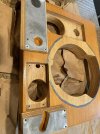
It’s a really good plinth though, seems a little better made than this other one I just got. I think the DK-300 is treated wood and this one is just regular plywood or something. But then this one has two arm boards and the bottom of the arm boards are lined with metal, presumably for damping. So each have their strengths. The 300 seems a little better in quality overall though.

IMG_4814-compressed.jpeg
 
Back
Top Bottom