• The move to the new server is done. There are some software and database maintenance updates in process. This has us passing the hat around to help out. We appreciate any donations. Seriously, even a dollar helps. The payment page may be found here - https://www.audiokarma.org/support.html

Does NAD Gear Lack Soundstage?

Would you say the 2600A lacks soundstage, ok that's a tough call. Reason for asking is I have 2 x 2600 (THX?) waiting in the shed and I'm hopeful...
No. I thought the 2600A was fine. You'll like them.

I only moved on to more modern amps because one of my 2600As had a defective relay and would cycle on and off. The tech I sent it to (I didn't have time to fix it) messed up the board trying to solder on a misfitted generic relay (OEMs are no longer available).

After years, I tried to fix it. The board seems shot, and I gave up.

I went with bigger wattage Anthem tri-amps in my latest system iteration.
 
I have been using a NAD 1155 and NAD 2200 for a few years with various speakers. I enjoy it a lot. I never thought soundstage was an issue. I am in no way what I consider to be an Audiophile. So my opinion doesn’t really count. I think that combo can drive anything and sound really good. As I have said many times, I have not been exposed to any real High End stuff. Maybe, if I heard someone else’s gear I would be disappointed with mine. I do know the source is a key factor. There are times when I am totally blown away at how good it sounds. Then there are times when it sounds ok. So I know what it is capable of doing. Does a High End amp make any source no matter how bad, sound good? If not, then I’m good. If they do then I need to step up. I do have a little RCA tube amp that sounds 3 demensional and makes me smile, but I am not sure if a SS amp can do what that thing does. For me, I think it is more about source and speakers. Just my perspective.
If you have ears, your opinion is very much welcomed.
 
I have a 7150 that I inherited from my FIL that got me into the HiFi game, but even after a careful restoration it still has problems. I agree with poster who said NAD QC might not have been so great at that era. Anecdotal, of course, but my friend did not enjoy working on it like he did some of my other gear, and brings it up without it being asked. Its in the closet after left channel dropped out again.

As for lacking soundstage, I'm not so sure, I was happy enough with it, for what it was. I think you have to compare it to other receivers that were in the same price class/era, to be fairest.
 
Between the NAD 7400PE and 7100PE I own I prefer the sound from the 7100PE. The engineering of each is very different with the 7400PE having three layers of circuit boards stacked on top of each other and interconnected with an incredible number of wires. The tech that worked on it said it wasn't the easiest to repair due to this. Luckily, its tuner and pre-amp sections were good and the amp section needed work but it was mostly under the tuner and pre-amp boards. The 7100PE is based on a much more modern design having far, far fewer wires and a more integrated board. On paper, I should like the sound from the 7400PE better than the 7100PE. Both receivers were released in 1988 but have very different designs. To be fair, all three of these components are approaching 40 years of age. I think it is likely that they all sounded better when new than they do now. Unfortunately, they aren't valuable enough to warrant the cost of a deep restoration. Even then, this might not make a huge difference in sound quality.
 
...1974 Amplifier Rule ... full sustained power for something like 20 minutes, etc. ...

I believe it was 1/3 continuous rated power for 1 hour.

That is a VERY severe test and has been effectively lobbied to ease up in the newer revision(s). Reasoning is because it does not reflect normal use case of audio amps playing music. 1/3 continuous power would be roughly equivalent to running the amp at heavy clipping on typical music.

The current rule is, I believe 1/8 continuous rated power for 1 hour. That's still a fair task as it is roughly akin to running the amp to verge of or just to light, occasional clipping with typical music. But, it's much more realistic use case/operating point than the previous test even though relatively few people, IMO, push their amp even as hard as does the current 1/8 continuous rated power test.
 
Last edited:
I believe it was 1/3 continuous rated power for 1 hour.

That is a VERY severe test and has been effectively lobbied to ease up in the newer revision(s). Reasoning is because it does not reflect normal use case of audio amps playing music. 1/3 continuous power would be roughly equivalent to running the amp at heavy clipping on typical music.

The current rule is, I believe 1/8 continuous rated power for 1 hour. That's still a fair task as it is roughly akin to running the amp to verge of or just to light, occasional clipping with typical music. But, it's much more realistic use case/operating point than the previous test even though relatively few people, IMO, push their amp even as hard as does the current 1/8 continuous rated power test.

I quoted a portion of the current version in this prior post (Post #48). It still requires that they do power measurement using a full spectrum signal (l20-20khz) at less than 1% THD -- and (if I'm reading it correctly) they do that measurement after they have run the amp for 5 straight minutes of full power output. That's a pretty tough test. So, yes, the current rule is still very strong -- the problem is that there are many that don't follow the current rule (e.g. use 1khz at 10% distortion, give peak power, give distortion figures without any indication of power level or test signal, etc). The Yamaha receiver specs in that same post is a prime example. I'm not sure how they get away with manufacturer specs that are a million miles away from the current amplifier rule standards -- I can only assume that the the rule isn't enforced.
 
Last edited:
Well, you have to read all the fine print nitty gritty to see all the hows and whys of what applies, when, or not rather than just presume it's not enforced. I have not much interest to go that far.
 
Well, you have to read all the fine print nitty gritty to see all the hows and whys of what applies, when, or not rather than just presume it's not enforced. I have not much interest to go that far.


The power tests in the rule are pretty concise though -- needs to be continuous power after 5 minutes at full power, measured with full spectrum (20-20khz) at less than 1% distortion.

The Yamaha specs (repeated at the bottom of this post) are a million miles from that.

Maximum Power (1khz, 10% THD) -- that's peak power, at 10%, with 1khz
Frequency range 10 Hz-100khz (at what power level?)
THD 0.2% (no power or frequency range figures given)

Yamaha's higher end amps are great and use legit specs, so they are using meaningless specs selectively to inflate the perception of this low-end model.

No close reading of the rule necessary, these specs are way off -- so I don't think the rule is enforced.

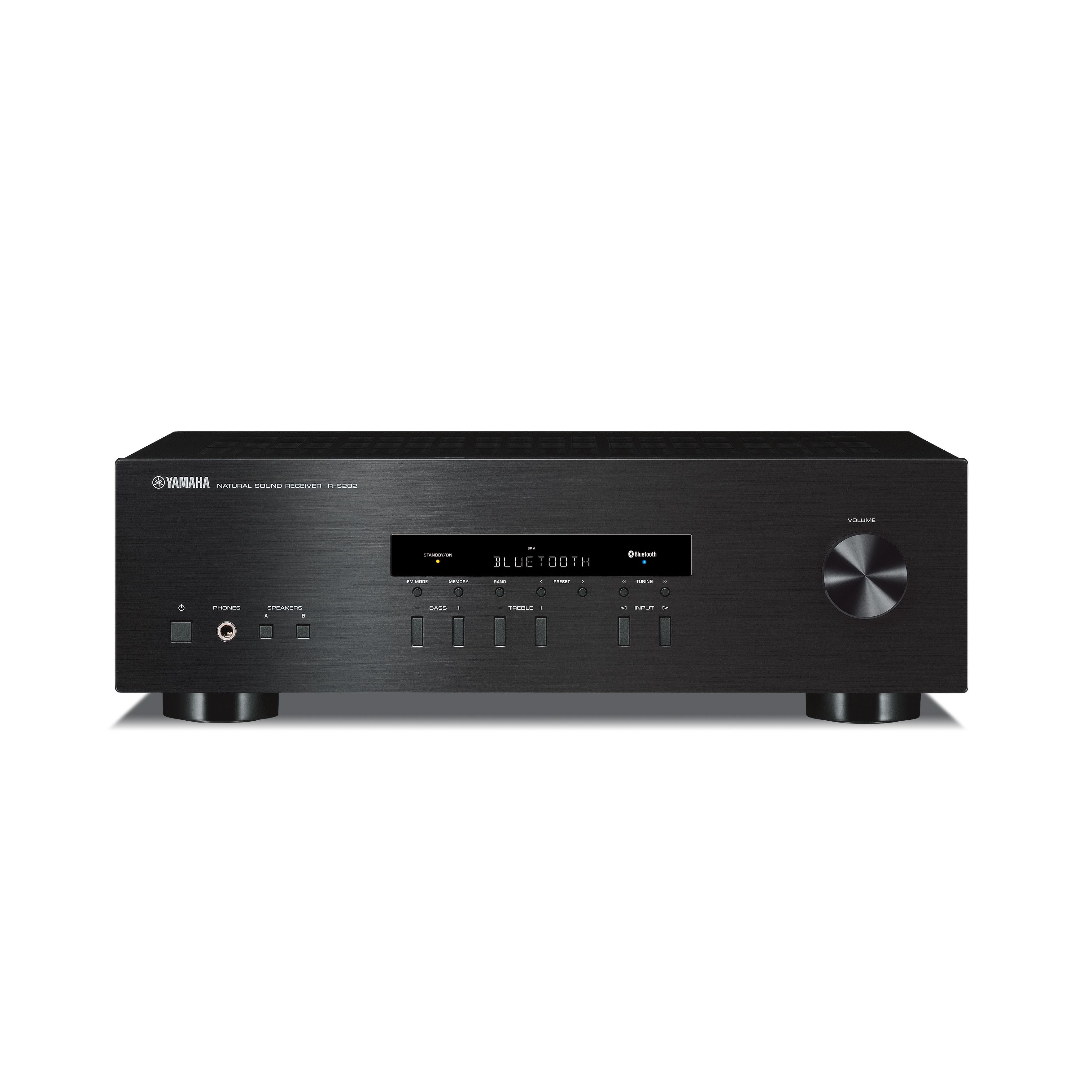
I personally have never needed more than 10 "real" watts per channel, but this "100 watt" receiver doesn't deliver 10 good watts in my experience.

I think the real trouble area for modern amps is full range frequency response -- that's a walk in the park for old class a/b amps, but it's a challenge for Class-D amps that need to be carefully designed to achieve flat response over the full frequency range. My issue with that Yamaha wasn't just that it didn't produce power, but it sounded awful at any volume. Adding a sub didn't help, -- it just got boomy -- because there is no sub out and low frequencies weren't coming out of the speaker outputs to extend the bass.

Any time you see specs being fudged, as they are below, I think the amp is going to sound bad. Couldn't have happened in the old days because the rule was enforced. Today I don't believe it is enforced at all. The amplifier rule in its current form is still pretty strong, it just isn't universally followed.


Screenshot 2026-04-15 at 5.13.33 PM.png
 
Last edited:
I suggest the nature of your response is on a way different plane than my statement. You're mired in the muck and mud, my statement had much broader implication.
 
I suggest the nature of your response is on a way different plane than my statement. You're mired in the muck and mud, my statement had much broader implication.

I'm definitely not trying to start an argument. You seem to be saying that it's possible the Yamaha specs meet the rule. I'd be very happy to be corrected if I'm wrong, but I don't think there's any chance they meet the rule.

There isn't much "muck and mud" to get into -- the entire amplifier rule is only one page long (Federal Register :: Request Access) -- and the amplifier requirements are very short and clear. I'm not presuming the Yamaha doesn't meet it -- it's as far as it can possibly be from meeting the rule requirements. Again -- if there's some asterisk I'm missing -- I'd be happy to be corrected, but I am 99% (not 100%) certain there isn't.

This is the excerpt of the amp testing requirements from the current version of the rule, cut & pasted from the link above, it's pretty short and clear:

Any power level from 250 mW to the rated power shall be obtainable at all frequencies within the rated power band of 20 Hz to 20 kHz without exceeding 1.0% of total harmonic distortion plus noise (THD+N) at an impedance of 8 ohms after input signals at said frequencies have been continuously applied at full rated power for not less than five (5) minutes at the amplifier's auxiliary input, or if not provided, at the phono input.
 
You seem to be saying that it's possible the Yamaha specs meet the rule.
I don't care if it does or doesn't. Not even remotely my point.

IMO you're too focused on details to see the point of post 67 and I'm not going to try to restate/rephrase.

Carry on...
 
Last edited:
I don't care if it does or doesn't. Not even remotely my point.

IMO you're too focused on details to see the point of post 67 and I'm not going to try to restate/rephrase.

Carry on...

I'm trying hard to see it, I just don't see it as that complicated. The one hour at 1/8th power you talked about in post 65 is just the pre-conditioning phase, and that uses 1khz for pre-conditioning (prepping for the power test). The power test takes place after preconditioning, and that is 5 minutes sustained at full power, 20-20khz, with less than 1% THD.

I didn't feel like I answered your post #65 very well -- I did absorb and agree with your point -- but I could see how my answer would look like I didn't absorb your point.

I made a comment in an earlier post similar to yours in post #65, that the relaxation of just 2-channel being test for 5.1/7.1 amplifiers was a reasonable compromise (for the same reason -- almost no real-world movie content has simultaneous full output to all channels). So I think we agree today's standards remain valid and reasonable (if enforced)

Anyway, I have three points:

1) The current version of the amplifier rule, though weaker than it was is 1974, is still very strong as a standard for testing -- and the compromises that have been made over the years since 1974 have been well-founded)

2) Based upon the anecdotal data, like the Yamaha's specs (and plenty of others), the rule is not enforced today

3) The lack of mandated full-spectrum testing is problematic today because poorly designed D-class amps have dropoff at the lowest and highest frequencies, and that can be hidden by manufacturers not following the amplifier rule testing requirements. The amplifiers that don't meet them don't follow the testing standards from what I've observed. This "full spectrum" problem wasn't an issue with class a/b because reproducing full spectrum was easy -- it is not easy with Class-D (can be done, but needs to be designed correctly).

TLDR: The only moral to this story is read the test conditions for specs in modern amps -- if they aren't doing full spectrum testing -- run from that amp as fast as you can.
 
I'm curious how the earliest silver-faced NAD amps sounded in comparison to when the amps they produced when they switched to the gray industrial look in 1978. I can't find any comparisons of that era to the later era -- when I ask AI, it says the old silver face amps have warmer sound and the gray have more detail -- but I don't really trust the AI response given there don't seem to be any comparisons (but I wouldn't be surprised if that was the case).

The little experience I had with NAD, listening to them in stores back in the late-70's/early 80's, I didn't like the sound. I have a mid/late-1990's Krell amp that I also don't really like the sound of in a similar way to NAD. The Adcom separates I bought new in the late 80's/early 90's had that same lifeless sound -- no soundstage, but the issue was far more than just lack of soundstage. I think those amps have a cold clinical sound that doesn't really work. I've often hear that clinical sound justified by people saying that those high quality super-detailed amps sound bad because they are so revealing they expose weaknesses in the recording. I think that's BS, and they sound bad because they sound bad.

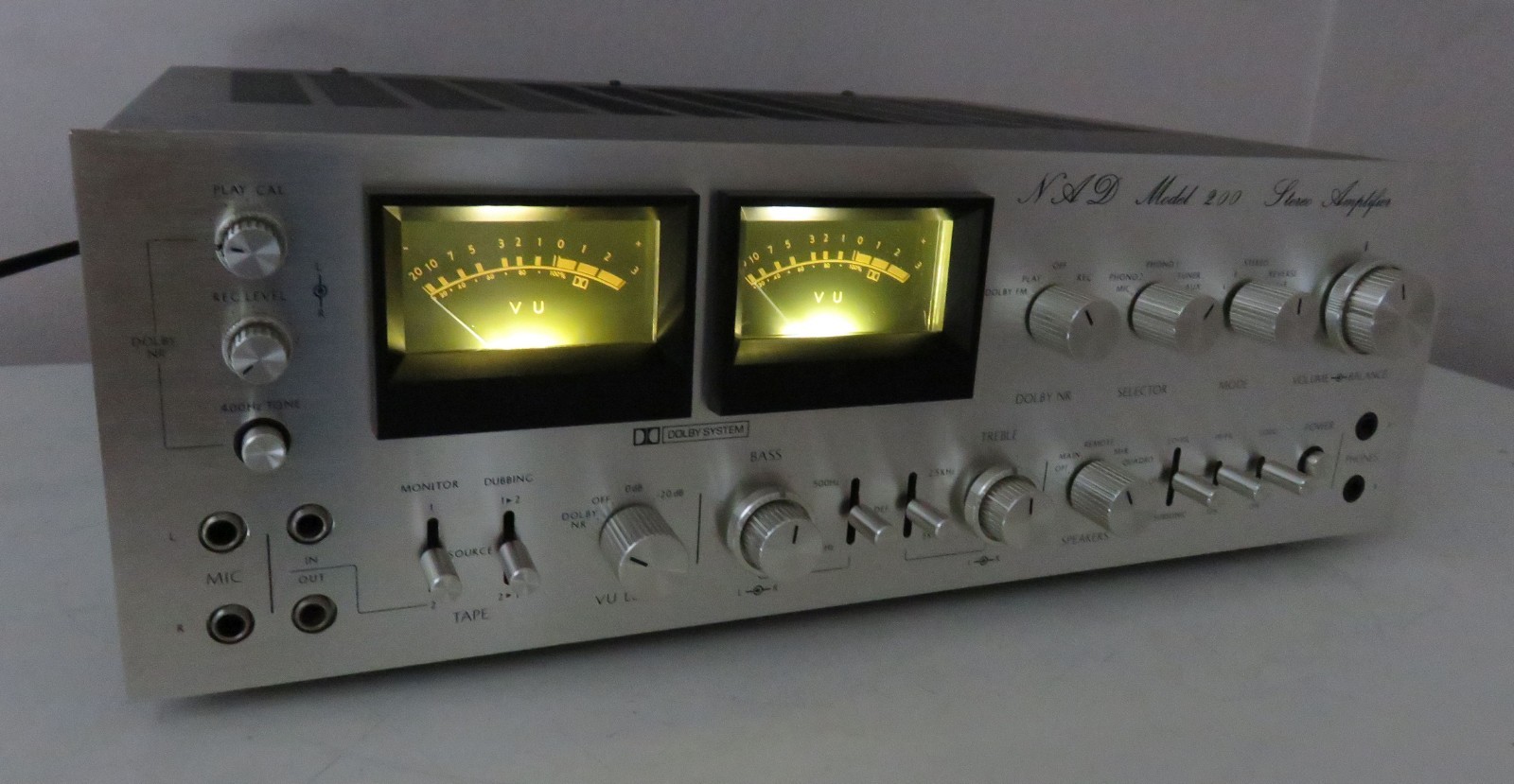
NAD 200 (1975-1978) - 100 watts per channel
s-l1600.jpg


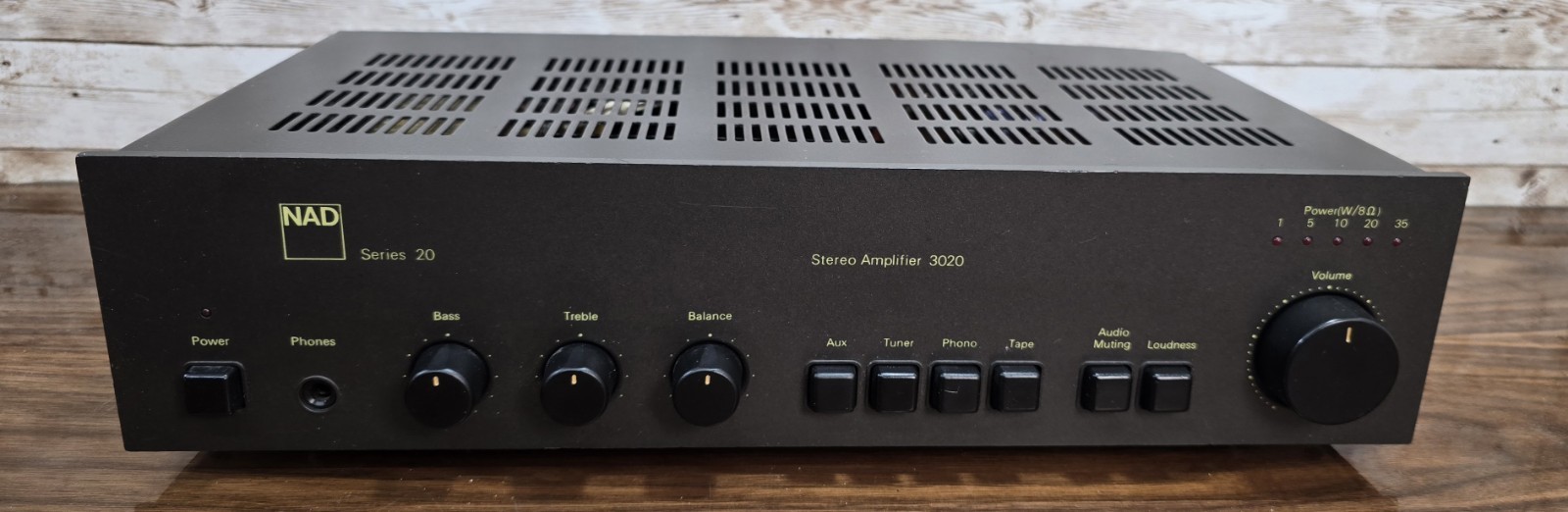
NAD 3020 introduced in 1978 (one of NAD's first amps that had the gray industrial look) - only 20 watts per channel -- it wasn't till 1986 that the NAD had a 100 watt per channel amp in the gray/black industrial look with the model 2200)

s-l1600.jpg
 
Last edited:
Weren't those early NADs made in England? I'd imagine they had a different sound and reliability history than the Asian-built one.

:idea:
 
Weren't those early NADs made in England? I'd imagine they had a different sound and reliability history than the Asian-built one.

:idea:

I believe NAD were one of the first to outsource production to Asia and as far as I know never actually built anything.

The 200 pictured above was made in Japan (at a time when it was a less expensive option).
 
Last edited:
I believe NAD were one of the first to outsource production to Asia and as far as I know never actually built anything.

The 200 pictured above was made in Japan (at a time when it was a less expensive option).

Yes, the 200 was built in Japan and the 3020 (I think first gray industrial look model) was built in Taiwan. I'd guess the 200 sounds like what we would expect from the 70's era from Pioneer, Marantz, etc. It seems like the gray industrial look change was as much (or even more) about engineering changes as aesthetic from what I can gather. I think the grey models was claimed to be better and more precise -- but I haven't found those analytical amplifiers enjoyable to listen to. They probably test well on the test bench (showing "better" performance in lab tests), but they don't really work well in the real world.

Of course, I'm painting gray-faced NAD with a very broad brush -- there are probably some models over the years that sound great, and maybe some that didn't. My recollection was I didn't like any of them when the gray models first came out. I may have been influenced by the looks, which I honestly hated compared to everything else, but I'm pretty sure I didn't like the sound either.

There are just some amps that don't sound good - and their poor sound gets excused (by some) as being "so good that they are too revealing" (e.g. the "superior" amp shows inadequacies of recordings, speakers, etc.). I think that was the BS that kept me from returning the Adcom separates, that I hated from day one, as a replacement for my trusty old Pioneer SX-3700 receiver.
 
Last edited:
I believe NAD were one of the first to outsource production to Asia and as far as I know never actually built anything.

The 200 pictured above was made in Japan (at a time when it was a less expensive option).
Is that Model 200 yours? It has a distinct vintage "Marantz" vibe.

How's the sound?

Thanks!
 
Of course, I'm painting gray-faced NAD with a very broad brush -- there are probably some models over the years that sound great, and maybe some that didn't. My recollection was I didn't like any of them when the gray models first came out. I may have been influenced by the looks, which I honestly hated compared to everything else, but I'm pretty sure I didn't like the sound either.
I truly enjoyed the 2600A amp. Yeah, it has a Plain-Jane exterior. But the sound was (for lack of a better term) quite analog, tube-like. And I like that over the common, hyper-aggressive, bright-sand amps of the time.

I also had a Perreaux SM2 pre-amp, too. So, you can guess the sound I was searching for.
 
Back
Top Bottom