• The move to the new server is done. There are some software and database maintenance updates in process. This has us passing the hat around to help out. We appreciate any donations. Seriously, even a dollar helps. The payment page may be found here - https://www.audiokarma.org/support.html

Does your Turntable stack records? Do you use this feature?

Does your Turntable stack records? Do you use this feature?


  • Total voters
    189
Getting back to record changers, since I wrote my earlier post, I've learned that the Accutrac +6 does not, as I originally thought, have the ability to program different tracks from different records in the stack as the raising piston would seem to facilitate. Not entirely sure what the point of the +6 would be otherwise, but I think it's safe to say that ADC/BSR didn't put as much thought into these things as they should've... :dunno:
-Adam

I can't remember individual model numbers, but there definitely was a model that would elevate a dropped record back up again, so that you could play a song lower in the stack. But, IIRC, it couldn't lift one or two, it would lift the whole stack, then drop the one or two that it needed to, to get back to record #2 or #3. I'm stressing gray cells here. :)
 
I can't remember individual model numbers, but there definitely was a model that would elevate a dropped record back up again, so that you could play a song lower in the stack. But, IIRC, it couldn't lift one or two, it would lift the whole stack, then drop the one or two that it needed to, to get back to record #2 or #3. I'm stressing gray cells here. :)
The changer model I mentioned was the Accutrac +6, otherwise known as the 3500. I haven't been able to find much information about that model, other than the fact that it's belt driven instead of direct drive as used with the 4000, and the extent of stack controls offered from the front panel are labeled 'Next Record' and 'Raise Records'. Best I can tell from reading the manual, the 'Next Record' button works during programming, and allows you to play track 4 from record 1, then track 5 from record 2 (up to 27 commands in total), but apparently you can't then go back and play track 3 from record 1 as said raising piston would seem to facilitate. o_O Anyway, a video of a +6 in action can be found below:
 
Anyway, a video of a +6 in action can be found below:

That video was cool. I forgot about the tonearm "scanning" to find the record size. I believe you could actually stack a mix of 12", 10", and 45's. Take "I believe" with a grain 'o salt. It was many moons ago. :beerchug:
 
That video was cool. I forgot about the tonearm "scanning" to find the record size. I believe you could actually stack a mix of 12", 10", and 45's. Take "I believe" with a grain 'o salt. It was many moons ago. :beerchug:
The old Collaro / Magnavox Micromatic changers could mix different sizes of records too. The tonearm would come over and tap the edge of the record to sense the size before it dropped. Supposedly, they could even use non-standard sizes of records, too.
 
That video was cool. I forgot about the tonearm "scanning" to find the record size. I believe you could actually stack a mix of 12", 10", and 45's. Take "I believe" with a grain 'o salt. It was many moons ago. :beerchug:
Oddly enough, the manual for the +6/3500 seems to refute that:

"Speed and Size Selection:
As you will notice, the Accutrac +6 has no speed or size selection controls. Record size and speed are set automatically during the scanning function. 7 inch records are always played at 45RPM. 12 inch records are always played at 33-1/3RPM.
NOTE: Unconventional speed and size combinations cannot be played on the Accutrac +6."

And furthermore, under the heading of "Automatic Operation: 7 inch, 45RPM records", we get the following warning:

"IMPORTANT: Do not intermix 7 inch and 12 inch records. Do not attempt to use an automatic 45 adaptor."

Again, more missed opportunities from ADC/BSR. :no: You'd think the ability to mix sizes using the scanning function would've been doable, but either they decided it wasn't worth the effort, or trying to do so resulted in too many problems/disasters. :dunno:
-Adam
 
Oddly enough, the manual for the +6/3500 seems to refute that:

I think it's my memory that's odd. I also think I've seen the old table that beat_truck is referring to. I have definitely seen an old table that would "sense" the record size by tonearm scanning.
 
I think it's my memory that's odd. I also think I've seen the old table that beat_truck is referring to. I have definitely seen an old table that would "sense" the record size by tonearm scanning.
Frankly, I don't blame you for thinking the Accutrac +6 could handle odd sizes in a stack, given its scanning capabilities. I suspect that a +6 could manage a stack where the 7" records (with small hole adapters, if needed) dropped before the 12" ones did. Having a larger record below a smaller one on the stack would probably result in its sensor only seeing the edge of the 12" one, which would probably result in disaster when the needle reached the edge of the 7" record while playing the surface of the 12" one below it.

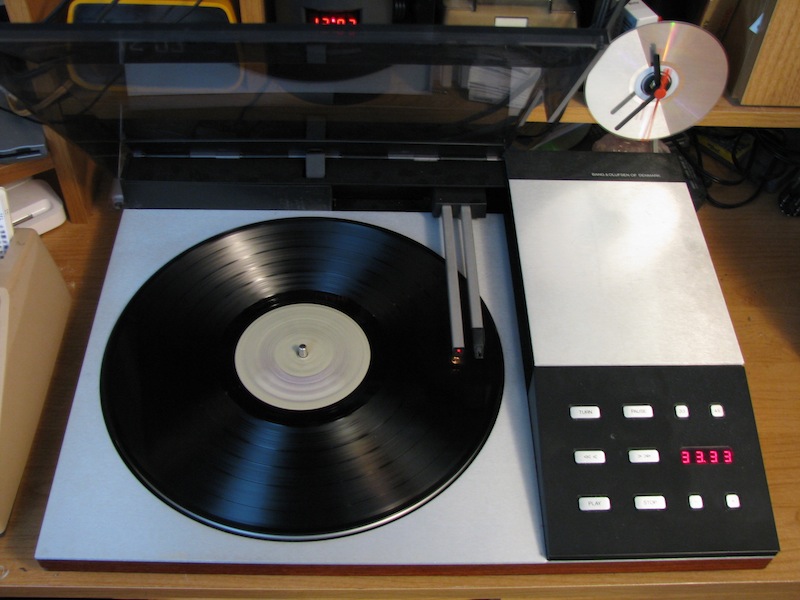
As far as optical size scanning goes, it's not a record changer, but Bang & Olufsen's early linear-tracking Beograms such as the 4002 and 8000 had an optical sensor 'wand' to the left of the tonearm which would slowly scan out over the platter before playback to check if there was a record on there, and what size it was. At the least, it could index 7", 10" and 12" records; not sure if it could handle any odd sizes in-between. It assumed 33-1/3RPM for 12" and 10" records, and 45RPM for 7" ones, though you could defeat this beforehand (and transparent records sometimes confused it). Here's a photo of my Beogram 8000 playing a 12" record, with the light in the sensor wand visible:
bg8000_running.jpg
 
Frankly, I don't blame you for thinking the Accutrac +6 could handle odd sizes in a stack, given its scanning capabilities. I suspect that a +6 could manage a stack where the 7" records (with small hole adapters, if needed) dropped before the 12" ones did. Having a larger record below a smaller one on the stack would probably result in its sensor only seeing the edge of the 12" one, which would probably result in disaster when the needle reached the edge of the 7" record while playing the surface of the 12" one below it.

As far as optical size scanning goes, it's not a record changer, but Bang & Olufsen's early linear-tracking Beograms such as the 4002 and 8000 had an optical sensor 'wand' to the left of the tonearm which would slowly scan out over the platter before playback to check if there was a record on there, and what size it was. At the least, it could index 7", 10" and 12" records; not sure if it could handle any odd sizes in-between. It assumed 33-1/3RPM for 12" and 10" records, and 45RPM for 7" ones, though you could defeat this beforehand (and transparent records sometimes confused it). Here's a photo of my Beogram 8000 playing a 12" record, with the light in the sensor wand visible:

You're reviving a couple of different memories. I think I was mixing up the Accutrac with a table we had in Germany when I was around 14. I think it was a Telefunken or a Grundig. It looked like one of the tables shown earlier in this thread. It had a "bent" center record holder and then the changer mechanism was off to the side. Looked like a tire changer. (Very similar to the table pictured in the 1st post of page #2.) But the tonearm would cycle around and "search" for a record, before it dropped it. Not sure why it did that. Maybe to make sure the record dropped properly.

Secondly, I have that B&O you pictured. But I think mine is a TX. The silver rectangular cover you show is black on mine. Like this:

https://beocentral.com/beogramtx

I haven't actually used it yet because it needs some serious TLC since I've acquired it, just last year. Hopefully, soon. But thanks for the memories. :)
 
The old Collaro / Magnavox Micromatic changers could mix different sizes of records too.

I think the limitation there is the records had to be stacked large to small, otherwise the arm would hit the edge of whatever the largest record in the stack was and drop in that position.
 
The truth is... this happens when your record changer needs some attention. Don't blame the changer. There's no such thing as a "thick" (or thin for that matter) record that causes a properly maintained Dual or Elac record changer to hang up and fall on the tonearm. For gosh sake, these things will handle old single-sided shellac 78s (not that I would recommend doing so) without ever doing that. If you purchased a new record that has never been played before, the center hole might possibly be too tight, but that would be a factory defect of the record and should've been corrected before playing. Either your spindle needs repair or replacement or your TT needs repair, adjustment, and/or lubrication. It's never "just a thing" that record changers sometimes do. The "thing" is, they occasionally need maintenance to keep them running flawlessly, which is something they can do.

My current Dual 1229 plays several thousand records a year, it's played almost every day (not necessarily by me). It plays old LPs and new LPs (weighing 120g,150g,180g & 200g), plus many 7" 45's (where thickness can really vary) and not once has it hung up and hit the tonearm. Because of this extraordinary use, I occasionally open it up, examine it, adjust it, lubricate it, and replace any worn out parts I may find (usually just the steuerpimpel and less often, the mode selector washer). I perform this maintenance annually, which may be a pain in the neck, but considering how much use it gets and the fact that my Dual 1229 has never fallen on the tonearm and damaged the stylus on my Shure V15 Type IV cartridge, I think it's well worth it. Of course, unless you use your record changer as much as I do, you would not need to service it as often, which would make it much less of a chore for you.

Sorry HTHMAN, but assuming that a record changer is just an inherently sloppy device that cannot be counted on to consistently and reliably operate, in such a manner as to not damage your stylus, is a ridiculous assumption. If it prevents you from using your changer, I'm sorry for that too.

I am talking about a brand new 1009F that I bought back in the late 60's. Terrific turntable, but yes, some records back then did vary in thickness and you could have them hang long enough for the tonearm to move under the stack before the recoed drops. I have also had it drop 2 recoreds at once. It was always specific records that caused the problem. 99% of the tome it was flawless, but just be prepared. Those umbrella spindles sure look nice but the rubber grippers do ware and cause problems.
 
Those umbrella spindles sure look nice but the rubber grippers do ware and cause problems.

The rubber grippers on the spindles of the Dual 10xx series did require a bit of attention and needed to be replaced too often, but they worked flawlessly when kept in good shape. Of course, the Dual 12xx series spindles had no rubber grippers to contend with, lasted for years, and could be refurbished.
 
One of the troubleshooting things in the Garrard manuals for issues with double drops or record hangs is to confirm the thickness of the record. I think it gives a range of what it will work with. Most records fall in that realm but some do not.
 
I didn't start using stacking turntables until somewhat recently. Right now I use one for 45s, any set of records that were sequenced for a stacker (compilations, double albums, classical music sets), and occasionally with multiple single LP albums (especially in cases where I want to just listen to a single artist.) If I'm very brave I'll stack a handful of 78s. I'll use single play most of the time for single LP records and 78s where I'm not sure of their brittleness.

I personally find that, while I don't always want to stack records, having the ability to do so is great. It makes my records much more usable, especially large compilations and 45s. It's not for everybody, mostly because they haven't made a good changer in about 40 years, but if you can find a good changer and keep the table maintained it's a great thing to have as an option. It's especially useful to me when I'm working from home and want to listen to records, but don't want to be distracted from work every 20 minutes.

As far as record damage goes: I did my homework on this, and the gist of what I learned about them is that they're mostly fine, but "with great power comes great responsibility." here's a summary of what I found on the subject:
  • The physical act of a well maintained changer dropping one record 2 inches onto another record is very unlikely to cause damage, especially if your records are clean.
  • Most changers operate on this principle, and so the changer mechanism itself is unlikely to damage records in these tables.
    • Some very old changers operate on different (sometimes outright wacky) principles that could damage records, and any turntable pre-1960 or so probably tracks fairly heavily anyway; with these tables, unless you really do your homework and know exactly how to use and maintain them, they shouldn't be used with any records that have any major value.
  • Most LPs and all 45s are designed in such a way to minimize surface contact between stacked records on their playing surfaces, and even those that don't probably won't get any damage to the inside of the grooves, where the music is actually encoded as long as the records are clean.
  • Almost all changers these days are very old machines, so it's on you to make sure that they're operating as originally intended. A malfunctioning changer could damage records, but that seems to be a rare occurrence limited to some specific models.
  • Some record changers are attached to otherwise cheap tables with heavy unadjustable tracking arms with integrated ceramic cartridges (lower end BSR changers), and these consumer grade models of the 70s were often sold to people who didn't properly care for their records (teenagers, kids, people who only used records because they were the default music option at the time) which eventually gave all changers a bad reputation.
    • Rule of thumb: if the turntable is bad at playing one record, it's not going to be a good changer either. A good turntable is a good turntable and a bad turntable is a bad turntable regardless of the bolted on automatic functionality.
  • The 1-2 degrees of error in VTA in a record stack is unlikely to make a big difference in sound with a conical or elliptical stylus. A microline might be slightly more sensitive to this, but I haven't tested that yet (and don't plan to, because I want my changer to be able to play styrene 45s, which Microlines sometimes don't get along with.)
  • There are some people who will absolutely not be swayed by any level of evidence that changers can be used safely, and these people aren't really worth arguing with, because if they want to limit themselves to single play tables (which is fair, because using a 40+ year old table with complicated mechanisms is a maintenance hassle not everyone wants to deal with) that's on them.
Edit: this is AK so I owe a picture of the stacking TT that kicked off my latest obsession here. It's a Miracord 50H:

20250313_151348.jpg
 
Last edited:
I can imagine someone using a wurlitzer/jukebox-like player. Preferably - with a flipping capability and a capacity of a ~hundred LPs.
But an LP-dropping devices are not according to my liking.

(I have something similar - the JVC XL-MC222, the 200 CDs carusell. Very handy thing.)
 
The Dual 1229 uses an umbrella-type spindle and has an excellent mechanical configuration that compensates for changes in the VTA when stacking records (up to 6). I'm an electrical and audio engineer who has been stacking records for almost 70 years and continues to do so with my Dual 1229 record changer. The trick to never damaging records is to restore your vintage TT to OEM specs and consistently maintain it that way. The Dual 1229 is an overengineered mechanical marvel that may be beyond the skills of many hobbyists and audiophiles to restore and adjust to OEM standards. However, there are a few Dual specialists in the US who can restore and repair a Dual TT if you ship it to them. I restore and repair them for my own use only. Of course, when you check out the price for a Dual 45RPM changer spindle for the 1229 (AS-12) you'll be shocked. They can run upwards of $300 if you're lucky enough to even find one. I have a few NIB AS-12 spindles that I purchased in 1971 for 5 bucks each. I guess I'll just leave them to my heirs in my will.
 

Attachments

  • DUAL-AS-12.jpg
    DUAL-AS-12.jpg
    70.1 KB · Views: 13
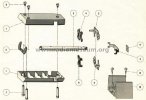
  • abwurfsaule_as12_1835773.jpg
    abwurfsaule_as12_1835773.jpg
    27.4 KB · Views: 13
  • Audio Gear 2.jpg
    Audio Gear 2.jpg
    104.7 KB · Views: 13
I immediately stashed the tripod changer spindle for my Dual. today, you couldn't pay me to use a changer function. I wish I had started a definitive cleaning regimen long ago before some of my records were permanently scarred from playing while dirty.

in high school, I and my friend used the RCA 45RPM, large spindle changer for used jukebox records we got for 3/$1 and the occasional new purchase like the Ventures, Santo & Johnny, Duane Eddy, and Link Wray records that were essential to own.

i am moderately irritated by multi-LP sets that were pressed in automatic sequence, especially for playing on changers. making sure the records have been ultrasonically cleaned on my Degritter, I use a carbon fiber brush like an Audioquest brush.
 
Was going to toss out this console pull Magnavox Imperial from 1960 but found a plinth that fit it, so decided to get it sounding as good as I can. Converted to a p-mount audio technica cartridge and it sounds great..at least to my ears. Just need to work on the motor mounts to get rid of the slightest bit of motor noise. Took alot of work to get to this point. Have a listen...headphones if you got them. Stack about 3 period correct albums with no issues. SRA is okay even with three records stacked.
 
The Dual 1229 uses an umbrella-type spindle and has an excellent mechanical configuration that compensates for changes in the VTA when stacking records (up to 6). I'm an electrical and audio engineer who has been stacking records for almost 70 years and continues to do so with my Dual 1229 record changer. The trick to never damaging records is to restore your vintage TT to OEM specs and consistently maintain it that way. The Dual 1229 is an overengineered mechanical marvel that may be beyond the skills of many hobbyists and audiophiles to restore and adjust to OEM standards. However, there are a few Dual specialists in the US who can restore and repair a Dual TT if you ship it to them. I restore and repair them for my own use only. Of course, when you check out the price for a Dual 45RPM changer spindle for the 1229 (AS-12) you'll be shocked. They can run upwards of $300 if you're lucky enough to even find one. I have a few NIB AS-12 spindles that I purchased in 1971 for 5 bucks each. I guess I'll just leave them to my heirs in my will.
These Dual changers intimidate me, not gonna lie. Maybe they shouldn't, I've brought Monroe adding machines and IBM Selectrics back to life... but for some reason, with all the mention of rubber parts, they do.
 
These Dual changers intimidate me, not gonna lie.
You are most assuredly not alone. The Dual 1229 I refer to as a "mechanical marvel" has equally been called a "mechanical nightmare". The fact that Germany produced some of the highest-quality turn tables available at the time, doesn't take away from the fact that these 1200 series record changers were tremendously over-engineered. They were complex and enigmatic machines, requiring many adjustments, lubrication, and replacement parts to keep them operable over the years. This also required an inordinate amount of technical expertise to accomplish. Without proper lubrication, the plastic portion of the "single/multi" VTA mechanism would break, and the motor and drive gears would eventually seize. The anti-skate wheel inevitably cracks and needs replacement. The "steuerpimpel" (it's a Dual thing) must be replaced occasionally to enable the horizontal movement of the tonearm and the accurate positioning of the automatic record start/end feature. Everything else will also require occasional maintenance to allow the record changer to reliably drop records, the platter to spin at the selected speeds, and the smooth movement of the highly complex collection of gears, levers, cogs, and bearings. But, as strange as it sounds, it's all worth it if you can do it. The Dual 1229 has been the only record changer I've owned or worked on, during the last 6+ decades that I would trust to stack records (excluding the brittle 78s) from my extensive and expensive record collection. It also has one of the longest straight tonearms of any turntable or record changer and uses a tonearm head for a standard 1/2" stylus cartridge, either conical or elliptical. The 1229 is a high-quality and versatile three-speed automatic turntable that just happens to include an equally high-quality, well-engineered, and safe record changer.
 
Last edited:
Back
Top Bottom