• The move to the new server is done. There are some software and database maintenance updates in process. This has us passing the hat around to help out. We appreciate any donations. Seriously, even a dollar helps. The payment page may be found here - https://www.audiokarma.org/support.html

Does your Turntable stack records? Do you use this feature?

Does your Turntable stack records? Do you use this feature?


  • Total voters
    189
You are most assuredly not alone. The Dual 1229 I refer to as a "mechanical marvel" has equally been called a "mechanical nightmare". The fact that Germany produced some of the highest-quality turn tables available at the time, doesn't take away from the fact that these 1200 series record changers were tremendously over-engineered. They were complex and enigmatic machines, requiring many adjustments, lubrication, and replacement parts to keep them operable over the years. This also required an inordinate amount of technical expertise to accomplish. Without proper lubrication, the plastic portion of the "single/multi" VTA mechanism would break, and the motor and drive gears would eventually seize. The anti-skate wheel inevitably cracks and needs replacement. The "steuerpimpel" (it's a Dual thing) must be replaced occasionally to enable the horizontal movement of the tonearm and the accurate positioning of the automatic record start/end feature. Everything else will also require occasional maintenance to allow the record changer to reliably drop records, the platter to spin at the selected speeds, and the smooth movement of the highly complex collection of gears, levers, cogs, and bearings. But, as strange as it sounds, it's all worth it if you can do it. The Dual 229 has been the only record changer I've owned or worked on, during the last 6+ decades that I would trust to stack records (excluding the brittle 78s) from my extensive and expensive record collection. It also has one of the longest straight tonearms of any turntable or record changer and uses a tonearm head for a standard 1/2" stylus cartridge, either conical or elliptical. The 1229 is a high-quality and versatile three-speed automatic turntable that just happens to include an equally high-quality, well-engineered, and safe record changer.
It's definitely the kind of project that's up my alley, and if I happened into a Dual 1229 for cheap I'd probably figure it out and embrace it... but I'm juggling so many projects (including an 11 month old son) that taking on something so complicated right now isn't in the cards for me.

Any opinions on the Miracords? I haven't had any issues with my 50H so far, except failure to drop the occasional very off-balance (dynaflex) disc or new records which failed to clean the sprue out of the spindle hole (fixed with a deburring tool.) That Miracord was a recent project to get working, and about my comfort level right now.
 
Last edited:
I recently bought a 1229 that has the stacking spindle with it, but I don't see myself ever using it. I need to fix the on/off function so I can put it to work!

Found where the tight spot was for the on/off function. All good now!
 
Last edited:
I need to fix the on/off function so I can put it to work!
Unfortunately, a very common problem. The fact that Dual 1229 record changers still exist after 55+ years is a tribute to their quality. The fact that very few of them operate fully, as designed is a testament to their complexity.
 
Any opinions on the Miracords? I haven't had any issues with my 50H so far
A well-restored and maintained Elac Miracord 50H is a fine record changer and I would have no problems stacking my records on it. It is fairly reliable and easier to repair and adjust than the Dual 1229. With that being said, I would still prefer the Dual. It just sounds better. The 1229 has a much heavier platter, longer tonearm, better motor, and more accurate speed control.
 
Unfortunately, a very common problem. The fact that Dual 1229 record changers still exist after 55+ years is a tribute to their quality. The fact that very few of them operate fully, as designed is a testament to their complexity.
Sounds like Dual are the Porsche of turntables. I friend gave me a 701 to go through not too long ago and it had 1 electrolytic cap which I replaced. The whole thing was so intimidating I just left it alone otherwise.
 
You'd get some argments about that - there are fans of practically every changer. Tastes, ears, and systems differ so everyone may be right.
 
Sounds like Dual are the Porsche of turntables. I friend gave me a 701 to go through not too long ago and it had 1 electrolytic cap which I replaced. The whole thing was so intimidating I just left it alone otherwise.
If we're going with this analogy, I'd say the Miracords are perhaps the Mercedes of turntables. But, like, the W123 era Mercedes' that were built like brick houses.
 
By that standard, I suppose BSRs are Model Ts or VW Bugs - not sophisticated, but get the job done, and work forever (well, actually Bug engines went at about 75k miles (mine right on schedule)). But relatively easily fixed.
Garrards might be Lamborginis - the tractors more than the cars, since the idler 'grunt' seems to be one of the big draws - more sophisticated makes don't have this quality quite as much.
 
By that standard, I suppose BSRs are Model Ts or VW Bugs - not sophisticated, but get the job done, and work forever (well, actually Bug engines went at about 75k miles (mine right on schedule)). But relatively easily fixed.
Garrards might be Lamborginis - the tractors more than the cars, since the idler 'grunt' seems to be one of the big draws - more sophisticated makes don't have this quality quite as much.
And of course the late 70s early 80s Technics stackers are collectively the Toyota Corolla. Simple and truly indestructible. They assume that the owner won't keep to the maintenance schedule and keep working anyway, but aren't breaking any ground with their feature set.

And they stuck around longer in the mainstream than the American, German and English makes...
 
Sounds like a terrible idea of something to do with a physical media like LP's.
Just the thought make me cringe a bit.
 
Sounds like a terrible idea of something to do with a physical media like LP's.
Just the thought make me cringe a bit.
Makes you cringe, does it? Here's a story for you then (this might even make the pro-stacker people cringe):

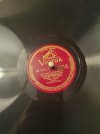
I stacked a set of 12" 78s today, RCA red label Bach's 1st and 6th cello suites, which I had recently found at the thrift store. All in quite good condition. Nearly silent, though missing the last record.

I thought the set was worthless. It was just something I found in a pile of beat up old 10" 40s pop records. I thought I had looked it up and confirmed that it was worthless. After pkaying it I double checked and it was, perhaps, not so worthless; I think I had pulled up a similar red label LP that wasn't very valuable but seemed similar.

Without getting too detailed, the set I'd just stacked had last sold at auction for several hundred dollars! Mine is missing a record, but the six I played are pristine in terms of sound quality...

No harm came to the records for having been stacked. They still sound great and there's no visible damage to them. They are technically changer sequenced so I got to experiemce them as originally intended, and again the last record is missing so it's not a perfect set regardless...

...but still, had I done my homework a little better I probably wouldn't have stacked that particular set.

Oh, and I took pictures while I was doing it, so there's proof:

20250322_095719.jpg20250322_095725.jpg
 
Stacking records does little to no damage to them. The idea that the record surfaces grind against each other might make sense when talking about 78s, but it is largely a marketing myth fostered somewhat by makers of single play turntables and by Glaser Steers whose changers actually stopped for the record drop.
78s actually are flat or close to it, so if covered with sand, I suppose grinding might happen if that is how you play your records. But LPs usually have a raised label and an outer lip, so the record surfaces don't touch much, if at all (which actually may not be great for sound). And vinyl is a slippery smooth material. But more important, you don't play the surface of the record - you play the insides the grooves, which aren't affected by the condition of the surface.
It is possible to wear the spindle hole - the changers that use a single section of the spindle as a pusher might produce some wear (though when the pusher contacts the record, the record is not turning - it's in the stack waiting to drop). The changers that use the umbrella like three prong spindle don't do anything to the record, though the prongs do wear the paper label a bit.
Because the spindle itself doesn't rotate with the record, this might wear records, which is why the single play spindles often either attach to the platter, not the main bearing, or have a rotating section. But that assumes records with really tight center holes, which few actually have. Most have a fair amount of slop, which, though it sounds bad, is actually a blessing for those with the only table that made a big point of having exactly the correct size spindle, the AR. Anyone who owns one has probably had the experience of fighting to get the record off the spindle when the record also has the exact size hole - the platter will come up out of the bearing before the record will be released.
 
tacking records does little to no damage to them. The idea that the record surfaces grind against each other might make sense when talking about 78s, but it is largely a marketing myth fostered somewhat by makers of single play turntables
Well said. People would prefer to believe that the manufacturing of record changers was discontinued because consumers realized how dangerous they were to their precious records and stopped buying them. But in reality, by the time record changers disappeared from stores, they were actually less risky to your records than single-play machines because you didn't have to handle them as much. This lowered the risk of dropping, scratching, finger smudging, scraping, or spilling something on them. It also allowed you to listen to hours of continuous music without getting up to do even more risky manipulation of your records. The main reason manufacturers discontinued making record changers was higher costs and lower profit margins. So they banked on some self-promoted bad publicity about record changers harming your records to help push the sales of their cheaper-to-make, higher-profit, single-play record players while misleading consumers into thinking they were getting an upgrade.
 
Stacking records does little to no damage to them. The idea that the record surfaces grind against each other might make sense when talking about 78s, but it is largely a marketing myth fostered somewhat by makers of single play turntables and by Glaser Steers whose changers actually stopped for the record drop.
78s actually are flat or close to it, so if covered with sand, I suppose grinding might happen if that is how you play your records. But LPs usually have a raised label and an outer lip, so the record surfaces don't touch much, if at all (which actually may not be great for sound). And vinyl is a slippery smooth material. But more important, you don't play the surface of the record - you play the insides the grooves, which aren't affected by the condition of the surface.
It is possible to wear the spindle hole - the changers that use a single section of the spindle as a pusher might produce some wear (though when the pusher contacts the record, the record is not turning - it's in the stack waiting to drop). The changers that use the umbrella like three prong spindle don't do anything to the record, though the prongs do wear the paper label a bit.
Because the spindle itself doesn't rotate with the record, this might wear records, which is why the single play spindles often either attach to the platter, not the main bearing, or have a rotating section. But that assumes records with really tight center holes, which few actually have. Most have a fair amount of slop, which, though it sounds bad, is actually a blessing for those with the only table that made a big point of having exactly the correct size spindle, the AR. Anyone who owns one has probably had the experience of fighting to get the record off the spindle when the record also has the exact size hole - the platter will come up out of the bearing before the record will be released.
I'm in general agreement with you here, and I did in fact demonstrate this by playing a stack of the heaviest possible records (12" 78s) in the maximum amount my umbrella spindle was designed to handle (they filled the spindle right up to the top position marker Elac designated as "safe"), and it was all fine; no damage occurred to those records.

However, my main concern with 78s is that some got more brittle with age, and it seems like having a big stack of them balanced on the teeny tiny umbrella spindle of my Miracord, theoretically, could be stressing them enough at a weak point to where a crack might develop around the spindle hole.

Granted, it hasn't happened yet. I've stacked many 78s on this table now and the most damage I've ever seen is a tiny bit of marking to one paper label. I've even tested some records that were already cracked to see if I could get the failure to happen (with the cueing lever up of course) and the mechanism dropped even them just fine.

But it does seem like, given a perfect set of circumstances, this is theoretically a way that 78s could get damaged, and in the case where the record set may be worth more than the record player, it might make sense to exercise an abundance of caution and not stack that particular set.
 
If I had the Dual SK-3(?) stacking spindle, I could do it. But, haven't done it in years, plus the majority of the Dual turntables we've had, have had the single spindle, including my current turntable. We've also had a couple BSR turntables (one a BSR McDonald unit, the other a Sony PS-77), but rarely used the stacking feature those had.
 
If I had the Dual SK-3(?) stacking spindle
For the Dual 1219/1229, the record stacking spindle for 10 " and 12" (78 and 33 RPM) records is AW-3, and for 7" (45 RPM) records it's AS-12. For the 1019, it's AW-2 and AS-9. I think these Dual models are the only ones I would stack records on.
 
A well-restored and maintained Elac Miracord 50H is a fine record changer and I would have no problems stacking my records on it. It is fairly reliable and easier to repair and adjust than the Dual 1229. With that being said, I would still prefer the Dual. It just sounds better. The 1229 has a much heavier platter, longer tonearm, better motor, and more accurate speed control.
The ELAC/Miracord 50H is superb. The plastic tonearm piece where the cartridge mount goes is the weakest link of the design, commonly damaged in shipping. Also wish the cartridge mounts would get reproduced like Duals do. Best speed accuracy of any automatic, broadcast grade speed accuracy due to the Hysteresis/Synchronous AC motor from Papst of Germany. Usually reliable and well made!
 
The ELAC/Miracord 50H is superb. The plastic tonearm piece where the cartridge mount goes is the weakest link of the design, commonly damaged in shipping. Also wish the cartridge mounts would get reproduced like Duals do. Best speed accuracy of any automatic, broadcast grade speed accuracy due to the Hysteresis/Synchronous AC motor from Papst of Germany. Usually reliable and well made!
I have some experience creating parts in FreeCAD for 3D printers, and have also struggled to find replacement parts, so have vaguely thought about modeling up some sort of printable replacement headshell/tonearm socket for the Elac Miracord 50H.

At first I thought about this from the angle of replicating the existing headshell and connector for backwards compatibility with existing parts. It seems doable, but you'd need to incorporate part of a standard off the shelf pin header into the design somehow, as well as the grounding plane, and I have no idea how to do that in a way that will always work. It would also have to be a simplified design; I'm not an engineer, so there's no way I'd be able to replicate the lead screw adjustment sled assembly (though arguably if one could just print a new head for every cartridge they own, the inconvenience of mounting them just once isn't that bad.)

The other angle I thought about was if it would be possible to design something that replaces the existing connector with one that makes standard Technics headshells fit instead. Basically just a housing for a run-of-the-mill socket connector you can source on ebay, and then you're just out of the proprietary Elac ecosystem entirely. The problem is that the Technics style headshells are quite a bit longer than the Miracord headshells, so it wouldn't actually be that easy to design while keeping the original tonearm length intact, unless somebody makes Technics headshells which are much shorter than standard.
 
Back
Top Bottom