• The move to the new server is done. There are some software and database maintenance updates in process. This has us passing the hat around to help out. We appreciate any donations. Seriously, even a dollar helps. The payment page may be found here - https://www.audiokarma.org/support.html

Dynaco PAS 2 or 3 static with nothing connected and independent of volume

davesnothome

New Member
Greetings,

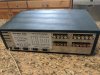
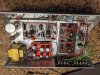
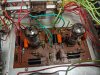
So I'm new to the PAS preamp and purchased a rebuilt one from eBay to use with my Dynaco ST-70. This one had been recapped, has an Erhard audio power supply cap board, a new Alps volume pot, and has had the tone controls bypassed. From the first time I've hooked it up to the ST-70 it started sending static through the speakers. I disconnected all inputs and the static remains. I've changed out every tube including the rectifier with known good tubes and still static. I cleaned the balance pot and contacts and still static. As a noob to this piece of equipment, and not having any luck from the seller or finding info online to troubleshoot, I wanted to see if anyone here could point me in the right direction. This unit has a custom faceplate so I'm not positive if it's a PAS 2 or later model. Any help at all would be greatly appreciated.

Also as an FYI, I've tried this with other amps and same problem for both solid state and tube amps that have no static when not hooked to this. The speakers I've used are Triangle Celius 202's, Cambridge Soundworks Model Seventeen's, Cambridge Soundworks Tower II's, and B&W DM630s. Same with all the speakers and amps. I've also tried multiple AC outlets within my home and even at my brother's house just in case it was my power lines.

Thanks,

Dave
 
Register to hide this ad
Does it hum in the phono, tuner, etc....? Does it still have tone control?

Couple of easy things to check, first is plug polarity, which you may have already done?

Second, if any of the internal DC wires are close to AC wires it will hum....

Third, how is the chassis ground done at the rectifier tube?


There are some very knowledgeable people on here that can help ( I don’t claim to be one of them)...


Regards,
Andy
 
Greetings,

So I'm new to the PAS preamp and purchased a rebuilt one from eBay to use with my Dynaco ST-70. This one had been recapped, has an Erhard audio power supply cap board, a new Alps volume pot, and has had the tone controls bypassed. From the first time I've hooked it up to the ST-70 it started sending static through the speakers. I disconnected all inputs and the static remains. I've changed out every tube including the rectifier with known good tubes and still static. I cleaned the balance pot and contacts and still static. As a noob to this piece of equipment, and not having any luck from the seller or finding info online to troubleshoot, I wanted to see if anyone here could point me in the right direction. This unit has a custom faceplate so I'm not positive if it's a PAS 2 or later model. Any help at all would be greatly appreciated.

Also as an FYI, I've tried this with other amps and same problem for both solid state and tube amps that have no static when not hooked to this. The speakers I've used are Triangle Celius 202's, Cambridge Soundworks Model Seventeen's, Cambridge Soundworks Tower II's, and B&W DM630s. Same with all the speakers and amps. I've also tried multiple AC outlets within my home and even at my brother's house just in case it was my power lines.

Thanks,

Dave
You have a choice here : return it to the seller for a refound or fix it.

Fixing means "return to factory config, including circuit boards tonecontrol powersupply etc".
The problem with "enhanced" or "modded" amps is that they are undocumented with no clear information
about voltages etc, and no common ground to be helped in Internet fora as noone out there knows
exactly the confoguratiojn of you amp.

Thus you best bet is RETURN IT and get an PAS in original shape
 
You have a choice here : return it to the seller for a refound or fix it.

Fixing means "return to factory config, including circuit boards tonecontrol powersupply etc".
The problem with "enhanced" or "modded" amps is that they are undocumented with no clear information
about voltages etc, and no common ground to be helped in Internet fora as noone out there knows
exactly the confoguratiojn of you amp.

Thus you best bet is RETURN IT and get an PAS in original shape

Unfortunately I'm past the return period and the seller has been no help whatsoever on info regarding the mods. Lesson learned, unfortunately the hard way.
 
Does it hum in the phono, tuner, etc....? Does it still have tone control?

Couple of easy things to check, first is plug polarity, which you may have already done?

Second, if any of the internal DC wires are close to AC wires it will hum....

Third, how is the chassis ground done at the rectifier tube?


There are some very knowledgeable people on here that can help ( I don’t claim to be one of them)...


Regards,
Andy
Tone control has been bypassed. No real hum in phono chanel, but constant static regardless of which channel is selected and even if nothing is connected to it. I'll look into the chassis ground at the rectifier tube tomorrow to see. No real hum to the unit, just static, regardless of volume being at zero or maxed out.
 
Without hearing it, we have to define static:

Is it continuous noise on each channel regardless of the input selection? Are you saying there’s no “static” when phono is selected?

Or is it an occasional popping sound, like playing a “ dirty” vinyl record, and does it occur regardless of the input selection?

If you get a PAS manual(s), it’s not that difficult to discover what changes someone has made however, as we all know, human induced problems are the most difficult to overcome.

From what I’ve read the PAS 3x systems had 1uf “coupling” capacitors to reduce or eliminate DC noise, and here is a website that has a considerable amount of information on the PAS, this page talks about models, but you may want to read some of the other pages as well....

http://www.audioregenesis.com/documents/Dynaco PAS 3 or 3X.pdf

Regards,
Andy
 
If its both channels and basically equal volume, that says something common to both. That narrows it down considerably. New power supply board cuts it down a fair bit further. Exactly what parts are still original? I'd be looking close at any original power supply resistors, and the connections from the power supply to the main board. Check the grounds on the power supply and board as well.

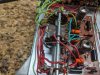
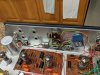
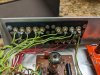
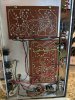
some detailed pics of the inside might turn up something useful here.
 
Without hearing it, we have to define static:

Is it continuous noise on each channel regardless of the input selection? Are you saying there’s no “static” when phono is selected?

Or is it an occasional popping sound, like playing a “ dirty” vinyl record, and does it occur regardless of the input selection?

If you get a PAS manual(s), it’s not that difficult to discover what changes someone has made however, as we all know, human induced problems are the most difficult to overcome.

From what I’ve read the PAS 3x systems had 1uf “coupling” capacitors to reduce or eliminate DC noise, and here is a website that has a considerable amount of information on the PAS, this page talks about models, but you may want to read some of the other pages as well....

http://www.audioregenesis.com/documents/Dynaco PAS 3 or 3X.pdf

Regards,
Andy

It is continuous noise on each channel regardless of the input selection and with nothing connected to the preamp. It starts to come out the speakers once this unit is turned on. It is more of a popping sound that is constant, very similar to dirty vinyl.
 
Firstly, don't spray, pour or otherwise apply any chemicals into/onto the pots or switches, including the selector switch. They contain phenolic materials that do not tolerate chemicals well.

The sound of a stock PAS in proper working order is sweet and satisfying. But, like other audio equipment, they were engineered to work a certain way. As kits, they were originally intended to function properly only when the assembly instructions were followed to the letter. Unfortunately, this situation is familiar. These things are often the target of modification attempts that may not be adequately considered. They change hands, and subsequent owners are left with problems and no adequate roadmap.

It is possible that we could get lucky and figure out what's going on with @davesnothome 's PAS. Short of seeing several images of this PAS and having readings taken at the nodes indicated in the reference voltage chart in the manual, this is an uphill climb at best.

Taking some photos now, will upload very shortly, thank you all for the help
 
I have the knob for the balance pot on my bench. I took it off to make sure it was centered and did not put it back on prior to taking the photos. The static was there prior to the knob removal and stays coming out of both channels regardless of which way the balance pot is turned.
 
If its both channels and basically equal volume, that says something common to both. That narrows it down considerably. New power supply board cuts it down a fair bit further. Exactly what parts are still original? I'd be looking close at any original power supply resistors, and the connections from the power supply to the main board. Check the grounds on the power supply and board as well.

some detailed pics of the inside might turn up something useful here.
Just added the photos
 
I wouldn't trust new parts any more than old ones. A noisy resistor in the power supply, noisy regulator, etc. A PAS will play for a few seconds after power is turned off. Does the static go away when power is removed for a few seconds before the tubes cool down or you lose your B+?
 
I've been told a lot of ALPS. controls are knock-offs these days. I've tracked a lot of noise problems down to pots over the decades.
 
I wouldn't trust new parts any more than old ones. A noisy resistor in the power supply, noisy regulator, etc. A PAS will play for a few seconds after power is turned off. Does the static go away when power is removed for a few seconds before the tubes cool down or you lose your B+?

Just checked it. The popping static stays after the power is turned off and stayed for probably 15-20 seconds until it died off.
 
I'm thinking volume control. You can short the various controls with short pieces of wire, a jumper from the high side of the volume to the center wiper, etc. Do not put a signal through it. Jumpers across the switches, but with it happening with no signal I'm leaning on volume and balance as being the culprits, or the ground connection from the volume control to wherever it's soldered in. Check those solder connections, don't just reheat them, remove the old solder and use fresh.
 
Have you cked the selector switch the loudness switch the tape /record switch and the filter switch.

Still learning this piece of equipment. I've tried the device with each of those switches in every possible setting and same problem. I haven't used any liquid cleaner like deoxit on the contacts but checked each contact and they were all making a connection. I'm looking through the manual now to get an idea of how to check the voltages without shocking myself, going to try to find a video. I've got the eevblog multimeter but haven't used it yet to check voltages on this. I want to make sure I don't shock or kill myself before I do. L
 
Back
Top Bottom