• The move to the new server is done. There are some software and database maintenance updates in process. This has us passing the hat around to help out. We appreciate any donations. Seriously, even a dollar helps. The payment page may be found here - https://www.audiokarma.org/support.html

ESS amt 1a Bookshelf speakers: bypass circuit breaker?

DavidAlm

Member
I am working on rehabing a pair of amt 1a's. The woofers were sent to Rick at ESS for a re-cone and re-magnetization. I am preparing to work on the crossover network and will recap with either Solens or Daytons. I have never owned a speaker with a circuit breaker. I would like to know if it makes sense to bypass the breaker? Seems like oxidized contacts within the breaker would be an ongoing maintenance issue. Is the Heil more fragile than a conventional cone midrange and dome tweeter? Is that why ESS chose to use a protection device?

Thanks,
David
 
Register to hide this ad
Dave: First, welcome to AK. To answer your question about Heil durability I would say that at the time this speaker was being made, mid 70s, the Heil diaphragm was still going through several design iterations to make it more reliable. speakers with voice coils will frequently make aberrant noises when being overdriven. So you know to back off. The Heil doesn't make noises before it fails. When the conductive strips heat up, the pleats will just melt together.
The early to mid 70s ESS Heil speakers were all fused. They changed to circuit breakers with the AMT 1A, AMT 1A Monitor and AMT 1a bookshelf. After this series, they dropped all protective devices. This might have been because they felt they had the diaphragm at an acceptable level of reliability or, more likely, they were cutting costs and just didn't provide protection any longer.
I believe the circuit breaker protects the whole system and not just the Heil. You can do your best to spray it with deoxit or just run a wire between the two terminals to bypass it. If you push the button from time to time, it may exercise it and clean the contacts, but this is just a theory on my part.
I have several ESS speakers in the collection with these breakers and am not having any perceived problems.
Since you are having things redone, you could also replace the diaphragms which is an easy task to do.
Would be curious to see any pics of your process.
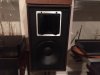
This is a much later version of the Bookshelf purchased by special order from ESS in about 2000. Bextrene woofer, rear mounted 12 inch passive and no breaker or fuse.

ESS AMT 1B Bookshelf.JPG
 
Dave: First, welcome to AK. To answer your question about Heil durability I would say that at the time this speaker was being made, mid 70s, the Heil diaphragm was still going through several design iterations to make it more reliable. speakers with voice coils will frequently make aberrant noises when being overdriven. So you know to back off. The Heil doesn't make noises before it fails. When the conductive strips heat up, the pleats will just melt together.

As I found out the other day..., this is not necessarily true.

I run the Mermans as 2.5 ways. The 18" cuts off at ~450Hz and the 10" runs up to ~4kHz where the Great Heil takes over.

I made some changes to the crossover for the 18" and when I put it all back, I switched the wires between the 10" and the Heil on the left speaker. :eek: So the Heil was getting EVERYTHING up to ~4KHz and the 10" got what was above that. :yikes:

I played them that way while watching TV that night (but most TV is in the center channel) and listened to an ELO disk, that sounded "off." I made a recording of SRV "Tin Pan Alley" (but not listening to it) and the next day put on Pink Floyd "Animals."


I was listening to the electric piano/bass combination on "Sheep" and heard a metallic ringing sound. I often hear "flaws" in the recording process on the Mermans, but this seemed excessive. I switched to the L300s and did not hear the ringing. I checked the input connection on the Mermans and found a 10" loose. I tightened it up, but the problem persisted. I then checked the wires and found the error.

LUCKILY THE HEIL IS ROBUST AND SUSTAINED NO DAMAGE! These were from an AMT1D. I made another SRV recording and there was no indication of any problems. I probably still have the first and the metallic ringing should be there. So as you would hear a cone woofer bottom out with a thump, the Heil can "bottom out" with a "metallic sheen."
 
As I found out the other day..., this is not necessarily true.

I run the Mermans as 2.5 ways. The 18" cuts off at ~450Hz and the 10" runs up to ~4kHz where the Great Heil takes over.

I made some changes to the crossover for the 18" and when I put it all back, I switched the wires between the 10" and the Heil on the left speaker. :eek: So the Heil was getting EVERYTHING up to ~4KHz and the 10" got what was above that. :yikes:

I played them that way while watching TV that night (but most TV is in the center channel) and listened to an ELO disk, that sounded "off." I made a recording of SRV "Tin Pan Alley" (but not listening to it) and the next day put on Pink Floyd "Animals."


I was listening to the electric piano/bass combination on "Sheep" and heard a metallic ringing sound. I often hear "flaws" in the recording process on the Mermans, but this seemed excessive. I switched to the L300s and did not hear the ringing. I checked the input connection on the Mermans and found a 10" loose. I tightened it up, but the problem persisted. I then checked the wires and found the error.

LUCKILY THE HEIL IS ROBUST AND SUSTAINED NO DAMAGE! These were from an AMT1D. I made another SRV recording and there was no indication of any problems. I probably still have the first and the metallic ringing should be there. So as you would hear a cone woofer bottom out with a thump, the Heil can "bottom out" with a "metallic sheen."
Well, this is an interesting anomaly I have not heard, but I'm just using my Heils attached to standard ESS crossovers and I don't think I really push them very hard. Glad your diaphragms didn't seem to sustain any damage. Sounds like a different kind of sound from what a round voice coil driver would make.
 
I am working on rehabing a pair of amt 1a's. The woofers were sent to Rick at ESS for a re-cone and re-magnetization. I am preparing to work on the crossover network and will recap with either Solens or Daytons. I have never owned a speaker with a circuit breaker. I would like to know if it makes sense to bypass the breaker? Seems like oxidized contacts within the breaker would be an ongoing maintenance issue. Is the Heil more fragile than a conventional cone midrange and dome tweeter? Is that why ESS chose to use a protection device?

Thanks,
David
Tweeter are more delicate than woofers, which is why you'll see breakers, polyswitches and fuses in the tweeter leg of a crossover.
I drive my gear like a sedated Grandma, but I had an amp go berserk and pop the fuses on my AMT-3's. If that fuse hadn't been there, I'm sure I'd be out the $160 for a pair of diaphragms.


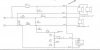
NOTE: In the case of my Rock Monitors, the fuse protects the "transition" driver and the great Heil.

AMT3_Schematic.jpg

Other drawings, including this AMT-1 schematic, have the fuse protecting everything.

AMT-1_Crossover.JPG
 
Well, this is an interesting anomaly I have not heard, but I'm just using my Heils attached to standard ESS crossovers and I don't think I really push them very hard. Glad your diaphragms didn't seem to sustain any damage. Sounds like a different kind of sound from what a round voice coil driver would make.


Just ran the RTA and there was no change from before the incident. Dodged a bullet on that one. :thumbsup:
 
Thanks for all of the replies and excellent information! I operate on the cautious side, so I will probably keep them protected. I don't know if there is an opening on the breaker to allow me to use Deoxit. I need to take another look. I could replace them with new breakers. Does replacing the breaker with a fuse holder and appropriate fuse make sense if I can't source a new breakers?

Thanks again,
David
 
To me protecting speakers always makes sense. Porkloin's comments above confirm it. The speaker threads in AK are rife with people fixing blown drivers. Many more speakers need protection that dont have it. I dont think you have to replace the breakers. But if you want to and cant find an acceptable replacement, a fuse holder will work. If you cant do the installation in the crossover board, run the wire across the 2 lugs on the circuit breaker and use an external in line fuse holder on one end of the speaker wire. ESS recommends a 3AG 2 amp fast blow fuse on the AMT 1, AMT 1 Tower and AMT 4 which should give similar protection to your speakers.
 
Dave: First, welcome to AK. To answer your question about Heil durability I would say that at the time this speaker was being made, mid 70s, the Heil diaphragm was still going through several design iterations to make it more reliable. speakers with voice coils will frequently make aberrant noises when being overdriven. So you know to back off. The Heil doesn't make noises before it fails. When the conductive strips heat up, the pleats will just melt together.
The early to mid 70s ESS Heil speakers were all fused. They changed to circuit breakers with the AMT 1A, AMT 1A Monitor and AMT 1a bookshelf. After this series, they dropped all protective devices. This might have been because they felt they had the diaphragm at an acceptable level of reliability or, more likely, they were cutting costs and just didn't provide protection any longer.
I believe the circuit breaker protects the whole system and not just the Heil. You can do your best to spray it with deoxit or just run a wire between the two terminals to bypass it. If you push the button from time to time, it may exercise it and clean the contacts, but this is just a theory on my part.
I have several ESS speakers in the collection with these breakers and am not having any perceived problems.
Since you are having things redone, you could also replace the diaphragms which is an easy task to do.
Would be curious to see any pics of your process.
This is a much later version of the Bookshelf purchased by special order from ESS in about 2000. Bextrene woofer, rear mounted 12 inch passive and no breaker or fuse.

View attachment 1941726

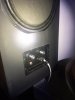
Funny the things you forget when you don't touch things for awhile. Here is the backplate of that ESS bookshelf pic I posted. It does have a circuit breaker. I had forgotten this. I also had ESS speakers protected by breakers when my errant stepson tried to operate the system when I was out of town. Happened twice. Little bastard.

ESS Bookshelf Rear Plate.JPG
 
There are two capacitors in the crossover. Both are 75 volt with one being 26uf and the other 75uf. Reading some posts both here and other forums, ESS must have had running changes to the network. I have read others finding 3 caps, a 26uf, 44uf, and 75uf. By the way, I will be putting in Daytons: 75 uf and a combo 25uf+1uf.

David
 
ESS certainly made production run changes to a number of their speakers. If you have not found it yet, there is a schematic for the AMT 1A bookshelf on the ESS website. I think pg 16 in the download section. Check that out. There certainly might be some commentary from Automojo or Porkloin who know what they are doing with recapping. Not my specialty.
 
Thanks for the lead jcidave. I never knew there was a download section on the ESS site...not easy to find for it is buried in the Media section. Looked at the schematics of the three variations of the AMT 1a. The 'Bookshelf' version has 2 caps (26uf and 75uf) which differs from the "Monitor" (26uf, 45uf, 75uf) and the floor standing AMT 1a (26uf, 45uf, 75uf x 2).

David
 
Replace with the values on your crossovers.
You should be fine.
IMHO stay away from the Solens in the Heil circuit.
I would recommend Mundorf Evo Oils.
Or 2/3 Mundorf Evo Oils, and 1/3 Jantzen Superior Z's (22uf evo oil-5.6uf Superior Z)
The 75's Dayton's or Jantzen standard Z caps are fine-the 26uf are where I would use the better caps.
I found the Dayton's to be blah with the Great Heil, a kind of greying out. The Mundorf Evo Oil's by them self are very clean and clear-with out being bright.
Solens are bright-and emphasize "s" and "t"'s-no good!
As long as the replacement values are within 10%+/- you should be fine.
Adding the superior Z's to the mix gives a more smoother and fuller sound.
 
Last edited:
Funny the things you forget when you don't touch things for awhile. Here is the backplate of that ESS bookshelf pic I posted. It does have a circuit breaker. I had forgotten this. I also had ESS speakers protected by breakers when my errant stepson tried to operate the system when I was out of town. Happened twice. Little bastard.

View attachment 1943981
These can be a issue over the years-intermittent or complete failure-you could easily add a fuse holder-1amp fast blow
 
These can be a issue over the years-intermittent or complete failure-you could easily add a fuse holder-1amp fast blow
This breaker here protects the entire system, not just the Heil. The breaker in the OPs system protects the whole system, not just the Heil. A one amp fast blow. Sure that will work, but he will pop it prematurely. If he was going to fuse just the Heil, yeah a one amp fast blow. Since he has the 1A Bookshelf. it won't be so easy to mount an accessable fuseholder just for the Heil, but it could be done.
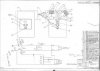
I am looking at the schematics on the ESS website. I am trying to figure out the amp rating of the breaker for the 1A bookshelf. its either 1.5 A or 4.5 A. I would think 4.5 is too high. Maybe someone can expand the view.
 
This breaker here protects the entire system, not just the Heil. The breaker in the OPs system protects the whole system, not just the Heil. A one amp fast blow. Sure that will work, but he will pop it prematurely. If he was going to fuse just the Heil, yeah a one amp fast blow. Since he has the 1A Bookshelf. it won't be so easy to mount an accessable fuseholder just for the Heil, but it could be done.
I am looking at the schematics on the ESS website. I am trying to figure out the amp rating of the breaker for the 1A bookshelf. its either 1.5 A or 4.5 A. I would think 4.5 is too high. Maybe someone can expand the view.
Huh_I thought it was just for the Heil-interesting.
If thats the case just leave it unless it goes bad.
If so-too much current explain why they go bad.
2 versions of the AMT3-one uses a 2 amp for mid and high.
Other 1.5amp for mid-1 amp for Heil.
I don't think I have seen a speaker breaker greater then roughly 2 amps.
 
Last edited:
To me protecting speakers always makes sense. Porkloin's comments above confirm it. The speaker threads in AK are rife with people fixing blown drivers. Many more speakers need protection that dont have it. I dont think you have to replace the breakers. But if you want to and cant find an acceptable replacement, a fuse holder will work. If you cant do the installation in the crossover board, run the wire across the 2 lugs on the circuit breaker and use an external in line fuse holder on one end of the speaker wire. ESS recommends a 3AG 2 amp fast blow fuse on the AMT 1, AMT 1 Tower and AMT 4 which should give similar protection to your speakers.
A3.jpeg
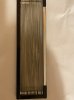
Original AMT3 diaphragm-this one was down 1.5-2 db
I agree-especially the smaller Heils-sometimes they go way down in db-till they totally go out-or just go out
A fuse/breaker is cheap insurance-but I do think if you can find a way to replace the breaker with a fuse-I would still be likely to opt for that.
Eventually it seems breakers fail over time.
 
Last edited:
Tweeter are more delicate than woofers, which is why you'll see breakers, polyswitches and fuses in the tweeter leg of a crossover.
I drive my gear like a sedated Grandma, but I had an amp go berserk and pop the fuses on my AMT-3's. If that fuse hadn't been there, I'm sure I'd be out the $160 for a pair of diaphragms.


NOTE: In the case of my Rock Monitors, the fuse protects the "transition" driver and the great Heil.

View attachment 1942207

Other drawings, including this AMT-1 schematic, have the fuse protecting everything.

View attachment 1942212
Ha!
Better look at your diaphragms..
A3.jpeg
 
Back
Top Bottom