• The move to the new server is done. There are some software and database maintenance updates in process. This has us passing the hat around to help out. We appreciate any donations. Seriously, even a dollar helps. The payment page may be found here - https://www.audiokarma.org/support.html

First Power-up in 55 Years - Need Advice

While replacing all the frayed wire inside, I would replace all the lytics in there at the same time. You just can't deal with the unknown X,Y,Z all together so eliminate all the 50 years old problem caps out of the equation first.

Yep, I'm making a list. I think I want to preserve the original appearance as much as I can so I will be stuffing the existing cans. I may also replace the PIO caps as well.

Thanks for the thoughts.

Joe Y
 
I've seen the 12B4 used in televisions, power supplies as a pass element,and my old Waveforms signal generator uses them.Other than DIY, I think Joe's amp is the first ''commercial'' audio product that I've ever seen that used them in an audio role. I really like this tube,it reminds me of a 6J6 on steroids:)

And changing ALL of the caps,not just the electrolytics,would be your best bet.And,as usual,check all of the carbon composition resistors for drift,especially the higher values.
 
I've seen the 12B4 used in televisions, power supplies as a pass element,and my old Waveforms signal generator uses them.Other than DIY, I think Joe's amp is the first ''commercial'' audio product that I've ever seen that used them in an audio role. I really like this tube,it reminds me of a 6J6 on steroids:)

And changing ALL of the caps,not just the electrolytics,would be your best bet.And,as usual,check all of the carbon composition resistors for drift,especially the higher values.
I do plan to replace all the caps.
Do you have any recommendations for the coupling counts? They are rated at 4uf 600 V.
 
I just discovered this super cool feature: the tube array is built on a hinged platform. What a great idea! Just remove 2 screws and the top flips over exposing the underside of the socket cluster.

This was a common trick in organ tone generators. Lots of tubes and electronics arranged in racks. You could pull out a rack simply by removing a few cottor pins, then flip the entire rack down once it cleared the other banks of electronics. You would just pull out the rack to replace a tube or adjust the frequency output of a single tone. You would flip the entire rack when you had to chase down a bad component like a leaky cap.
 
There is no better tube tester than the amp itself - both for static cathode bias current, and for dynamic signal cathode current (gain-gm checking).

Its not too practical to consider inserting a 10 ohm current sense resistor between each pin 1 and the common cathode bus (perhaps moved from pin 1 to pin 6), and then add in a loom of cathode sense wiring to a say a bank switch, and then to a meter or terminals for an external meter. One alternative to sensing 'in situ' is to make up a spacer 'bias' socket with an in-built cathode sense resistor, but that would be not too practical to move around if it meant power cycling the amp to move from one tube to another. But then again, maintenance of such a large array of tubes in parallel is the key issue I guess.

You would likely need a lab grade uV DC meter with good mains hum rejection to measure static grid leakage across all the 100 ohm stoppers, but that could be another worthwhile maintenance test.

You could also consider checking if the heater loop could be conveniently be broken in to 2-3 groups, and having 2-3 feed points to split up that 18A flowing out via wiring from one socket.
 
While everyone is entitled to their own opinion,I don't subscribe to the boutique capacitor philosophy.And paper in oil is what happens under the old Nortons in my garage.

My personal preference for film caps are either Solen or Illinois. I like both,but usually go with Solen because I've been using them for what seems like forever,never had a failure,and their warehouse is a 30 minute drive.While they do offer some ''exotic'' models,I only use the P-series or the Film and Foil Polypropylene,depending on required value/voltage.Either are good choices.

For a 4mfd@600v:
http://solen.ca/products/capacitors/fast-capacitors-630v-1500v-ppe-ppm-pesg-polypropylene/ppe390/
 
While everyone is entitled to their own opinion,I don't subscribe to the boutique capacitor philosophy.And paper in oil is what happens under the old Nortons in my garage.

My personal preference for film caps are either Solen or Illinois. I like both,but usually go with Solen because I've been using them for what seems like forever,never had a failure,and their warehouse is a 30 minute drive.While they do offer some ''exotic'' models,I only use the P-series or the Film and Foil Polypropylene,depending on required value/voltage.Either are good choices.

For a 4mfd@600v:
http://solen.ca/products/capacitors/fast-capacitors-630v-1500v-ppe-ppm-pesg-polypropylene/ppe390/
I can certainly respect your opinion and I can definitely respect that price. Thanks for the great tip.
 
Oil caps often held up well, but not always. Might be worth testing them with a cap tester that will run them up to full voltage.

I'm also not an exotic cap guy. Good reliable film caps do me fine.
 
Do you have any recommendations for the coupling counts? They are rated at 4uf 600 V.
I also definitely recommend testing those on an insulation resistance tester at standard 500VDC. On a more common amp, if those caps start to leak and you don't periodic test or have some other alarm then lots of tubes could get stressed.
 
So, I got little time to play this evening and was able to connect all the dots.

I have here all (8) chassis - 2 power amps, 2 power amp power supplies, 2 preamps, 2 preamp power supplies.
I connected a pair of old car speakers and gave it a test. See the net post.
 

Attachments

  • image.jpeg
    image.jpeg
    118.2 KB · Views: 54
Last edited:
Yep, I'm making a list. I think I want to preserve the original appearance as much as I can so I will be stuffing the existing cans. I may also replace the PIO caps as well.

Thanks for the thoughts.

Joe Y

All Good thoughts there! Stuffing the cans and keeping the aesthetics as much as original deserves a well respected hats off!

She lives!
I think she needs a name.


That's Awesome! It's surprising they still crank up a good tune without much effort. But then, I would do the full recapping before everyday use.

Got OTL? (GOTL) :beerchug:
 
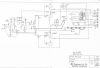
Only 4 output tubes per channel? Is this a schematic for a lower power model? Or is this one of those "repeat output tube count" type deals?
 
Back
Top Bottom