• The move to the new server is done. There are some software and database maintenance updates in process. This has us passing the hat around to help out. We appreciate any donations. Seriously, even a dollar helps. The payment page may be found here - https://www.audiokarma.org/support.html

Fuse Protecting multiple speakers

Speaker fusing has nothing to do with the amp. It has to do with speaker. It protects the speaker independent from the amp since there is nothing in the amo to monitor or regulate the current output.

This amp, Phase Linear 400 II has no speaker protection. It clearly states that in the manual and provides a disclaimer and recommends speaker fusing.
 
tape out is sometimes without control of anything ..check the manual .. headphones will have control but might be high level . be careful with volume level
 
tape out is sometimes without control of anything ..check the manual .. headphones will have control but might be high level . be careful with volume level

I have been VERY Careful. Do you know if the equation works as I interpret? Where P is total Pn of all speakers in series and 4R is a constant?
 
Speaker fusing has nothing to do with the amp. It has to do with speaker. It protects the speaker independent from the amp since there is nothing in the amo to monitor or regulate the current output.
no real solution then apart from an external protection circuit that monitors dc .like many amplifiers have built in ..
 
I have been VERY Careful. Do you know if the equation works as I interpret? Where P is total Pn of all speakers in series and 4R is a constant?
i am not good at maths .. i am also tone deaf ..but i know if things arent right and are about to blow up .. yes that might seem odd to you but i know what i am doing from experience .
 
cool. I guess then If I wire 4 speakers in series with a total of 225 W combined then the fuse I would use is 2.65 Amps of the Phase Linear + terminal for left and right channels?
 
I wonder if there is someone who could answer? I =sqrt(P/4R) in my case speakers are different Watts and all are same ohm rating. So I = sqrt(225/32). I = 2.65. Maybye someone will know.
 
Mike, I believe what you are experiencing here is a little rejection, because what you want to do violates many of the tenets of audiophiles. I mean, mixing all of these dissimilar speakers will produce a loud noise, but nothing even close to the high quality sound that most of those on this board strive to achieve.

Be that as it may, the best way for you to play all four speaker systems at once is hook two pairs to each amp. Use the series connection method for the PL. The Kenwood will put the speaker's in series when you use the A & B speaker outputs.

Now the best way to handle the audio signal, is to get a preamp. Connect all sources to the preamp. Connect the output of the preamp to the input of the PL.

Connect the Record Out of the preamp to the Aux input on the Kenwood. Now you'll have the same signal going to all 4 sets of speakers and you will have two volume controls, one control for each pair of speakers sets.

As for fuses, since you are connecting everything in series, I would not even worry about it. The noise will be unpleasant enough, that you probably will NOT be cranking this all that high.

Regards,
Jerry

PS: Once you get it all connected, post here how it sounds. You still have one more step and that has to do with phase. We will deal with that at the appropriate time.

I am confused on the pre amp portion of your reply. If I run a line RCA to the pre amp from the record out on the kenwood and run an RCA from the pre amp out to the amp (PL) then what is a record out on the pre amP? The pre amp just has an in and out. No Record out. Please clear up for me. I know I am a pain in the ass but I am determined.
 
I wonder if there is someone who could answer? I =sqrt(P/4R) in my case speakers are different Watts and all are same ohm rating. So I = sqrt(225/32). I = 2.65. Maybye someone will know.

You are still not quite on the right track in terms of speakers connected in series.

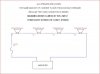
If you put the speakers in series and in the example below I have 4 speakers of different power handling (wattage) capability.

CaptureS1.JPG

Because this is a series circuit the same amount of current will flow through all of the speakers. You will need to use a fuse value to protect the lowest power rated speaker.

Think of it like a chain is no stronger than it weakest link. In this case the weakest link is the speaker with the lowest power rating. Of course the manufacturers' power rating for a speaker may or may not be an overly accurate reflection of the actual power handling of a speaker.

And remember for example a 2 amp fuse does not blow when the current through it reaches 2 amps, it blows X amount of time after 2 amps is exceeded. X amount of time depending on how much the current is over the 2 amp rating of the fuse. There are charts and ways to calculate this for audio applications on the net.

Again, when speaking of speakers connected in series it is not about the total of the power ratings of all of the speakers, it is about the maximum current that the lowest power rated speaker can handle based on its power rating and in the real world this (the current rating for the fuse) can be some what complicated to calculate for a number of reasons.
 
I am good. I understand what you are saying and did accordingly. I got it to work and it sounds fantastic. I do not know what the naysayers are saying! I will post a update when my house burns down with people cutting the rug. I need to integrate my pre amp and then I think I have it. The only crux of the deal is the tape record out to PL amp. There is no volume there. There is onlyREAL volume on the headphone jack. I have a feeling I am onto something with vintage equipment and the boundaries of sound with what I have thanks to all of you. I am sure I will f%&$ up but experience isnt something you get until just after you need it. It sounds soooo good. I wish you could hear. :)
 
I am good. I understand what you are saying and did accordingly. I got it to work and it sounds fantastic. I do not know what the naysayers are saying! I will post a update when my house burns down with people cutting the rug. I need to integrate my pre amp and then I think I have it. The only crux of the deal is the tape record out to PL amp. There is no volume there. There is onlyREAL volume on the headphone jack. I have a feeling I am onto something with vintage equipment and the boundaries of sound with what I have thanks to all of you. I am sure I will f%&$ up but experience isnt something you get until just after you need it. It sounds soooo good. I wish you could hear. :)

Mike, when you get a pre-amp, tell us what model you got. We will then be able to tell you how to hook it all up.

Are you using just the PL to power all 4 sets of speakers? If so, I think you will like the sound better with two sets on the PL and two sets on the Kenwood. You do need the preamp to make this work, however.

Regards,
Jerry
 
Hi jerry I got a adcom gtp 500. My feed to the kenwood amp and preamp are from my roku 4. They go through a tendak hdmi to hdmi audio extractor. It has rca outs so I split them using a rca splitter to feed the pre amp into cd rca jacks and the aux of the kenwood amp. From the pre amp (it has two sets of outs), I used the lab out to the phase linear and the norm out to back feed a klipsch iFi system (has nice integrated amp, sub and speakers). Follow? I know it's crazy. BTW WHATS THE DIFF BETWEEN LAB AND NORM OUTS. I BELEIVE ONE IS A PASSTHROUGH AND THE OTHER YOU CAN USE ADCOM FILTERS AND STUFF. I WAS SO EXCITED I JUST HOOKED UP. I THINK I AM RIGHT. So then I wired the sansui 2500's and the kenwood JL-770's(my test junk speakers but they sound ok) in series with a 3 amp glass fuse on the positive to the phase linear. I wired my coral bx1000's and wharfedale w25's to a passive klipsch subwoofer and then to the A and B of the kenwood stereo amp. So I have all 4 sets working , sub, and the klipsch iFi. The signal comes from the roku remember. I watch a lot of YouTube music and can control with my phone. I also have my whole iTunes library synced through the roku 4. It sounds killer but I bet there is a better way. I would like to get my Fischer x-10's in the mix but I will await your WTF and correction lecture. :). It sounds killer though. Loud as hell and crystal clear. I am open to suggestions. I also have a really cool turntable. Audio dynamics corporation 1700 quartz. Should I run that off pre amp or kenwood receiver? Plan is to get all working then split upstairs and downstairs. Thanks for all your help.

Correction! the lab is a straight through output on the adcom. The norm is capacitoir regulated. I have lab to Phase linear and Norm to Klipsch iFi.
 
Last edited:
Wow, Mike, you have an incredibly complex setup.

The only modifications I would suggest are:

1. Use norm to the PL because you want to be able to adjust via tone controls the sound coming out of your speakers to match as best you can the sound of the speaker's attached to the Kenwood

2. Use lab to the Klipsch

3. Disconnect that Y to the Kenwood and instead feed the Kenwood with the Tape Out from the Adcom. This makes the Adcom the master and whatever source you select (Aux, FM, phono, etc) will automatically be routed to the Kenwood

OK, one last thing to check is phase. So listen to all kinds of music and the turn off the Kenwood and reverse the speaker connections at the amp. Turn on and listen again. Your system will sound louder when all of the speaker's are in phase.

Regards,
Jerry
 
Will do. Thanks.

It means that I'm gonna sit down and watch what
It means that I'm gonna sit down and watch what happens here. :)
good things happened. No fire. No problems. Thanks for
Wow, Mike, you have an incredibly complex setup.

The only modifications I would suggest are:

1. Use norm to the PL because you want to be able to adjust via tone controls the sound coming out of your speakers to match as best you can the sound of the speaker's attached to the Kenwood

2. Use lab to the Klipsch

3. Disconnect that Y to the Kenwood and instead feed the Kenwood with the Tape Out from the Adcom. This makes the Adcom the master and whatever source you select (Aux, FM, phono, etc) will automatically be routed to the Kenwood

OK, one last thing to check is phase. So listen to all kinds of music and the turn off the Kenwood and reverse the speaker connections at the amp. Turn on and listen again. Your system will sound louder when all of the speaker's are in phase.

Regards,
Jerry
 
Right when I thought I was done reading this thread, Onplane brought up phasing. I don't trust my ears or my room to make sure the phasing is correct. I have to use a cd that first runs a tone in phase and then out of phase, then I can tell the difference.

So in this case, wouldn't you need to first hook up each pair one at a time to confirm phasing, but then how would you know if each of them are in phase or out out of phase with the other pairs or is that not possible or an issue?
 
Manchophile, you do realize that no one dispensing advice here would even think twice about actually performing the affront to conventional wisdom that you're asking for help on? It's your gear and money on the line here, so they're just letting their inner Rube Goldberg run amok vicariously through you.
Resist the classical audiophile urge to work real hard at creating mediocrity. Find ONE pair of speakers that you can be happy with and put your efforts into more tried and true methods of modification and restoration.
 
Question. I did it your way and there is one problem unless I have a problem. The volume on the kenwood does not control anything. I put it back my way and am going to check diff in sound and etc.Any thoughts? As far as phasing, you are saying reverse reverse the speaker connections at the phase linear? Both left and right? red to white? should it sound better or worse?
 
Manchophile, you do realize that no one dispensing advice here would even think twice about actually performing the affront to conventional wisdom that you're asking for help on? It's your gear and money on the line here, so they're just letting their inner Rube Goldberg run amok vicariously through you.
Resist the classical audiophile urge to work real hard at creating mediocrity. Find ONE pair of speakers that you can be happy with and put your efforts into more tried and true methods of modification and restoration.

I agree with you. The end game here is to get sound upstairs and downstairs with the 4 sets of speakers I have. Two up and two down. I am fine upstairs with the 40wpc kenwood and the klipch. No worries with that setup as I have been running for months. Now introduce phase linear, pre amp and the basement. I am very careful and technical. I really just came on this site to get knowledge. I also know that unless you try something new and get opposition by doing so, creates the challenge. I wake up every day and think to myself what am I supposed to do now? I guess it is what makes life interesting to me as I have pretty much done everything and more than most normal 47 year olds. It could also be a collossal mid life crisis. Who knows.
 
Question. I did it your way and there is one problem unless I have a problem. The volume on the kenwood does not control anything. I put it back my way and am going to check diff in sound and etc.Any thoughts? As far as phasing, you are saying reverse reverse the speaker connections at the phase linear? Both left and right? red to white? should it sound better or worse?

Mike, I don't understand. If you hook the Tape Out on the Adcom and hook the other end to the Aux on the Kenwood, the volume control on the Kenwood should vary the volume going to the speaker's connected to the Kenwood. Naturally you must select the Aux as the source for the Kenwood.

Now to test for phase we want to make sure the speaker's connected to the Kenwood are in phase with the speaker's connected to the PL. So turn the Kenwood OFF. Next reverse the Right speaker - take the lead going to the Red terminal and put in on the Right Black terminal. Put the lead that was on the black terminal and connect it to the Right Red terminal.

Now do this exact same reversal on the Left Speaker lead.

Turn the Kenwood on and listen to it's speakers as well as the speaker's connected to the PL. You need all 4 pairs running to determine which way sounds the loudest.

Regards,
Jerry
 
Last edited:
Back
Top Bottom