

You are using an out of date browser. It may not display this or other websites correctly.
You should upgrade or use an alternative browser.
You should upgrade or use an alternative browser.
Has anyone replaced a Dual 1019 base/plinth with custom?
- Thread starter bobspets
- Start date
Register to hide this ad


Luthierman
Introverted extrovert
Use the existing cutout as a template. You can tape paper down and rub the edges with a crayon or something of the like. Cut out your rubbing template with an exacto blade and trace that on to your new piece of wood. Build your sides based on that. Make sure you make it deep enough. Simple enough?

Looking for folks who used non-standard materials like marble or others
Funny you should say that but I was just at Home Depot looking at tiles to add to the sides of a 1019 base I have. I know what I am planning is not what you seem to have in mind but is more a way of improving what I already have.
I think what you are doing is something many of the folks at Lenco Heaven like to do with their idlers. There are some impressive slate, concrete or other examples over there. Mine will just be a pale hybrid by comparison.
I have a nice looking but unusually dimensioned base for the Dual. This was installed as the "alternate" turntable in a drawer in a large custom console that also had a Thorens TD-124 and a full H/K Citation tube system. It's very tall at about 7" by around 18 x 15. I like the width and depth but the height was too much.

Dual 1019 by Buhduh, on Flickr
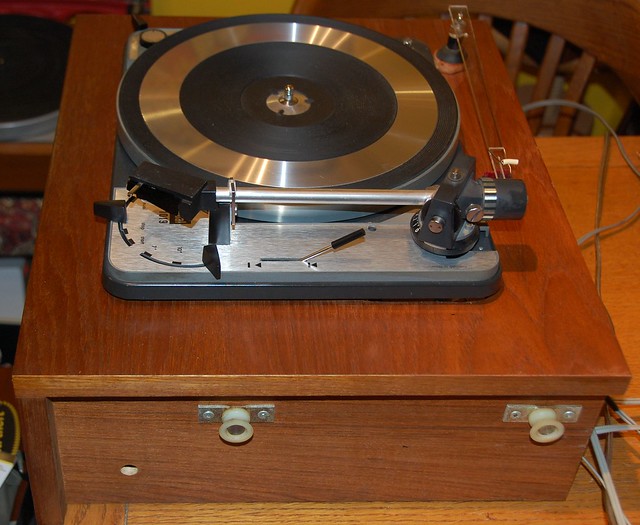
Dual 1019 side by Buhduh, on Flickr
I have removed the drawer glides and just last weekend cut the height down to a little less than 4". The piece I cut off the front has been glued on the back (which was open).
The next step is to add something to the sides. The intent is to cover the holes left from the drawer hardware, partially fill the 3/4" deep space but still leave a lip which helps if I need to pick it up, add something unique in the esthetic department and increase mass. I plan to keep the suspension.

Dual 1019 3 by Buhduh, on Flickr

Dual 1019 4 by Buhduh, on Flickr
Funny you should say that but I was just at Home Depot looking at tiles to add to the sides of a 1019 base I have. I know what I am planning is not what you seem to have in mind but is more a way of improving what I already have.
I think what you are doing is something many of the folks at Lenco Heaven like to do with their idlers. There are some impressive slate, concrete or other examples over there. Mine will just be a pale hybrid by comparison.
I have a nice looking but unusually dimensioned base for the Dual. This was installed as the "alternate" turntable in a drawer in a large custom console that also had a Thorens TD-124 and a full H/K Citation tube system. It's very tall at about 7" by around 18 x 15. I like the width and depth but the height was too much.
Dual 1019 by Buhduh, on Flickr
Dual 1019 side by Buhduh, on Flickr
I have removed the drawer glides and just last weekend cut the height down to a little less than 4". The piece I cut off the front has been glued on the back (which was open).
The next step is to add something to the sides. The intent is to cover the holes left from the drawer hardware, partially fill the 3/4" deep space but still leave a lip which helps if I need to pick it up, add something unique in the esthetic department and increase mass. I plan to keep the suspension.
Dual 1019 3 by Buhduh, on Flickr
Dual 1019 4 by Buhduh, on Flickr
That is an interesting setup. What is your intention with the tiles?

Interesting base for the 1019, Andrew. I've seen similar ones, but never that deep! I'm trying to decide what eventually to do with my 1219 base once I get the rest of the table 100% up to snuff. It seems to me that if you're going to retain the suspension then the mass of the plinth is of less importance than its not adding resonances to the mix maybe? I'm thinking about adding dampening to the existing base and also to the top plate etc. of the deck itself. Also some good vibration absorbing feet. I suspect that going without the suspension would alter the character of the table. Maybe not for the worse, but if you basically like it as is maybe not such a desirable thing to do?

Marantz 2270
Active Member

mfrench
Addicted Member
Looking for folks who used non-standard materials like marble or others
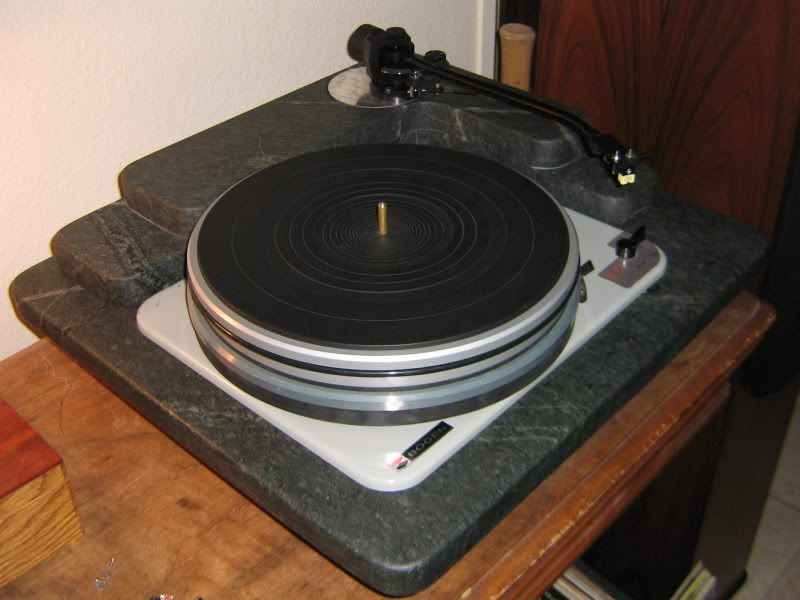
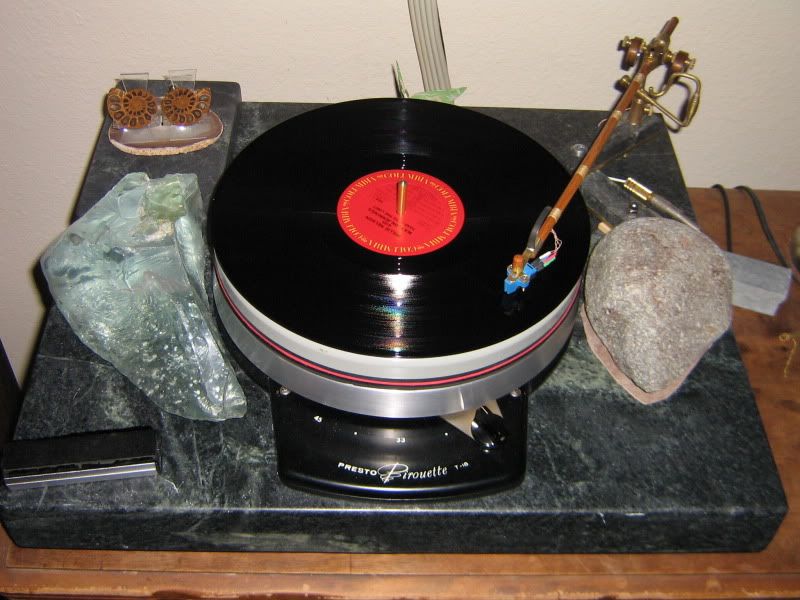
OK,…. I don't have a Dual deck, but, I have worked with stone as a plinth material; specifically, soapstone. Please tolerate the presence of the Lenco/Bogen/Presto deck in the thread.
I can highly recommend soapstone as a substrate, in regard to its ease of workability. Its a very inert sounding material when given the knuckle-rap test; where granite rings when knuckle-rapped, soapstone thunks.
The B51 deck, below, is my daily driver deck. The T18 has not been used for a year, due to moving, and having its power supply buried in moving boxes out in the garage storage.
Bogen-Presto B51 heavy platter mod, on soapstone:
http://www.audiokarma.org/forums/showthread.php?t=377588
Presto Recording Corp. T18 Pirouette, on soapstone:
http://www.audiokarma.org/forums/showthread.php?t=380100

OK,…. I don't have a Dual deck, but, I have worked with stone as a plinth material; specifically, soapstone. Please tolerate the presence of the Lenco/Bogen/Presto deck in the thread.
I can highly recommend soapstone as a substrate, in regard to its ease of workability. Its a very inert sounding material when given the knuckle-rap test; where granite rings when knuckle-rapped, soapstone thunks.
The B51 deck, below, is my daily driver deck. The T18 has not been used for a year, due to moving, and having its power supply buried in moving boxes out in the garage storage.
Bogen-Presto B51 heavy platter mod, on soapstone:
http://www.audiokarma.org/forums/showthread.php?t=377588
Presto Recording Corp. T18 Pirouette, on soapstone:
http://www.audiokarma.org/forums/showthread.php?t=380100
Wow the look is certainly striking. Please compare/contrast the sound of the original and new base
mfrench
Addicted Member
Thanks.
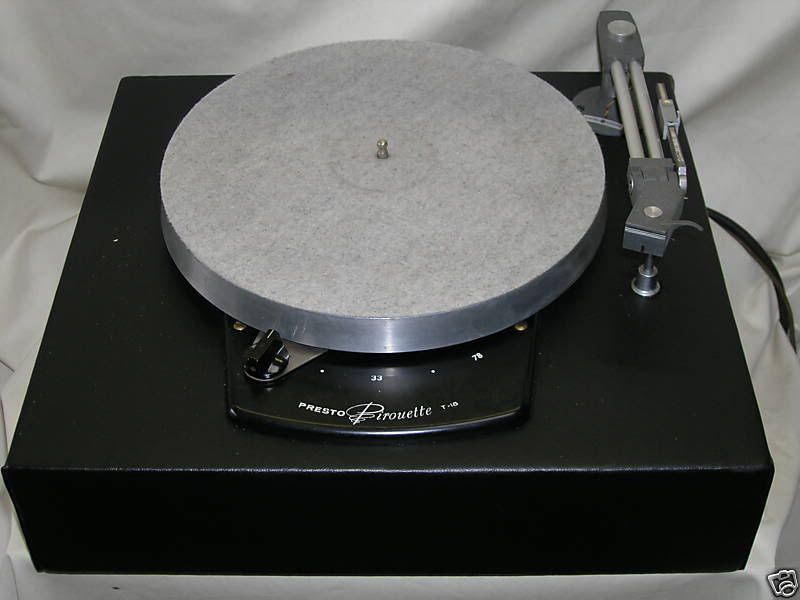
The T18 came to me like this: on a thin plywood base with lots of reverberant space inside, a mono tonearm without cartridge, both circa early-mid 50's. Its motor dogged me in trying to get it to operate without vibrating when it warmed up. So I redesigned its driveline to that of a modern DC motor, and its matching controller driver. I kept it in its original appearance, and renovated the under platter driveline.
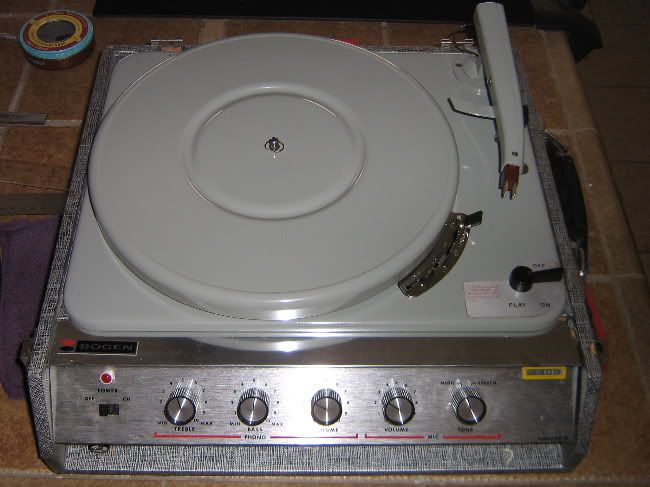
The B51, my daily driver, came to me like this, as a suitcase kit (TT, mono amp, single speaker). It did not have a headshell, and the amp was dead.
So, neither of those examples had a critical before and after comparison.
I did get a chance to run the B51 on a set of soup cans as a skeletal plinth (read: no base), and with a quality cartridge and unipivot tonearm, and it did sound quite nice. But this was also after I'd converted it from a light platter deck to a heavy platter deck. I also did a bunch of work to the plinth to create a bearing brace for the platter bearing to give solid rigidity to the top plate to keep it from flexing, and damp bearing vibration and noise, off into the soapstone.
So, the decks were essentially unheard prior to the plinth building, and the plinths are fairly tricked-out custom builds that you can really only accomplish in building it yourself (or be ready to kickdown some serious money to get it built).
I'm a live music recording aficionado, having 30 years of mastering behind my belt. I've developed a very critical and educated ear in that time. These two decks have been in my first string playback lineup for years now, with no desire to change that
The T18 came to me like this: on a thin plywood base with lots of reverberant space inside, a mono tonearm without cartridge, both circa early-mid 50's. Its motor dogged me in trying to get it to operate without vibrating when it warmed up. So I redesigned its driveline to that of a modern DC motor, and its matching controller driver. I kept it in its original appearance, and renovated the under platter driveline.
The B51, my daily driver, came to me like this, as a suitcase kit (TT, mono amp, single speaker). It did not have a headshell, and the amp was dead.
So, neither of those examples had a critical before and after comparison.
I did get a chance to run the B51 on a set of soup cans as a skeletal plinth (read: no base), and with a quality cartridge and unipivot tonearm, and it did sound quite nice. But this was also after I'd converted it from a light platter deck to a heavy platter deck. I also did a bunch of work to the plinth to create a bearing brace for the platter bearing to give solid rigidity to the top plate to keep it from flexing, and damp bearing vibration and noise, off into the soapstone.
So, the decks were essentially unheard prior to the plinth building, and the plinths are fairly tricked-out custom builds that you can really only accomplish in building it yourself (or be ready to kickdown some serious money to get it built).
I'm a live music recording aficionado, having 30 years of mastering behind my belt. I've developed a very critical and educated ear in that time. These two decks have been in my first string playback lineup for years now, with no desire to change that

Gang-Twanger
Resident Wharfedaliophool
Interesting base for the 1019, Andrew. I've seen similar ones, but never that deep! I'm trying to decide what eventually to do with my 1219 base once I get the rest of the table 100% up to snuff. It seems to me that if you're going to retain the suspension then the mass of the plinth is of less importance than its not adding resonances to the mix maybe? I'm thinking about adding dampening to the existing base and also to the top plate etc. of the deck itself. Also some good vibration absorbing feet. I suspect that going without the suspension would alter the character of the table. Maybe not for the worse, but if you basically like it as is maybe not such a desirable thing to do?
I'd like to do the same thing. I really like the stock sound of the 1019, so I'd like to start off by dampening the existing plynth, but I don't know what not-terribly-invasive method works best. I've heard people mention putting bags of dry sand or fishtank rocks on each inside-corner of the plynth, so I might try that first. Just haven't had a good opportunity yet, plus I'd rather be sure what's best for my style plynth (until I can get a better one).
Gang-Twanger
Resident Wharfedaliophool
By the way, beautiful Bogen there, mfrench. I have a real fondness for those early to mid '60's tables. I assume it's solid-mounted to the plynth (i.e., the table's original suspension is no longer in play). Did that thing even HAVE springs on it (since it was part of another unit)? I read through the thread, but I get lost in the technicals and building stuff (Not exactly a DIY'er).
You also have a pair of W90's, don't you?
You also have a pair of W90's, don't you?
Last edited:
mfrench
Addicted Member
By the way, beautiful Bogen there, mfrench. I have a real fondness for those early to mid '60's tables. I assume it's solid-mounted to the plynth (i.e., the table's original suspension is no longer in play). Did that thing even HAVE springs on it (since it was part of another unit)? I read through the thread, but I get lost in the technicals and building stuff (Not exactly a DIY'er).
You also have a pair of W90's, don't you?
thanks! I do also like the lines of the older decks, very much.
B51 questions;
Yes, solid mounted to the plinth, and then braced from below with an upward thrust applied to the base of the platter bearing housing; not undue upward lift thrust, but more to carry the load of the platter through to the plinth. That is something that I did with both tt's, and stone plinths that I've shown in this thread.
It did not have a sprung suspension. The deck was bolted to the "suitcase" frame.
A commonly held theory is to remove the suspension in these old idlers; not sure that I agree with that totally, or not, given positive experience with another suspended Bogen TT pair. But I went with the popular convention of no suspension springs, bolting directly to the plinth.
W90's?
No.
Bozaks, yes. B-302A Urbans. I love them, and, so does the spousal unit (more importantly).
Please ask about the technical stuff. I might not have an answer, but I'll sure smear as much wild-ass-guess theory as I can.
I have built maybe a half dozen plinths, in wood and stone, and worked my way through figuring out some thinkers in those efforts, so maybe i can help.
And adding for clarity:
I have no issue with granite as a plinth material, as opposed to what I'd suggested in my earlier post when I suggested that it rings. Properly executed granite can be a nice plinth layer; perhaps as part of a CLD strata layer (attached to other materials). I've also seen it used exclusively, and the builders have liked the results.
I prefer the soapstone for my builds as its a fairly easily worked stone. Whereas granite is a 10/10 on the difficulty scale, soapstone is a 3/10 (maybe even a 2/10)
Last edited:
OK,…. I don't have a Dual deck, but, I have worked with stone as a plinth material; specifically, soapstone. Please tolerate the presence of the Lenco/Bogen/Presto deck in the thread.
I can highly recommend soapstone as a substrate, in regard to its ease of workability. Its a very inert sounding material when given the knuckle-rap test; where granite rings when knuckle-rapped, soapstone thunks.
The B51 deck, below, is my daily driver deck. The T18 has not been used for a year, due to moving, and having its power supply buried in moving boxes out in the garage storage.
Bogen-Presto B51 heavy platter mod, on soapstone:
http://www.audiokarma.org/forums/showthread.php?t=377588
Presto Recording Corp. T18 Pirouette, on soapstone:
http://www.audiokarma.org/forums/showthread.php?t=380100
thanks! I do also like the lines of the older decks, very much.
B51 questions;
Yes, solid mounted to the plinth, and then braced from below with an upward thrust applied to the base of the platter bearing housing; not undue upward lift thrust, but more to carry the load of the platter through to the plinth. That is something that I did with both tt's, and stone plinths that I've shown in this thread.
It did not have a sprung suspension. The deck was bolted to the "suitcase" frame.
A commonly held theory is to remove the suspension in these old idlers; not sure that I agree with that totally, or not, given positive experience with another suspended Bogen TT pair. But I went with the popular convention of no suspension springs, bolting directly to the plinth.
W90's?
No.
Bozaks, yes. B-302A Urbans. I love them, and, so does the spousal unit (more importantly).
Please ask about the technical stuff. I might not have an answer, but I'll sure smear as much wild-ass-guess theory as I can.
I have built maybe a half dozen plinths, in wood and stone, and worked my way through figuring out some thinkers in those efforts, so maybe i can help.
And adding for clarity:
I have no issue with granite as a plinth material, as opposed to what I'd suggested in my earlier post when I suggested that it rings. Properly executed granite can be a nice plinth layer; perhaps as part of a CLD strata layer (attached to other materials). I've also seen it used exclusively, and the builders have liked the results.
I prefer the soapstone for my builds as its a fairly easily worked stone. Whereas granite is a 10/10 on the difficulty scale, soapstone is a 3/10 (maybe even a 2/10)
I appreciate all the information. Still not convinced I want to do a conversion. Due to my lack of technical skills I would probably have someone else do the build.

This is my custom plinth on my dual 1019. Very happy with the result. There's no bottom plate. The sound is very solid on this neat little turntable.
That is a handsome looking plinth. What type of wood is it...Poplar? I like to make one like this using walnut that I have. Is it a hollow box with a recessed top plate that the turntable mounts to, like the original on steroids? How did it change the sound compared to a factory base?
That is a handsome looking plinth. What type of wood is it...Poplar? I like to make one like this using walnut that I have. Is it a hollow box with a recessed top plate that the turntable mounts to, like the original on steroids? How did it change the sound compared to a factory base?
I'm curious as to the answer to those questions as well.


