• The move to the new server is done. There are some software and database maintenance updates in process. This has us passing the hat around to help out. We appreciate any donations. Seriously, even a dollar helps. The payment page may be found here - https://www.audiokarma.org/support.html

Help Needed Reusing an Old Desktop Computer to Stream HD Audio from the Internet.

Would using a HDD over a SSD for media storage slow the system enough to notice performance issues while listening? It seems counterintuitive to have the OS on the faster SSD and access to the media on slower larger HDD? The other side of this is the SSD can move to the next system, which I'd build using better newer/new components, provided I like the concept and access. The OS is going to consist of the Daphile files and whatever space they need to occupy to run. The other drive is going to be all music. I was leaning toward a 500GB or 1TB SSD for the actual media. Wouldn't any 120GB drive be serious overkill simply to house the Daphile OS?

There will not be any Windows system ever loaded or operating on this machine, provided Daphile works well as a stand alone OS. Once I get everything up and running correctly, I'll begin investigating external DAC's once its going. Pretty sure I can add a PCI USB 3.0 card to get speed transfer and peripheral speeds VIA USB up. I've always planned to build another computer for this purpose or use one of the Core5/Core7 laptops once it's time to get a new one. I'd go with used parts, MB and Processor but I'm always worried I'll be getting someone else's broken junk.

With what I've learned in a few short days, you can get seriously deep into the rabbit hole building one of these things. Dedicated linear PS's, custom component-looking cases to sit beside other gear, fancy remotes and more. For table top remote use, I'm going to repurpose a a tablet or Kindle that are taking up space. I may do the IR blaster route so I tie it into remote control-ing everything that uses a remote, plus stuff on network, such as the TV's.
 
You want the OS on the SSD so the system runs as fast as possible on your old machine. All of my music is on an HDD (so is the OS for that matter) and I have never had a problem. No dropouts or stuttering.
 
Wouldn't any 120GB drive be serious overkill simply to house the Daphile OS?

Yes as it is only a few GB. No need to over think this. Give it a try with one HDD. With what ever you have on hand. Try it out and see how it works. Don 't like it. Replace with some thing else, reinstall and try again.
The best way to see if what you have works is to just try it and see.
 
Any particular model/brand SSD and HDD recommended ? The WD Purple 2TB HDD Surveillance 67$ on Amazon Prime. 1TB's are even cheaper , 37$ for the WD Purple. Western Digital Green 120 SSD's for 32$. I'll need an adapter mount for the SSD, those are like 5$, maybe another SATA cable. Both towers came with SATA drives. The 8400 MB features 4 SATA and 1 IDE connection.
 
Any particular model/brand SSD and HDD recommended ? The WD Purple 2TB HDD Surveillance 67$ on Amazon Prime. 1TB's are even cheaper , 37$ for the WD Purple. Western Digital Green 120 SSD's for 32$. I'll need an adapter mount for the SSD, those are like 5$, maybe another SATA cable. Both towers came with SATA drives. The 8400 MB features 4 SATA and 1 IDE connection.

I would buy the cheapest possible SSD and HD possible. And I would not waste money buying adapters.

Your PC is so old that you will be hardware limited. Modern ATA drives use SATA 3 (6 Gb/s). Your early 2000 PC likely uses SATA 1, which is 150 Gb/s- 1/4 of the speed that current drives are capable of. On top of that, your system buss speed is likely barely able to keep up with the 150 Gb/s, so getting a higher speed adapter will not add any speed to your system. If the system buss cannot transfer at the rate of the drive, then the excess speed of the drive goes to waste.

If you want to buy better adapters and big, fast drives, you would be much better off upgrading to newer PC that can actually use that speed.
 
As a boot drive the transfer rate is unimportant, so it won't really matter that the SSD maxes out at 150MB/sec (if indeed it's only SATA I, which seems quite possible). The real improvement comes from the improved seek times. When adding an SSD to a computer without an extra mounting bay, I've done something as basic as tucking it into a thin space, or using double sided foam tape to stick it to the side of the power supply or cabinet.
 
Its SATA, the black/blue cable from the HDD to the MB single cable. Processor is a later Socket 775 P4 HT, Prescott 3.8GHZ by the processor numbers. There are 4 1GB DDR2 RAM Modules. FSB speed is 800MHZ, L2 Cache 1MB. Long ago, I updated the processor fan to the much quieter Dell recommended changing to a Zalman CNPS7700CU 120MM fan. The Zalman is whisper-quiet, unlike the old fan that at a full clip sounded like a fully loaded Hawker Vulcan bomber at take-off. The stock PS in tower 1, I replaced using a Corsair CX500, which has the rear panel on-off switch. It it but required some slight modification using a Dremel to massage the rear panel when replacing of the OEM PS. The Csx500 runs cooler and quieter by far and away than the stock Dell PS ever did.

Both Dimension 8400's, purchased brand new, back in March 2008. All capacitors on the MB's have been verified by their numbers, none are among those documented containing bad electrolytic formula which often caused them to swell, pop, and short, often rendering many MB's non-repairable. I purchased a spare Dimension 8400 Foxconn MB NOS before I knew which caps were installed, just in case. For 49$ in 2012, it was cheap insurance. The second 8400 tower still has stock MB fans and PS installed. I do plan to upgrade it using the same fans and PS.

For whatever reason, the Dimension 8400 would never recognise 2 sticks of 2GB DDR2 RAM as 4GB. It would only recognise 4- 1GB DDR4 modules as 4GB total. I recall there were 2 different RAM speeds at that time. When I upgraded the RAM from 2GB to 4GB, Dell sold me the slower of the available RAM speeds. As inexpensive as DDR2 RAM is today, I'll to pick up 8 new 1GB sticks of faster RAM, maxing out the RAM in both towers. There are newer BIOS updates available, both towers likely need it as they have been boxed up long term since 2014.

I purchased 2 new Toshiba laptops in 2013, special ordered, spec'd special by me. Both are Toshiba Satellite P775-S7148 laptops. They have the Intel I-5 3.1GHZ processors, 8GB of DDR3 RAM, Blu Ray burner optical drives, Harman audio, HDMI USB 3.0, media card readers, and more. I replaced the stock 500GB HDD's with Samsung 1TB SSD's for both. They really run smoking fast, but are huge and heavy, with 18" screens.

Newer still, I have another Dell laptop, Latitude E7240, Pentium I-7 4200 3GHZ, 8GB DDR3 RAM, HDMI, USB3.0, a 250GB SSD and Windows 10. No internal optical drive, I bought an external Pioneer BDR-XD05B 6X burner for it. It was free, there was a local company we did work for which went out of business. Their laptops all had some kind of Microsoft software lock and the codes were lost, non-retrievable. The only way to get around the lock was to purchase a stand-alone copy of Windows 10, erase, format the SSD. then reinstall everything from scratch. With a 14" screen, it could be used as a server, but it seems like overkill to me ATM.

Down the road, I'm thinking about building my own custom stand alone headless server from scratch, using a custom fanless case and MB. Something including the highly rated Femto clock, a Linear PS, audiophile USB, a really nice looking case that includes a basic blue VFD, front power switch and very basic front panel controls. It would seem that a UPS makes good sense as well. There are plans posted online showing various available parts used to build a really kick-ass audiophile grade DIY media server. I'm pretty sure I can build it myself from scratch. Anything except a nice fanless case, PCI buss'd Femto clock, audiophile grade USB 3.0 card( maybe, if better than the USB 3.0 on the MB's), Linear PS, I can pick up inexpensively from the local Micro Center. Most plans show using a Mini ITX form factor MB and integrated processor. Buying the rest of the parts used, the total price for hardware, including case, memory, storage, and extras still comes to well South of 1K$. Beyond that, I'd want a Linux based software. I don't know which one I'd use, maybe Daphile again, something like JRiver, or maybe Foobar 2000. Whatever it is I don't want any Windows or Apple based OS. Both use far too many resources and slow down even the best computers. I want a streamlined high quality unit that will deliver the best sound quality high resolution audio has to offer.

In the meantime, this P4 build will give me an idea of what to expect, can learn about most everything and get my feet wet for cheap, before investing the money. I'm not hurting for a DAC, either DAC in my current Mc gear will be more than sufficient, even for an audiophile grade server. That leaves me with the single task of getting the audio signal VIA SPDIF or Optical from the server to my DAC's. I don't mind saying I'm really stoked. As I currently own multiple formatted 3.5" 160GB and 350GB HDD's I pulled from Scientific Atlanta Recordable cable boxes I can use to get things cooking. Later, I'll start collecting SSD's and other parts a piece or 2 at a time, SSD's first, case etc, 'till I have everything I need to do a custom build the way many folks here would likely recommend, It's a steep but do-able learning curve, using the Dell 8400's will allow me to learn as I go, experiment with different options without worry of killing anything valuable or tieing up money until I'm ready for to go big-time.

A big thank-you to everyone so far for all the great information posted, and the time everyone has spent replying, answering my dumb questions. Keep the ideas coming. Hopefully, this thread will help the next person who wants to do the same things, and the next and so on..Meantime, I'm getting everything together. When I start putting it all together I'll try to post photos and describe the process and things that I run into.

 
Last edited:
My opinion, for what it may be worth (2¢) is this.

1: Yes the P4 is old. It will run most Linux versions. Absolutely do not waste a Windows license on it.

2: Once the OS is booted it will run fine with a regular HDD, but you can get a nice Kingston SSD from Amazon for cheap, and it can always be repurposed into a laptop or other PC later if desired. Can't go wrong for $23
https://www.amazon.com/Kingston-120...?keywords=kingston+ssd&qid=1582594619&sr=8-10

3: Again, buying a pair of 1tb or 2tb hard drives (the WD Purple are great) for storage of media is a fine idea, as they can also be moved to a more modern/different system when the time comes.

4: As long as any hardware you buy is something you can use in a brand new computer as well I don't think it will be wasted.

5: Once set up properly and working great, a media server is extremely convenient. That is why they exist.

6: The cost of the power to run the PC will be offset by the LED bulbs you surely have installed to replace your incandescent light bulbs by now. ;)

7: Newer used computers can be bought from eBay for very reasonable prices, and the performance improvements vs the P4 are similar to the LED vs Incandescent comparison. With a Linux host OS on your boot drive, when you are ready to upgrade your server it should be as easy as plug and play with the drives. If not, you know how to set it back up.

Have fun. :)
 
The second 8400 tower still has stock MB fans and PS installed. I do plan to upgrade it using the same fans and PS.
IMO, this would make the project not worthwhile. I wouldn't spend money on anything that couldn't be used on a newer computer. So sure, get a new HDD and SSD, maybe a USB sound card if you need, but don't buy a power supply, a heat sink/fan combo or any DDR2 RAM. I suspect that even with this old architecture, you won't be maxing out the CPU and the fans should stay relatively inaudible.
 
...I suspect that even with this old architecture, you won't be maxing out the CPU and the fans should stay relatively inaudible.
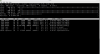
I doubt LMS will not come anywhere close to maxing out the CPU or the RAM. Here are two screenshots when running a 24/96 file.

Logitech Media Server - Google Chrome_013.png t1700_011.png
LMS uses barely any of the Xeon's resources or the RAM which is only 4GB.

My player is a Pogoplug v4 which runs squeezelite flawlessly on a Foreceon CPU and .125 GB of RAM.

The P4 will be able to do the job.
 
LMS uses barely any of the Xeon's resources or the RAM which is only 4GB.

My player is a Pogoplug v4 which runs squeezelite flawlessly on a Foreceon CPU and .125 GB of RAM.

The P4 will be able to do the job.
What's pegging those 3 of 4 CPUs?
 
Oh yes, plenty of LED smart bulbs. Almost everything lighting is Alexa capable ;:thumbsup:. Anything I buy will be with a nod to reusing down the road on a dedicated audiophile server build. Even the 120mm Noctua extreme quiet fans can be repurposed, same with the drives and PS. Will 100% follow all the great advice here before spending anything not repurposable down the pike, unless its dirt cheap, and maybe no even then.

Thanks for the heads up on the Kingston SSD. A pair of 2TB WD Purples make the most sense, and I'll buy them one at a time, since it'll take forever to fill 2TB let alone 4TB. By the time I fill one, I'll probably be on to a dedicated build, sometime later in the year. I have to say this is a lot of fun and I can't wait to get it all up and running...As I suspected, running Linux and not Windows OS for a dedicated music server platform sounds like it'll have plenty of speed and reserves until I get to the point where I'm ready to do a purpose designed build. :rockon:
 
What's pegging those 3 of 4 CPUs?
It is a BOINC (think Seti@home) project called Latinsquares that is pegging 3 of the 4 cores. The GPU is running a different project called Collatz conjecture. The GPU also runs at 100% but uses very little of the CPU's or RAM's resources.

Even with all of this going on LMS (squeezeboxserver) runs flawlessly whether it is my own flac library, Spotify or internet radio. This is why I am pretty sure that the OP's machine will handle the load just fine.
 
The earlier purpose built ready made streaming devices from the mid-00's into the 2010's typically used some thing less powerful than the P4 Prescott 3.8GHZ based machine I'm doing here, with really good sound quality and GUI interface. The McIntosh MS300 (currently being upgraded with the MS750 750Gb HDD) are both a rebadge of the old Escient Fireball II music servers. Aside from needing a new HD (factory HDD used is the infamously known-to-fail Maxtor 300GB) the power supply gets its electrolytic caps replaced with modern Panasonic caps replacing those on the known-to-fail diseased cap lists with the bad electrolyte formula.

These machines run really well, and do sound excellent with the files in FLAC, even the MP3 384 files sound acceptable, though MP3 is not my cup of tea. These units record analog as well, and are network ready servers accessible remotely as well as allowing up to 4 CD banks connected at one time in addition to the local files. They feature SPDIF and Optical digital outputs.,allowing for better off board DAC's to be utilised.

The only issue is the Gracenote servers for Metadata are now off-line. Another method for loading the Metadata for the discs will be needed. The MS machines can copy, rip, and burn CD's, as well as store FLAC files downloaded elsewhere or from online. As long as the files are on a network device its easy to to. My point being, is that if the older MS300 and 750 units, with their primitive processor and logic boards, can run and sound as well as they do, then any decent P4 ( I know, that was an oxymoron) should be more than sufficiently capable of powering a similar Linux-based OS WAV and FLAC internet based streaming machine that I'm building here. Others here seem to agree as well which is good news for me, or anyone looking to do something similar.

Keeping the processor cool and the fans dead quiet is all but solved, I'll recoat the processor using some on-hand Arctic Silver paste for computers, to improve heat dissipation as well as contact between the processor top and the fan-radiator assembly. The Corsair PS and the case fans are whisper quiet, having been previously replaced. With the machine in the room, noise should be a non-issue. Putting the tower in the closet next to the stereo rack is always an option. Out of side, mind, and earshot.
 
I have to admit I didn’t read this whole thread but I do have experience with streaming to old PCs. First make sure the service you want to use supports the OS. AMHD does not support XP. Not even through a web browser. It will play on Linux Mint on an old PC but not with an App just through a browser. Qobuz also will play on Linux through a browser. I can’t answer that one on XP though.
Also my sound quality was vastly improved just with an inexpensive usb DAC vs the old pc sound card. I would consider that a must.
 
The earlier purpose built ready made streaming devices from the mid-00's into the 2010's typically used some thing less powerful than the P4 Prescott 3.8GHZ based machine I'm doing here, with really good sound quality and GUI interface.
You can't really compare the two. The Mac devices have custom operating systems fine-tuned for this purpose; no doubt any unnecessary cruft has been removed. They might have ASICs as well to do some decoding in hardware. That's not to say that I think the P4 won't be up to the task; I already said that it would be in my earlier post. Just wanted to point out that your logic doesn't necessarily follow.
 
I'll be using the above suggested Daphile OS, which I understand to be a Linux based standalone program, installed on the server's SSD. I'll be experimenting with a few audio decoding avenues. First, the stereo out's directly from the server's 192/24 sound card; second the SPDIF/Optical out, to either the Burr Brown 192/24 DAC in the MX-135 Pre-Pro. (essentially a C45 Preamp / 7.1 surround processor); third, C2500 preamp featuring TI's PCM1795 32/192KHz DAC. DAC quality shouldn't be an issue. Ether unit's DAC is uber capable of decoding WAV., FLAC and other Hi Res HD 2 channel digital audio formats. The C2500 stereo tube pre runs in whats known as pass thru mode with the MX135, providing the option to listen in tube or transistor based 2 channel audio, out to the amps anyway. Amps are the Quad Balanced MC501's, feeding a pair of XRT-20 loudspeakers.
 
You can't really compare the two. The Mac devices have custom operating systems fine-tuned for this purpose; no doubt any unnecessary cruft has been removed. They might have ASICs as well to do some decoding in hardware. That's not to say that I think the P4 won't be up to the task; I already said that it would be in my earlier post. Just wanted to point out that your logic doesn't necessarily follow.

Ahh, I understand and see your point. The Mc MS units work and sound great for being designed in the time period they were sold in. Logically they would have trimmed the fat down and excess to essentials only to achieve this. I hadn't thought of it that way until you pointed it out. I was operating with the assumption the designers used a simple Linux based OS and essentially off-the-shelf hardware. Even still, to attain that level of performance, it follows that the hardware and software used must be far more tweaked than my bare bones off the shelf P4 dinosaur even if it runs a similar OS.

It'll be interesting to compare the two units using the same DAC to see were their strengths and weaknesses lay. That said, either way, I'd actually be disappointed if the multi-thousand dollar MS music server DIDN'T out-perform the cheaper mass produced P4 based computer released around 15 years ago! Either way this endeavour should end up be as much fun as it is about learning. Next go-round I'll purpose build something much better, using the lessons I learn from this one.
 
I've been looking to do something similar, although the computer that I have is a bit newer than yours. One thing about the P4, and you may already know this, is that it's a real power hog, so this isn't an ideal setup if you're planning on leaving it turned on all the time. If you are, you could probably pick up a used/refurbed 10-year-old business PC for about a hundred bucks and in a year or so recover the cost you've spent on electricity (I may be exaggerating a little, but that PC would probably also come with a more recent Windows license and more memory, and so would make the project easier). FWIW, I recycled all my P4s several years ago, and they'd been sitting around idle for several years before then. If you decide to continue with the PC, I'd definitely recommend going with an SSD (SSHD is really not a correct term, since HD implies a spinning disk).

For what you're looking to do, though, I wonder if you might be better off with a Google Chromecast hooked to your TV and feeding the TV's digital out to your receiver. Have you looked into any alternatives before you decided that you definitely wanted to use the PC?

Regarding hooking an SSD to the Mac Music server, this is probably doable. Normally I wouldn't put an SSD into a device with an operating system that's not meant to use one, because to maximize the drive's life you need to have TRIM support. However, since you're not going to be doing a lot of updates to the drive, it will probably last a long time (although I would recommend backing it up).

If you haven't guessed, I work in IT, and have been building computers for about 25 years, but this is my first music PC build (although I have built several NASes that I use to serve media to my TVs and stereos around the house).

Not fast enough to handle newer OS capable of using HD audio, nor audio interfaces/sound cards capable of. Core i3-i7 first generation with 8GB ram limit or higher please. Which can handle Linux or other OS capable of high resolution audio. And can handle true 64 Bit OS currently supported.
 
My opinion, for what it may be worth (2¢) is this.

1: Yes the P4 is old. It will run most Linux versions. Absolutely do not waste a Windows license on it.

2: Once the OS is booted it will run fine with a regular HDD, but you can get a nice Kingston SSD from Amazon for cheap, and it can always be repurposed into a laptop or other PC later if desired. Can't go wrong for $23
https://www.amazon.com/Kingston-120...?keywords=kingston+ssd&qid=1582594619&sr=8-10

3: Again, buying a pair of 1tb or 2tb hard drives (the WD Purple are great) for storage of media is a fine idea, as they can also be moved to a more modern/different system when the time comes.

4: As long as any hardware you buy is something you can use in a brand new computer as well I don't think it will be wasted.

5: Once set up properly and working great, a media server is extremely convenient. That is why they exist.

6: The cost of the power to run the PC will be offset by the LED bulbs you surely have installed to replace your incandescent light bulbs by now. ;)

7: Newer used computers can be bought from eBay for very reasonable prices, and the performance improvements vs the P4 are similar to the LED vs Incandescent comparison. With a Linux host OS on your boot drive, when you are ready to upgrade your server it should be as easy as plug and play with the drives. If not, you know how to set it back up.

Have fun. :)

Big problems: Linux today is not 32 bit, it IS 64 bit. Most mainstream distros are not developing 32 bit at all, or spin offs which are specialty only, and limited on what they can support and do. Core2 Duo barest minimum today, and Core i preferred. And what is needed to handle modern graphic interfaces in mainstream use. P4 TOO OLD. Mate the barest minimum acceptable desktop today, and most use fancier today like Cinnamon or KDE.
 
Back
Top Bottom