

You are using an out of date browser. It may not display this or other websites correctly.
You should upgrade or use an alternative browser.
You should upgrade or use an alternative browser.
How many watts is your Amplifier @8ohms
- Thread starter OnTheBlitz
- Start date


C.A.P
Well-Known Member
One cannot come without the other when tied through the speaker impedance.
Misleading as many amps have big watts but not high current.. A la Pro amps and Carver Mag amps were famous for this .. Most high curent amps are A/ AB and have Torids or a great transformer .. There is something to be said about BRUTE force power

whoaru99
Epic Member
Misleading as many amps have big watts but not high current..
That's exactly why I commented.
There is no such thing as big watts but not high current.
There are pro amps that put out as much or more power at 1 ohm than the Krell you mentioned. Are you saying those are somehow "low current" watts?
Last edited:

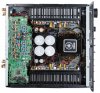
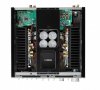
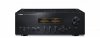
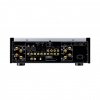
That's why my Yamaha A-S2100 Integrated Amplifier weighs ~52lbs and is only rated for 90WPC @8ohms. It's got a massive Transformer, ample capacitor storage reservoir, 58VDC BUS, and MOSFETS that are rated for well beyond 90W. Yamaha was very conservative with their rating. This amplifier surpasses amplifiers I've had that were rated for 250 WPC @8 ohms.Misleading as many amps have big watts but not high current.. A la Pro amps and Carver Mag amps were famous for this .. Most high curent amps are A/ AB and have Torids or a great transformer .. There is something to be said about BRUTE force power
Last edited:
If you have efficient speakers, you don't need much to make your ears bleed. Like the Klipsch Klipschorn 105db/1watt/1meter! Those were developed back in the late forties, when tube amps were all they had, and 10W was cranking!Funny...15 WPC in triode mode seems to be plenty. Who'da thunk.
Last edited:

PAGS
Super Member
Tekton Lores, 98 dB (allegedly).If you have efficient speakers, you don't need much to make your ears bleed. Like the Klipsch Klipschorn 104db/1watt/1meter! Those were developed back in the late forties, when tube amps were all they had, and 10W was cranking!

You'll see I made a correction, the Klipschorn is:105db/1W/1MeterTekton Lores, 98 dB (allegedly).

restorer-john
Addicted Member
There are plenty of amps I would classify as 'big watts' but not high current designs.
High current designs will happily hold their rails up and allow the output stages to source whatever current the load demands- particularly as the load impedance drops. HK made a bunch of true high current designs in the 1980s. Lots of output devices, stiff PSUs, big txformers and current limiting that was only called upon in extreme conditions. They test and sound, in the real world, much better than 1970s current limited amps of a similar 8 ohm rating.
'big watts' designs, were mainly 1970s power-wars era models, designed to hit a target 8 ohm rating. They had aggressive current limiting due to inadequate SOAR characteristics and/or insufficient heat sinking. High power silicon was expensive. Take for example the Pioneer SX1980. 273watts (tested) both channels driven at 8 ohms. 253 watts (tested) at 4 ohms. It is not a high current design. But that is understandable, it would need double the output stage and even more heat sinking area etc. It would have been even heavier than its 35kg weight. It would have cost more and no speaker at the time could have handled it for more than a few minutes. The transformer could do more, but the current limiting (to achieve FTC ratings back in the day) meant agressive limiting into 4 ohms.
Most pro amps are true high current designs. They use banks of output devices and can easily sink the entire PSU in an extreme situation. In general, they make 'consumer' amps look like toys in terms of circuit design.
Now we have lots of 4 ohm nominal speakers, high current designs are the ones we should be using. Modern speakers of a low nominal impedance should be paired with high current amplifier designs, not old 8ohm rated, 1970s current limited amps.
High current designs will happily hold their rails up and allow the output stages to source whatever current the load demands- particularly as the load impedance drops. HK made a bunch of true high current designs in the 1980s. Lots of output devices, stiff PSUs, big txformers and current limiting that was only called upon in extreme conditions. They test and sound, in the real world, much better than 1970s current limited amps of a similar 8 ohm rating.
'big watts' designs, were mainly 1970s power-wars era models, designed to hit a target 8 ohm rating. They had aggressive current limiting due to inadequate SOAR characteristics and/or insufficient heat sinking. High power silicon was expensive. Take for example the Pioneer SX1980. 273watts (tested) both channels driven at 8 ohms. 253 watts (tested) at 4 ohms. It is not a high current design. But that is understandable, it would need double the output stage and even more heat sinking area etc. It would have been even heavier than its 35kg weight. It would have cost more and no speaker at the time could have handled it for more than a few minutes. The transformer could do more, but the current limiting (to achieve FTC ratings back in the day) meant agressive limiting into 4 ohms.
Most pro amps are true high current designs. They use banks of output devices and can easily sink the entire PSU in an extreme situation. In general, they make 'consumer' amps look like toys in terms of circuit design.
Now we have lots of 4 ohm nominal speakers, high current designs are the ones we should be using. Modern speakers of a low nominal impedance should be paired with high current amplifier designs, not old 8ohm rated, 1970s current limited amps.
whoaru99
Epic Member
If you have efficient speakers, you don't need much to make your ears bleed. Like the Klipsch Klipschorn 105db/1watt/1meter! Those were developed back in the late forties, when tube amps were all they had, and 10W was cranking!
Indeed. What a K-horn can do with 10W would takes nearly 700W with a pair of speakers I have @ 86dB/W/m. Perhaps that's why I have some amps that can do 700 watts or more.
whoaru99
Epic Member
There are plenty of amps I would classify as 'big watts' but not high current designs.
That's where it run off the rails. I'm talking electrical/Ohm's Law type of relationships; volts, amps, watts, that sort stuff. Not personal definitions of what someone opines make for "high current" amp.
You can use modern Software (or Bloatware) as a similar analogy : Back in the late 70's you could have a PDP73 with 64K memory running 20 terminals and an accounting application. Now the same modern application requires 1 gig disc space and an i7 8 core processor.Indeed. What a K-horn can do with 10W would takes nearly 700W with a pair of speakers I have @ 86dB/W/m. Perhaps that's why I have some amps that can do 700 watts or more.


Carver M500t x 2
395wpc after mods
395wpc after mods
whoaru99
Epic Member
You think that speakers that are super efficient are better at reveling the nuances and minute details over a less efficient pair of speakers? I always wondered that question.
I don't believe so.
My Thiel CS3.6 are 86dB/W/m and are pretty much universally decreed as brutally revealing.

JoeESP9
ESL's & tubes since 83
You think that speakers that are super efficient are better at reveling the nuances and minute details over a less efficient pair of speakers? I always wondered that question.
No!!! IMO efficiency has nothing to do with being revealing.
You think that speakers that are super efficient are better at reveling the nuances and minute details over a less efficient pair of speakers? I always wondered that question.
Like with many things audio - personal preference.

You think that speakers that are super efficient are better at reveling the nuances and minute details over a less efficient pair of speakers? I always wondered that question.
With respect to equipment's background hiss and hum, yes most definitely! An efficient set of speakers is murder on your ears if you have a noisy eq between you pre-out and power-amp inputs without power amp attenuators.
The thing is, no one wants to hear that stuff.
Last edited:
Hiss and hum? Even if I crank my volume all the way up and have my transport paused and put my ear right up against the ring tweeter or upper mid-range, There is no hum, just a very, very, very faint hiss. At levels up to 1-2o'clock which is the max I would ever crank, there is nothing, just dead quite.With respect to equipment's background hiss and hum, yes most definitely!
The thing is, no one wants to hear that stuff.

damacman
Resident Psycho
A "high current" amp is one that can maintain its output voltage as the impedance of the load changes, even when voltage is not in phase with current. This is a function of the power supply design more than anything. Want an amp that can play a 2 Ohm 60 degree capacitive load as easily as it can a -60 degree inductive load at 4 Ohms? Then be prepared to spend some money.There are plenty of amps I would classify as 'big watts' but not high current designs.
High current designs will happily hold their rails up and allow the output stages to source whatever current the load demands- particularly as the load impedance drops. HK made a bunch of true high current designs in the 1980s. Lots of output devices, stiff PSUs, big txformers and current limiting that was only called upon in extreme conditions. They test and sound, in the real world, much better than 1970s current limited amps of a similar 8 ohm rating.
'big watts' designs, were mainly 1970s power-wars era models, designed to hit a target 8 ohm rating. They had aggressive current limiting due to inadequate SOAR characteristics and/or insufficient heat sinking. High power silicon was expensive. Take for example the Pioneer SX1980. 273watts (tested) both channels driven at 8 ohms. 253 watts (tested) at 4 ohms. It is not a high current design. But that is understandable, it would need double the output stage and even more heat sinking area etc. It would have been even heavier than its 35kg weight. It would have cost more and no speaker at the time could have handled it for more than a few minutes. The transformer could do more, but the current limiting (to achieve FTC ratings back in the day) meant agressive limiting into 4 ohms.
Most pro amps are true high current designs. They use banks of output devices and can easily sink the entire PSU in an extreme situation. In general, they make 'consumer' amps look like toys in terms of circuit design.
Now we have lots of 4 ohm nominal speakers, high current designs are the ones we should be using. Modern speakers of a low nominal impedance should be paired with high current amplifier designs, not old 8ohm rated, 1970s current limited amps.
Ohm's Law tells us that Voltage is that which causes current to flow. When impedance decreases, and voltage stays the same, current obviously goes up. Then, one has to factor Power Factor when considering that amplifiers output AC Voltage and when driving a speaker with an impedance curve, Voltage and Current are rarely in phase with one another.