• The move to the new server is done. There are some software and database maintenance updates in process. This has us passing the hat around to help out. We appreciate any donations. Seriously, even a dollar helps. The payment page may be found here - https://www.audiokarma.org/support.html

How much wattage do you use, on average?

Status
Not open for further replies.
The only thing in dispute here is my statement that SS amps are more linear as they approach rated output, period. This is a fact still to be disproved.
Already have. Once again. refer to post #153.

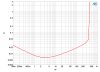
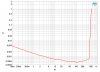
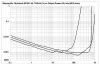
The Pass amp clearly exhibits the lowest level at the 4 watt level while rated at 25 and clips near 80.

Here's another:

mxr.jpg

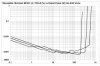
And another:

220Para21fig4.jpg


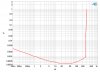
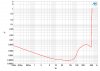
So, "most SS amps are more linear as they approach rated output" except when they don't !
 
Last edited:
All good man, I am the first person that will engage in a “fun” debate. Only problem, intent is often lost with the written word the interweb :dunno:. Many Audiophiles panties tend get in a bunch then we all go to the principles office.

:beerchug:

So true. The audio world is a weird place. Just like an Eskimo tribe may have multiple words or even inflections to describe ice or snow, we have created our own language, often a language of context that is often very subtle. We'll toss "100 watts" out there when discussing a cheap receiver and in the next breath use it again to help describe a pair of 80lbs ea monoblocks. In the 80s the industry went from the power wars to the distortion wars. I remember one receiver on the shelf that was rated at .007 (maybe even .0007, irrelevant, I know), that Consumer Reports rated highly. Unfortunately, it couldn't drive a decent speaker to save it's silicon soul. I guess "fortunately" would be the better word. Numbers became a religion. It always fun to demonstrate otherwise.

Skol!!!
 
Nah, I'm not grumpy. Just doing some "lockdown homeschooling" with someone who's heart may be in the right place, but his knowledge level is not there yet.
5 hours until beer :30.

Why wait 5 hours until beer? I think you have earned a drink.
 
FWIW - every test sheet for every I've received with McIntosh amplifiers I've had serviced always measured lower distortion at lower output levels than that at full rated output. I'm not saying that measurements <= 1 watt were provided because they were not.

In the case of the MC2255 evaluated by Julian Hirsch in June 1982 issue of Stereo Review, he reports that distortion (THD + IM) was so low as to be undetectable until reaching 10 watts which came in at 0.00056% (@ 1kHz), increasing to 0.0032% @ 250 wpc and 0.0045% at 300 wpc. Published spec is 250 wpc with no more that 0.02%. Not bad for a Class B! :)

Can't say if this holds true for all Mcs but I'm sure it does for plenty of 'em.
 
Last edited:
Doesn't change the fact that most SS amps are more linear as they approach rated output as I've stated and you challenged.
You must be confusing me with Pyrro. Just look at the graph I posted in #153.
...
Just to set the record straight, this discussion got started when I stated:

... Having more power capability than you need does not hurt the sound, but having less than you need does.
...

Which is true, but it prompted this reply:

SS amps typically become more linear the closer they get to rated power, the opposite of tube amps, added to that it's not great to have your speakers hit their max peak output at just a crack of the volume output, meaning 1 on a scale of 11 lol.

So yes, you can have "too much" power, and why the SET guys run flea watt amps.

Which led to me asking about the amps being less linear at low power and him providing an example, which resulted in this reply, which still stands:

Two things. First, that would apply equally to low powered amplifiers as it would to high powered ones. Second, and more importantly, that is from 1966, as one can see here:

https://www.stereophile.com/content/dynaco-stereo-120-transistor-power-amplifier

One hopes that amplifier technology has progressed since then.

Also, as long as the distortion is always below the point of audibility, it does not matter if it is higher at one output level than another. It is only when the amount of distortion becomes audible that there is a problem for humans listening to it.

As I stated so long ago, "as long as the distortion is always below the point of audibility, it does not matter if it is higher at one output level than another. It is only when the amount of distortion becomes audible that there is a problem for humans listening to it."

Which we have reached yet again in the postings of others.

What I was disputing was not whether or not amplifiers distort more at their lowest power levels than at half rated power; I was disputing whether that mattered. And it does not, as long as the distortion is inaudible.

He has given no reason to believe that having more powered than needed is a problem, which is the start of this lengthy discussion.

Ironically, he posted examples in which the high powered amplifier had less distortion below one watt than the low powered amplifier, and yet he seems to imagine that the lower powered amplifier has less distortion at low power levels than the high powered amplifier.

The simple fact is, one cannot determine the distortion below one watt based solely on maximum output power capability. That is a nonsensical idea.

As I stated originally, having more power capability than one needs is not a problem.

 
You must be confusing me with Pyrro. Just look at the graph I posted in #153.


Do you end every question with lol?

Didn't think you'd answer my question about the utter lack of class B amps today. We know better.
My mistake lol.

See, I often end statements that way as well lol.

There, I did it again.
 
Just to set the record straight, this discussion got started when I stated:


Which is true, but it prompted this reply:


Which led to me asking about the amps being less linear at low power and him providing an example, which resulted in this reply, which still stands:


As I stated so long ago, "as long as the distortion is always below the point of audibility, it does not matter if it is higher at one output level than another. It is only when the amount of distortion becomes audible that there is a problem for humans listening to it."

Which we have reached yet again in the postings of others.

What I was disputing was not whether or not amplifiers distort more at their lowest power levels than at half rated power; I was disputing whether that mattered. And it does not, as long as the distortion is inaudible.

He has given no reason to believe that having more powered than needed is a problem, which is the start of this lengthy discussion.

Ironically, he posted examples in which the high powered amplifier had less distortion below one watt than the low powered amplifier, and yet he seems to imagine that the lower powered amplifier has less distortion at low power levels than the high powered amplifier.

The simple fact is, one cannot determine the distortion below one watt based solely on maximum output power capability. That is a nonsensical idea.

As I stated originally, having more power capability than one needs is not a problem.

Just to set the record truthfully straight, not like the fabrication above.

Actually this is what started the debate eh.
Screenshot_20200504-172323.png

I provided this.
419MC462fig06.jpg


You asked for proof I provided such. You didn't like it so went off on a tangent about whether or not it mattered.
 
Last edited:
Actually this is what started the debate eh.
View attachment 1856479

I provided this.
View attachment 1856481


You asked for proof I provided such. You didn't like it so went off on a tangent about whether or not it mattered.

No, that isn't what started the discussion, and I never stated that solid state amplifiers did not generally have more distortion at less than one watt than at half power. The point of that question was to show that your supposed support for your assertion "you can have "too much" power" did not actually support that assertion. Not only is that claim of yours false, your own data shows it to be false.
 
Just to set the record straight, this discussion got started when I stated:


Which is true, but it prompted this reply:


Which led to me asking about the amps being less linear at low power and him providing an example, which resulted in this reply, which still stands:


As I stated so long ago, "as long as the distortion is always below the point of audibility, it does not matter if it is higher at one output level than another. It is only when the amount of distortion becomes audible that there is a problem for humans listening to it."

Which we have reached yet again in the postings of others.

What I was disputing was not whether or not amplifiers distort more at their lowest power levels than at half rated power; I was disputing whether that mattered. And it does not, as long as the distortion is inaudible.

He has given no reason to believe that having more powered than needed is a problem, which is the start of this lengthy discussion.

Ironically, he posted examples in which the high powered amplifier had less distortion below one watt than the low powered amplifier, and yet he seems to imagine that the lower powered amplifier has less distortion at low power levels than the high powered amplifier.

The simple fact is, one cannot determine the distortion below one watt based solely on maximum output power capability. That is a nonsensical idea.

As I stated originally, having more power capability than one needs is not a problem.

Ironically you just skip over the part where I stated "all things being equal" between the amps other than power output.

Or the part where I stated this.

"I'm in no way claiming a cheap low powered amp will outperform all higher powered amps at low output, again, look at my post concerning two Levinson amps. And the same comparison could be made with two pedestrian amps, again all things equal, apples to apples."
 
S
No, that isn't what started the discussion, and I never stated that solid state amplifiers did not generally have more distortion at less than one watt than at half power. The point of that question was to show that your supposed support for your assertion "you can have "too much" power" did not actually support that assertion. Not only is that claim of yours false, your own data shows it to be false.

And you can, take my Levinson amp comparison into consideration. Here you are with 94db sensitive speakers, most of the time your going to be running at 5watts or less, maybe 20 when you want to rock the house and blow your eardrums out lol. You're shopping for amps, your looking at the 2 Levinson amps. The 300watt Levinson is $9000, the 30watt Levinson is $5000. The less powerful amp will serve you better, it will be in its more linear range for most of your listening, and you'll save 5 big ones, this is a good thing, not a bad thing eh.

And you must be looking at different data as it does support my assertion.
 
No, that isn't what started the discussion, and I never stated that solid state amplifiers did not generally have more distortion at less than one watt than at half power. The point of that question was to show that your supposed support for your assertion "you can have "too much" power" did not actually support that assertion. Not only is that claim of yours false, your own data shows it to be false.
Actually it is.

This was my whole statement in its entirety.

"SS amps typically become more linear the closer they get to rated power, the opposite of tube amps, added to that it's not great to have your speakers hit their max peak output at just a crack of the volume output, meaning 1 on a scale of 11 lol.

So yes, you can have "too much" power, and why the SET guys run flea watt amps."

You only requested I show data SS amps are typically more linear as they approach rated output, are you disputing I wasn't able to show this?

Or are you disputing this because you think it's a good thing to only be able to use 1% of your volume knob.
 
Last edited:
Luckily with some mentoring I got over that crap in my mid twenties :rockon:

:beerchug:

You know I'm not a numbers guy lol, I've stated so many times.

If i were why would I prefer records over digital?

But that doesn't change the fact more power is not always better.

And that was my point.


"SS amps typically become more linear the closer they get to rated power, the opposite of tube amps, added to that it's not great to have your speakers hit their max peak output at just a crack of the volume output, meaning 1 on a scale of 11 lol.

So yes, you can have "too much" power, and why the SET guys run flea watt amps."
 
Status
Not open for further replies.
Back
Top Bottom