• The move to the new server is done. There are some software and database maintenance updates in process. This has us passing the hat around to help out. We appreciate any donations. Seriously, even a dollar helps. The payment page may be found here - https://www.audiokarma.org/support.html

How to clean a tuner (analog)

Hi,

I'm not cleaning a tuner, but an older receiver with an all-analog tuner section. The advisory regarding the tuning capacitor is well understood. However, the rest of the tuner board has many tuned inductor coils. How should I go about cleaning the board w/o causing detrimental effects to those?

Thanks and regards,

Rob

There isn't much benefit to cleaning circuit boards. We clean tuning capacitors to clear particles and general grunge from between the capacitor plates and to clean the interface between the shaft and the stationary contacts because this definitely affects performance. Other than any connectors, there really isn't anything that benefits from cleaning on the board.
 
I cleaned up two Kenwood KT 615, and a Sansui TU 717, last weekend and reception improved considerable on all.
The Kenwoods needed it more than the Sansui, but it also improved.
I am amazed how great this simple cleaning works, although the tuning fins didn't look dirty.
 
Thanks for this awesome thread Dr. Audio. I'm getting ready to do this on my Rotel RX-400 (which is a identical to Harman Kardon 330). I have one question. I will follow the procedure in post 1 exactly, but I can't help but wonder why it isn't a good idea to also spray the fins with non-residue cleaner after vacuuming and blowing the dust out. It seems like the spray would help clean them further but not harm anything (unless non-residue isn't always non-residue). I will be using MG Chemicals 409B Electrosolve Zero Residue contact cleaner (ordered from Amazon) if that makes any difference.

As an aside, I tried comparing comparing the sound quality of the TuneIn app streamed via Chromecast Audio into the Rotel with the Rotel built-in FM tuner for the New York 88.3 jazz (WBGO) station. The sound quality of the 40-year-old Rotel tuner decimates the streamed FM of the same station. I expected FM to sound better because FM streaming is fairly compressed, but the FM tuner is "dark night and bright day" better. In other words, it's more than worth the time and effort to keep these old tuners going!
 
I sprayed all my fins with none residue cleaner after blowing them out, they are now clean as can be with great signal improvement.
 
Thanks again Dr. Audio for all the help in this thread. I did this process last night on my Rotel RX-400 (same internals as Harman Kardon 330) using MG Zero Residue cleaner and Faderlube. I vacuumed, blow dusted with compressed air, used MG cleaner, moved tuner back and forth many times, used faderlube in pivots, moved back and forth many times.

Even though I used a needle to apply faderlube, it seemed like some went on the tuner plates (it's a very tight area on this receiver), so I sprayed the plates with MG Zero Residue lightly so the cleaner wouldn't go into the intended faderlube points.

The result is night and day improvement across the whole band. The tuning dial was always accurate and remained accurate, but it pulls in a lot more stations at much higher levels. It looked pretty clean to start with, but the difference is still huge.

The one station I want most, 88.3 jazz, now works much better (it's a weak signal in our area to start with but works much better now). I heard a noise interference on the lower frequency stations before the cleaning and it remained after. It turns out it is the overhead LED bulb causing it -- when the light is on, the noise is there and it's gone when off. I've ordered a different LED bulb to see if that has less FM interference.
 
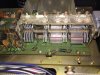
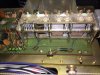
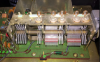
anyone mind helping me get oriented here with this pioneer SX 1280? maybe point out where i need to clean and i can put arrows for others for future reference?

i’m going to blow it out with compressed air in the meantime.

also, can i use this CRC cleaner? maybe spray it in a cup and use some qtips?

or anyone got a link for CAIg faderlube or whatever why are calling it now?

THANKS
 

Attachments

  • BF00EA47-7BEC-4C84-A2BA-A9244C804567.jpeg
    BF00EA47-7BEC-4C84-A2BA-A9244C804567.jpeg
    87.1 KB · Views: 76
  • 838D5C05-7C86-4A8C-9EBF-8CC0C681CBE4.jpeg
    838D5C05-7C86-4A8C-9EBF-8CC0C681CBE4.jpeg
    74.4 KB · Views: 73
  • C009A567-93B8-4E14-93A6-122A9077F49B.jpeg
    C009A567-93B8-4E14-93A6-122A9077F49B.jpeg
    57.5 KB · Views: 72
  • 649BF56A-CD03-4334-B531-827101EB4302.jpeg
    649BF56A-CD03-4334-B531-827101EB4302.jpeg
    64.2 KB · Views: 73
  • 5F7031CE-891D-4B47-A7BC-F46F878FA762.jpeg
    5F7031CE-891D-4B47-A7BC-F46F878FA762.jpeg
    84.1 KB · Views: 72
  • 42FE3BF5-EABA-4396-BAD7-D7549DE8AB59.jpeg
    42FE3BF5-EABA-4396-BAD7-D7549DE8AB59.jpeg
    74 KB · Views: 71
  • 49558332-5049-4FFE-8870-4DBF0675EBBD.jpeg
    49558332-5049-4FFE-8870-4DBF0675EBBD.jpeg
    77.5 KB · Views: 71
  • 90D8D233-62F7-460B-8E8F-3599322080A1.jpeg
    90D8D233-62F7-460B-8E8F-3599322080A1.jpeg
    80.8 KB · Views: 70
  • CD7EE2D0-6852-45C1-BCDE-80A60AA23A2B.jpeg
    CD7EE2D0-6852-45C1-BCDE-80A60AA23A2B.jpeg
    73.8 KB · Views: 67
  • 38F3C6E6-F39E-4D81-85C3-55FDFC087060.jpeg
    38F3C6E6-F39E-4D81-85C3-55FDFC087060.jpeg
    64.5 KB · Views: 72
anyone mind helping me get oriented here with this pioneer SX 1280? maybe point out where i need to clean and i can put arrows for others for future reference?

i’m going to blow it out with compressed air in the meantime.

also, can i use this CRC cleaner? maybe spray it in a cup and use some qtips?

or anyone got a link for CAIg faderlube or whatever why are calling it now?

THANKS
more pics
 

Attachments

  • AA6F30F9-D55F-453B-9279-0312C19E8708.jpeg
    AA6F30F9-D55F-453B-9279-0312C19E8708.jpeg
    50.2 KB · Views: 51
GENTS!

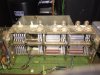
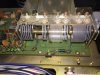
anyone know where exactly i am cleaning these tuner thing-a-ma-jigs?

1. compressed air to clean out dust
2. "tuner ground contacts" (this is the same as "shaft contacts"?)
a. clean with isopropyl rubbing alcohol and run tuner back and forth all the way multiple times
b. clean with non-residue contact cleaner and run tuner back and forth all the way multiple times
c. add one or two drops of DEOXIT FADER somewhere?

THANKS
 

Attachments

  • IMG_1326.JPG
    IMG_1326.JPG
    120.7 KB · Views: 87
  • IMG_1327.JPG
    IMG_1327.JPG
    130 KB · Views: 82
  • IMG_1328.JPG
    IMG_1328.JPG
    114 KB · Views: 81
  • IMG_1329.JPG
    IMG_1329.JPG
    128.6 KB · Views: 81
  • IMG_1330.JPG
    IMG_1330.JPG
    132.4 KB · Views: 81
Last edited:
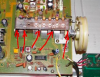
anyone know where these arrows are on this PIONEER SX 1280
 

Attachments

  • Screen Shot 2020-01-14 at 10.05.13 PM.png
    Screen Shot 2020-01-14 at 10.05.13 PM.png
    393.2 KB · Views: 83
  • Screen Shot 2020-01-14 at 10.06.42 PM.png
    Screen Shot 2020-01-14 at 10.06.42 PM.png
    294.3 KB · Views: 83
You only clean at the contact points.
Only clean the tuner var cap if it needs it. You can tell that if you get a scratchy sound through the speakers, while tuning across the dial, FM muting must be off. Also if the ability to tune to stations across the dial is an issue. If the tuning meter jumps around erratically and is not smooth as it swings across the center tuning location.
Other than that, if it ain't broke, do not mess with it.
 
You only clean at the contact points.
Only clean the tuner var cap if it needs it. You can tell that if you get a scratchy sound through the speakers, while tuning across the dial, FM muting must be off. Also if the ability to tune to stations across the dial is an issue. If the tuning meter jumps around erratically and is not smooth as it swings across the center tuning location.
Other than that, if it ain't broke, do not mess with it.


OK. THANKS.

a couple questions please? what are “contact points”? are we saying to clean between the BRASS SUPPORT and the BRASS CONTROL ROD? like where this arrow points? seems very hard to get anything in there. i suppose you would stand it up somehow and drop a drip in?!

also. what is a “tuner var cap”? and what does it look like?

lastly. if i said it does not come in CLEAR sometimes (other times it does seem to) and it can start clear and then get NOT CLEAR, would you say tuner should be cleaned?

and when rotating the FM dial if i hear static (of some kind which i guess is “scratchy”) then tuner definitely needs cleaning?

THANK YOUE57B9387-ED81-4BF0-8274-A0FF31144C1B.png
 
Really surprised at the lack of interest here. This stuff is made for the job and does work.

Just speaking for myself, my interest isn't all that piqued just because "tuner" is in the product name. It appears to be just another non-residue contact cleaner. I don't doubt that it works as well as others in that category, but I wouldn't expect it to work better. Do you find that it does?

Cheers,

chazix
 
Really surprised at the lack of interest here. This stuff is made for the job and does work.
It's pretty much the same composition as the stuff I use; Pentane and Hexane. If it's easier to find, use it. It won't work any better.
 
Just speaking for myself, my interest isn't all that piqued just because "tuner" is in the product name. It appears to be just another non-residue contact cleaner. I don't doubt that it works as well as others in that category, but I wouldn't expect it to work better. Do you find that it does?

Cheers,

chazix
I've not used any other non-residue cleaner on tuning gangs, so cannot compare this with any other. However, it certainly did work in silencing a noisy, vintage (1970s) Rotel tuner.

I will admit to, some years ago, using Kontakt 60 on a Technics ST-7600. What a mistake - it de-tuned the thing!

Rich
 
use air in a can.

compressors could coat your fins with oil.

either from an old compressor with leaky rings, or from an oiler that is sometimes used in series with the line in commercial units, the purpose being to lube air drills and such.

sometimes the oil mist in the compressed air is not visible as the droplets are fine,but it could be there, causing a sticky mess that would be a chore to clean.

if you insist, spray compressed air on a sheet of white paper for a minute and examine the paper.
 
use air in a can.

compressors could coat your fins with oil.

either from an old compressor with leaky rings, or from an oiler that is sometimes used in series with the line in commercial units, the purpose being to lube air drills and such.

sometimes the oil mist in the compressed air is not visible as the droplets are fine,but it could be there, causing a sticky mess that would be a chore to clean.

if you insist, spray compressed air on a sheet of white paper for a minute and examine the paper.
Good point! Also compressor air can contain condensed water, which you would then have to dry before aligning the tuner. I prefer a vacuum cleaner and a brush. Why would you want to blow dust from the unit into your living environment?
 
Back
Top Bottom