• The move to the new server is done. There are some software and database maintenance updates in process. This has us passing the hat around to help out. We appreciate any donations. Seriously, even a dollar helps. The payment page may be found here - https://www.audiokarma.org/support.html

Is a Phono Preamp better than regular Preamp??

Phono preamp design varies considerably. There are several methods of doing the equalization. Because of the tremendous gain required to amplify the tiny signal, most use more than one gain stage. Equalization can be done actively, or passively, or with a combination, and where in the circuitry it is done can vary, too. Power supply design alone can take unusual paths, since it is so critical.

I'm not a phono preamp designer, but member @rothwellaudio is. Maybe he will come along and shed some light. :)
 
Thank you for all the feedback! Dont all of these phono products use the same equalization? (RIAA)

Do the standalone phono preamps have the same type of hardware as what would be in a preamp or reciever? Does it just come down to which has better quality parts but that all have a similar way of working and the same equilization?

Yes..they are all similar in the same way that all cars are fundamentally the same. Or all speakers. Or all watches, etc.

Which is to say that while they all do basically the same thing, there is wide variation in design, performance, features, capabilities and price.
 
Last edited:
I was thinking its too bad you don't have the 5000X instead of the A. If the 5000 is anything like the 2000X, the phono is very nice in it. Plus, the OP already likes the 5000A. I used my 2000X as a preamp for a while, and it is a very nice preamp, especially when matched with bright amplifiers. Mine was mated to a Mitsubishi A10DC and some Genesis 2 speakers.

You could expect to pay a little for a working Sansui 2000X. The people who have them, love them. I loved mine, but I promised a friend I would sell it to him if I didn't find a preamp for him. He really liked the way they sounded together. Does your future amp come with a built in preamp? if it does, start with an MM/MC Preamp attached to your Aux in. If it doesn't have one, you will need one regardless of what you do unless all you do is listen to vinyl. Make your choice of phono preamps by reading up on major players products. There are some interesting new players in the game bringing interesting options. I don't have any, but have heard about some of them. That would be my initial approach. After that, it is all uphill$$$
 
IME, an Apt-Holman preamp has an excellent phono stage, but it must be restored, yet still possess the original phono-stage transistors.
Luxman C1000 and C1010 preamps are excellent, but they are getting on in years as well. Phono A on mine is good but a little dark, but phono B is still neutral, perhaps due to less usage over the years?
A Hafler DH-110 is a little below these, but cheaper and likely to be fine, condition-wise.

I would have guessed that both phono inputs are connected to a common phono stage (with perhaps step-up amplification capability that can be switched in or out of at least one of the inputs)?

They most likely exist, but I've never seen a pre- amp with redundant phono sections.
 
Last edited:
At the moment I am looking at two preamps...maybe you guys can tell me about the phono quality and sound of each.

Carver C1 (seems to get good reviews but I would NOT be nodding it, too intensive for my skills lol )

Denon PRA-1100

Both have MM/MC, the Carver has the holographic stuff, no idea if I would care for that and use it or not. They are the same price.
 
Last edited:
I would have guessed that both phono inputs are connected to a common phono stage (with perhaps step-up amplification capability that can be switched in or out of at least one of the inputs)?

They most likely exist, but I've never seen a pre- amp with redundant phono sections.
Maybe they have parts in common, but they sound different. I found that out after connecting it up by feel. I thought one channel had gone bad, but I had hooked it up to phono B by accident, and was surprised at the difference. Phono A has more adjustability; maybe the difference was due to that portion.
 
Maybe they have parts in common, but they sound different. I found that out after connecting it up by feel. I thought one channel had gone bad, but I had hooked it up to phono B by accident, and was surprised at the difference. Phono A has more adjustability; maybe the difference was due to that portion.
Probably not another phono section but the contacts in the phono selection switch . I bet a good disassembly
of the switch will equal out the sound.

Nashou
 
Also found a Emotiva BasX PT-100 not vintage by a longshot....but I wonder how good its phono sections sound as compared to the Carver C1 or Denon PRA-1100? All three are the same price!

Obviously the Emotiva has a lot of digital capability, but I wont be using that. All three do MM/MC. I wonder if the Emotiva sounds better than the Carver or Denon? Might be nice to have a remote control lol

It's supposed to be a all vintage system that has character.....BUT I dont want to sacrifice sound quality if I can get something that sounds better for the same money.
 
Phono preamp design varies considerably. There are several methods of doing the equalization. Because of the tremendous gain required to amplify the tiny signal, most use more than one gain stage. Equalization can be done actively, or passively, or with a combination, and where in the circuitry it is done can vary, too. Power supply design alone can take unusual paths, since it is so critical.

I'm not a phono preamp designer, but member @rothwellaudio is. Maybe he will come along and shed some light. :)
You're right, there are lots of ways to design a phonostage. A lot of phonostages on the market today seem to be very similar (one or two similar op-amp circuits) but there are lots of alternative approaches as you say, splitting the EQ into several different parts, maybe a combination of active/passive EQ, discrete bipolar transistors, FETs, valves, hybrid transistor/valve, and all manner of variations. One often overlooked aspect of design is PCB layout. I remember many years ago seeing a review of an unusual preamp which had a separate power supply with a ribbon cable linking the power supply to the audio circuit. The rationale for this apparently bizzare design choice was that it allowed for a multitude of earth wires back to the power supply for star grounding. At the time I thought it was nuts, but I've since come to appreciate the importance of track routing. It's the sort of thing that doesn't look impressive in advertising literature like "audiophile components" or "500VA transformer" does, but it's more important than many people think and can have a big impact on performance.
Yes, when there's a lot of gain and a tiny input signal the little things matter.
 
Last edited:
Also found a Emotiva BasX PT-100 not vintage by a longshot....but I wonder how good its phono sections sound as compared to the Carver C1 or Denon PRA-1100?
Your not going to get clear answers online, no one has your system room or ears.
The best thing to do with phono stages is to listen to them yourself and have two at a time to compare.
If your buying used at a fair price you can always resell the one you felt didn't make the cut.

I'll generalize with what I have found in time period and evolution.
Generally Receivers, Integrated amp and Separates components fall in that pecking order as to a brands line of equipment quality. A receiver will always have more compromise than a separate preamp and power amp, this is true if new or old.

In the 60s 70s and the first half of the 80s, most people played records, it was a primary source. With that understanding, even lower end equipment, and receivers would try to make their phono stage sound good. If a stand alone MM phono stage was built in the 60s and early 70s it would need to compete with already good sounding stages built into the equipment then. During this earlier time MC cartridges started to show up, so stand alone step up transformers started to be added inline to accommodate these cartridges.

By the late 70s and mid 80s more MC cartridges where on the market, so some of the better equipment started to build in a step up transformer with the phono stage in their equipment line. You will see both MM Phono and MC Phono inputs on these integrated and separates. Some of these units might have even taken it further, a TOTL mid 80s preamp might have an adjustable built in phono stage where you could adjust loading and gain for your MC cartridge.

By the late 80s, 90s and 2000, most mass market units started to drop the phono stage entirely. Some early AVRs might have put a phono stage in their unit because people still had their records and tables, so it could be a selling point. However phono stages like this are more of an after thought and just in case someone needed it.

When records started to gain in popularity again in the mid 2000s people needed a way to play them on their home AVR TV system. So many stand alone RIAA phono stages came out that you could plug into the AUX input of your AVR. You could get any price point here and in reality the masses don't know the sound quality of records anymore like in the 70s. They no longer had a reference point or anything else to compare it to, it just had to play.

Today we have all these decades to buy from, we can buy a new cheap stand alone RIAA phono stage for $250-$300. We can buy a old Stereo Preamp or integrated amp from the 80s that has built in MM & MC phono staging, or an 80s stand alone. We can but a brand new adjustable stand alone stage from $500- $10,000.

In my opinion the very late 70s and through the 80s to early 90s is the sweet spot for vinyl playback used equipment. You can get phono staging, stand alone or built in for $200- $400 that would cost you $2000+ today for the same sound quality. This was the pinnacle of vinyl playback and had very discerning people that had all the prior years as a reference point to judge from. Much of the cheaper stand alone staging is just like and in many cases the same built equipment of the 2000s. This is the mentality, lets just get it to work for them, they don't know or have a reference point anyway.

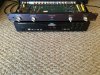
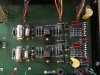
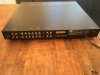
For instance here is a Forte Audio Model 2, it's a stereo preamp with a adjustable phono stage for MM & MC. I also has a stand alone power supply so it's just got many nice sound quality building added to it. It would make a nice start to a system by adding a power amp, but also can just be added to a system to use the phono stage. This one cost me $45, but they sell for more, $400 and under, but I would say to get this staging in a new RIAA stand alone it might cost you $1000-$1500 or more.

IMG_0656.JPG IMG_0650.jpg

Here is a Sansui CA-F1 stereo preamp, again would make a nice start to a system, or use it for the MM or MC phono stage only, these go for around $350.

download.jpg 2039580-rare-sansui-caf1-preamp-in-very-nice-condition-and-perfect-working.jpg

This is just to point out you can use a stereo preamp as a stand alone stage
 
Last edited:
Your not going to get clear answers online, no one has your system room or ears.
The best thing to do with phono stages is to listen to them yourself and have two at a time to compare.
If your buying used at a fair price you can always resell the one you felt didn't make the cut.

I'll generalize with what I have found in time period and evolution.
Generally Receivers, Integrated amp and Separates components fall in that pecking order as to a brands line of equipment quality. A receiver will always have more compromise than a separate preamp and power amp, this is true if new or old.

In the 60s 70s and the first half of the 80s, most people played records, it was a primary source. With that understanding, even lower end equipment, and receivers would try to make their phono stage sound good. If a stand alone MM phono stage was built in the 60s and early 70s it would need to compete with already good sounding stages built into the equipment then. During this earlier time MC cartridges started to show up, so stand alone step up transformers started to be added inline to accommodate these cartridges.

By the late 70s and mid 80s more MC cartridges where on the market, so some of the better equipment started to build in a step up transformer with the phono stage in their equipment line. You will see both MM Phono and MC Phono inputs on these integrated and separates. Some of these units might have even taken it further, a TOTL mid 80s preamp might have an adjustable built in phono stage where you could adjust loading and gain for your MC cartridge.

By the late 80s, 90s and 2000, most mass market units started to drop the phono stage entirely. Some early AVRs might have put a phono stage in their unit because people still had their records and tables, so it could be a selling point. However phono stages like this are more of an after thought and just in case someone needed it.

When records started to gain in popularity again in the mid 2000s people needed a way to play them on their home AVR TV system. So many stand alone RIAA phono stages came out that you could plug into the AUX input of your AVR. You could get any price point here and in reality the masses don't know the sound quality of records anymore like in the 70s. They no longer had a reference point or anything else to compare it to, it just had to play.

Today we have all these decades to buy from, we can buy a new cheap stand alone RIAA phono stage for $250-$300. We can buy a old Stereo Preamp or integrated amp from the 80s that has built in MM & MC phono staging, or an 80s stand alone. We can but a brand new adjustable stand alone stage from $500- $10,000.

In my opinion the very late 70s and through the 80s to early 90s is the sweet spot for vinyl playback used equipment. You can get phono staging, stand alone or built in for $200- $400 that would cost you $2000+ today for the same sound quality. This was the pinnacle of vinyl playback and had very discerning people that had all the prior years as a reference point to judge from. Much of the cheaper stand alone staging is just like and in many cases the same built equipment of the 2000s. This is the mentality, lets just get it to work for them, they don't know or have a reference point anyway.

For instance here is a Forte Audio Model 2, it's a stereo preamp with a adjustable phono stage for MM & MC. I also has a stand alone power supply so it's just got many nice sound quality building added to it. It would make a nice start to a system by adding a power amp, but also can just be added to a system to use the phono stage. This one cost me $45, but they sell for more, $400 and under, but I would say to get this staging in a new RIAA stand alone it might cost you $1000-$1500 or more.

View attachment 1760213 View attachment 1760214

Here is a Sansui CA-F1 stereo preamp, again would make a nice start to a system, or use it for the phono stage only, these go for around $350.

View attachment 1760216 View attachment 1760217

This is just to point out you can use a stereo preamp as a stand alone stage

Thank you for taking so much time for such a great comment!
 
Well so far I've got my eye on these preamps....
NAD 1300
Carver C1
Denon PRA 1100

Also found a phono preamp that gets good reviews (and some not as good)
Lounge LCR Markiii

BUT with the Lounge LCR I'd be spending my preamp money on it which means at least for a period I'd have to hook it directly to a amp (if possible). I'd have level control at the amp but that's it and wouldn't be able to listen to anything else.

Is it okay to hook a phono preamp up directly to a amp? What about my phone using a cable that goes from my headphone jack to rca? I usually use it in the aux inputs. Are amp inputs different from standard inputs like aux?
 
For instance here is a Forte Audio Model 2, it's a stereo preamp with a adjustable phono stage for MM & MC. I also has a stand alone power supply so it's just got many nice sound quality building added to it. It would make a nice start to a system by adding a power amp, but also can just be added to a system to use the phono stage. This one cost me $45, but they sell for more, $400 and under, but I would say to get this staging in a new RIAA stand alone it might cost you $1000-$1500 or more.
View attachment 1760214
Looks like polystyrene capacitors in the RIAA eq section. Polystyrene are probably the best for low distortion. Unfortunately, they're not so easy to come by theses days. I'm not even sure they're still manufactured.
I suppose that's something in favour of vintage gear, when they used polystyrene.
 
Well so far I've got my eye on these preamps....
NAD 1300
Carver C1
Denon PRA 1100

Also found a phono preamp that gets good reviews (and some not as good)
Lounge LCR Markiii

BUT with the Lounge LCR I'd be spending my preamp money on it which means at least for a period I'd have to hook it directly to a amp (if possible). I'd have level control at the amp but that's it and wouldn't be able to listen to anything else.

Is it okay to hook a phono preamp up directly to a amp? What about my phone using a cable that goes from my headphone jack to rca? I usually use it in the aux inputs. Are amp inputs different from standard inputs like aux?
If your amp has level controls, then connecting the phono pre directly to it should work (depending on the function of the level controls). You can also connect a phone directly to the amp as you describe, and use either the amp level controls and/or the phone volume controls. The amp RCA inputs are not physically different from the RCA inputs on a preamp.

Not sure if you mentioned, but are you looking for a phono stage that can handle lower output (moving coil) cartridges, or just MM cartridges?

Edit - my advice, buy a preamp with the features you want. If you are starting out, getting one with a built in phono stage would be preferred. Listen to that for a while, if you like what you hear great. At some point in the future you can start experimenting with different phono stages to see if you can hear differences, or if you want to move into moving coil cartridges, you can elect to add step-up devices to the existing phono stage.

I would do the above versus switching out input sources to a power amp to be able to hear the source you want. At some point you will forget to turn off the amp before unplugging/plugging something in and your amp or speakers will pay for it.
 
Last edited:
If your amp has level controls, then connecting the phono pre directly to it should work (depending on the function of the level controls). You can also connect a phone directly to the amp as you describe, and use either the amp level controls and/or the phone volume controls. The amp RCA inputs are not physically different from the RCA inputs on a preamp.

Not sure if you mentioned, but are you looking for a phono stage that can handle lower output (moving coil) cartridges, or just MM cartridges?

Edit - my advice, buy a preamp with the features you want. If you are starting out, getting one with a built in phono stage would be preferred. Listen to that for a while, if you like what you hear great. At some point in the future you can start experimenting with different phono stages to see if you can hear differences, or if you want to move into moving coil cartridges, you can elect to add step-up devices to the existing phono stage.

I would do the above versus switching out input sources to a power amp to be able to hear the source you want. At some point you will forget to turn off the amp before unplugging/plugging something in and your amp or speakers will pay for it.

Currently I'm only using a MM cartridge, but would like the MC ability for future.

Good point about forgetting to turn off the amp when unplugging something. If I go the route of getting a phono preamp like the Lounge and plugging directly....it will just be temporary for a couple months until I can get a preamp.

I've never used separates so I didnt think about that.
 
I've been seeing a lot about these Chinese tube preamps and phono preamps that a lot of people seem to like that are cheap. I wonder how they compare to a vintage Carver C1 or Denon 1100.
 
Last edited:
Some of these cheaper tube preamps and phono preamps are interesting.... Yaqin, Bellari....few others on Amazon. I like that you can kind of change the tone like more or less bright, etc by changing tubes. But honestly, I wonder if I would end up always wondering if theres a better tube and going through tube after tube. Where without that capability if you like the sound, you may just enjoy it and not always be wondering about the illusive tube thatll sound better.

They do sound interesting though! Yaqin even has one that is like a integrated....its basically a phono preamps that also has rca inputs to feed a CD player or something through it.
 
Back
Top Bottom