• The move to the new server is done. There are some software and database maintenance updates in process. This has us passing the hat around to help out. We appreciate any donations. Seriously, even a dollar helps. The payment page may be found here - https://www.audiokarma.org/support.html

Is this part difficult to find? (RCA solder board)

Klebby

Member
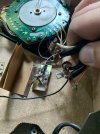
I done goofed chasing down a buzzing sound in my speakers… struggled to get the wire tension relief opened and this (pcb?) board holding the solder joints for the RCA cables snapped in half… I’ve spent the past month working on this inherited turntable and my final issue was the buzzing… it drove me mad.
IMG_4053.jpeg
 

Attachments

  • IMG_4052.jpeg
    IMG_4052.jpeg
    131.2 KB · Views: 19
Register to hide this ad
Should be able to get those online. Maybe a tube amp business, the bay or amazon. Or just use epoxy glue.
 
 
Any method of gluing that holds the broken part securely and doesn't short out contacts is perfectly fine. It may not look good, but if it works it is good. I very much doubt that when you go to your great reward, anyone will hold it against you that you duct taped the thing.
 
Care to expand on that?

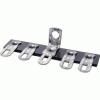
I'm not sure why he suggested that, but it's a rather generic (and cheap) part, as described by heyraz. In this case, a 5-lug terminal strip. I have some tube amp kits, point to point wiring, that are built around the things. For the modest cost of them, maybe better just to install a new strip, though if glueing is secure, there shouldn't be a problem with repairing one.

Definitely a broken circuit board would be a different story, as the break would sever traces, and a replacement board, even if a relatively simple one, would probably have to be cannibalized from another machine, same model. Not that I've ever known a circuit board to break in two.
 
Buzzing? Did you connect turntable earth wire to chassis of the amp?
I did. Still got buzzing. I tried moving wires around and was checking to make sure there was no severed connection or even wire sheath touching anything and I couldn’t find it.
 
Terminal Strip, terminal lug strip, solder lug strip.
Different configurations available from the big auction site, Amazon, Digikey.
View attachment 3260082
Ordered 2. Thanks again. How about finding or identifying some really solid RCA cables since I’ll be soldering a new line from this strip? Should RCA cables come with a ground wire as well or is that just any smaller gauge copper wire I will need in addition?
 
Thank you! Ordered 2 from this site, much better cost than taking it to a repair man. Any idea what I would look for to identify some good RCA/ground wire cables as I’ll be soldering/installing all new ones now? Need about 4 feet I reckon.
 
How about finding or identifying some really solid RCA cables since I’ll be soldering a new line from this strip?
I would make my own using Microphone Signal Cable and SwitchCraft RCA Plugs from Parts Express.


I do have some “gold” banana plugs already, are nickel better? Also, the link you shared shows a red wire positive and I’m assuming with it the negative and then a ground? Is there a white positive and white negative I should order also or does that come along with the first link you sent? Can’t thank you enough for helping out!

Edit: if the RCA plugs are for the turntable end, it’s actually hard wired… I wonder if I could just add RCA jacks… hmm
I would make my own using Microphone Signal Cable and SwitchCraft RCA Plugs from Parts Express.


Red is signal, white is ground. More importantly...the cable is shielded. Shield is left disconnected (floating) at destination side of interconnect. The idea is for any EMI to be drained backwards out to ground.

Run a separate wire for turntable ground

Gold plated plugs are fine. I like SwitchCraft because they are narrow.

Installing RCA jacks on the turntable's plinth are a good idea too

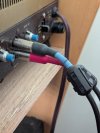
I use colored heat shrinkable tubing to identify L/R cables. I also use a ferrite bead at the end of the cable. Left and Right cables run together in cable braid. Separate ground wire can run in braided jacket to keep things neat.

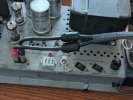
PXL_20240726_125707137.jpg
PXL_20240726_125648640.jpg
 
Last edited:
Ah I think I understand now… so I would need two lengths of this same wire, and either way the signal will be red I will just have to mark it myself to differentiate the “white” from the “red” for my photo plugin on the integrated amp… is that correct? Because I see when hard wiring it there is 2 lugs for each channel then one lug for the ground. So the t he ground wire would just be a sheathed wire I run completely seperate of either channel and the sort of exposed copper that runs along the RCA cables is just to catch EMI signals for interfering with the positive and negative wires cheated beside it?IMG_4063.png
Red is signal, white is ground. More importantly...the cable is shielded. Shield is left disconnected (floating) at destination side of interconnect. The idea is for any EMI to be drained backwards out to ground.

Run a separate wire for turntable ground

Gold plated plugs are fine. I like SwitchCraft because they are narrow.

Installing RCA jacks on the turntable's plinth are a good idea too

I use colored heat shrinkable tubing to identify L/R cables. I also use a ferrite bead at the end of the cable. Left and Right cables run together in cable braid. Separate ground wire can run in braided jacket to keep things neat.

View attachment 3260384
View attachment 3260385

 
Back
Top Bottom