

You are using an out of date browser. It may not display this or other websites correctly.
You should upgrade or use an alternative browser.
You should upgrade or use an alternative browser.
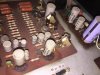
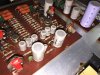
Leaking capacitors or glue?
- Thread starter Accused
- Start date

Register to hide this ad


mars_volta
Super Member
Looks like glue to me.


ferninando
Lunatic Member
glu and leak.
edit: my error. no leakage. only glue.
edit: my error. no leakage. only glue.
Last edited:

Goldie99
Super Member
Looks like glue, and a 'halo' probably from glue degradation - I've replaced similar in a Sony ES amp previously. Despite having similar (and growing over time) 'halos', I could not find evidence of leakage once the caps were removed - so I assume it was from the glue as well.


Blue Shadow
Waiting for Vintage Gear from this century
It is always glue. Not many questions like this turn out to be leaking caps. I don't think I have seen this question answered as a leaking cap. Whichever that glue could be as bad as a leaking cap as some glue is corrosive, too.

petehall347
the brandy coffee man
its glue for sure ..too neat for leakages


My guess is that it is both glue and electrolyte leakage.
The wider halo discoloration does seem to be centered around the glue. I also notice that the glue does not encircle the caps. I am wondering if the globs of glue along just one part of the base of the caps might have somehow contributed to causing leaks in the area where it is in contact with the caps (dissimilar expansion/contraction with thermal cycling possibly?). It doesn't seem likely, to me, that glue could have somehow emitted what appears to have been a liquid, whereas the caps could have done so.
The wider halo discoloration does seem to be centered around the glue. I also notice that the glue does not encircle the caps. I am wondering if the globs of glue along just one part of the base of the caps might have somehow contributed to causing leaks in the area where it is in contact with the caps (dissimilar expansion/contraction with thermal cycling possibly?). It doesn't seem likely, to me, that glue could have somehow emitted what appears to have been a liquid, whereas the caps could have done so.
Last edited:
Soundphile
Active Member
Overall, the boards look good. Whether it's glue or cap leakage is academic now - critical issue is that the caps are WAY past their shelf life. If they vent when the amp is in use I hate to think what damage it will cause. Replace those fast !!!



S Phillips
Member
Old thread, but my question is, did they solder and glue the cap to the board?

S Phillips
Member
Yes always soldered. They glue larger caps that may be subject to vibration.
The glue in many cases can look very sloppy. SANSUI
It just needs to connect the body of the cap to the board.
Thx Jimbo, I picked up a Fisher receiver that after removing the cover, noticed dark brown stuff around the base of some of the larger caps. Was thinking, they must be leaking. Glad I found this thread. Thx again. Steve


