• The move to the new server is done. There are some software and database maintenance updates in process. This has us passing the hat around to help out. We appreciate any donations. Seriously, even a dollar helps. The payment page may be found here - https://www.audiokarma.org/support.html

Mach One 4024, 4024A, 4029 Information and Upgrades!

As it stands, I am one of few on this thread that has backed up what I've said with data, real data and test results. You have been more than clear you don't like the Machs or anything about them. It seems that your goal is to get people to confirm your opinion that the original Mach 1 speakers are no good. Am I right? I don't think that but I do know that they can be much better and that is why I have done all this work. As to your other comment that the T/S don't jive. Yes they do! Fact is, they jive so much that the modeled driver and T/S parameters do exactly the same thing, both in the model and in real world measurements. That's as good a correlation as one needs. You have loaded and unloaded measurements and multiple ones to get good correlated data for the T/S. Some of the parameters you see are unloaded and others that really matter are listed loaded, like the QTS, VAS and SPL. If the VAS was listed as unloaded the number would be much greater. Because we are not going to listen to the woofer laying in the floor out of the cabinet, the unloaded VAS, IMO, is not an important number. Hope this helps to clarify things! :thmbsp:

Measuring Vas unloaded requires the use of the delta mass method. Typically, the results using this method get you sufficiently close (I've normally ended up within 10%).

Regardless of what people feel are my motivations in this thread, i'm simply wanting to get data that seems to defy physics clarified or corrected. The t/s parameters, as you originally published them a few posts up, would qualify as defying physics. You can't drop Fs on your driver to 11hz and gain sensitivity without making up for it elsewhere.

Can you post the same screenprint with the revised parameters of the modded driver?

I still think you probably just mis-listed a spec and aren't trying to deceive us, can you please review and make changes or post the screen print showing the specs of the modded woofer?
 
"it might validate my concerns with the sound of the original..."

Why would anyone be concerned about how good the MachOnes sounded. I know for a fact most speakers around its price range were no better or worse... Its subjective.

You can't validate your concerns... my experience proves to me they were great. You experience proves to you they were colored and you did not like them. What else do you want? I have never really heard a 'bad' speaker over say $50. Heck even PC speakers sound good. Are you trying to prove the MachOnes were the worse speakers you ever heard, and we all need a reality check because you know better than us? Again you can't take away my experience with them. Perhaps if you owned them you may have enjoyed them as I.


I've tried to keep my real opinion of their performance offline to avoid trying to muck up the thread, but when inconsistencies are published, you can count on it that I am going to question them. I'm not one to blindly follow, I apologize if that offends you.
 
Honestly these obviously negative comments are pointless and useless. It's quite obvious that we Mach One owners are not particularly interested in building our own "ideal" enclosure. If we were we could still base the final dimensions on close proximity to the original design, figuring in modifications made by VL. Anyone who has followed this thread also realizes the impact of those modifications, such as changes in the xMas and it's audible influences. This is not an exercise in "best" application/use of Mach One drivers "outside" the factory enclosure but a means to restore and/or enhance the existing components as a whole. I fully plan to make my own cabinets using VL info, but only because my cabinets are damaged in such a way that I feel they are impacting the full potential of the original components. If your (dnewma04) real goal (which truly is what it comes across as) is to slam Mach One speakers, please start your own thread so the rest of us can take in, explore and at the same time admire the conviction of one persons efforts to improve on a design that has survived over 30 years of changing music, and demands.

(now stepping down from the soapbox)

Thank you
:music:

My goal is consistent, accurate data. If you want to admire the convictions of someone's work, I can only hope that you try to verify it when it appears to not be accurate. I hope your step off your soap box was a safe one. Sometimes the soap leaks and makes the floor slippery.
 
For instance, the t/s parameters don't jive. There is a misprint somewhere, you don't get 93dB sensitivity with a driver with a resonant frequency of 11hz and a Vas of only 602 liters.

Dave's right. The laws of physics won't allow that combination.

As to your other comment that the T/S don't jive. Yes they do!

No, they don't.

Efficiency is defined as

No = (4*pi*Fs^3*Vas/(c^3*Qes)) with Vas in m^3

4*pi/c^3 = 9.523x10⁻⁷

so for an 11Hz Fs, Vas of 600l (.6m^3) and .63 Qes that would be

(9.523x10^-7*11^3*.6/.63) = .001207 (or .1207%)

To get to dB SPL at 1W it's 112+10log(No) = 112+10log(.001207) = 82.8dB

The 93dB SPL doesn't work out with 11Hz Fs and 600l Vas.

If the VAS was listed as unloaded the number would be much greater. Because we are not going to listen to the woofer laying in the floor out of the cabinet, the unloaded VAS, IMO, is not an important number. Hope this helps to clarify things! :thmbsp:

Loaded Vas makes no sense. Vas is defined as the volume of air with the equivalent compliance to the driver in free air. If you measure the Vas, presumably with the delta mass method, while the driver is in the box then what you're measuring is not Vas and it cannot be used in further computations.

The real measured total Xmax for the 4029 is 10mm!!

Xmax is maximum excursion, commonly given as the center-to-peak measure. According to your pictures you have a 22mm coil and a 12mm top plate giving total travel of 10mm or and Xmax of 5mm.

Honestly these obviously negative comments are pointless and useless.

Pointing out inconsistencies in calculations and numbers that seem to defy physics is neither pointless nor useless. Something isn't right. It's not subjective and has nothing to do with whether Dave likes Mach 1's or not. The numbers don't have an opinion.
 
Dave's right. The laws of physics won't allow that combination.

~~~~~~~~~~~~~~~~~~~~~Big Snip~~~~~~~~~~~~~~~~~~~~


Pointing out inconsistencies in calculations and numbers that seem to defy physics is neither pointless nor useless. Something isn't right. It's not subjective and has nothing to do with whether Dave likes Mach 1's or not. The numbers don't have an opinion.

I have a number of opinions, but numbers don't!

FWIW: I am in complete agreement with both Dave and Ray, without having "any" opinion on the Mach 1 speakers at all. If the numbers don't make sense, then the testing protocol is defective or you've misunderstood the results, it's not like you can drop any "inconvenient" numbers or pick and choose which ones may work for some preconceived outcome.

Best Regards,
TerryO
 
Facts, figures, etc.

Dave's right.

Pointing out inconsistencies in calculations and numbers that seem to defy physics is neither pointless nor useless. Something isn't right. It's not subjective and has nothing to do with whether Dave likes Mach 1's or not. The numbers don't have an opinion.

400HP is 400HP, or is it? Horsepower, mathematically speaking, is calculated using a standard formula. But is all horsepower equal? In a word NO! Why? Because you have HP measured at the crank, the drive line (after the transmision), rearend and finally the wheels (also known as Brake Horsepower). And let's not forget the impact of weight, traction, etc., etc.

A 400HP Honda Civic will walk all over a 400HP Mustang. But 9 times out of ten the Mustang will keep on going long after the Honda has detonated and spilled it's guts all over the pavement.

How one acheives HP and how one applies that HP are entirely different aspects that have no solid formulas. You can calculate power to weight, but that doesn't mean reaction times, traction or other factors will play in one person or the others favor.

Finding flaws in VL's numbers doesn't really prove anything other than the "precision" of his application being off. What counts above all else is his ability to interpret the info in a way that allows him to implement fixes that make sense and make measureable improvements.

There are tons and tons of examples of speakers that on paper should sound magnificent yet don't. The reasons can be the source material, the equipment that feeds the signal to the speakers, the room environment, the listener or simply the speakers themselves.

VideoLady, in my opinion, is using both scientific and common sense approaches. Even if his calculations were proven dead on, the corrective implementations may not have sounded correct anyway.

In the end, it's not what a meter tells us, but what our ears hear. If it costs $50k and it doesn't sound good to our ears, why pay $50k? My hearing isn't getting any better, and depending on your age you will find this to be true for yourself, in time.

I love my Vienna Accoustic speakers, no regrets what so ever about owning them. But for non-specific listening, I'll take my Mach One speakers. I don't have to tweak settings routinely to make up for short commings.

My Mach One's have had caps and resistors, all other components function just fine. Given my initial investment and my tweaks the Mach One's have proven to be not only a wise investment, but a very modest investment as well. The money I've saved pays for a lot of music, Blu-rays and other hobbies. No regrets.
 
Hehe..., i finally got the voice coil and magnet separated for the horn, i glued in the felt pad, now i am ready to assemble, however what glue should i use to reset the voice coil to the magnet? Can i use regular cement glue?

Or something get at a regular home hardware store?

Thanks...
 
400HP is 400HP, or is it? Horsepower, mathematically speaking, is calculated using a standard formula. But is all horsepower equal? In a word NO! Why? Because you have HP measured at the crank, the drive line (after the transmision), rearend and finally the wheels (also known as Brake Horsepower). And let's not forget the impact of weight, traction, etc., etc.

A 400HP Honda Civic will walk all over a 400HP Mustang. But 9 times out of ten the Mustang will keep on going long after the Honda has detonated and spilled it's guts all over the pavement.

How one acheives HP and how one applies that HP are entirely different aspects that have no solid formulas. You can calculate power to weight, but that doesn't mean reaction times, traction or other factors will play in one person or the others favor.

Finding flaws in VL's numbers doesn't really prove anything other than the "precision" of his application being off. What counts above all else is his ability to interpret the info in a way that allows him to implement fixes that make sense and make measureable improvements.

There are tons and tons of examples of speakers that on paper should sound magnificent yet don't. The reasons can be the source material, the equipment that feeds the signal to the speakers, the room environment, the listener or simply the speakers themselves.

VideoLady, in my opinion, is using both scientific and common sense approaches. Even if his calculations were proven dead on, the corrective implementations may not have sounded correct anyway.

In the end, it's not what a meter tells us, but what our ears hear. If it costs $50k and it doesn't sound good to our ears, why pay $50k? My hearing isn't getting any better, and depending on your age you will find this to be true for yourself, in time.

I love my Vienna Accoustic speakers, no regrets what so ever about owning them. But for non-specific listening, I'll take my Mach One speakers. I don't have to tweak settings routinely to make up for short commings.

My Mach One's have had caps and resistors, all other components function just fine. Given my initial investment and my tweaks the Mach One's have proven to be not only a wise investment, but a very modest investment as well. The money I've saved pays for a lot of music, Blu-rays and other hobbies. No regrets.

Horsepower? Let's see, there's Brake HP, Shaft HP, SAE HP and who knows what else. Horsepower measurements are essencially meaningless without a reference to the corresponding torque figures in a bandwidth notation (RPM's). BTW: There's several people on this thread that know a lot about cars, etc., so I wouldn't press that analogy too far...

Then you state:

Finding flaws in VL's numbers doesn't really prove anything other than the "precision" of his application being off. What counts above all else is his ability to interpret the info in a way that allows him to implement fixes that make sense and make measureable improvements.

The ability to "interpret the info" is pretty useless for any application, if the data isn't correct or is off by a wide margin in the first place. You may even attempt to correct a problem that doesn't actually exist.

If the initial measurements are erronious, then what are the chances of the implemented fixes, based on bad data, making a "measurable" improvement?

You can flip a coin and be right, at least half the time, but the other half...?

Best Regards,
TerryO
 
Clarification on Specs

Dave's right. The laws of physics won't allow that combination.

No, they don't.

Efficiency is defined as

No = (4*pi*Fs^3*Vas/(c^3*Qes)) with Vas in m^3

4*pi/c^3 = 9.523x10⁻⁷

so for an 11Hz Fs, Vas of 600l (.6m^3) and .63 Qes that would be

(9.523x10^-7*11^3*.6/.63) = .001207 (or .1207%)

To get to dB SPL at 1W it's 112+10log(No) = 112+10log(.001207) = 82.8dB

The 93dB SPL doesn't work out with 11Hz Fs and 600l Vas.

O.K. So you know your math. You are missing as I look at all the equations for motor loses, SPL energy transferred, etc. You also are assuming that the transducer is 100% pistolic in your calculation above, no loses or gains. That the transducer contributes or removes nothing in the acoustical output. I thought if you had read the rest of the thread and the clarifications post that I made, you would understand that the SPL measurements were in the cabinet and on the floor. Which gives a 6db boost! This is also in a room, not outside in an open field. Are we just going to forget about that, it's there and is considered in my redesign work, or should we just through that energy away?

Loaded Vas makes no sense. Vas is defined as the volume of air with the equivalent compliance to the driver in free air. If you measure the Vas, presumably with the delta mass method, while the driver is in the box then what you're measuring is not Vas and it cannot be used in further computations.

It depends on how you look at it. If you use the drivers T/S for cabinet design you need VAS in free air. The cabinet is built and is what it is. Yes technically your quote on VAS is correct. Example: A 10uf cap is a 10uf cap, but if you use it in series with another 10uf it is now 5uf. My point was we were not going to use the driver without a cabinet just laying in the floor and I had no plans in Tier 2 to redesign the cabinet. This redesign is my work and I did plan on giving information that someone else could work from. The transducer and the cabinet in series created the T/S I provided, and I stated that is where they came from.

Xmax is maximum excursion, commonly given as the center-to-peak measure. According to your pictures you have a 22mm coil and a 12mm top plate giving total travel of 10mm or and Xmax of 5mm.

This is old school and is outdated information. You as a speaker designer yourself should know this. Xmax can be defined at 10%, 20% what ever the manufacture chooses for a maximum usable distortion rating. It is not defined as you stated by the physical measurements(old school). Many drivers with a physical Xmax of 2mm overhang, can produce under 10% distortion at 8mm. It is all based on the design of the top plate and pole piece structure, stray flux, etc. The LTD model is the most accurate model in the industry to date and DOES take these other parameters into consideration. The T/S parameter will just get you in the ballpark.

Pointing out inconsistencies in calculations and numbers that seem to defy physics is neither pointless nor useless. Something isn't right. It's not subjective and has nothing to do with whether Dave likes Mach 1's or not. The numbers don't have an opinion.

Your right as you stated "Something isn't right". It's your understanding of what I am doing and you are using outdated models/math. The numbers don't have an opinion as you stated, they also don't have knowledge of the AC loses in the magnet structure, the acoustical output of the transducer(real world), room gain and a lot of other things. Without trying to trash my work, you could just ask your questions and I will be happy to answer them. I am here to help redesign a speaker for the people interested and I am not here to teach others how to design speakers. If you really would like to know if it adds up. Purchase you a set of 4029s and do the mods in the Tier 2 paper I post, and then you let me know if it adds up.
 
Last edited:
What Glue

Hehe..., i finally got the voice coil and magnet separated for the horn, i glued in the felt pad, now i am ready to assemble, however what glue should i use to reset the voice coil to the magnet? Can i use regular cement glue?

Or something get at a regular home hardware store?

Thanks...

You don't need any glue. Clean it off good and line it up and the screws will hold it in place.
 
I am here to help redesign a speaker for the people interested

We are here! Please carry on with the regularly scheduled program :yes:

EDIT: Just wanted to say that I do like the discussion about the math though, my favorite part of the thread so far.
 
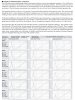
Different Models Comparing T/S & Leap

Attached is a chart showing the different modeling and the accuracy of each. Please see the attached file.
 

Attachments

  • models.jpg
    models.jpg
    122.5 KB · Views: 174
O.K. So you know your math. You are missing as I look at all the equations for motor loses, SPL energy transferred, etc. You also are assuming that the transducer is 100% pistolic in your calculation above, no loses or gains. That the transducer contributes or removes nothing in the acoustical output. I thought if you had read the rest of the thread and the clarifications post that I made, you would understand that the SPL measurements were in the cabinet and on the floor. Which gives a 6db boost! This is also in a room, not outside in an open field. Are we just going to forget about that, it's there and is considered in my redesign work, or should we just through that energy away?


It depends on how you look at it. If you use the drivers T/S for cabinet design you need VAS in free air. The cabinet is built and is what it is. Yes technically your quote on VAS is correct. Example: A 10uf cap is a 10uf cap, but if you use it in series with another 10uf it is now 5uf. My point was we were not going to use the driver without a cabinet just laying in the floor and I had no plans in Tier 2 to redesign the cabinet. This redesign is my work and I did plan on giving information that someone else could work from. The transducer and the cabinet in series created the T/S I provided, and I stated that is where they came from.


This is old school and is outdated information. You as a speaker designer yourself should know this. Xmax can be defined at 10%, 20% what ever the manufacture chooses for a maximum usable distortion rating. It is not defined as you stated by the physical measurements(old school). Many drivers with a physical Xmax of 2mm overhang, can produce under 10% distortion at 8mm. It is all based on the design of the top plate and pole piece structure, stray flux, etc. The LTD model is the most accurate model in the industry to date and DOES take these other parameters into consideration. The T/S parameter will just get you in the ballpark.


Your right as you stated "Something isn't right". It's your understanding of what I am doing and you are using outdated models/math. The numbers don't have an opinion as you stated, they also don't have knowledge of the AC loses in the magnet structure, the acoustical output of the transducer(real world), room gain and a lot of other things. Without trying to trash my work, you could just ask your questions and I will be happy to answer them. I am here to help redesign a speaker for the people interested and I am not here to teach others how to design speakers. If you really would like to know if it adds up. Purchase you a set of 4029s and do the mods in the Tier 2 paper I post, and then you let me know if it adds up.

Thank you for standing up to this tripe. I can see that I've been misquoted as well. Just keep up the GREAT work! By the way, did you notice how popular this thread is (based on replies and not views)?

Nice work!

Thanks

Francis (jack of all trades, master of none, and happy to be so).
 
Ok all back assembled i added some of that foam i used for the coil & magnet assembly on the horn as also a dampening material on the shell of the horn... i will now proceed with the 12 X 4 inch hole in horn enclosure section clean it up, seal, and plug her in!


I will post most probably tomorrow with test... well not real test just listen to one that was modded and one that was not.... any suggestions on what to test that with other than a pink Floyd cd :)

Have a good one all...
 
O.K. So you know your math. You are missing as I look at all the equations for motor loses, SPL energy transferred, etc. You also are assuming that the transducer is 100% pistolic in your calculation above, no loses or gains.

Are you saying that with losses you're going to get a 10dB increase in output? Sure, floor bounce is a known quantity. But how are losses adding another 4dB? I'm going to assume you meant pistonic above. If my equations assume pistonic movement then they would have higher efficiency than in the real world with losses.

This is also in a room, not outside in an open field. Are we just going to forget about that, it's there and is considered in my redesign work, or should we just through that energy away?

Then you should probably indicate that you are optimizing the speakers for your room. The modifications may or may not work out in someone else's room. That's why we do design work using anechoic or pseudoanechoic measurements. So that the result can be translated to any room and is not dependent on the customer's room matching the one the speakers were designed in.

It depends on how you look at it. If you use the drivers T/S for cabinet design you need VAS in free air.

Thiele and Small defined the T/S parameters so that we could predict driver performance in a box. Making up your own definitions for quantities negates the accuracy of anything downstream. If you've found a way to use the equivalent air spring volume of the driver in the box then good for you. But it is not Vas.

Another question based on this, is the 11Hz Fs in free air or in the cabinet?

Example: A 10uf cap is a 10uf cap, but if you use it in series with another 10uf it is now 5uf.

No, it's still a 10uF cap. When you use it in series with another the resultant combination is 5uF. The cap hasn't changed at all.

My point was we were not going to use the driver without a cabinet just laying in the floor and I had no plans in Tier 2 to redesign the cabinet.

How you plan to use it has no bearing on the fact that the parameters are defined as free air quantities. If you're going to use the equations based on Thiele and Small's work then you have to use the parameters as described by them.

This is old school and is outdated information. You as a speaker designer yourself should know this. Xmax can be defined at 10%, 20% what ever the manufacture chooses for a maximum usable distortion rating.

You're the one who showed pictures of your caliper to "prove" a 10mm Xmax, not me. I just pointed out that excursion is from the starting point to the max, not peak-to-peak.

Your right as you stated "Something isn't right". It's your understanding of what I am doing and you are using outdated models/math.

You are correct that I don't understand what you're doing. It seems that you're picking and choosing equations and making up your own values to put in them. Are you honestly saying that Thiele and Small's work does not apply anymore because LEAP has a new algorithm for predicting excursion based distortion?

Without trying to trash my work, you could just ask your questions and I will be happy to answer them.

I'm not trying to trash anything. I'm questioning the validity of your numbers. I think your redesign is a great project and I applaud you putting forth the effort.

Purchase you a set of 4029s and do the mods in the Tier 2 paper I post, and then you let me know if it adds up.

Therein lies a paradox. If these speakers are as good as people, especially in this thread, are saying then why do they need such extensive upgrades?

Note that I did not state an opinion of Mach 1's, simply asked a question.
 
Another point that should be mentioned is that there is a lot of speaker knowledge on AK, by creating her own set of parameters, she is unintentionally (i hope not intentionally) alienating a wealth of knowledge that could be helping her improve these speakers to even a higher degree of performance. When I ask for t/s parameters, I (and probably others) would like to play around with valid numbers in BB6P, Unibox, or WinISD. It's nice to be able to corroborate data, offer suggestions, etc.

I figure at this point my efforts to keep things realistic (har har) have been taken as being a negative person, so any legitimate suggestion I could make to better the performance will probably be misunderstood, as well. That said, I would strongly recommend that videolady fill the midrange horn with 30 ppi reticulated foam. It does a remarkable job reducing HOM's and I'd suspect that it would work wonders on the radioshack horns. I've used it on other vintage horns and subjectively, it's made a significant impact reducing some of the audible issues. Take it for what it's worth.
 
400HP is 400HP, or is it? Horsepower, mathematically speaking, is calculated using a standard formula. But is all horsepower equal? In a word NO! Why? Because you have HP measured at the crank, the drive line (after the transmision), rearend and finally the wheels (also known as Brake Horsepower). And let's not forget the impact of weight, traction, etc., etc.

Your example really doesn't apply here. Horsepower is simply a unit of measure, not a fully defined quantity. Once you define where you're measuring and what you're measuring then you can stick a "hp" on the end of it.

Vas, on the other hand, is a fully defined quantity. You don't get to change where you measure it or anything else.

If you want to use the hp example in the context of this thread then this is more like what's going on. We define P to be the power in hp at the crank. Knowing the mechanical advantage of the rest of the drive system means that we can use a simple multiplier to get the power at the wheels, we'll call it z. The final power would be P * z. But VL points out that we're not going to use the engine on a stand, but in a car. So she measures the power at the wheels and says "this is P". Then uses z as a multiplier to get the final power.

The problem is that P was already defined. Using her version of P in an equation that was built around the previous definition of P will give an incorrect result.

That's what's going on here. Vas is defined as a free air quantity. You don't get to change that definition and then use an equation that was built on the previous definition.
 
Ok all back assembled i added some of that foam i used for the coil & magnet assembly on the horn as also a dampening material on the shell of the horn... i will now proceed with the 12 X 4 inch hole in horn enclosure section clean it up, seal, and plug her in!


I will post most probably tomorrow with test... well not real test just listen to one that was modded and one that was not.... any suggestions on what to test that with other than a pink Floyd cd :)

Have a good one all...

If you have a HT system at home with built in Pink/White noise I'd start there. If you hook up both speakers and cycle the speakers (or just front if you can) there should be a notable difference in sound. Other than that there are CD's with sample sounds that are equally balanced to both channels (unlike regular music CD's). If you want to really have fun there are inexpensive tone generator programs that you can download (to a laptop preferrably) and run the tones into your aux and have at it. Most are fairly cheap and have sample tones, sweeps, instruments, etc.
 
Back
Top Bottom